
 Förhandsvisa
 Skicka
 Dela
Dela
 Visa detaljer
 Guide
Guide

 Ladda ner
 Liknande objekt
 Röntgen
 Bildspel
 Q&A
Q&A Statistik
Gemini

- 61.0 x 54.0 cm


 Visa mer
Konstverket som visas på denna sida skyddas av upphovsrättslagen, vilket innebär att vi inte lagligt kan skapa eller sälja en identisk reproduktion. Detta skydd upprätthålls genom internationella avtal såsom den Bernkonventionen och genom nationella lagar, inklusive de som fastställs av Amerikansk upphovsrättslag – Titel 17. Alla rättigheter förbehållna. Återgivning av konstverk är förbjuden utan skriftligt tillstånd från WahooArt.
Denna metod följer fullt ut upphovsrättsliga regler eftersom den inte innebär kopiering eller duplicering av det skyddade konstverket. Istället är det en kreativ nytolkning – en ny målning som är influerad av originalet men inte identisk med det.
Giclée / Konsttryck
Giclée- eller canvasprint av museumskvalitet med snabb produktion och flexibla ytbehandlingsalternativ. ( Beställ handmålad reproduktion Byt till digital bild)




P118B Skr10

P118H Skr10

P118W Skr10

P438Z Skr10

P508JH Skr12

P508YH Skr12

P805H Skr10

P805Z Skr10

P919BZ Skr10

P919G Skr10

P919XJ Skr10

P959ZH Skr10

P968JZ Skr12

W106C Skr8

W218G Skr10

W218JH Skr8

W218Y Skr10

W307PJ Skr10

W316G Skr10

W316PJ Skr8

W316Y Skr10

W398PJ Skr8

W4111J Skr10

W500HY Skr15

W500JH Skr15

W692G Skr12

W849H Skr8

W940BG Skr15

W953PJ Skr8




Välj bland våra förinställda storlekar som motsvarar konstverkets ursprungliga proportioner.

Ange den bredd och höjd du behöver för att passa din ram eller vägg. Ett tryck kan endast beskäras, aldrig göras större än originalbilden, vilket innebär att ett format med en annan proportion leder till att en del av bilden går förlorad. Vi skickar en digital mockup för godkännande innan vi påbörjar tryckningen. Bilden som visas på denna sida visar inte den faktiska beskärningen — det är endast mockuppen som gör det.
Leverans över hela världen () på 2 veckor istället för standard 4/5 veckor. (1 november)

Fri expressfrakt över hela världen

Högkvalitativ linnecanvas

Fullständig fraktförsäkring

Garantier för återbetalning av tullavgifter

Garantier för exakt färgåtergivning

100 dagars returrätt (endast vid fel)

100% pengarna tillbaka-garanti

Mängdrabatt erbjuds
 Glasalternativet är endast tillgängligt i storlekar under 110 cm.

Gemini
Giclée / Konsttryck
Storlek på reproduktion
-


Slutgiltigt pris
Skr 804
Frågor och svar
Var kan jag hitta konstverk som liknar "Gemini" av Sui Jianguo?
Sidan Liknande verk för "Gemini" av Sui Jianguo visar liknande konstverk.
Hur är färgkompositionen i "Gemini" av Sui Jianguo uppbyggd?
Färgkompositionen i "Gemini" av Sui Jianguo förenar en Gentle kontrast med en Discordant Palette harmoni.
Är Sui Jianguo, skaparen av "Gemini", känd under andra namn?
Sui Jianguo är även känd som 隋建國.
Konstnärsbiografi
Early Life and the Echoes of Maoist China
Sui Jianguo, born in Qingdao, China in 1956, is a figure deeply marked by the tumultuous history of his nation. His formative years unfolded under the long shadow of Mao Zedong’s rule, an era that profoundly shaped not only Chinese society but also the very fabric of its artistic expression. Growing up as the son of factory workers, Sui experienced firsthand the hardships and sacrifices demanded by the communist regime. The absence of his parents due to their demanding work schedules instilled a sense of early independence, but more significantly, it exposed him to the pervasive influence of Maoist ideology. During this period, art was largely confined within the strict parameters of socialist realism—a style that glorified the revolution and its leader in idealized terms. This official aesthetic, intended to cultivate a cult of personality around Mao, became the dominant visual language of the time.
However, beneath the surface of officially sanctioned imagery lay a simmering discontent. Sui’s early exposure to this controlled artistic landscape would later become a crucial point of departure for his own work. The rigid constraints and propagandistic nature of socialist realism sparked within him a desire to explore alternative forms of expression—a yearning that was initially suppressed but ultimately fueled his artistic evolution. His childhood, spent witnessing the realities of factory life and the omnipresent imagery of Mao, laid the foundation for a career dedicated to confronting and reinterpreting China’s complex past.
From Propaganda to Personal Expression
The Cultural Revolution brought further disruption to Sui Jianguo's early life. Schools were closed, and he was compelled to join his parents in factory work—a period he later described as being “transfixed in the age of Mao worship.” This experience wasn’t merely a matter of labor; it was an immersion into the very heart of the system he would eventually critique through his art. He began painting propaganda posters, dutifully replicating the idealized images of Mao that permeated society. Yet, even within these confines, a nascent artistic sensibility began to emerge.
A turning point arrived with a broken arm in 1976—an injury that unexpectedly liberated him from factory work and allowed him to pursue his burgeoning passion for art. This period of convalescence became a time of profound introspection, as Sui contemplated his “spiritual” life and the direction he wished to take. With his father’s encouragement, he secretly began studying painting at night, laying the groundwork for a future career that would challenge the established norms of Chinese art. His early works reflected this transition—a traditional landscape painting completed after Mao's death signaled a departure from the rigid constraints of socialist realism and a tentative exploration of personal expression.
Sculptural Innovations and the Use of Raw Materials
Sui Jianguo’s artistic journey took a decisive turn when he enrolled in the Central Academy of Fine Arts in Beijing, where he focused on sculpture. Inspired by his years in the factories—a place where physical labor and manual skill were paramount—he embraced the medium as a means of translating his experiences into tangible form. After earning his master’s degree, Sui embarked on a period of international travel, exhibiting his work in Japan, Australia, and other countries. These encounters broadened his artistic horizons and exposed him to diverse perspectives.
His early sculptures were characterized by the use of “naturalistic materials”—rocks, boulders, and steel—which he manipulated to create powerful forms that resonated with his perception of life and internal conflicts. He developed unique techniques of sealing, binding, tying, and hammering, forging a relationship between his materials that was both associative and confrontational. However, it was his exploration of Mao suits in 1997 that truly catapulted him to international prominence. These sculptures—imitations of Chairman Mao’s iconic jacket—became instantly recognizable symbols of China’s complex past.
The Mao Suit Series: Memory, Power, and Transformation
The Mao suit series represents a pivotal moment in Sui Jianguo’s career and a significant contribution to contemporary Chinese art. These sculptures are not merely replicas of a garment; they are potent symbols that evoke the era of Mao Zedong and its enduring legacy. By recreating these iconic jackets, Sui forces viewers to confront their own relationship with China’s history—a history marked by both revolutionary fervor and profound social upheaval.
The materials used in the series further amplify its symbolic weight. Often crafted from marble or other durable stones, the suits take on a monumental quality, suggesting the enduring power of Maoist ideology. The act of transforming this everyday object into a sculpture also speaks to the process of historical reinterpretation—a process that Sui actively engages with in his work. His sculptures have attracted the attention of prominent collectors like Uli Sigg, solidifying his position as a leading figure in the Chinese contemporary art scene.
Historical Significance and Contemporary Relevance
Sui Jianguo’s work is deeply rooted in the historical context of China, but its themes resonate far beyond national boundaries. His exploration of memory, power, and transformation speaks to universal human experiences—the struggle for identity, the weight of the past, and the search for meaning in a rapidly changing world.
As professor and ex-chairman of the Department of Sculpture at the Central Academy of Fine Arts in Beijing, Sui Jianguo has played a crucial role in shaping the next generation of Chinese artists. His work continues to challenge conventional notions of art and history, prompting viewers to question established narratives and engage with China’s complex past on a deeper level. He is not simply documenting history; he is actively reinterpreting it—a process that is essential for understanding the present and forging a path towards the future.
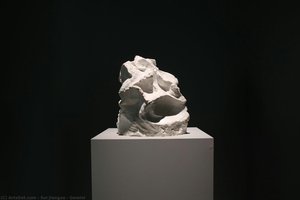
- Gemini (2009): A striking sculpture of stacked marble boulders, embodying power and resilience.
- The Mao Suit Series: Sculptures crafted from durable materials like marble, representing enduring ideology.
- Land Depression: Early sculptures utilizing rocks and steel to explore internal conflicts.
Sui Jianguo
China
Kortfakta
- Full Name: Sui Jianguo
- Nationality: Chinese
- Place Of Birth: China
- Notable Artworks:
- Blind Portraits
- Legacy Mantle
- Made in China
- Artistic Movement Or Style: Contemporary Sculpture
- Artists Who Influenced This Artist:
- Richard Serra
- Heidegger
- Artists Or Movements Influenced By This Artist: ['Landform Sculpture']
Relaterade artiklar

The Enduring Form: Exploring Themes & Techniques in Sculpture Across Historical Periods
Explore the rich history of sculpture from ancient masterpieces to contemporary innovations. Discover key techniques, influential artists & investment potential for discerning art collectors.

Timeless Elegance: A Complete Guide to the Sublime Beauty and Artistry of Marble Sculpture
Discover the sublime beauty of marble art through an expert exploration of Renaissance and Neoclassical masterpieces. From the delicate textures of Carpeaux to the grandeur of Sansovino, immerse yourself in a guide to timeless elegance and sculptural perfection.

The Enduring Form: Sculpture Across History, Technique & Emotional Resonance
Explore the rich history of sculpture with OriginalUniqueArt. Discover key techniques, influential artists & investment potential for discerning collectors. Expert insights into valuing and collecting timeless masterpieces.

The Enduring Allure of Marble in Art History: From Classical Sculpture to Modern Abstraction
Explore the captivating history of marble sculpture from ancient Greece to modern art. Discover renowned artists like Canova & Michelangelo, carving techniques, and investment insights at OriginalUniqueArt.

Bronsålderns Mästerverk: 10 Skulpturer Som Förändrade Konsthistorien | OriginalUniqueArt
Upptäck 10 legendariska brons skulpturer som revolutionerade konsthistorien! Lär känna Rodin, Michelangelo och andra mästare. Köp museumkvalitativa repliker & hitta inspiration för din inredning på OriginalUniqueArt.com.