

 Förhandsvisa
 Skicka
 Dela
Dela
 Visa detaljer
 Guide
Guide

 Ladda ner
 Liknande objekt
 Röntgen
 Bildspel
 Statistik
Untitled
 Etching
- Contemporary Realism
 1978
1978- Modern
 28.0 x 30.0 cm
 Kerala Museum
 Visa mer
Konstverket som visas på denna sida skyddas av upphovsrättslagen, vilket innebär att vi inte lagligt kan skapa eller sälja en identisk reproduktion. Detta skydd upprätthålls genom internationella avtal såsom den Bernkonventionen och genom nationella lagar, inklusive de som fastställs av Amerikansk upphovsrättslag – Titel 17. Alla rättigheter förbehållna. Återgivning av konstverk är förbjuden utan skriftligt tillstånd från WahooArt.
Som ett respektfullt och lagligt alternativ erbjuder vi skräddarsydda, handmålade konstverk inspirerade av originalet. Våra skickliga och professionella konstnärer studerar noggrant originalets stil, stämning och konstnärliga essens för att skapa ett nytt, unikt verk som väcker samma känsla – samtidigt som det förblir en originell skapelse i egen rätt.
Denna metod följer fullt ut upphovsrättsliga regler eftersom den inte innebär kopiering eller duplicering av det skyddade konstverket. Istället är det en kreativ nytolkning – en ny målning som är influerad av originalet men inte identisk med det.
Handgjord oljereproduktion
Handmålad olja på duk i din valda storlek och ram, tillverkad efter beställning av våra konstnärer. ( Byt till tryck Byt till digital bild)




P118B Skr10

P118H Skr10

P118W Skr10

P438Z Skr10

P508JH Skr12

P508YH Skr12

P805H Skr10

P805Z Skr10

P919BZ Skr10

P919G Skr10

P919XJ Skr10

P959ZH Skr10

P968JZ Skr12

W106C Skr8

W218G Skr10

W218JH Skr8

W218Y Skr10

W307PJ Skr10

W316G Skr10

W316PJ Skr8

W316Y Skr10

W398PJ Skr8

W4111J Skr10

W500HY Skr15

W500JH Skr15

W692G Skr12

W849H Skr8

W940BG Skr15

W953PJ Skr8




Välj bland våra förinställda storlekar som motsvarar konstverkets ursprungliga proportioner.

Ange den bredd och höjd du behöver för att passa din ram eller din vägg. Eftersom detta är handmålat kan konstnären, vid ett annat format, måla lite mer runt bilden eller beskära den något – det är du som väljer. Vi skickar en digital mockup för godkännande innan målningen påbörjas. Bilden som visas på denna sida representerar inte det slutgiltiga resultatet — det är endast mockuppen som visar det.
Efter beställning kommer OriginalUniqueArt.com team att mejla kunden för instruktioner och tillhandahålla en skissförhandsvisning
Leverans över hela världen () på 3–4 veckor istället för standard 5 veckor. (26 oktober). Inga kompromisser med kvaliteten.

Fri expressfrakt över hela världen

Högkvalitativ linnecanvas

Fullständig fraktförsäkring

Garantier för återbetalning av tullavgifter

Garantier för exakt färgåtergivning

100 dagars returrätt (endast vid fel)

100% pengarna tillbaka-garanti

Mängdrabatt erbjuds
 Glasalternativet är endast tillgängligt i storlekar under 110 cm.

Untitled
Reproduktionsmetod
Storlek på reproduktion
-


Slutgiltigt pris
Skr 2978
A Poignant Encounter in Etching
In this evocative black and white etching from 1978, the legendary Indian printmaker Somnath Hore invites us into a moment of profound human connection. The composition centers on an intimate, almost sacred embrace between two figures; a man, draped in what appears to be a simple robe or long shirt, cradles another person with a tenderness that transcends the starkness of the medium. This central interaction is framed by a quiet, domestic setting where a window and a wall provide a sense of enclosure, while a solitary potted plant in the lower corner introduces a delicate touch of nature into the somber scene. The interplay of light and shadow across the figures creates a palpable sense of weight and presence, drawing the viewer into the silent dialogue between the subjects.
The technical mastery of Hore is on full display through his signature use of meticulous hatching and cross-hatching. These fine, rhythmic lines do more than merely define form; they imbue the paper with texture and emotional depth, allowing the artist to sculpt light out of darkness. The etching technique lends a raw, visceral quality to the work, where every stroke feels like a deliberate mark of witness. This method is particularly effective in capturing the subtle nuances of the figures' expressions and the heavy atmosphere that surrounds them, making the piece feel less like a static image and more like a living, breathing fragment of history.
The Weight of History and Human Spirit
To understand this work, one must look through the lens of Somnath Hore’s profound engagement with the socio-political landscape of twentieth-century Bengal. As an artist who stood as a witness to the devastating Bengal famine and the turbulent Tebhaga movement, Hore’s oeuvre is deeply rooted in the reality of human suffering and resilience. While this specific untitled piece presents an intimate scene, it carries the echoes of his larger mission: to capture the essence of the human experience amidst hardship. The shadows within the etching can be seen as metaphors for the historical struggles that shaped his era, while the embrace serves as a symbol of enduring compassion and the strength found in solidarity.
For the discerning collector or interior designer, this reproduction offers more than just a visual element; it provides a soulful focal point for a curated space. The monochromatic palette and the sophisticated interplay of line work make it an ideal addition to a gallery wall or a minimalist study, where its quiet intensity can command attention without overwhelming the surroundings. Owning a piece that reflects such deep historical consciousness and technical brilliance allows one to bring a sense of gravity, empathy, and timelessness into a modern living environment.
Frågor och svar
Vilken fas i Somnath Hores karriär motsvarar årtalet 1978 för "Untitled"?
Med tanke på sitt datum från 1978, tillhör "Untitled" Somnath Hores Mature Period.
Finns "Untitled" tillgänglig som ett konsttryck?
"Untitled" finns tillgänglig som ett konsttryck på bomullscanvas eller arkivbeständigt canvaspapper. Beställningar görs via dess Konsttryck i hög kvalitet-sida, i den storlek du själv väljer.
När skapades "Untitled" och vilken stilriktning tillhör det?
"Untitled" skapades år 1978 som ett verk inom Contemporary Realism-rörelsen. Datum och stil förankrar konstverket i konsthistorien.
Konstnärsbiografi
The Witness of Bengal’s Turbulent Century
Somnath Hore (1921–2006) was far more than a mere creator of forms; he was a profound chronicler of the human condition, standing as an unflinching witness to the socio-imaginative upheavals of twentieth-century Bengal. His artistic journey was inextricably linked to the very marrow of social struggle, shaped by the devastating echoes of the 1943 Bengal famine and the defiant spirit of the Tebhaga peasant movement. Born in Chittagong, Hore’s early life was deeply colored by the political currents of his era. His affiliation with the Communist Party during his youth infused his work with a powerful socialist ideology, transforming his practice into a medium for documenting historical trauma and advocating for social justice. He did not merely observe history from the periphery; he translated the hunger, the resistance, and the resilience of the marginalized into a visual language that remains hauntingly relevant today.The Architecture of Suffering and Technique
The technical brilliance of Hore’s oeuvre lies in his ability to translate visceral, often agonizing experiences into delicate, rhythmic textures. As a master of printmaking, he achieved legendary status through his command of lithography and intaglio, using these mediums to explore the depths of human vulnerability. He is perhaps most celebrated for his development of the unique pulp-print technique, a method that allowed him to imbue his work with a raw, tactile quality. This was most notably realized in his critically acclaimed Wounds series, where the very texture of the paper seemed to mirror the physical and emotional scars of the people he depicted. Through meticulous hatching and cross-hatching, Hore sculpted light out of darkness, using fine, rhythmic lines to create a sense of depth that was both aesthetically masterful and emotionally heavy. Whether through the starkness of a charcoal drawing or the intricate layers of an etching, his work captures a profound intimacy—a moment where the artist’s hand becomes a vessel for collective memory.A Sculptural Legacy in Clay and Spirit
As his artistic vision matured, Hore expanded his dialogue with form, moving from the two-dimensional plane into the tactile, three-dimensional world of sculpture. Utilizing stoneware clay and bronze, he brought a contorted, expressive energy to his figures, echoing the tension and endurance found in his earlier prints. This transition allowed him to explore the weight and presence of the human body in space, imbuing his sculptures with a humanist sensibility that was both grounded in realism and elevated by poetic expression. His later years were deeply rooted in the academic and creative community of Santiniketan, where he headed the Graphics and Printmaking Department at Kala Bhavan. Working alongside luminaries such as K.G. Subramanyan and Ramkinkar Baij, Hore helped shape the trajectory of modern Indian art. His legacy remains a testament to the power of art to serve as both a mirror to society’s darkest moments and a celebration of the indomitable human spirit.
Somnath Hore
1921 - 2006 , India
Kortfakta
- Full Name: Somnath Hore
- Nationality: Indian
- Date Of Birth: 1921
- Date Of Death: 2006
- Place Of Birth: India
- Notable Artworks: ['Untitled']
- Artistic Movement Or Style: Social realism
Relaterade artiklar
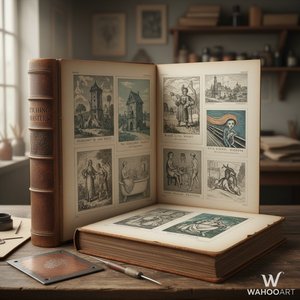
10 Etser som Förändrade Konsthistorien – Mästverk för Ditt Hem
Utforska 10 legendariska etsningar av Rembrandt, Goya och Dürer! Lär känna historien bakom dessa mästerverk & tekniken som förändrade konsten. Köp reproduktioner av högsta kvalitet på OriginalUniqueArt.com – för en tidlös inredning.

Vita mästerverk: Topp 10 målningar som hyllar ljuset – OriginalUniqueArt.com
Utforska 10 ikoniska vita målningar av Monet, Whistler & fler! Lär känna historien bakom dessa ljusa konstverk och upptäck hur vitt används för att skapa stämning. Köp museumkvalitativa tryck på OriginalUniqueArt.com.

The Intricate World of Etching: A Historical Survey of Technique, Aesthetic Evolution, and Enduring Artistic Impact
Explore the rich history of etching, from its origins to modern practice. Discover techniques, key artists like Rembrandt, and insights for collectors. A comprehensive guide by OriginalUniqueArt.

Mästverk i svart: Topp 10 målningar som fascinerar – OriginalUniqueArt.se
Utforska 10 ikoniska målningar dominerade av svart – från Rembrandts djupa skuggor till Munchs ångest. Lär känna historien bakom mästerverken och hitta inspiration för din inredning på OriginalUniqueArt.se. Upptäck hela kollektionen online!

Etching: A Historical Survey of Technique, Aesthetic Qualities & Enduring Artistic Significance
Explore the rich history of etching, from its origins to Rembrandt's masterful innovations. Discover the technique, aesthetic qualities & enduring legacy of this captivating art form. Expert insights for collectors and enthusiasts.