

 Förhandsvisa
 Skicka
 Dela
Dela
 Visa detaljer
 Guide
Guide

 Ladda ner
 Liknande objekt
 Röntgen
 Bildspel
 Q&A
Q&A Statistik
Study (verso)
 Oil On Panel
- Tonal Impressionism
 Modern
 25.0 x 33.0 cm
 The Munnings Art Museum
 Visa mer
Konstverket som visas på denna sida skyddas av upphovsrättslagen, vilket innebär att vi inte lagligt kan skapa eller sälja en identisk reproduktion. Detta skydd upprätthålls genom internationella avtal såsom den Bernkonventionen och genom nationella lagar, inklusive de som fastställs av Amerikansk upphovsrättslag – Titel 17. Alla rättigheter förbehållna. Återgivning av konstverk är förbjuden utan skriftligt tillstånd från WahooArt.
Denna metod följer fullt ut upphovsrättsliga regler eftersom den inte innebär kopiering eller duplicering av det skyddade konstverket. Istället är det en kreativ nytolkning – en ny målning som är influerad av originalet men inte identisk med det.
Giclée / Konsttryck
Giclée- eller canvasprint av museumskvalitet med snabb produktion och flexibla ytbehandlingsalternativ. ( Beställ handmålad reproduktion Byt till digital bild)




P118B Skr10

P118H Skr10

P118W Skr10

P438Z Skr10

P508JH Skr12

P508YH Skr12

P805H Skr10

P805Z Skr10

P919BZ Skr10

P919G Skr10

P919XJ Skr10

P959ZH Skr10

P968JZ Skr12

W106C Skr8

W218G Skr10

W218JH Skr8

W218Y Skr10

W307PJ Skr10

W316G Skr10

W316PJ Skr8

W316Y Skr10

W398PJ Skr8

W4111J Skr10

W500HY Skr15

W500JH Skr15

W692G Skr12

W849H Skr8

W940BG Skr15

W953PJ Skr8




Välj bland våra förinställda storlekar som motsvarar konstverkets ursprungliga proportioner.

Ange den bredd och höjd du behöver för att passa din ram eller vägg. Ett tryck kan endast beskäras, aldrig göras större än originalbilden, vilket innebär att ett format med en annan proportion leder till att en del av bilden går förlorad. Vi skickar en digital mockup för godkännande innan vi påbörjar tryckningen. Bilden som visas på denna sida visar inte den faktiska beskärningen — det är endast mockuppen som gör det.
Leverans över hela världen () på 2 veckor istället för standard 4/5 veckor. (30 oktober)

Fri expressfrakt över hela världen

Högkvalitativ linnecanvas

Fullständig fraktförsäkring

Garantier för återbetalning av tullavgifter

Garantier för exakt färgåtergivning

100 dagars returrätt (endast vid fel)

100% pengarna tillbaka-garanti

Mängdrabatt erbjuds
 Glasalternativet är endast tillgängligt i storlekar under 110 cm.

Study (verso)
Giclée / Konsttryck
Storlek på reproduktion
-


Slutgiltigt pris
Skr 800
The Quiet Intimacy of an Equine Moment
In the delicate realm of British Impressionism, few moments capture the profound stillness of rural life as tenderly as Sir Alfred James Munnings’s Study (verso). This intimate oil on panel serves as a window into a private, unobserved second in time, where the grandeur of the horse is replaced by a sense of gentle vulnerability. The painting depicts a single horse, its head bowed toward the earth, lost in a moment of quiet foraging amidst the lush grasses. There is no thunder of hooves or dramatic gallop here; instead, Munnings invites us into a sanctuary of peace, where the only movement is the soft rustle of the meadow and the rhythmic grazing of a creature at rest.
The composition, though modest in its 25 x 33 cm scale, possesses an expansive emotional depth. By focusing on the horse’s downward gaze, Munnings directs our attention to the connection between the animal and the land. This downward focus creates a closed loop of intimacy, making the viewer feel less like an intruder and more like a silent witness to a natural ritual. For collectors and lovers of classical realism, this piece offers a rare glimpse into the artist's preparatory mind—a study that prioritizes the essence of life over the spectacle of action.
Mastery of Light and Texture
Technically, this work exemplifies Munnings’s ability to manipulate oil paint to evoke the tactile reality of the English countryside. The brushwork is masterful, blending the fluid, impressionistic strokes required to render the swaying blades of grass with a more controlled precision used to define the muscular anatomy of the horse. One can almost feel the weight of the animal and the dampness of the earth beneath its hooves. The light in this study is soft and diffused, characteristic of the overcast, luminous skies often found in the East Anglian landscapes that so inspired the artist.
The palette is a sophisticated arrangement of earthy tones—deep greens, muted ochres, and warm browns—which ground the subject in a sense of timelessness. For interior designers seeking to introduce a sense of calm and heritage into a space, this painting provides an anchor of organic warmth. The subtle interplay of light and shadow across the horse's coat adds a three-dimensional quality that breathes life into the panel, ensuring that even as a reproduction, the work retains its soulful, living presence.
A Legacy of Rural Tradition
To understand this study is to understand the heart of Sir Alfred James Munnings himself. As a painter whose life was inextricably linked to the equine world, Munnings sought to preserve a vanishing way of life—a Britain defined by the rhythms of hunting, racing, and the pastoral beauty of the countryside. This particular work, housed in the Munnings Art Museum in Colchester, represents the foundational sketches of a master documenting a disappearing era. It is more than just a depiction of an animal; it is a nostalgic tribute to the dignity of nature.
Owning or displaying a high-quality reproduction of such a piece allows one to bring a fragment of this historical elegance into the modern home. Whether placed in a sunlit library or a sophisticated contemporary living room, Study (verso) acts as a meditative focal point. It reminds us of the beauty found in simplicity and the enduring grace of the natural world, making it an incomparable choice for those who value art that speaks to both the eye and the soul.
Frågor och svar
Vilken epok tillhör "Study (verso)"?
"Study (verso)" av Alfred Munnings härstammar från Modern-perioden, vilket ger verket dess historiska sammanhang.
Kan jag se "Study (verso)" av Alfred Munnings i olika ljus?
Röntgenvyn av "Study (verso)" av Alfred Munnings finns på verkets Röntgenanalys-sida: en interaktiv undersökning av bilden genom elva optiska lager.
Vilken typ av verk är "Study (verso)"?
"Study (verso)" av Alfred Munnings är klassificerat som wall art. Kategorin beskriver vilken typ av konstverk originalet är.
Konstnärsbiografi
A Life Immersed in Equine Grace
Sir Alfred James Munnings, ett namn oåtskärligt knutet till den livfulla skildringen av hästar och den romantiska locken av det lantliga England, upptar en central position inom 20:e århundradets brittisk konst. Han föddes 1878 mitt i de böljande landskapen i Suffolk, och hans liv präglades djupt av en bestående koppling till den hästliknande världen – ett band som skulle definiera hans konstnärliga vision och driva honom till berömmelse. Munnings registrerade inte bara det han såg; han bevarade en känsla, en atmosfär, en värld stående på randen av omvälvning. Han fångade ett försvinnande sätt att leva, en skarpt observerad porträtt av England djupt rotat i tradition, jakt och jordbrukets rytmer.From Rural Beginnings to Artistic Development
Munnings konstnärliga resa började inte inom de formella gränserna hos en akademi, utan i den praktiska världen av ett Norwich tryckerihus. Detta lärande förfinade hans färdigheter i design och observation samtidigt som han tillät sig att studera vid Norwich School of Art. Det var en formativ period, som inställde disciplin som skulle tjäna honom väl när han navigerade utmaningarna med att etablera sig som konstnär. Tidiga influenser inkluderade *plein air*-målarna i Newlyn School i Cornwall, där han omfamnade deras engagemang för att fånga ljus och atmosfär direkt från naturen. Denna immersion i impressionistiska tekniker lade grunden för hans signaturstil – löst penslade penslar, en livfull palett och en känsla av rörelse som var verkligt palpabel. Hans tidiga verk skildrade ofta landsbygdslandskap, särskilt de som visade gypsys och hästar som vandrade genom Suffolk-landet, fyllda med en romantisk känsla som visade hans växande behärskning av färg och ljus. Dessa målningar var inte bara representationer; de var uttryck för en djup kärlek till landet och dess invånare.War, Recognition and a Champion of Tradition
Första världskriget formade både Munnings konstnärliga perspektiv och hans offentliga profil djupt. Även om han initialt ansågs olämplig för stridstjänst, tjänstgjorde han som officiell krigsartist med den kanadensiska kavalleri-brigaden, dokumenterade hästens avgörande roll i konflikten. Denna erfarenhet ledde honom att möta de hårda realiteterna av kriget – lidandet, förlusten och det bestående bandet mellan människor och djur. Hans målningar från denna period är inte glorifieringar av strid, utan sorgsna reflektioner över offer och motståndskraft, fångar en dyster skönhet mitt i förstörelsen. Efterkrigstiden vittnade om en explosion av Munnings popularitet och ekonomisk säkerhet. Prestigious kommissioner flödade in, vilket gjorde att han kunde förvärva Castle House i Dedham, Essex – en egendom som skulle bli både hans hem och studio för resten av sitt liv. Han blev en eftertraktad porträttist, fångade likheten hos framstående personer från den aristokratiska världen och tävlingsvärlden. Hans förmåga att inte bara förmedla fysisk likhet utan också karaktär och anda etablerade honom som en av Storbritanniens ledande konstnärer. Han var dock också en envis försvarare av traditionella konstvärden.A Controversial Voice and Enduring Legacy
Munnings konstnärliga filosofi var djupt rotad i tradition, och han blev en röst för den ökande modernismen som utmanade konventionella uppfattningar om konst. Hans berömda – och ofta kontroversiella – radioföreläsning 1949 såg honom lansera ett skoningslöst angrepp på Kubism och Surrealism, levererat med karaktäristisk ärlighet (och förmodligen drivet av alkohol). Även om hans uttalanden utlöste ilska bland förespråkare för modern konst, resonerade de också med dem som värnade om representativ målning och den bestående kraften i konstnärlig skicklighet. Han var inte bara motstånd mot förändring av förändringens skull; han trodde på vikten av att bevara konstnärliga standarder och fira skönhet i dess traditionella former. Denna övertygelse kulminerade i hans val till president för Royal Academy 1944, en position han innehavde fram till 1949, vilket befäste hans status inom den brittiska konstvärlden. Han blev riddare 1944 och utnämndes till Knight Commander of the Royal Victorian Order 1947, ytterligare erkännande av hans bidrag till nationens kulturella liv. Sir Alfred James Munnings lämnade efter sig en omfattande och övertygande konstsamling som fortfarande fångar publiken idag. Hans målningar erbjuder ett fönster in i en förfluten tid – en värld av hästar, jakt och lantliga landskap som har försvunnit i stort sett. Munnings Art Museum, grundat av hans fru Violet på Castle House, tjänar som ett testamente till hans bestående arv, bevarar hans konst och ger framtida generationer möjlighet att uppskatta hans unika vision. Utöver den tekniska skickligheten i hans målningar är det Munnings förmåga att väcka känslor som verkligen skiljer honom från andra. Han fångade inte bara den fysiska skönheten hos hästar, utan också deras anda, deras kraft och deras koppling till det mänskliga hjärtat. Hans verk förblir ett kraftfullt påminnelse om den bestående attraktionen av representativ målning och vikten av att bevara konstnärliga traditioner i en ständigt föränderlig värld.Major Achievements
- Royal Academy President: Elected President of the Royal Academy in 1944, serving until 1949.
- Knighthood: Knighted Bachelor in 1944 and appointed a Knight Commander of the Royal Victorian Order in 1947.
- War Artist Commissions: Recognized for his work documenting the Canadian Cavalry during WWI.
- Sculptural Work: Created sculptures, including an equestrian statue of Edward Horner.
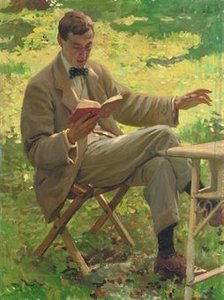
Alfred Munnings
1878 - 1959 , Storbritannien
Kortfakta
- Artistic Movement Or Style: Impressionism
- Artists Or Movements Influenced By This Artist: ['Modernism']
- Artists Who Influenced This Artist: ['Newlyn School']
- Date Of Birth: 1878
- Date Of Death: 1959
- Full Name: Sir Alfred James Munnings
- Nationality: Brittisk
- Notable Artworks:
- The Fancy Dress Ball
- A Piper
- Place Of Birth: Mendham, Storbritannien
Relaterade artiklar
The Timeless Charm of Oil on Board: Reimagining Texture and Light through the Impressionist Lens
Discover the profound intimacy of oil on panel. Explore how Impressionist masters used rigid supports to capture light, texture, and impasto depth through exquisite, handmade oil reproductions for discerning collectors.

Mastering the Surface: A Historical and Technical Guide to the Art of Oil on Panel Painting
Explore the profound history and technical brilliance of oil on panel painting. From Renaissance masters to modern techniques, discover why this rigid support offers unparalleled precision and permanence for fine art lovers and collectors.
Topp 10 legendariska oljemålningar på panel som förändrade konsten – OriginalUniqueArt.com
Utforska de 10 mest legendariska oljemålningarna på panel som revolutionerade konsten! Lär känna mästerverk från renässans till impressionism. Hitta inspiration & köp museumkvalitets konsttryck hos OriginalUniqueArt.com – din källa för tidlös skönhet.

Sir Alfred James Munnings: Topp 25 mästerverk – Konst för hemmet & själen
Utforska Sir Alfred James Munnings 25 mest ikoniska målningar! Upptäck hästkonstens mästare, hans impressionistiska landskap & gripande krigskonst. Köp exklusiva konsttryck på OriginalUniqueArt.com – för en tidlös inredning.
Oil on Panel: A Historical Survey of Technique, Support & Aesthetic Evolution
Explore the rich history of oil on panel painting! Discover Renaissance techniques, support structures & aesthetic evolution. Expert insights for art collectors and enthusiasts.


