

 Förhandsvisa
 Skicka
 Dela
Dela
 Visa detaljer

 Ladda ner
 Liknande objekt
 Röntgen
 Bildspel
 Statistik
The Magic Crystal (Study: Male Figure)
 Oil On Canvas
- WallArt
- Baroque
 1878
1878- 19th Century
 32.0 x 18.0 cm
 Manchester Art Gallery
 Visa mer
Giclée / Konsttryck
Giclée- eller canvasprint av museumskvalitet med snabb produktion och flexibla ytbehandlingsalternativ. ( Beställ handmålad reproduktion Byt till digital bild)




P118B $10

P118H $10

P118W $10

P438Z $10

P508JH $12

P508YH $12

P805H $10

P805Z $10

P919BZ $10

P919G $10

P919XJ $10

P959ZH $10

P968JZ $12

W106C $8

W218G $10

W218JH $8

W218Y $10

W307PJ $10

W316G $10

W316PJ $8

W316Y $10

W398PJ $8

W4111J $10

W500HY $15

W500JH $15

W692G $12

W849H $8

W940BG $15

W953PJ $8




Välj bland våra förinställda storlekar som motsvarar konstverkets ursprungliga proportioner.

Du kan ange egna mått för att passa en specifik ram eller yta. Om det valda måttet inte överensstämmer med originalbildens proportioner kommer vi antingen att beskära konstverket eller utöka bilden med en speglad eller enfärgad kant. En digital mockup skickas för ditt godkännande innan produktionen påbörjas.
Vänligen notera att förhandsvisningen på skärmen inte återspeglar den faktiska beskärningen eller utökningen. Endast mockuppen visar den slutgiltiga kompositionen korrekt.
Även om anpassade storlekar är möjliga, rekommenderar vi att du väljer ett mått från den fördefinierade listan för att bevara de ursprungliga proportionerna.
Leverans över hela världen () på 2 veckor istället för standard 4/5 veckor. (9 september)

Fri expressfrakt över hela världen

Högkvalitativ linnecanvas

Fullständig fraktförsäkring

Garantier för återbetalning av tullavgifter

Garantier för exakt färgåtergivning

100 dagars returrätt (endast vid defekter)

100% pengarna tillbaka-garanti

Mängdrabatt erbjuds
 Glasalternativet är endast tillgängligt i storlekar under 110 cm.

The Magic Crystal (Study: Male Figure)
Giclée / Konsttryck
Storlek på reproduktion
-


Slutgiltigt pris
$ 80
The Magic Crystal (Study: Male Figure) – A Victorian Echo of Baroque Drama
Simeon Solomon’s “The Magic Crystal” stands as a haunting testament to the Pre-Raphaelite movement's fascination with biblical narratives and psychological exploration, achieved through masterful oil painting technique and imbued with profound symbolic resonance. Completed in 1878, this artwork transcends mere visual representation; it delves into themes of suffering, contemplation, and spiritual yearning—a characteristic preoccupation of Victorian artists grappling with anxieties surrounding faith and morality.- Subject Matter: The piece depicts a nude male figure – ostensibly an angel or saint – positioned against a dark, textured surface reminiscent of weathered stone or ancient wood. Beside him rests a small bowl and a crimson object—likely representing blood—underscoring the imagery’s solemnity and hinting at sacrifice. Above all, however, is a subtle depiction of a starry night sky, adding an element of ethereal beauty to the scene’s melancholic core.
- Style: Solomon's work firmly anchors itself within Baroque painting conventions. The dramatic chiaroscuro—the stark contrast between light and shadow—dominates the composition, channeling the theatrical grandeur favored by artists like Caravaggio. This stylistic choice isn’t merely decorative; it serves to heighten emotional intensity and draw the viewer’s gaze directly to the central figure’s torso, emphasizing his vulnerability and inner turmoil.
- Technique: Solomon employed impasto—thickly applied paint—to create a tactile surface that captures the texture of the stone-like background and contributes significantly to the artwork's overall mood. The artist meticulously layered pigments, achieving remarkable depth and volume through painstaking brushwork. This technique lends itself beautifully to capturing the subtle nuances of emotion and conveying a sense of palpable stillness.
- Historical Context: Created during Victorian England—a period marked by religious revivalism and societal anxieties regarding sexuality—the painting reflects broader cultural concerns about morality and spiritual redemption. Solomon’s exploration of biblical themes aligns with the Pre-Raphaelites' desire to recapture the expressive fervor of Renaissance art, rejecting academic conventions in favor of emotionally charged imagery.
- Symbolism: The bowl symbolizes sorrow or offering – perhaps representing a plea for divine compassion—while the crimson hue evokes pain and loss. Furthermore, the starry sky serves as a visual metaphor for transcendence and spiritual aspiration, mirroring the Pre-Raphaelites’ belief in the power of imagination to illuminate the mysteries of faith.
- Explore Simeon Solomon’s ‘The Magic Crystal,’ a haunting 1878 oil painting of a nude male figure in Baroque style. Discover its symbolism & rich textures – a Victorian masterpiece.
- The Magic Crystal (Study: Male Figure) | Art UK
- The Magic Crystal (Study: Male Figure), 1878 - Simeon Solomon
- Simeon Solomon
- Manchester Art Gallery Website: https://www.manchesterartgallery.org/
- Victoria and Albert Museum Collection: https://www.vam.ac.uk/
Konstnärsbiografi
A Life Shrouded in Beauty and Scandal: The World of Simeon Solomon
Simeon Solomon, a name whispered with both reverence and regret within the annals of Victorian art, occupies a unique and often tragic position amongst the Pre-Raphaelites. Born in London in 1840 into a prominent Jewish family – the eighth and final child of merchant Michael (Meyer) Solomon and artist Catherine (Kate) Levy – his life was one of remarkable artistic promise tragically curtailed by societal prejudice and personal demons. Unlike many of his contemporaries who enjoyed long and celebrated careers, Solomon’s trajectory was abruptly altered by scandal, yet his work continues to captivate with its delicate beauty, evocative symbolism, and poignant exploration of themes often considered taboo for the era. He wasn't merely a painter; he was a cultural mirror reflecting the complexities of Victorian England, grappling with faith, desire, and identity in a rapidly changing world.Early Influences and Artistic Development
Solomon’s artistic education began within his own family circle. His mother possessed an amateur talent for miniature painting, while his elder siblings, Abraham and Rebecca Solomon, were both established artists exhibiting at the Royal Academy. It was from them, particularly his brother Abraham, that Simeon received his initial training, learning the fundamentals of draftsmanship and composition. He formally studied at Carey’s Art Academy in 1852 before entering the prestigious Royal Academy Schools in 1856. This period proved pivotal, as it introduced him to the burgeoning Pre-Raphaelite Brotherhood through Dante Gabriel Rossetti. The encounter with Rossetti, along with friendships forged with Edward Burne-Jones and Algernon Charles Swinburne, profoundly shaped Solomon’s artistic sensibilities. He embraced their commitment to detailed realism, vibrant color palettes, and a fascination with literature, mythology, and religious narratives. Early works like *Isaac Offered* (1858) demonstrate this initial influence, showcasing a meticulous attention to detail and a dramatic narrative style characteristic of the Pre-Raphaelites. However, Solomon quickly began to forge his own path, infusing his paintings with a distinctly personal vision.The Pre-Raphaelite Brotherhood and Artistic Style
Solomon’s connection to Rossetti and Burne-Jones was instrumental in shaping his artistic style. The Pre-Raphaelites rejected the academic conventions of their time, advocating for an idealized depiction of nature and literature—drawing inspiration from medieval art and folklore. Solomon absorbed these principles, prioritizing meticulous observation and expressive color alongside a deep understanding of symbolism. His canvases often featured luminous landscapes bathed in ethereal light, mirroring the Romantic ideals prevalent during his era. He skillfully blended elements of Gothic and Renaissance aesthetics, creating compositions that were both visually stunning and intellectually stimulating. The influence of Swinburne’s poetry—particularly its exploration of homoerotic themes—became a significant catalyst for Solomon's artistic experimentation.Themes of Faith, Desire, and Identity
Solomon’s oeuvre explored profound philosophical questions concerning morality, spirituality, and human sexuality. He tackled biblical narratives with sensitivity and nuance, portraying figures like Moses and Jeremiah with remarkable psychological depth. Simultaneously, he engaged in a daring dialogue with Victorian societal norms by depicting homosexual relationships—often veiled in classical allegory or biblical allusion—a practice that was considered scandalous at the time. His paintings *Sappho and Erinna in a Garden at Mytilene* (1864) exemplify this courageous artistic stance, reflecting his fascination with beauty and desire while simultaneously challenging conventional notions of gender roles. Solomon’s exploration of these themes cemented his place as one of the Pre-Raphaelites' most controversial yet intellectually stimulating artists.Later Years and Legacy
Despite achieving considerable acclaim during his formative years, Solomon’s life took a tragic turn in 1873 when he was arrested for attempting to engage in homosexual acts—a conviction that irrevocably altered his artistic trajectory and tarnished his reputation. The ensuing scandal effectively ended his public career, plunging him into poverty and alcoholism. Nevertheless, Solomon persevered in his artistic endeavors, producing works under difficult circumstances and finding solace in the companionship of fellow artists and intellectuals who recognized his talent. His death in 1905 from complications related to alcohol marked the end of a life tragically cut short—yet his paintings continue to resonate with audiences today, securing his legacy as a pioneering Pre-Raphaelite artist who dared to confront societal prejudices and explore the complexities of human experience. Simeon Solomon’s art stands as a testament to artistic integrity and a poignant reminder of the enduring power of beauty to transcend boundaries.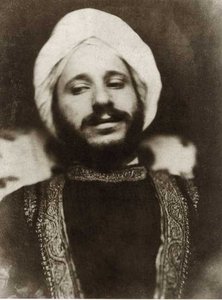
Simeon Solomon
1840 - 1905 , Storbritannien
Kortfakta
- Artistic Movement Or Style: Pre-Raphaelites
- Artists Who Influenced This Artist:
- Rossetti
- Burne-Jones
- Date Of Birth: 1840-10-09
- Date Of Death: 1905-08-14
- Full Name: Simeon Solomon
- Nationality: Brittisk
- Notable Artworks:
- Babylon hath been...
- Socrates and Agathodemos
- Ruth and Naomi
- Shadrach, Meshach...
- In the Temple of Venus
- Place Of Birth: London, UK
Relaterade artiklar

The Enduring Power of Painting: A Historical & Contemporary Exploration of Form and Emotion
Explore the rich history & enduring techniques of oil painting with OriginalUniqueArt. Discover masterpieces, learn about art collecting, and find authentic handmade reproductions crafted by skilled artists.

The Enduring Legacy of Oil on Canvas: Technique, History & Aesthetic Impact
Explore the rich history & techniques of oil painting – from Renaissance masters to Impressionism. Discover pigments, layering methods, and why this timeless medium endures. Expert insights for artists & art enthusiasts.

Barockens dramatik: Att föra prakt och känsla in i samtida interiörer
Upptäck barockens dramatik och lyx! Lär dig hur du integrerar denna klassiska stil i ditt hem med våra experttips och inspirerande exempel. Skapa en palatskänsla idag!

Barockens Mästerverk: Topp 10 konstverk som definierade en epok – OriginalUniqueArt.se
Upptäck barockens 10 största mästerverk! Caravaggio, Rembrandt, Bernini och fler. Lär känna historien bakom ikoniska målningar & skulpturer. Köp reproduktioner av hög kvalitet på OriginalUniqueArt.com – för en lyxig heminredning.

The Dramatic Flourish: Exploring the Baroque Movement's Enduring Legacy in Art History
Explore the dramatic world of Baroque art! Discover iconic artists like Caravaggio & Rubens, defining techniques, and its lasting impact on art history. Expert insights for collectors & enthusiasts at OriginalUniqueArt.