
 Förhandsvisa
 Skicka
 Dela
Dela
 Visa detaljer
 Guide
Guide

 Ladda ner
 Liknande objekt
 Röntgen
 Bildspel
 Frågor och svar
 Statistik
Waterfall and Monkeys

- 187.0 x 113.0 cm


 Visa mer
Giclée / Konsttryck
Giclée- eller canvasprint av museumskvalitet med snabb produktion och flexibla ytbehandlingsalternativ. ( Beställ handmålad reproduktion Byt till digital bild)




P118B Skr10

P118H Skr10

P118W Skr10

P438Z Skr10

P508JH Skr12

P508YH Skr12

P805H Skr10

P805Z Skr10

P919BZ Skr10

P919G Skr10

P919XJ Skr10

P959ZH Skr10

P968JZ Skr12

W106C Skr8

W218G Skr10

W218JH Skr8

W218Y Skr10

W307PJ Skr10

W316G Skr10

W316PJ Skr8

W316Y Skr10

W398PJ Skr8

W4111J Skr10

W500HY Skr15

W500JH Skr15

W692G Skr12

W849H Skr8

W940BG Skr15

W953PJ Skr8




Välj bland våra förinställda storlekar som motsvarar konstverkets ursprungliga proportioner.

Ange den bredd och höjd du behöver för att passa din ram eller vägg. Ett tryck kan endast beskäras, aldrig göras större än originalbilden, vilket innebär att ett format med en annan proportion leder till att en del av bilden går förlorad. Vi skickar en digital mockup för godkännande innan vi påbörjar tryckningen. Bilden som visas på denna sida visar inte den faktiska beskärningen — det är endast mockuppen som gör det.
Leverans över hela världen () på 2 veckor istället för standard 4/5 veckor. (6 november)

Fri expressfrakt över hela världen

Högkvalitativ linnecanvas

Fullständig fraktförsäkring

Garantier för återbetalning av tullavgifter

Garantier för exakt färgåtergivning

100 dagars returrätt (endast vid fel)

100% pengarna tillbaka-garanti

Mängdrabatt erbjuds
 Glasalternativet är endast tillgängligt i storlekar under 110 cm.

Waterfall and Monkeys
Giclée / Konsttryck
Storlek på reproduktion
-


Slutgiltigt pris
Skr 809
A Symphony of Nature and Spirit
In the vast tapestry of nineteenth-century Japanese art, few works capture the whimsical yet profound essence of the natural world as masterfully as Shibata Zeshin’s Waterfall and Monkeys. Created in 1872, during the height of the artist's creative maturity, this monumental scroll painting invites the viewer into a hidden, primordial realm where the boundaries between the animal kingdom and human emotion blur. The scene unfolds with a breathtaking sense of scale, presenting a troop of young monkeys and their beleaguered mother navigating the craggy, moisture-slicked rocks at the base of a powerful, cascading waterfall. Zeshin, a virtuoso who bridged the gap between meticulous lacquer craftsmanship and expressive painting, utilizes this subject to create a deep kinship between the viewer and the subjects, as the primates exhibit behaviors that feel strikingly, almost unnervingly, human.
The technical brilliance of the piece lies in Zeshin’s ability to marry realism with a poetic, atmospheric sensibility. Through a sophisticated application of sumi-e (ink wash) techniques, the artist achieves a remarkable tactile quality. One can almost feel the contrast between the soft, downy washes used to define the delicate fur of the infants and the longer, more fluid, and vigorous strokes that compose the mother’s thick, heavy coat. This attention to texture extends to the landscape itself; the waterfall is not merely a static element but a dynamic force, rendered through varying ink densities that suggest the spray, mist, and relentless movement of descending water. The composition is balanced with an expert hand, using the verticality of the scroll to draw the eye upward, mimicking the spiritual ascent often found in East Asian landscape traditions.
Symbolism and the Art of Observation
Beyond its surface beauty, Waterfall and Monkeys serves as a profound meditation on life, family, and the cycle of nature. The choice of monkeys is far from accidental; Zeshin leverages their natural resemblance to mankind to explore themes of vulnerability and maternal protection. As the young monkeys scramble amidst the treacherous rocks, their expressions—captured with an almost scientific precision—convey a range of emotions from curiosity to trepidation. This realism suggests that Zeshin was not merely an illustrator of myth, but a keen observer of life, translating the spontaneous energy of simian behavior into a permanent, frozen moment of high drama.
The waterfall itself acts as a powerful symbol of purification and the eternal flow of time. In the context of Japanese and broader East Asian iconography, such natural features often represent a cleansing force or a threshold between the mundane and the divine. The interplay of negative space—the "empty" areas of the paper that allow the mist to breathe—creates an atmosphere of mystery and transcendence. For the collector or interior designer, this piece offers more than just visual splendor; it provides a focal point of contemplative depth. Whether placed in a contemporary gallery setting or a traditional study, the painting’s muted palette of grays, blacks, and subtle earth tones allows it to integrate seamlessly into sophisticated environments, offering an enduring sense of tranquility and a window into a world where nature and spirit are one.
Frågor och svar
Vilken teknik har använts för "Waterfall and Monkeys" och vad är dess mått?
Originalet "Waterfall and Monkeys" av Shibata Zeshin är ett verk i Ink med måtten 187 x 113 cm. Teknik och storlek beskriver det ursprungliga objektet.
Vilken stämning skulle "Waterfall and Monkeys" tillföra ett rum?
Den Natural atmosfären i "Waterfall and Monkeys" av Shibata Zeshin passar perfekt för det rekommenderade rummet: ett Hallway.
Hur passar "Waterfall and Monkeys" in i Shibata Zeshins teman och stil?
"Waterfall and Monkeys" tillhör Shibata Zeshins Japanese Ukiyo-e influenced-period, vars dokumenterade teman inkluderar buddhist aspiration, waterfall purification, chinese ink wash, ukiyo-e influence, humanity in animals, kinship themes, monkeys as moral allegory.
Konstnärsbiografi
A Singular Vision: Shibata Zeshin (1807-1891)
Shibata Zeshin stands apart in the annals of Japanese art history—a figure simultaneously lauded as a revolutionary innovator and dismissed as stubbornly traditional. Born in Edo (modern Tokyo) in 1807, he descended from a lineage steeped in craftsmanship; his grandfather was a shrine carpenter, and his father, Ichigoro Shibata, possessed considerable skill as an ukiyo-e painter, having studied under Katsukawa Shunshō—a formative influence that instilled within him the values of meticulous observation and artistic discipline. This early exposure to both woodworking and painting would prove instrumental in shaping Zeshin’s distinctive oeuvre.- Early Apprenticeship & Suzuki Nanrei:
- The Pursuit of Mastery: Studying Under Nanrei
- Zeshin's Artistic Persona: “This Is True” – The Significance of His Name
Innovation Amidst Tradition: Zeshin’s Distinctive Style
Zeshin’s artistic style is characterized by a remarkable blend of meticulous realism and subtle expressive nuance. While adhering to established conventions of Sumi-e painting—particularly the depiction of landscapes and animals—he pushed boundaries through his masterful use of *maki-e*, a technique involving applying metallic pigments onto lacquer surfaces. This innovative approach allowed him to imbue his works with shimmering luminescence and textural depth, elevating them beyond mere representation into embodiments of spiritual contemplation. His paintings frequently explored themes of Buddhist serenity and harmony, reflecting the prevailing intellectual currents of the Meiji era.- Landscapes & Tigers: Capturing Nature’s Essence
- Maki-e Technique: Light & Texture in Japanese Lacquer Art
Legacy & Recognition: Zeshin’s Enduring Influence
Despite criticisms leveled against his perceived conservatism within Japan, Shibata Zeshin achieved considerable acclaim in the West, particularly in England and the United States. His works were exhibited internationally, garnering admiration for their aesthetic beauty and technical virtuosity—a testament to his artistic genius and a reflection of the burgeoning interest in Japanese art during the late nineteenth century. Today, Zeshin’s paintings continue to captivate audiences worldwide, serving as enduring symbols of Japan's artistic tradition and demonstrating the transformative power of blending meticulous observation with innovative technique. His legacy persists as an exemplar of artistic integrity and unwavering devotion to craft—a singular vision that resonates across time and culture.
Shibata Zeshin
1807 - 1891
Kortfakta
- Artistic Movement Or Style: Edo and Meiji periods; Shijo school
- Artists Or Movements Influenced By This Artist: ['Generations of lacquer artists']
- Artists Who Influenced This Artist:
- Katsukawa Shunsho
- Komā Kansai II
- Suzuki Nanrei
- Full Name: Shibata Zeshin
- Nationality: Japanese
- Notable Artworks:
- The Narrow Road to Shu
- Bamboo Sprouts
- Waves and Rocks
- Kannon
- Carp
- Place Of Birth: Edo, Japan
- Date Of Birth: 1807
- Date Of Death: 1891
Relaterade artiklar

Ephemeral Expressions: Exploring the Nuances of Ink on Paper Through History & Contemporary Art
Explore the captivating world of ink wash painting – from its ancient origins to contemporary masters. Discover techniques, symbolism & conservation insights with OriginalUniqueArt.com.
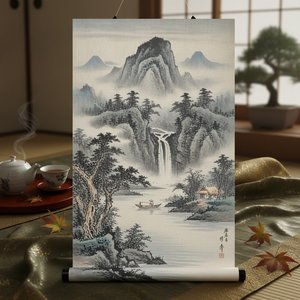
Serenity on Canvas: A Guide to the Timeless Beauty of Japanese Landscape Painting
Discover the serene beauty of Japanese landscape painting. From Hokusai's iconic woodblock prints to meditative sumi-e ink washes, explore a visual journey through the 'floating world' and learn how to bring this timeless Zen aesthetic into your modern home decor.
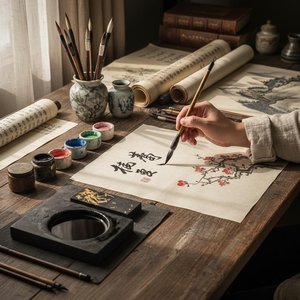
The Alchemy of Ink: Mastering the Timeless Beauty and Art History of Paper and Brush
Embark on a sophisticated exploration of ink wash painting and Sumi-e. Uncover the profound historical lineages, Zen philosophies, and technical mastery behind this timeless medium in our authoritative guide for fine art enthusiasts.

Katsushika Hokusais 25 Mästerverk: Ukiyo-e Konst & Heminredning | OriginalUniqueArt
Utforska Katsushika Hokusais 25 mest ikoniska ukiyo-e konstverk. Lär känna historien bakom 'The Great Wave' och andra mästerverk från japansk konst. Köp högkvalitativa reproduktioner & inred med tidlös skönhet på OriginalUniqueArt.com.

Mastering Ink on Paper: The Timeless Art of Precision, Flow, and Calligraphic Heritage
Explore the profound mastery of ink on paper. From Japanese haiku traditions to Ming Dynasty calligraphy, discover the delicate balance of precision and flow that defines this timeless art form through an expert historical lens.