

 Visa i rummet
 Skicka
 Dela
Dela
 Detaljer
 Studentguide för konstverk

 Ladda ner
 Liknande objekt
 Röntgen
 Bildspel
 Besökstatistik
Ruton Robot


 Läs mer
Konstverket som visas på denna sida skyddas av upphovsrättslagen, vilket innebär att vi inte lagligt kan skapa eller sälja en identisk reproduktion. Detta skydd upprätthålls genom internationella avtal såsom den Bernkonventionen och genom nationella lagar, inklusive de som fastställs av Amerikansk upphovsrättslag – Titel 17. Alla rättigheter förbehållna. Återgivning av konstverk är förbjuden utan skriftligt tillstånd från WahooArt.
Denna metod följer fullt ut upphovsrättsliga regler eftersom den inte innebär kopiering eller duplicering av det skyddade konstverket. Istället är det en kreativ nytolkning – en ny målning som är influerad av originalet men inte identisk med det.
Giclée / Konsttryck
Giclée- eller canvasprint av museumskvalitet med snabb produktion och flexibla ytbehandlingsalternativ. ( Köp handmålat konstverk Byt till digital bildförsäljning)




































Välj bland våra förinställda storlekar som motsvarar konstverkets ursprungliga proportioner.

Ange den bredd och höjd du behöver, för att passa din ram eller din vägg. Ett tryck kan endast beskäras, aldrig göras större än bilden, vilket innebär att ett format med en annan formform leder till att en del av bilden går förlorad. Vi skickar en digital mockup för godkännande innan vi trycker något. Bilden som visas på denna sida visar inte den faktiska beskärningen — det är endast mockuppen som gör det.
Leverans över hela världen () på 2 veckor istället för standard 4/5 veckor. (22 oktober)

Fri expressfrakt över hela världen

Högkvalitativ linnecanvas

Fullständig fraktförsäkring

Garantier för återbetalning av tullavgifter

Garantier för exakt färgåtergivning

100 dagars returrätt vid fabrikationsfel

100% pengarna tillbaka-garanti

Mängdrabatt erbjuds
 Glasalternativet är endast tillgängligt i storlekar under 110 cm.

Ruton Robot
Giclée / Konsttryck
Reproduktionsstorlek
-


Totalpris
Skr 793
Om konstnären
The Dawn of Robotic Art: Ruton Robot’s Pioneering Lamp
Ruton Robot, a name synonymous with the nascent field of robotic art, emerged from Finland in 1960, crafting an instantly recognizable and profoundly influential piece – his iconic lamp. More than just a lighting fixture, the Ruton Robot represents a pivotal moment in automation history, demonstrating early experimentation with self-operating mechanisms and sparking imaginations about the potential of machines as artistic creators. Born in Finland, (though precise birth details remain elusive), Robot’s journey began not with grand ambitions but with a simple desire to explore the possibilities of combining mechanics and aesthetics. The lamp itself is a testament to this exploration: a chrome-plated automaton that slowly rotates its head and arm, mimicking a human gesture – a subtle dance of movement designed to captivate and intrigue. The use of plastic as the primary material was remarkably innovative for the time, offering both affordability and a lightweight construction suitable for intricate mechanical systems.A Finnish Roots in Mechanical Ingenuity
Robot’s early life appears largely undocumented, shrouded in the quiet simplicity of rural Finland. However, anecdotal evidence suggests a deep-seated fascination with mechanics and engineering from a young age. His work wasn't driven by commercial aspirations initially; rather, it stemmed from a genuine curiosity about how things worked and a desire to bring those workings to life. This inherent mechanical aptitude, combined with a burgeoning interest in design, laid the foundation for his unique artistic vision. The Finnish landscape itself – characterized by its vast forests, intricate waterways, and a tradition of craftsmanship – undoubtedly influenced his aesthetic sensibilities, fostering an appreciation for both natural forms and precise construction. The post-war era in Finland was one of rebuilding and innovation, and Robot’s work can be seen as reflecting this spirit of progress and experimentation.Influences and Early Development
While often considered a singular creation, the Ruton Robot wasn't born in isolation. Robot’s work drew inspiration from several sources. The burgeoning field of automation, fueled by advancements in transistor technology and early computer science, provided a technological backdrop for his explorations. Furthermore, he was influenced by the mid-century modern design movement, characterized by its emphasis on functionality, simplicity, and geometric forms – qualities that are clearly evident in the lamp’s sleek lines and polished chrome finish. The work of early industrial designers like Dieter Rams also subtly informed Robot's approach to integrating mechanical components with an aesthetically pleasing form. Crucially, Robot was experimenting with a then-novel technique of using miniature motors and gears to create controlled movement – a process that required considerable skill and patience.The Lamp’s Enduring Legacy
Despite its relatively modest production run (only a handful of lamps were ever created), the Ruton Robot quickly gained recognition as a landmark achievement in robotic art. Its unique blend of mechanical ingenuity, sculptural form, and subtle animation captivated critics and collectors alike. The lamp became an icon of the 1960s, representing the optimistic vision of a future where machines could augment human creativity. It’s often cited as one of the earliest examples of “kinetic sculpture,” predating many later developments in robotic art by decades. Today, the Ruton Robot is housed in the OriginalUniqueArt collection and remains a celebrated example of early automation and a testament to Robot's pioneering spirit. Its influence can be seen in subsequent generations of robotic artists who have built upon his foundational work.A Continuing Mystery
Ruton Robot’s life after the creation of the lamp remains somewhat enigmatic. He largely retreated from public attention, dedicating himself to further mechanical experimentation and design projects, though details about these endeavors are scarce. He continued to live in Finland until his death, a quiet figure who left behind a remarkable legacy. The Ruton Robot stands as a powerful reminder that art can be found not just in traditional mediums but also in the intricate workings of machines – a testament to the enduring power of human curiosity and innovation.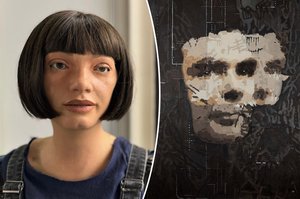
Ruton Robot
1960 - , Finland
Snabbfakta
- Full Name: Ruton Robot
- Nationality: Finnish
- Date Of Birth: 1960
- Place Of Birth: Finland
- Notable Artworks: ['Ruton Robot']
- Artistic Movement Or Style: Robotic art, Automaton
Relaterade artiklar

Angelo Chiacchio: A Mid-Century American Illustration Master & the Rise of Commercial Art
Explore the captivating world of Angelo Chiacchio, a master of mid-century American illustration. Discover his evolution, signature style, and lasting impact on commercial art & design. Learn about his legacy at the Museum of American Illustration.
Topp 10 berömda målningar dominerade av 'kromgul': Konsthistoria för ditt hem
Utforska 10 ikoniska målningar dominerade av 'kromgul' – från Van Goghs solrosor till Monets ljusspel. Lär känna konsthistorien och hitta inspiration för ditt hem med OriginalUniqueArt.coms exklusiva reproduktioner. Upptäck mästerverken online!

The Retro Remix: Decoding the Power of Historical Illustration in Modern Visual Identity
Discover how historical illustration fuels today's boldest design trends. From Victorian drama to mid-century cool, explore the 'Retro Remix' shaping modern visual impact. Elevate your space with high-impact, hand-painted art from OriginalUniqueArt.com—where history meets pop culture.
Mästverk i Svart: Topp 10 målningar dominerade av lampkolstoner – Konst & Inredning
Utforska 10 ikoniska målningar dominerade av lampkolstoner – från Rembrandts djupa skuggor till Manets dramatik. Lär känna konsthistorien och hitta inspiration för ditt hem. Köp reproduktioner av högsta kvalitet på OriginalUniqueArt.com.
Topp 10 berömda målningar i kromgröna toner – Konst & Inredning
Utforska de 10 mest berömda målningarna dominerade av kromgröna toner! Upptäck Monet, Van Gogh och andra mästares verk. Konsttryck & inredningsinspiration på OriginalUniqueArt.com – museumskvalitet för ditt hem.