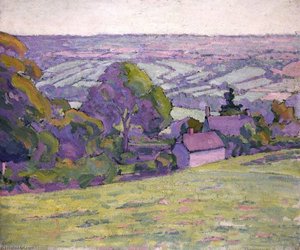
Förhandsvisa
 Skicka
 Dela
Dela
 Visa detaljer
 Guide
Guide

 Ladda ner
 Liknande objekt
 Röntgen
 Bildspel
 Q&A
Q&A Statistik
Under the Hammer

- 637.0 x 637.0 cm


 Visa mer
Giclée / Konsttryck
Giclée- eller canvasprint av museumskvalitet med snabb produktion och flexibla ytbehandlingsalternativ. ( Beställ handmålad reproduktion Byt till digital bild)




P118B Skr10

P118H Skr10

P118W Skr10

P438Z Skr10

P508JH Skr12

P508YH Skr12

P805H Skr10

P805Z Skr10

P919BZ Skr10

P919G Skr10

P919XJ Skr10

P959ZH Skr10

P968JZ Skr12

W106C Skr8

W218G Skr10

W218JH Skr8

W218Y Skr10

W307PJ Skr10

W316G Skr10

W316PJ Skr8

W316Y Skr10

W398PJ Skr8

W4111J Skr10

W500HY Skr15

W500JH Skr15

W692G Skr12

W849H Skr8

W940BG Skr15

W953PJ Skr8




Välj bland våra förinställda storlekar som motsvarar konstverkets ursprungliga proportioner.

Ange den bredd och höjd du behöver för att passa din ram eller vägg. Ett tryck kan endast beskäras, aldrig göras större än originalbilden, vilket innebär att ett format med en annan proportion leder till att en del av bilden går förlorad. Vi skickar en digital mockup för godkännande innan vi påbörjar tryckningen. Bilden som visas på denna sida visar inte den faktiska beskärningen — det är endast mockuppen som gör det.
Leverans över hela världen () på 2 veckor istället för standard 4/5 veckor. (1 november)

Fri expressfrakt över hela världen

Högkvalitativ linnecanvas

Fullständig fraktförsäkring

Garantier för återbetalning av tullavgifter

Garantier för exakt färgåtergivning

100 dagars returrätt (endast vid fel)

100% pengarna tillbaka-garanti

Mängdrabatt erbjuds
 Glasalternativet är endast tillgängligt i storlekar under 110 cm.

Under the Hammer
Giclée / Konsttryck
Storlek på reproduktion
-


Slutgiltigt pris
Skr 804
Robert Polhill Bevan’s ‘Under the Hammer’: A Window into Early Modern British Art
Under the Hammer, painted in 1914 by Robert Polhill Bevan, is more than just a depiction of a crowded room; it's a meticulously observed snapshot of a pivotal moment in British art history. Measuring an impressive 637 x 637 cm, this black and white composition captures a scene brimming with quiet intensity – a gathering seemingly centered around a horse, likely within the context of an auction or appraisal. Bevan’s work stands as a crucial bridge between the Impressionistic tendencies prevalent at the turn of the century and the burgeoning radicalism that would define British Modernism.
- Subject Matter: The central focus is undeniably the horse, positioned with deliberate prominence within the room's architecture. However, it’s the surrounding figures – a diverse group of men, many in formal attire suggesting an upper-class setting – that truly imbue the painting with its narrative weight.
- Style & Technique: Bevan employs a restrained yet remarkably detailed technique, characteristic of his time. The tonal range is carefully controlled, utilizing subtle gradations of gray to create depth and volume. His brushwork is precise, particularly evident in the rendering of clothing textures and the horse’s musculature, reflecting a commitment to observational accuracy rather than purely expressive color.
A Quaker Banker's Artistic Rebellion
Robert Polhill Bevan’s biography itself is fascinating. Born into a banking family – his parents were Richard Alexander Bevan and Laura Maria Polhill – he initially seemed destined for a life of finance, influenced by his Quaker upbringing. Yet, defying expectations, Bevan embraced an artistic path, fueled by a restless intellectual curiosity and a desire to push the boundaries of representation. His formative years in Paris at the Académie Julian proved transformative, exposing him to the innovative ideas circulating amongst artists like P.
This influence is palpable in ‘Under the Hammer’. The composition’s slightly awkward perspective, the deliberate lack of idealized beauty, and the focus on capturing a specific moment in time – rather than presenting an allegorical or romanticized scene – are hallmarks of Bevan's engagement with European modernism. He wasn't simply copying trends; he was actively participating in a dialogue about how art could represent the world around him.
Symbolic Layers and Emotional Resonance
While seemingly straightforward, ‘Under the Hammer’ is rich in symbolic potential. The horse itself can be interpreted as representing wealth, status, and perhaps even judgment – fitting for an auction setting. The figures surrounding it are equally significant; their expressions, postures, and interactions suggest a complex interplay of observation, speculation, and negotiation. The inclusion of details like books and cups adds layers of domesticity and intellectual engagement to the scene.
Bevan’s ability to evoke a sense of quiet contemplation is remarkable. Despite the bustling activity implied by the gathering, there's an underlying stillness that draws the viewer in. This emotional resonance, combined with the artist’s masterful technical skill, elevates ‘Under the Hammer’ beyond a mere depiction of a scene; it becomes a poignant meditation on observation, value, and the human condition.
A Legacy for Collectors & Interior Design
This hand-painted reproduction captures not only the visual elements of Bevan's original work but also its historical significance and artistic merit. Its size (637 x 637 cm) makes it a commanding presence, suitable for grand spaces or as a focal point within a sophisticated interior design scheme. The monochrome palette lends itself beautifully to a variety of styles – from classic British interiors to contemporary minimalist settings. ‘Under the Hammer’ is an investment in art history and a testament to Bevan's pioneering role in shaping modern British art.
Frågor och svar
Var i Robert Polhill Bevans karriär placeras "Under the Hammer", med tanke på dess datum?
Med tanke på sitt datum från 1914, tillhör "Under the Hammer" Robert Polhill Bevans Early Modernism.
Vad föreställer "Under the Hammer" av Robert Polhill Bevan?
Motiven i "Under the Hammer" är auction scene, horse gathering, british art, early 20th century, robert bevan, black and white, social portrait.
Vilken användning och vilken yta rekommenderas för "Under the Hammer" av Robert Polhill Bevan?
Rekommendationerna för "Under the Hammer" av Robert Polhill Bevan är användningsområde (Reflective) och utrymme (Reception).
Konstnärsbiografi
Robert Polhill Bevan (1865–1925): British Painter & Camden Town Group Founder
Robert Polhill Bevan, born in Hove in 1865, occupies a pivotal yet often understated position within the narrative of early 20th-century British art. Emerging from a Quaker background steeped in banking connections – his parents were Richard Alexander Bevan and Laura Maria Polhill – he defied conventional expectations to become a daring innovator, a key figure in the transition from Impressionism towards more radical explorations of color and form. His journey was one of constant experimentation, absorbing influences from across Europe while forging a distinctly personal artistic vision that would profoundly impact the development of modern art in Britain. Bevan’s early education at Westminster School of Art under Fred Brown provided a solid foundation, but it was his subsequent studies at the Académie Julian in Paris that truly ignited his creative spark. There, he encountered a constellation of rising stars – Paul Sérusier, Pierre Bonnard, Édouard Vuillard, and Maurice Denis – artists who were challenging academic conventions and embracing new approaches to painting. These encounters proved formative, exposing Bevan to the principles of synthetism and laying the groundwork for his future explorations.Brittany, Fauvism, and The Pursuit of Pure Color
The impact of Brittany on Bevan’s artistic development cannot be overstated. Two significant journeys in 1890 and 1891 immersed him in the atmosphere of Pont-Aven, a small coastal town that had become a magnet for artists seeking an alternative to Parisian salon culture. The bold colors and simplified forms championed by artists like Gauguin resonated deeply with Bevan, influencing his early drawings and prints. He was particularly drawn to the luminous landscapes of Breton Brittany – scenes rendered in vibrant hues that prioritized expressive color over accurate representation. This fascination fueled his artistic impulse and cemented his commitment to capturing the emotional essence of nature—a characteristic that would define much of his oeuvre. Around 1904 Bevan embarked on a path of experimentation with pure color, anticipating the emergence of Fauvism on the continent. His painting “Courtyard” stands as a remarkable demonstration of this proto-Fauvist approach, eschewing naturalistic detail in favor of intense chromatic intensity—a boldness that distinguished him from many of his British contemporaries and signaled a decisive break from Impressionist traditions. This stylistic shift was underpinned by an engagement with the ideas of Cézanne and Van Gogh, whose explorations of form and color served as crucial precedents for Bevan’s own artistic endeavors.The Camden Town Group & Collaborative Artistic Spirit
Bevan wasn't merely an individual artist; he actively cultivated connections with fellow creatives who shared his vision for modern British art. He was a founding member of the Fitzroy Street Group, alongside artists like Walter Sickert and Frank Auerbach—a collective dedicated to depicting urban life in London with uncompromising honesty and stylistic innovation. This group’s commitment to capturing the gritty realities of industrial Britain mirrored Bevan's own fascination with the changing social landscape of his time. Furthermore, he established the Camden Town Group in 1911, uniting a cohort of artists who championed bold color palettes and expressive brushwork—a movement that would solidify Bevan’s reputation as a pioneer of British modernism. Collaborations with fellow painters fostered intellectual exchange and propelled artistic experimentation, shaping the trajectory of British art during the formative years of the twentieth century. The influence of Maurice Denis – whose decorative aesthetic resonated deeply with Bevan – is evident in his stylistic choices and underscores the importance of artistic dialogue within the broader context of modernist culture.Landscapes & Artistic Expression: Bevan’s Signature Style
Bevan's artistic output was characterized by a profound engagement with landscape painting—a genre he pursued consistently throughout his career, reflecting both personal passion and intellectual curiosity. His depictions of Sussex landscapes – particularly Hawkridge Farmhouse – are imbued with an understated elegance, capturing the subtle nuances of light and atmosphere through meticulous observation and expressive brushwork. Similarly, his explorations of Breton Brittany—rendered in luminous colors that prioritize emotional resonance over photographic accuracy—demonstrate Bevan’s ability to convey the sublime beauty of the natural world. He skillfully blended Impressionist techniques with elements of Divisionism/Pointillism – a technique pioneered by Georges Seurat – resulting in canvases marked by shimmering surfaces and vibrant color harmonies. This stylistic fusion exemplifies Bevan's commitment to pushing boundaries and experimenting with innovative approaches to artistic representation—a hallmark of his distinctive oeuvre.Legacy & Recognition
Robert Polhill Bevan’s contribution to British art history is undeniable. He remains a vital figure for understanding the complex evolution of British painting in the early twentieth century, embodying the spirit of experimentation and innovation that defined the era. His paintings are held in prestigious collections across Europe and North America—including Brighton Art Gallery, Tate Britain, V&A London, and The Fitzwilliam Museum Cambridge—testament to their enduring artistic merit and historical significance. Bevan’s influence extended beyond his own work, inspiring subsequent generations of artists who embraced bold color palettes and expressive brushwork—a legacy that continues to resonate within the contemporary art world. His retrospective exhibition at Colnaghi's in 1961 served as a crucial moment of recognition, securing his place among the foremost British painters of his time and ensuring that Bevan’s artistic vision would endure for decades to come.
Robert Polhill Bevan
1865 - 1925 , Storbritannien
Kortfakta
- Artistic Movement Or Style: Fauvismus, Divisionism
- Artists Or Movements Influenced By This Artist:
- Camden Town Group
- London Group
- Artists Who Influenced This Artist:
- Paul Gauguin
- Velázquez
- Goya
- Renoir
- Date Of Birth: 1865
- Date Of Death: 1925
- Full Name: Robert Polhill Bevan
- Nationality: Britannien
- Notable Artworks:
- The Farmhouse
- Ploughing on the Downs
- Queen’s Grove
- The Cab Horse
- Place Of Birth: Hove, United Kingdom
Relaterade artiklar
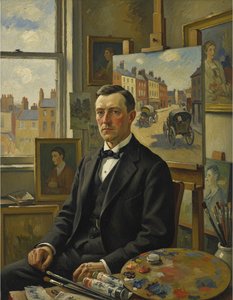
Robert Bevan: Pioneering British Post-Impressionism & the Camden Town Group's Intimate Vision
Explore the life & work of Robert Bevan, a pioneer of British Post-Impressionism and founding member of the Camden Town Group. Discover his vibrant landscapes and lasting impact on early 20th-century art.

Monochrome Visions: Exploring the Aesthetic & Historical Significance of Black & White Photography
Explore the rich history & artistic power of black and white photography. From early techniques to iconic masters like Ansel Adams, discover why monochrome continues to captivate art lovers today. Expert insights for collectors.

Mästverk i svart: Topp 10 målningar som fascinerar – OriginalUniqueArt.se
Utforska 10 ikoniska målningar dominerade av svart – från Rembrandts djupa skuggor till Munchs ångest. Lär känna historien bakom mästerverken och hitta inspiration för din inredning på OriginalUniqueArt.se. Upptäck hela kollektionen online!

Vita mästerverk: Topp 10 målningar som hyllar ljuset – OriginalUniqueArt.com
Utforska 10 ikoniska vita målningar av Monet, Whistler & fler! Lär känna historien bakom dessa ljusa konstverk och upptäck hur vitt används för att skapa stämning. Köp museumkvalitativa tryck på OriginalUniqueArt.com.

Giclée Prints: Archival Quality & Aesthetic Nuances for the Discerning Collector
Explore the world of giclée prints with OriginalUniqueArt. Learn about archival quality, aesthetic nuances & investment potential. Expert guidance for discerning art collectors seeking museum-quality reproductions and lasting value.