 Oljemålning
 Allt om Fantasy







































 För konstverk eller reproduktioner som är större än 105 cm (cirka 41 tum) på någon sida, levereras ramen som ett isärplockat kit. Denna metod säkerställer en trygg leverans och förhindrar skador under transport.


The Composition of Emergence
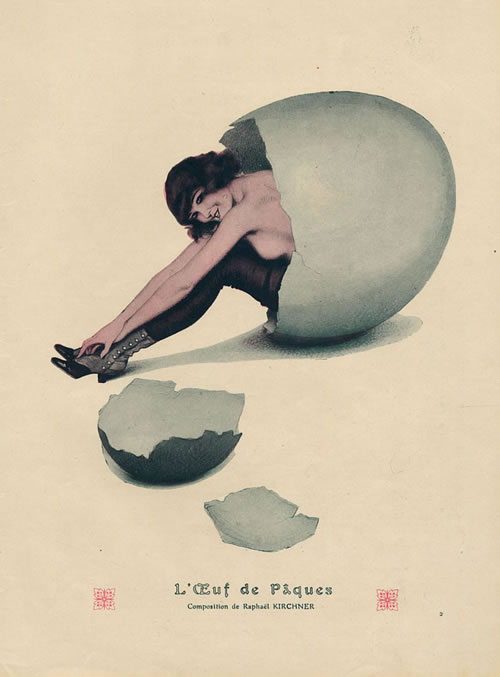
The artwork presents a central figure of a nude woman positioned within the hollow of a large, fractured eggshell. The shell is broken into several irregular, geometric fragments that surround the organic form of the body. The woman's skin is rendered in pale cream and beige tones, contrasting with the darker, shadowed recesses of the shell's interior. Her form is defined by soft, continuous lines that trace the contours of her limbs and torso. The lighting is diffused, creating subtle gradients of shadow across the smooth surface of her skin and the textured, matte surfaces of the eggshell. The background remains neutral, focusing all visual weight on the intersection of the broken calcium structure and the human figure. This arrangement creates a sense of depth through the layering of the shell fragments in the foreground and the figure in the midground.
Technical and Stylistic Attributes
The piece utilizes a muted color palette dominated by shades of ivory, cream, and light tan. The medium appears to be ink on paper, evidenced by the tonal variations and the precision of the line work. The style aligns with the transition between Symbolism and early Surrealism, characterized by a focus on dreamlike subject matter and non-literal representation. The following elements define the visual structure:
- The use of organic shapes to represent the human body and the egg.
- The use of geometric, sharp-edged shapes to represent the cracked shell.
- A flattened perspective that emphasizes the symbolic arrangement over spatial realism.
- A soft, non-directional light source that minimizes harsh highlights.
Historical Context and Symbolism
Created in 1914, this work emerged during a period of significant transition in European art. The subject matter utilizes the egg as a symbol of birth, renewal, or the unveiling of internal potential. The juxtaposition of the rigid, broken shell and the soft, emerging figure suggests a moment of transition from a confined state to an open one. This imagery reflects the broader artistic shifts occurring in the early 20th century, where artists moved away from strict realism toward more psychological and symbolic depictions of the human condition. The work's aesthetic, characterized by a blend of technical precision and ethereal subject matter, is consistent with the Art Nouveau influences prevalent in the era.
Frågor och svar
Är Fantasy handmålat eller tryckt?
Handmålad: en utbildad konstnär kopierar Fantasy i olja på linnecanvas.
Vilken storlek bör jag välja för Fantasy?
Storlekarna sträcker sig från 36.8 x 27.2 cm (Skr1978) till 245.0 x 181.0 cm (Skr16220); tabellen på denna sida listar de huvudsakliga storlekarna och deras priser.
Hur lång leveranstid är det?
Leveransen tar 4 till 5 veckor med kostnadsfri expressfrakt över hela världen; ett alternativ för snabbare produktion erbjuds på denna sida. Du kan returnera verket inom 100 dagar för full återbetalning, utan några villkor.
Är originalet till Fantasy en teckning eller en målning?
En teckning: Raphael Kirchner skapade den i Ink On Paper.
 Förhandsvisa

 Skicka
 Dela
 Visa detaljer
 Faktablad


 Ladda ner
 Liknande objekt
 Röntgen
 Bildspel
 Frågor och svar

 Statistik


