
 Förhandsvisa
 Skicka
 Dela
Dela
 Visa detaljer
 Guide
Guide

 Ladda ner
 Liknande objekt
 Röntgen
 Bildspel
 Frågor och svar
 Statistik
St Anne Altarpiece (left wing)

- 224.0 x 219.0 cm


 Visa mer
Giclée / Konsttryck
Giclée- eller canvasprint av museumskvalitet med snabb produktion och flexibla ytbehandlingsalternativ. ( Beställ handmålad reproduktion Byt till digital bild)




P118B Skr10

P118H Skr10

P118W Skr10

P438Z Skr10

P508JH Skr12

P508YH Skr12

P805H Skr10

P805Z Skr10

P919BZ Skr10

P919G Skr10

P919XJ Skr10

P959ZH Skr10

P968JZ Skr12

W106C Skr8

W218G Skr10

W218JH Skr8

W218Y Skr10

W307PJ Skr10

W316G Skr10

W316PJ Skr8

W316Y Skr10

W398PJ Skr8

W4111J Skr10

W500HY Skr15

W500JH Skr15

W692G Skr12

W849H Skr8

W940BG Skr15

W953PJ Skr8




Välj bland våra förinställda storlekar som motsvarar konstverkets ursprungliga proportioner.

Ange den bredd och höjd du behöver för att passa din ram eller vägg. Ett tryck kan endast beskäras, aldrig göras större än originalbilden, vilket innebär att ett format med en annan proportion leder till att en del av bilden går förlorad. Vi skickar en digital mockup för godkännande innan vi påbörjar tryckningen. Bilden som visas på denna sida visar inte den faktiska beskärningen — det är endast mockuppen som gör det.
Leverans över hela världen () på 2 veckor istället för standard 4/5 veckor. (4 november)

Fri expressfrakt över hela världen

Högkvalitativ linnecanvas

Fullständig fraktförsäkring

Garantier för återbetalning av tullavgifter

Garantier för exakt färgåtergivning

100 dagars returrätt (endast vid fel)

100% pengarna tillbaka-garanti

Mängdrabatt erbjuds
 Glasalternativet är endast tillgängligt i storlekar under 110 cm.

St Anne Altarpiece (left wing)
Giclée / Konsttryck
Storlek på reproduktion
-


Slutgiltigt pris
Skr 810
A Vision of Devotion: The Sacred Grace of St Anne
In the quiet, contemplative corner of the St Anne Altarpiece, specifically its left wing, we encounter a moment of profound spiritual intimacy that has captivated viewers for over five centuries. Painted in 1507 by the Flemish master Quentin Massys, this work serves as a breathtaking window into the soul of the Northern Renaissance. The scene is anchored by the figure of St Anne, depicted with a poignant realism that eschews the idealized perfection of the Italian masters in favor of a deeply human vulnerability. As she kneels in humble supplication, her hands raised toward the heavens, the viewer is not merely an observer of a religious event but a participant in her prayerful silence. The painting captures the very essence of piety, inviting anyone who gazes upon it to pause and reflect on the weight of devotion.
The composition is masterfully balanced by celestial messengers that bridge the gap between the earthly and the divine. To the left, an angel holds a delicate scroll inscribed with the words “Ave Maria,” a powerful proclamation of Mary's divine motherhood that resonates with the theological heart of the era. Opposite this, another angel presents a pristine lily, a timeless symbol of purity and virginity. These figures are rendered with a classical grace, their wings and gestures adding a sense of movement to the otherwise still and solemn atmosphere. For the collector or designer, this interplay of sacred figures creates a focal point that is both intellectually stimulating and visually harmonious, making it an ideal centerpiece for spaces dedicated to tranquility and thought.
The Mastery of Light and Texture
What truly distinguishes Massys as the pioneer of the Antwerp School is his unparalleled ability to manipulate light and texture to create a sense of tangible reality. Through a sophisticated use of chiaroscuro, he sculpts the figures out of the shadows, lending them a three-dimensional presence that feels almost sculptural. The way light catches the heavy folds of St Anne's robes or illuminates the subtle wrinkles of her skin demonstrates a technical virtuosity that was revolutionary for its time. This meticulous attention to detail extends to the background, where a serene landscape of rolling hills and distant architecture provides a sense of infinite depth.
For those seeking to incorporate fine art into a sophisticated interior, the tactile quality of this piece offers immense inspiration. The artist’s ability to render the sheen of fabric and the soft textures of nature creates a sensory experience that transcends the flat surface of the panel. A high-quality reproduction of this masterpiece allows the subtle nuances of Massys' brushwork—the way he captures the weathered texture of age alongside the ethereal glow of angelic light—to breathe life into a room. It is a work that does not merely decorate a wall; it transforms an environment, infusing it with the historical grandeur and the quiet, enduring beauty of the Northern Renaissance.
Frågor och svar
Vilket material har "St Anne Altarpiece (left wing)" använts med, och i vilken stil är det utfört?
I "St Anne Altarpiece (left wing)" möter Oil On Panel-tekniken Northern Renaissance-rörelsen.
Är bilden av "St Anne Altarpiece (left wing)" av Quentin Matsys fri att återge?
Upphovsrättslig status för "St Anne Altarpiece (left wing)" av Quentin Matsys: verket är allmän egendom – upphovsrätten har löpt ut. Detta avgör om reproduktioner av bilden får framställas fritt.
När skapades "St Anne Altarpiece (left wing)" av Quentin Matsys och vilken stil tillhör det?
"St Anne Altarpiece (left wing)" skapades år 1507 som ett verk inom Northern Renaissance-rörelsen. Datum och stil förankrar konstverket i konsthistorien.
Konstnärsbiografi
Antwerpenskolans arkitekt
I det livfulla och framväxande landskapet i 1500-talets lågländer finns få namn som ekar med så stor grundläggande betydelse som Quentin Massys. Ofta hyllad som pionjären bakom Antwerpenskolan, var Massys en målare som överbryggade klyftan mellan den noggranna, andliga hängivenheten i den tidiga nederländska traditionen och den framväxande humanismen under den nordeuropeiska renässansen. Född omkring 1466 i Leuven, Belgien, förblir hans tidiga liv en väv av legender och historiska fragment. Inom konsthistorien viskas det vida att han, innan han någonsin greppade en fin pensel, utbildades till smed – en detalj som ger en djup, taktil tyngd åt hans senare mästerskap i textur och material. Denna bakgrund inom metallarbete instillade sannolikt en unik vördnad för den fysiska världen i honom, vilket gjorde det möjligt för honom att återge silkets lyster, myntets kalla glimt och mänsklighetens väderbitna hud med en oöverträffad precision.
När han omkring år 1490 övergick från den akademiska atmosfären i Leuven till det myllrande kommersiella navet i Antwerpen, började Massys väva sin egen särpräglade tråd i den flamländska konstens väv. Hans tidiga utbildning, möjligen under ledning av Dirk Bouts, knöt honom till en släktlinje av mästare som Hans Memling och Rogier van der Weyden. Från dessa föregångare ärvde han en hängivenhet till verisimilitude – strävan efter sanning i representationen. Ändå var Massys långt ifrån en ren imitator. Samtidigt som han bibehöll den utsökta detaljrikedom som var hans förfäder karakteristisk, genomsyrade han sitt arbete med en ny, spirande vitalitet och en vilja att utforska det mänskliga tillståndets komplexitet genom både religiös högtidlighet och bitande social kommentar.
Ett mästerskap i hängivenhet och satir
Massys briljans ligger i hans anmärkningsvärda förmåga att navigera mellan två till synes skilda världar: det heliga och det profana. Å ena sidan fungerar hans religiösa kompositioner som djupa meditationer över tron. I verk som Kristus på korset med donatorer fångar han korsfästelsens råa, emotionella tyngd, där han använder en högrenässans-sensibilitet för att presentera en scen som är både djupt rörande och tekniskt felfri. Hans förmåga att avbilda det gudomliga genom mänskligt lidandes lins gjorde att hans religiösa motiv kunde resonera med en visceral intimitet, vilket gjorde det andliga påtagligt för betraktaren.
Omvänt var Massys en mästare av den satiriska genren, och använde sin pensel för att hålla en spegel upp mot sin tids skiftande sociala moral. Han besatt ett skarpt öga för mänsklighetens svagheter och skapade ofta scener som blandade realism med en subtil, hånfull kvickhet. Denna dualitet är kanske tydligast i hans tillvägagångssätt vid porträttmåleri och genremåleri, där han kunde växla från den fridfulla skönheten i en Jungfru och barn till de mer komplexa, moraliskt lagerrika skildringarna av det samtida livet. Hans arbete utforskade ofta teman som girighet, fåfänga och spänningen mellan materiellt välstånd och andlig renhet, vilket gjorde honom till en föregångsbild för de stora genremålare som skulle följa under de kommande århundradena.
Arv och konstnärlig betydelse
Quentin Massys historiska betydelse kan inte överskattas; han var katalysatorn för en konstnärlig revolution i Antwerpen. Genom att introducera nya motiv och tekniker, samtidigt som han förblev förankrad i sitt hemland rika traditioner, lade han ritningen för en skola av måleri som skulle dominera Flandern under hela 1500-talet. Hans inflytande kan spåras genom den nordeuropeiska konstens utveckling, då han banade väg för en mer expressiv och observerande stil som omfamnade den moderniserande världens komplexitet.
Idag minns vi Massys inte bara som en hantverkare, utan som en historieberättare som fångade en epoks själ. Hans arv bevaras i hans bildspråks bestående kraft:
- Teknisk innovation: Den sömlösa integrationen av metallarbetsinspirerad precision med den flödande elegansen i renässansens oljemåleri.
- Antwerpensskolan: Etablerandet av en bestående konstnärlig rörelse som prioriterade både realism och moraliskt berättande.
- Humanistiskt perspektiv: En unik förmåga att sammanväva den djupa helighet hos religiösa ikoner med den skarpa, observerande kvickheten i social satir.

Quentin Matsys
1466 - 1530 , Belgien
Kortfakta
- Artistic Movement Or Style: Antwerp School
- Artists Or Movements Influenced By This Artist: ['Hans Memling']
- Artists Who Influenced This Artist: ['Dirk Bouts']
- Date Of Birth: ca 1466
- Date Of Death: 1530
- Full Name: Quentin Massys
- Nationality: Flamländsk
- Notable Artworks (List Of Titles):
- St Anne Altarpiece
- The Moneylender
- Place Of Birth (City And Country): Leuven, Belgien
Relaterade artiklar
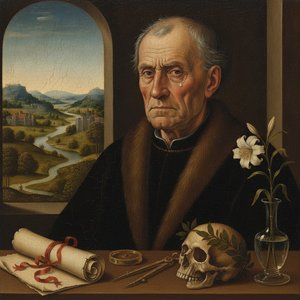
The Northern Renaissance: A Masterclass in Hyper-Realism, Oil Innovation, and Symbolic Depth
Explore the profound mastery of Northern Renaissance art. Discover the technical brilliance of Flemish oil painting, the intricate symbolism of Bosch and Bruegel, and the revolutionary realism that redefined European art history through an expert historical lens.

The Enduring Power of Painting: A Historical & Contemporary Exploration of Form and Emotion
Explore the rich history & enduring techniques of oil painting with OriginalUniqueArt. Discover masterpieces, learn about art collecting, and find authentic handmade reproductions crafted by skilled artists.

The Enduring Legacy of Oil on Canvas: Technique, History & Aesthetic Impact
Explore the rich history & techniques of oil painting – from Renaissance masters to Impressionism. Discover pigments, layering methods, and why this timeless medium endures. Expert insights for artists & art enthusiasts.

Olja på dukens bestående arv: Teknik, historia och samtida praktik
Utforska oljemåleriets rika historia och tekniker – från renässansens mästare till dagens konstnärer. Lär dig om material, metoder och konservering för att bevara konsten.

Olja på duk: En tidlös teknik – Historik, process och konstnärliga möjligheter
Utforska oljemålningskonsten! Lär dig om flamländsk teknik, materialval och historisk utveckling. Expertguider för både nybörjare och erfarna konstnärer – bevara dina målningar med bästa praxis.