

 Skicka
 Dela
Dela
 Detaljer
 Studentguide för konstverk

 Ladda ner
 Liknande objekt
 Bildspel
 Besökstatistik
Rape of Proserpine
 Fresco
- Renaissance
 1509
1509- Renaissance
 79.0 x 81.0 cm
 Läs mer
Giclée / Konsttryck
Giclée- eller canvasprint av museumskvalitet med snabb produktion och flexibla ytbehandlingsalternativ. ( Köp handmålat konstverk Byt till digital bildförsäljning)




































Välj bland våra förinställda storlekar som motsvarar konstverkets ursprungliga proportioner.

Ange den bredd och höjd du behöver, för att passa din ram eller din vägg. Ett tryck kan endast beskäras, aldrig göras större än bilden, vilket innebär att ett format med en annan formform leder till att en del av bilden går förlorad. Vi skickar en digital mockup för godkännande innan vi trycker något. Bilden som visas på denna sida visar inte den faktiska beskärningen — det är endast mockuppen som gör det.
Leverans över hela världen () på 2 veckor istället för standard 4/5 veckor. (23 oktober)

Fri expressfrakt över hela världen

Högkvalitativ linnecanvas

Fullständig fraktförsäkring

Garantier för återbetalning av tullavgifter

Garantier för exakt färgåtergivning

100 dagars returrätt vid fabrikationsfel

100% pengarna tillbaka-garanti

Mängdrabatt erbjuds
 Glasalternativet är endast tillgängligt i storlekar under 110 cm.

Rape of Proserpine
Giclée / Konsttryck
Reproduktionsstorlek
-


Totalpris
Skr 793
A Celestial Drama in Fresco
In the delicate, sun-drenched fragments of Pinturicchio’s Rape of Proserpine, we encounter a moment of profound mythological upheaval captured with the exquisite grace of the Italian Renaissance. This fresco, once part of a magnificent ceiling within the Palazzo del Magnifico in Siena, serves as a breathtaking window into a world where the divine and the mortal collide. The scene depicts the harrowing abduction of Proserpine by Pluto, a narrative that vibrates with movement and tension. As the goddess is swept away by a group of men on horseback, the viewer is immediately struck by the dynamic composition; there is a palpable sense of urgency in the way the figures surge across the frame, their forms intertwined in a chaotic yet choreographed dance of power and distress.
The artistry of Pinturicchio lies in his ability to balance the raw emotion of the subject matter with a refined, decorative elegance. While the theme is one of violence and loss, the execution remains remarkably poised. The artist utilizes a vibrant palette that breathes life into the ancient story, using rich pigments to highlight the muscularity of the horses and the flowing drapery of the figures. Small, unexpected details—such as the presence of birds watching from the periphery—add a layer of naturalistic charm to the epic drama, grounding the mythological event in a world that feels both otherworldly and intimately real.
The Legacy of the Golden House
To understand the visual language of this masterpiece, one must look back to the shadows of Imperial Rome. Pinturicchio was an artist deeply enamored with antiquity, and in this work, he draws direct inspiration from the Golden House of Nero. The very structure of the composition, designed to mimic a vaulted ceiling, evokes the grandeur of Roman imperial splendor. By integrating motifs derived from ancient sarcophagi and classical architecture, Pinturicchio bridged the gap between the rediscovered glory of the past and the burgeoning humanism of his own era.
This piece was not merely an isolated creation but part of a larger, cohesive decorative program for Pandolfo Petrucci, the ruler of Siena. The room in which this fresco resided was a triumph of Renaissance luxury, featuring intricate stuccowork and majolica tile floors that complemented the narrative intensity of the walls. For the modern collector or interior designer, owning a reproduction of such a work means bringing more than just an image into a space; it means inviting a piece of historical continuity and architectural prestige into the home.
An Invitation to Timeless Elegance
For those seeking to curate an environment of intellectual depth and aesthetic splendor, the Rape of Proserpine offers unparalleled inspiration. The painting’s ability to command attention through its intricate details and emotional resonance makes it a centerpiece capable of transforming any room. Whether placed in a formal study or a grand living area, the work serves as a conversation starter, evoking the sophisticated tastes of the Italian Renaissance masters.
A high-quality reproduction of this fresco allows the delicate textures of the original stuccowork and the luminous quality of the pigments to be appreciated in a contemporary setting. It is an opportunity to surround oneself with the storytelling power of the 16th century, capturing the essence of Pinturicchio’s unique ability to blend Gothic delicacy with Renaissance strength. In every brushstroke of a faithful reproduction, one finds the enduring spirit of an age that celebrated beauty, myth, and the eternal drama of the human condition.
Frågor och svar
Vilken användning och vilken yta rekommenderas för "Rape of Proserpine" av Pinturicchio?
"Rape of Proserpine" av Pinturicchio rekommenderas för Focal, helst i ett Restaurant. Användningsområde och rymd hjälper dig att avgöra var en reproduktion passar bäst.
Vilket medium och vilka mått har "Rape of Proserpine" av Pinturicchio?
Originalet "Rape of Proserpine" av Pinturicchio är ett verk i Fresco med måtten 79 x 81 cm. Teknik och storlek beskriver det ursprungliga objektet.
Hur harmoniska är färgerna i "Rape of Proserpine" av Pinturicchio?
Färgerna i "Rape of Proserpine" av Pinturicchio uppvisar en Strong Color Unity harmoni. Harmoni beskriver hur färgerna förhåller sig till varandra.
Om konstnären
Bernardino di Betto, Known as Pinturicchio
Bernardino di Betto, known to the world as Pinturicchio – a nickname affectionately bestowed upon him for his diminutive stature – emerged from the artistic heartland of Perugia in 1454. His life unfolded during a period of immense cultural ferment, the High Renaissance blossoming across Italy, yet Pinturicchio carved out a unique path, one that blended the lingering elegance of Gothic traditions with the burgeoning innovations of the era. While giants like Leonardo da Vinci and Michelangelo strove for anatomical perfection and dramatic realism, Pinturicchio cultivated a style characterized by refined grace, intricate detail, and a vibrant, decorative sensibility. His journey wasn’t one of revolutionary upheaval, but rather of exquisite refinement – a testament to his skill in transforming established forms into something uniquely captivating.Early Years and Training
Pinturicchio’s early training remains somewhat shrouded in mystery, though it is believed he honed his skills under the guidance of lesser-known Perugian masters like Bonfigli and Fiorenzo di Lorenzo. He absorbed influences from the Umbrian School of Painting, which prioritized serene landscapes and luminous colors—a stylistic preference that would permeate much of his later work. Giorgio Vasari recounts Pinturicchio’s formative years as an assistant to Pietro Perugino, a pivotal connection that undoubtedly shaped his artistic development. This collaboration instilled in him a deep understanding of Perugian technique and fostered a commitment to meticulous observation—qualities that would serve him well throughout his career.The Sistine Chapel Commission
A defining moment arrived when Pinturicchio secured a commission for the Sistine Chapel in Rome during the early 16th century. Working alongside some of the most celebrated artists of the time – Botticelli, Ghirlandaio, and Signorelli among them – Pinturicchio contributed to this monumental project—though tragically his frescoes were later destroyed to make way for Michelangelo’s *Last Judgement*. Despite this devastating loss, the experience exposed him to new artistic currents and solidified his reputation as a master craftsman. He meticulously recreated scenes from Genesis and Exodus, employing a technique known as *trompe-l’œil*, creating illusions of depth and perspective that captivated viewers.The Borgia Apartments: A Triumph of Decorative Art
The years between 1484 and 1492 witnessed Pinturicchio’s most ambitious undertaking—the decoration of the Borgia Apartments within the Vatican Palace. Commissioned by Pope Alexander VI – Rodrigo Borgia – he embarked on a project that would become synonymous with Renaissance splendor. Collaborating with Raphael and Giulio Romano, Pinturicchio transformed five rooms into breathtaking spaces adorned with mythological frescoes depicting scenes from Homer’s *Odyssey* and Virgil’s *Aeneas*. The use of gold leaf, vibrant colors, and innovative illusionistic techniques—particularly the *quadratura*, a technique pioneered by Michelangelo—created an atmosphere of opulent grandeur that reflected the papal court's ambition.Legacy and Influence
Pinturicchio’s artistic legacy is one of understated elegance and unparalleled craftsmanship. While he may not have achieved the fame of Leonardo or Michelangelo, his influence on subsequent generations of artists is undeniable. His distinctive style—characterized by delicate figures, luminous colors, and intricate decorative motifs—resonated with those who appreciated subtlety and beauty. He demonstrated an exceptional ability to elevate decorative art to new heights, establishing himself as a cornerstone of Umbrian Renaissance painting. Notably, Pinturicchio’s frescoes in the Piccolomini Library in Siena foreshadowed the High Renaissance style, cementing his place as one of Italy's most enduring artistic figures. His work continues to inspire admiration and study today—a testament to the lasting power of a “little painter” who transformed tradition into timeless art.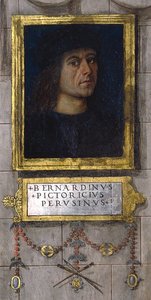
Pinturicchio
1454 - 1513 , Italien
Snabbfakta
- Artistic Movement Or Style: Renaissance
- Artists Who Influenced This Artist:
- Perugino
- Bonfigli
- Fiorenzo di Lorenzo
- Date Of Birth: 1454 Perugia
- Date Of Death: 1513 Siena
- Full Name: Bernardino di Betto
- Nationality: Italian
- Notable Artworks:
- Sistine Chapel frescoes
- Borgia Apartments decor.
- Saint Augustine
- Place Of Birth: Perugia Italien
Relaterade artiklar

Konsten att leva med dig: Den emotionella kraften i en skräddarsydd interiörfresk
Upptäck freskens tidlösa skönhet! Lär dig om teknik, historia och hur du beställer en skräddarsydd interiörfresk. Expertkunskap & högsta kvalitet hos .
The Enduring Legacy of Fresco Painting: Techniques, History & Contemporary Relevance
Explore the rich history & enduring artistry of fresco painting – from Giotto to Michelangelo! Discover techniques, conservation efforts, & modern applications. Learn how OriginalUniqueArt brings this timeless art form to your home.

The Enduring Legacy of Fresco: Technique, History & Artistic Expression Across Cultures
Explore the rich history & enduring legacy of fresco painting! Discover ancient techniques, Giotto's masterpieces, and modern applications. Expert insights for art lovers & professionals.

Frescens arv som familjetradition: Måla din historia på väggarna
Utforska väggmålningens historia och teknik! Lär dig skapa din egen familjetradition med konst på väggen. Expertguider, inspiration & tips.

The Enduring Legacy of Fresco: Technique, History & Artistic Expression
Explore the rich history & enduring artistry of fresco painting. Discover techniques from Giotto to Michelangelo, conservation efforts, & modern applications. Learn how OriginalUniqueArt brings this timeless art form to your home.