

 Förhandsvisa
 Skicka
 Dela
Dela
 Visa detaljer
 Guide
Guide

 Ladda ner
 Liknande objekt
 Röntgen
 Bildspel
 Statistik
The Soothsayer
 Oil
Oil- WallArt
- Rococo
 1750
1750- Early Modern
 60.0 x 48.0 cm
 Gallerie dell’Accademia
 Visa mer
Giclée / Konsttryck
Giclée- eller canvasprint av museumskvalitet med snabb produktion och flexibla ytbehandlingsalternativ. ( Beställ handmålad reproduktion Byt till digital bild)




P118B Skr10

P118H Skr10

P118W Skr10

P438Z Skr10

P508JH Skr12

P508YH Skr12

P805H Skr10

P805Z Skr10

P919BZ Skr10

P919G Skr10

P919XJ Skr10

P959ZH Skr10

P968JZ Skr12

W106C Skr8

W218G Skr10

W218JH Skr8

W218Y Skr10

W307PJ Skr10

W316G Skr10

W316PJ Skr8

W316Y Skr10

W398PJ Skr8

W4111J Skr10

W500HY Skr15

W500JH Skr15

W692G Skr12

W849H Skr8

W940BG Skr15

W953PJ Skr8




Välj bland våra förinställda storlekar som motsvarar konstverkets ursprungliga proportioner.

Ange den bredd och höjd du behöver för att passa din ram eller vägg. Ett tryck kan endast beskäras, aldrig göras större än originalbilden, vilket innebär att ett format med en annan proportion leder till att en del av bilden går förlorad. Vi skickar en digital mockup för godkännande innan vi påbörjar tryckningen. Bilden som visas på denna sida visar inte den faktiska beskärningen — det är endast mockuppen som gör det.
Leverans över hela världen () på 2 veckor istället för standard 4/5 veckor. (25 oktober)

Fri expressfrakt över hela världen

Högkvalitativ linnecanvas

Fullständig fraktförsäkring

Garantier för återbetalning av tullavgifter

Garantier för exakt färgåtergivning

100 dagars returrätt (endast vid fel)

100% pengarna tillbaka-garanti

Mängdrabatt erbjuds
 Glasalternativet är endast tillgängligt i storlekar under 110 cm.

The Soothsayer
Giclée / Konsttryck
Storlek på reproduktion
-


Slutgiltigt pris
Skr 793
A Glimpse into Venetian Intrigue
In the heart of eighteenth-century Venice, where the mist of the canals meets the gilded splendor of aristocratic salons, Pietro Longhi captured the fleeting moments of human connection. His masterpiece, The Soothsayer, serves as a captivating window into a world of mystery and social performance. The painting presents us with a central figure, a man commanding the attention of a gathered crowd, his hand gripping a microphone—a curious, anachronistic element that invites the viewer to contemplate the intersection of prophecy and public spectacle. As he stands upon a stage, the energy of the room vibrates around him, pulling the observer into a lively gathering where every face tells a story of curiosity, skepticism, or quiet anticipation.
Longhi, often celebrated as the chronicler of Venetian daily life, eschews the grandiosity of mythological epics to focus on the intimate and the anecdotal. In this work, the composition is masterfully balanced, with nine figures scattered across the scene like notes in a visual symphony. Some lean in, drawn by the magnetism of the speaker, while others linger at the periphery, creating a sense of depth and movement. Even the presence of a small dog near the base of the frame adds a touch of domestic realism, grounding the theatricality of the event in the tangible reality of 1750s life.
Technique and the Art of Observation
The brilliance of Longhi’s technique lies in his ability to render light and texture with a subtle, painterly grace. Through delicate brushwork, he captures the sheen of silk, the soft glow of candlelight, and the varied expressions of his subjects. The artist utilizes a palette that reflects the sophisticated atmosphere of the era, employing warm tones that evoke the intimacy of an indoor salon. His mastery of genre painting allows him to transform a simple social gathering into a complex psychological study, where the interplay of light and shadow heightens the drama of the central performance.
For the discerning collector or interior designer, this piece offers more than mere decoration; it provides a narrative anchor for a room. The painting’s ability to evoke a sense of historical nostalgia makes it an exquisite choice for spaces that value elegance and conversation. Whether placed in a formal study or as a focal point in a contemporary living area, The Soothsayer brings with it the sophisticated spirit of Venice, inviting guests to linger on its details and lose themselves in the whispered secrets of the past.
A Legacy of Intimate Storytelling
To possess a reproduction of this work is to hold a fragment of history. Longhi’s departure from the traditional religious and historical themes of his contemporaries allowed him to pioneer a style that feels remarkably modern in its focus on human behavior. He understood that the true drama of life is found not in the battles of gods, but in the glances exchanged between strangers and the tension held in a silent room. This painting remains a testament to his unique vision—a blend of wit, observation, and an unparalleled ability to freeze time.
Frågor och svar
Hur hittar jag konstverk som påminner om "The Soothsayer" av Pietro Longhi?
Hitta verk som liknar "The Soothsayer" på verkets sida Liknande verk.
Har "The Soothsayer" starka ljus-mörkerkontraster?
Kontrastnivån i "The Soothsayer" av Pietro Longhi är Gentle.
När skapades "The Soothsayer" av Pietro Longhi och vilken stil tillhör det?
"The Soothsayer" skapades år 1750 som ett verk inom Rococo-rörelsen. Datum och stil förankrar konstverket i konsthistorien.
Konstnärsbiografi
Pietro Longhi (1701-1785): A Venetian Chronicler of Daily Life
Pietro Longhi, born Pietro Falca in Venice on November 5th, 1701, wasn’t painting grand historical narratives or mythological scenes; he was capturing the quiet dramas unfolding within the city's elegant homes and bustling streets. He became renowned for his witty genre paintings – intimate glimpses into the lives of 18th-century Venetians, a departure from the prevailing artistic trends of his time. The son of Alessandro Falca, a silversmith, Longhi’s early training began under the Veronese painter Antonio Balestra, who recognized and nurtured the young artist's talent. This foundation in traditional technique would later serve as a subtle counterpoint to the innovative spirit he brought to his chosen subject matter. He adopted the surname “Longhi” upon beginning his artistic career, a symbolic shedding of his father’s trade for the pursuit of painting.Early Influences and Artistic Training
Longhi's formative years were marked by exposure to Venetian artistic traditions. His initial mentor, Antonio Balestra, instilled in him a mastery of Venetian painting techniques—broken brushwork and vibrant color glazes—a stylistic hallmark of the era. This meticulous attention to detail would become evident throughout his oeuvre, particularly in his depictions of interiors and fabrics. Recognizing Longhi’s potential, Balestra recommended him to Giuseppe Maria Crespi, a Bolognese painter who was highly regarded for both religious and genre painting. Crespi's influence encouraged Longhi to explore broader artistic horizons while retaining the core principles of Venetian art. He diligently studied Crespi’s methods, absorbing his understanding of light and color—a crucial element in achieving realism and conveying emotion. This early training solidified Longhi’s commitment to capturing the nuances of everyday life with remarkable accuracy.Religious Beginnings and Transition Towards Genre Painting
Like many artists of his time, Longhi began his artistic career with religious commissions. His 1732 altarpiece for the church of San Pellegrino exemplifies this initial phase—a testament to Balestra’s influence and demonstrating a skillful command of traditional Venetian painting techniques. The composition is carefully balanced, utilizing chiaroscuro to create dramatic depth and highlighting key figures within the scene. However, Longhi's artistic trajectory took an unexpected turn in the late 1730s. Sensing a shift in cultural sensibilities—a growing fascination with the private lives of the bourgeoisie—he deliberately moved away from grand historical narratives and embraced genre painting. This decision represented a bold departure from prevailing artistic conventions and signaled Longhi’s burgeoning independence as an artist. He began to depict scenes of Venetian society, capturing moments of domestic life, social interaction, and theatrical performance.The Venetian Hogarth: Satirical Observation and Artistic Innovation
Longhi quickly established himself as “the Venetian Hogarth,” a moniker bestowed upon him by critics who recognized his uncanny ability to infuse seemingly mundane subjects with layers of social commentary—much like William Hogarth’s unflinching depictions of London life. Unlike Hogarth's moralizing pronouncements, Longhi’s satire possessed a subtle irony and a keen awareness of human folly. His paintings are populated with masked figures – a vibrant reminder of Venice’s Carnival celebrations – engaged in various activities ranging from gambling and flirtation to clandestine meetings and dubious transactions. The Concert, for example, portrays a gathering of Venetian nobles, capturing the atmosphere of aristocratic society with meticulous detail. Longhi's masterful use of light and color—influenced by Caravaggio—further enhanced his artistic innovation, creating an illusionistic depth that captivated audiences. He wasn’t merely recording life as it was; he was offering a perceptive critique of its complexities and contradictions.Legacy and Recognition
Longhi’s oeuvre comprises approximately 150 paintings, predominantly genre scenes depicting Venetian interiors and daily life. His works are characterized by their remarkable realism—a testament to his unwavering dedication to observation and technique. He achieved considerable fame during his lifetime, earning the admiration of fellow artists and critics alike. Notably, Carlo Goldoni praised Longhi’s commitment to truth, emphasizing his ability to portray human behavior with unflinching honesty. His paintings continue to resonate with viewers today, appreciated for their charm, wit, and artistic sophistication. Longhi served as Director of the Academy of Drawing and Carving from 1763, furthering his influence within Venetian art circles and ensuring that his legacy would endure. He died peacefully in Venice on May 8th, 1785, leaving behind a body of work that remains an enduring symbol of Venetian artistic excellence—a true chronicler of the Enlightenment era.
Pietro Longhi
1701 - 1785 , Italien
Kortfakta
- Artistic Movement Or Style: Venetian painting, Rococo
- Artists Or Movements Influenced By This Artist: ['William Hogarth']
- Artists Who Influenced This Artist:
- Antonio Balestra
- Giuseppe Maria Crespi
- Date Of Birth: November 5, 1701
- Date Of Death: May 8, 1785
- Full Name: Pietro Longhi
- Nationality: Italian
- Notable Artworks:
- The Tailor
- The Baptism
- Painter in his studio
- Place Of Birth: Venice, Italy
Relaterade artiklar

Pietro Longhi's Venetian Scenes: A Study of Rococo Society & Domestic Life
Explore the captivating world of Pietro Longhi's Venetian scenes! Discover insightful analysis of his Rococo masterpieces & social commentary on 18th-century life. Learn about this 'Venetian Hogarth' and his lasting artistic legacy.
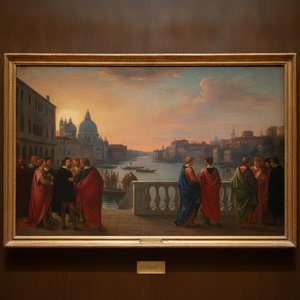
The Venetian Renaissance: A Masterclass in Colorito, Light, and the Birth of Atmospheric Brilliance
Explore the breathtaking mastery of the Venetian Renaissance. Discover how legends like Titian revolutionized art through Colorito, capturing the luminous light and vibrant pigments of the Venetian lagoon in a visual journey of unparalleled color and texture.
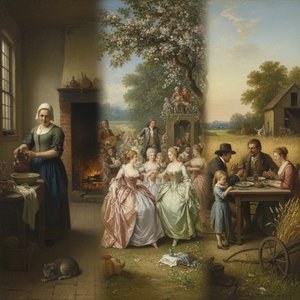
Scenes of Daily Life: A Comprehensive Exploration of Genre Painting Through History
Explore the rich history of genre painting! Discover Dutch Masters & European artists who captured everyday life with stunning realism. Learn about symbolism, techniques & lasting influence.

Jacopo Tintorettos 25 Mästerverk: Drama, Ljus och Renässansens Storhet – Konst för Ditt Hem
Utforska Jacopo Tintorettos 25 mest ikoniska målningar – en resa genom venetiansk renässans och dramatiskt ljusspel. Upptäck historierna bakom mästerverken och finn inspiration till din inredning med konsttryck av högsta kvalitet på OriginalUniqueArt.com.

Venetian Renaissance: The Mastery of Color, Light, and the Art of Colorito
Explore the luminous mastery of the Venetian Renaissance. Discover how masters like Titian and Giorgione revolutionized art through colorito, light, and atmosphere. An expert guide to the golden age of Italian painting for collectors and enthusiasts.