

 Visa i rummet
 Skicka
 Dela
Dela
 Detaljer
 Guide
Guide

 Ladda ner
 Liknande objekt
 Röntgen
 Bildspel
 Besökstatistik
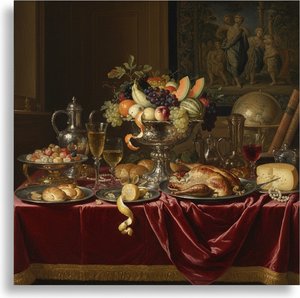
Still Life


 Läs mer
Handgjord oljereproduktion
Handmålad olja på duk i din valda storlek och ram, tillverkad efter beställning av våra konstnärer. ( Byt till tryckta exemplar Byt till digital bildförsäljning)




































Välj bland våra förinställda storlekar som motsvarar konstverkets ursprungliga proportioner.

Du kan ange egna mått för att passa en specifik ram eller yta. Om den valda storleken inte matchar originalbildens proportioner kommer vi antingen att beskära konstverket eller utöka målningen med ytterligare handmålade element. En digital skiss skickas till dig för godkännande innan produktionen påbörjas.
Observera att förhandsvisningen på skärmen inte återspeglar den faktiska beskärningen eller utökningen. Endast skissen visar den slutgiltiga kompositionen korrekt.
Även om anpassade storlekar är möjliga, rekommenderar vi att du väljer en dimension från den fördefinierade listan för att bevara originalproportionerna.
Efter beställning kommer OriginalUniqueArt.com team att mejla kunden för instruktioner och tillhandahålla en skissförhandsvisning
Leverans över hela världen () på 3–4 veckor istället för standard 5 veckor. (20 september). Inga kompromisser med kvaliteten.

Fri expressfrakt över hela världen

Högkvalitativ linnecanvas

Fullständig fraktförsäkring

Garantier för återbetalning av tullavgifter

Garantier för exakt färgåtergivning

100 dagars returrätt vid fabrikationsfel

100% pengarna tillbaka-garanti

Mängdrabatt erbjuds
 Glasalternativet är endast tillgängligt i storlekar under 110 cm.

Still Life
Tryckteknik
Reproduktionsstorlek
-


Totalpris
$ 300
Om konstnären
Pieter Claesz Soutman: A Master of Subtle Realism in the Dutch Golden Age
Pieter Claesz Soutman (1593-1657) stands as a quietly significant figure within the pantheon of Dutch Golden Age painters. Often overshadowed by the flamboyant brushstrokes of Frans Hals or the dramatic compositions of Rembrandt, Soutman’s legacy lies in his remarkable ability to capture nuanced realism and atmospheric depth—particularly in his still lifes and portraits. Born and raised in Haarlem, a city brimming with artistic talent during this period, Soutman's career unfolded amidst the vibrant cultural landscape shaped by contemporaries like Hals, Pot, and Claesz himself, suggesting an absorption of diverse influences that ultimately defined his unique style. His life story is intertwined with the political currents of the era, marked by service to Polish royalty and a fascinating episode involving a mistaken attribution at the Louvre.Early Life and Training
Soutman’s origins were rooted in wealth and Catholic tradition. He was the youngest son of a prosperous brewery owner, the proprietor of De Werelt in Haarlem, a fact that afforded him a comfortable upbringing and access to cultural circles. While details about his formal artistic training remain somewhat elusive, accounts suggest a connection with Peter Paul Rubens in Antwerp—a pivotal experience for any aspiring artist of the time. Houbraken’s biographical notes indicate this apprenticeship, painting Soutman as a successful protégé who garnered recognition through Samuel Ampzing's verse praising his abilities within Haarlem society. The timing of this period – coinciding with Prince Władysław Vasa’s visit to Antwerp in 1624 – further cemented Soutman’s reputation and led to a recommendation by Rubens himself, a testament to the artist’s burgeoning skill. This early exposure to Rubens's studio undoubtedly shaped his approach to composition, lighting, and the rendering of textures—elements that would become hallmarks of Soutman’s distinctive style.Service in Poland and Return to Haarlem
A significant chapter in Soutman’s life unfolded during his tenure as a court painter for King Sigismund III Vasa in Poland (1624-1628). This period marked a departure from his Haarlem roots, thrusting him into the heart of Polish aristocratic society. He served as a servitor to the king and his son, Władysław Sigismund, demonstrating an adaptability and professionalism that allowed him to thrive in a foreign court. Returning to Haarlem in 1628, Soutman established himself as a respected portrait painter within the city’s artistic community. His connections to the Catholic Hofje Codde en Van Beresteijn—a complex arrangement involving two separate hofjes—provided him with patronage and opportunities for commissions, particularly lucrative schutterstukken (civic group portraits) that were central to Haarlem's social and political life.The Scandal at the Louvre and Artistic Legacy
Perhaps the most intriguing aspect of Soutman’s career revolves around a remarkable misattribution that occurred in the 1860s. A portrait of the Beresteijn family, regents of both the Codde and Beresteijn hofjes, was mistakenly identified as a work by Frans Hals and purchased by the Louvre for a considerable sum. This incident sparked outrage within the Dutch press, with Conrad Busken Huet vehemently arguing that such a national treasure should remain in its homeland. The story highlights not only the challenges of attribution during that era but also underscores Soutman’s remarkable skill—his paintings were so convincing that they fooled even seasoned art experts. Today, Soutman's works are housed in various museums across Europe, including the Huis ten Bosch in The Hague, and his pupils – Cornelis Visscher, Jacob Louys, and Pieter van Sompel – continued to build upon his artistic foundations.Style and Technique
Soutman’s distinctive style is characterized by a remarkable restraint and subtlety. Unlike the bold, dramatic brushwork of Hals or the chiaroscuro mastery of Rembrandt, Soutman favored a more muted palette and a meticulous attention to detail. His still lifes—often featuring humble objects like fruit, bread, and wine—are imbued with an almost melancholic beauty, capturing not just their physical appearance but also suggesting a deeper contemplation on themes of mortality and transience – hallmarks of *vanitas* paintings. His portraits, too, are notable for their psychological depth and the way he captured the quiet dignity of his subjects. He skillfully employed light and shadow to create atmospheric effects, lending a sense of realism and immediacy to his compositions. His work represents a significant contribution to the development of Dutch still life painting during the 17th century, demonstrating a mastery of technique and an ability to evoke profound emotion through seemingly simple imagery.
Pieter Claesz Soutman
1580 - 1657
Snabbfakta
- Artistic Movement Or Style: Dutch Golden Age
- Artists Or Movements Influenced By This Artist: ['Frans Hals']
- Artists Who Influenced This Artist:
- Rubens
- Hals
- Pieter Claesz
- Date Of Birth: 1593/1601
- Date Of Death: 1657
- Full Name: Pieter Claesz Soutman
- Nationality: Dutch
- Notable Artworks:
- Portrait of Sigismund III Vasa
- Emerantia van Berensteyn
- Place Of Birth: Haarlem, Netherlands
Relaterade artiklar

Golden Age Reflections: Dutch Baroque Painting & Cultural Innovation
Explore the Dutch Golden Age of painting! Discover key artists like Vermeer & ter Borch, their innovative techniques, and the rich cultural context behind these Baroque masterpieces. Learn about collecting & appreciating this iconic art period.

Nederländsk Guldålder: Topp 10 mästerverk som definierade epoken – konst & heminredning
Utforska de 10 ikoniska mästerverken från den nederländska guldåldern! Lär känna Rembrandt, Vermeer och Hals – deras teknik & berättelser. Hitta konsttryck och inspiration för din heminredning på OriginalUniqueArt.com. Upptäck hela samlingen online!

Illuminating Innovation: Exploring the Dutch Golden Age of Painting
Explore the Dutch Golden Age of painting with OriginalUniqueArt. Discover Rembrandt, Vermeer & other Masters. Learn about key characteristics, iconic artworks, and lasting influence. Expert insights for collectors & enthusiasts.

Golden Light & Dutch Skies: The Timeless Magic of Dutch Golden Age Landscapes
Discover the breathtaking beauty of Dutch Golden Age landscapes. Explore the mastery of light, chiaroscuro, and 17th-century realism through an expert art history lens, celebrating the enduring legacy of the Dutch Masters for discerning collectors and art lovers.
Abraham Hendricksz van Beyeren: Pioneering Dutch Still Life & the Banquet Tradition
Explore the captivating world of Dutch Golden Age still life with Abraham van Beyeren. Discover his innovative techniques, symbolic banquet scenes & lasting influence on art history. Learn about collecting these masterpieces.