
 Förhandsvisa
 Skicka
 Dela
Dela
 Visa detaljer
 Guide
Guide

 Ladda ner
 Liknande objekt
 Röntgen
 Bildspel
 Q&A
Q&A Statistik
Mars and Venus

- 73.0 x 94.0 cm


 Visa mer
Giclée / Konsttryck
Giclée- eller canvasprint av museumskvalitet med snabb produktion och flexibla ytbehandlingsalternativ. ( Beställ handmålad reproduktion Byt till digital bild)




P118B Skr10

P118H Skr10

P118W Skr10

P438Z Skr10

P508JH Skr12

P508YH Skr12

P805H Skr10

P805Z Skr10

P919BZ Skr10

P919G Skr10

P919XJ Skr10

P959ZH Skr10

P968JZ Skr12

W106C Skr8

W218G Skr10

W218JH Skr8

W218Y Skr10

W307PJ Skr10

W316G Skr10

W316PJ Skr8

W316Y Skr10

W398PJ Skr8

W4111J Skr10

W500HY Skr15

W500JH Skr15

W692G Skr12

W849H Skr8

W940BG Skr15

W953PJ Skr8




Välj bland våra förinställda storlekar som motsvarar konstverkets ursprungliga proportioner.

Ange den bredd och höjd du behöver för att passa din ram eller vägg. Ett tryck kan endast beskäras, aldrig göras större än originalbilden, vilket innebär att ett format med en annan proportion leder till att en del av bilden går förlorad. Vi skickar en digital mockup för godkännande innan vi påbörjar tryckningen. Bilden som visas på denna sida visar inte den faktiska beskärningen — det är endast mockuppen som gör det.
Leverans över hela världen () på 2 veckor istället för standard 4/5 veckor. (2 november)

Fri expressfrakt över hela världen

Högkvalitativ linnecanvas

Fullständig fraktförsäkring

Garantier för återbetalning av tullavgifter

Garantier för exakt färgåtergivning

100 dagars returrätt (endast vid fel)

100% pengarna tillbaka-garanti

Mängdrabatt erbjuds
 Glasalternativet är endast tillgängligt i storlekar under 110 cm.

Mars and Venus
Giclée / Konsttryck
Storlek på reproduktion
-


Slutgiltigt pris
Skr 803
A Celestial Encounter: The Grandeur of Mars and Venus
In the luminous realm of French Baroque masterwork, Pierre Mignard’s "Mars and Venus" stands as a breathtaking testament to the era's obsession with mythic romance and divine elegance. Created in 1685, this oil on canvas masterpiece invites the viewer into an intimate, opulent sanctuary where the boundaries between the mortal and the divine blur. The composition centers upon the legendary lovers—the god of war, Mars, and the goddess of beauty, Venus—seated closely upon an ornate couch. Their proximity suggests a profound connection, a quiet moment of tenderness captured amidst the grandeur of a classical setting. Above them, a celestial messenger floats with ethereal grace, playing a flute that seems to breathe life into the very air of the scene, adding a layer of divine harmony to their earthly embrace.
The artistry of Mignard is most strikingly evident in his masterful command of light and texture. Though often viewed through various lenses of interpretation, the painting’s soul lies in its dramatic use of chiaroscuro. Strong contrasts between deep, velvety shadows and brilliant highlights sculpt the figures, lending them a sculptural presence that feels almost tangible. One can almost feel the weight of the heavy, draped fabrics that cascade around the central couple, the intricate folds rendered with such precision that they evoke a sense of tactile luxury. This meticulous technique, characteristic of the high Baroque style, creates a rhythmic flow of lines—curving drapery meeting the structured elegance of the furniture—that guides the eye through a complex, multi-layered narrative.
Symbolism and the Baroque Spirit
Beyond its visual splendor, "Mars and Venus" serves as a profound allegory for the reconciliation of opposing forces. The union of Mars, representing strength and conflict, with Venus, embodying love and grace, symbolizes the triumph of peace over strife. This theme was particularly resonant in the late 17th-century French court, where art often functioned as a mirror for political stability and divine right. The presence of the angelic figure playing the flute acts as a sonic metaphor for cosmic order, suggesting that true beauty and love are sanctioned by the heavens themselves.
For the discerning collector or interior designer, this piece offers more than mere decoration; it provides a focal point of historical depth and emotional resonance. The painting’s palette—rich with tonal variations—allows it to integrate seamlessly into sophisticated environments, whether placed in a room defined by classical architectural details or as a bold, dramatic statement in a contemporary gallery setting. To possess a reproduction of such a work is to invite the spirit of the French Baroque into one's space, surrounding oneself with an enduring legacy of elegance, passion, and the timeless pursuit of beauty.
Frågor och svar
Vilken teknik och storlek har originalet till "Mars and Venus" av Pierre Mignard?
"Mars and Venus" av Pierre Mignard är utförd i Oil On Canvas och har måtten 73 x 94 cm.
Vilken atmosfär skulle en reproduktion av "Mars and Venus" av Pierre Mignard tillföra ett rum?
Den Romantic atmosfären i "Mars and Venus" av Pierre Mignard passar perfekt för det rekommenderade rummet: ett Living Room.
När och med vilka material skapades "Mars and Venus"?
"Mars and Venus" skapades år 1685 med tekniken Oil On Canvas. Material och datum beskriver hur och när originalet tillverkades.
Konstnärsbiografi
Ett liv nedsänkt i barockens prakt
Pierre Mignard, född i Troyes, Frankrike, år 1612, var en central gestalt inom den franska barockmåleriet, även om han ofta hamnade i skuggan av sin samtida rival Charles Le Brun. Med enkla rötter i en familj av hantverkare uppvisade Mignard tidigt en konstnärlig fallenhet som förde honom till Bourges för sin första utbildning under Jean Boucher, en målare djupt rotad i manieristiska traditioner. Denna grundläggande period gav honom en känslighet för form och komposition, färdigheter som han senare förfinade genom flitigt kopierande av verk vid Château de Fontainebleau – en sann klassrum för etablerade konstnärliga principer. Avgörande var även hans studier i Simon Vouets parisiska ateljé, en mästare som förespråkade klassiska influenser och besatt omfattande internationella kontakter. Dessa formativa erfarenheter lade grunden för Mignrads särpräglade stil, en stil som skulle förena italiensk storslagenhet med fransk elegans.Romerska drömmar och födelsen av ”Mignardiser”
Ett definierande kapitel i Mignards konstnärliga resa inleddes 1635 när han flyttade till Rom. Under ungefär tjugotvå år fördjupade han sig i det italienska barockmåleriets pulserande hjärta. Det var här han verkligen blommade ut och vann ryktbarhet för sina ömma och fängslande skildringar av Madonna och barn – bilder så charmiga och delikata att de kärleksfullt kom att kallas ”mignardiser”, ett bevis på deras söta och förfinade kvalitet. Inflytandet från de italienska mästarna är påtagligt i hans romerska verk; dramatiska kompositioner, en mästerlig användning av ljus och skugga samt en övergripande känsla av teatralitet präglar denna period. Utöver religiösa beställningsverk slipade Mignard sina tekniska färdigheter genom reproduktionsgravyr, där han noggrant kopierade Annibale Carraccis verk, vilket fördjupade hans förståelse för konstnärliga principer. Hans talang sträckte sig även till porträttkonsten, där han säkrade uppdrag från framstående romerska gestalter – påvar, kardinaler och medlemmar av eliten – och etablerade ett rykte om att fånga inte bara likhet utan även karaktär med både skicklighet och grace.Återkomsten till Paris och konstnärlig strid
Omkring 1657 återvände Mignard till Paris, kallad av kardinal Mazarin, vilket markerade hans inträde i den tävlingsinriktade världen av fransk hovmålning. Han vann snabbt beskydd från inflytelserika personer, inklusive kung Ludvig XIV själv, men hans framgångar sammanföll med dominansen av Charles Le Brun, som innehade den prestigefyllda titeln *peintre du roi*. Detta ledde oundvikligen till en utdragen och ofta bitter rivalitet mellan de två konstnärerna. Mignard motsatte sig aktivt auktoriteten hos Académie Royale de Peinture et Sculpture, distanserade sig från dess etablerade hierarki och förespråkade konstnärlig självständighet. Trots denna konflikt blomstrade han som porträttmålare och förevigade framstående individer såsom Turenne, Molière, Bossuet och Madame de Maintenon på duken. Hans porträtt hyllas inte enbart för sin exakta representation utan också för den psykologiska insikt de uppvisar – förmågan att fånga sina modellers essens med en anmärkningsvärd känslighet.
Pierre Mignard
1612 - 1695 , Frankrike
Kortfakta
- Artistic Movement Or Style: Barock
- Artists Or Movements Influenced By This Artist: ['Franska porträttmålare']
- Artists Who Influenced This Artist:
- Simon Vouet
- Annibale Carracci
- Date Of Birth: 1612
- Date Of Death: 1695
- Full Name: Pierre Mignard
- Nationality: Fransk
- Notable Artworks:
- Gud Fader
- Jungfrun med druvorna
- La Fortune
- Place Of Birth: Troyes, Frankrike
Relaterade artiklar
Baroque Classicism: The Grandeur of Order and Drama in 17th-Century Art History
Explore the profound elegance of Baroque Classicism. Discover how 17th-century masters synthesized dramatic emotion with classical order through the lens of the Counter-Reformation and the works of legends like Carlo Maratta and Andrea Sacchi.
Charles Le Brun: Master of French Baroque Classicism & His Enduring Legacy
Explore the life & art of Charles Le Brun, master of French Baroque Classicism. Discover his royal commissions, influence on Versailles, and enduring legacy through detailed analysis & stunning artworks.
Baroque Classicism: A Professional Guide to Integrating Timeless Grandeur into Luxury Hotel Interiors
Elevate luxury hospitality with Baroque Classicism. Our guide for hotel designers explores integrating grand, classical oil reproductions into professional interiors. Discover efficient bulk procurement, custom sizing, and large-format murals to create timeless, high-impact spaces.
Baroque Classicism: Reconciling Drama & Order in 17th-Century Art
Explore the captivating world of Baroque Classicism! Discover its history, key artists like Caravaggio & Rubens, and defining characteristics. Expert insights & high-quality reproductions at OriginalUniqueArt.
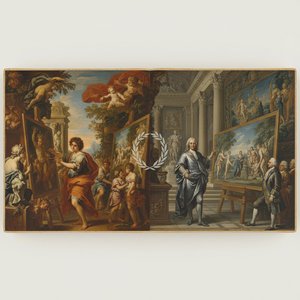
Simon Vouet: A Baroque Master's Journey from Italian Influence to French Classicism
Explore the life & art of Simon Vouet, a pivotal French Baroque painter who introduced Italian styles to France. Discover his masterpieces and lasting influence on 17th-century art.