

 Förhandsvisa
 Skicka
 Dela
Dela
 Visa detaljer

 Ladda ner
 Liknande objekt
 Röntgen
 Bildspel
Buste du Christ

 Visa mer
Köp en högupplöst, förbättrad digital bild med betydligt högre kvalitet än förhandsvisningen online.
Varje fil är noggrant förberedd av våra interna specialister med hjälp av avancerade verktyg och professionell manuell retuschering. Vi säkerställer att varje bild har exceptionell skärpa, exakt färgåtergivning och fina detaljer.
Den slutgiltiga filen levereras via e-post inom 72 timmar, optimerad för omedelbar användning i professionella sammanhang, redaktionellt bruk och tryckmiljöer. Detta är samma kvalitet som med förtroende används av ledande designstudior, förlag och gallerier.
Digital bild
Ladda ner en högupplöst fil för personlig visning, utskrift och kreativa projekt. ( Beställ tryck Beställ handmålad reproduktion)
Ingår i varje beställning av digital bild
Professionell digital leverans, garanterad
När du väljer OriginalUniqueArt.com får du inte bara en bild – du får ett professionellt förädlat digitalt konstverk, skapat med precision och med en garanterad tillfredsställelse. Här är allt som ingår i din beställning, automatiskt:

Snabb leverans via e-post
Din högupplösta digitala bild skickas till dig via e-post inom 72 timmar efter beställning – redo för omedelbar användning.

AI-förbättrad digital bild
Ditt konstverk optimeras professionellt med hjälp av avancerade AI-verktyg och manuell redigering, vilket garanterar maximal detaljrikedom, skärpa och färgnoggrannhet.

Gratis livstidsåterutskick
Har du råkat radera eller tappa bort din fil? Ingen oro – vi skickar den kostnadsfritt till dig när som helst.

Inga importavgifter – någonsin
Njut av ditt konstverk omedelbart utan tull, importavgifter eller leveranskostnader – digitala nedladdningar är alltid skattefria.

Garanterad färgåtergivning
Vi säkerställer att din digitala bild återger de ursprungliga färgerna så exakt som möjligt med hjälp av professionella verktyg och färghantering.

100 dagars nöjdhetsgaranti
Om du inte är nöjd med din digitala bild kommer vi att revidera den eller återbetala 100% inom 100 dagar – utan frågor.

100% pengarna-tillbaka-garanti
Inte nöjd? Få full återbetalning inom 100 dagar efter att du har tagit emot din digitala fil – utan frågor och diskussioner.

Rabatt vid storköp
Köp 3 bilder, spara 10% – Köp 5, spara 15% – Köp 10+, spara 20%. Perfekt för kreativa projekt, gallerier och byråer.
Konstnärsbiografi
The Sculptural Legacy of Pierre-Étienne Monnot
In the grand, sweeping era of the Late Baroque, few artists captured the divine drama and physical grace of marble as effectively as Pierre-Étienne Monnot. Born in 1657 in the rugged beauty of Doubs, France, Monnot’s journey from a provincial woodcarver's apprentice to a celebrated sculptor in the heart of Rome is a testament to the era's interconnected artistic landscape. Trained initially by his father, he honed his foundational skills in the workshops of Dijon, but it was his move to Italy that would ultimately define his destiny. By 1687, Monnot had settled in Rome, where he became a vital figure within a vibrant community of Burgundian expatriates, breathing life into stone through a style that blended French precision with Italian grandeur.
Monnot’s artistic evolution was deeply shaped by the masters who preceded him and the monumental atmosphere of the Eternal City. Often referred to in Italian records as Pietro Stefano Monnot, he navigated the complex social and religious hierarchies of Rome with remarkable success. His early works in Italy reflected the influence of Domenico Guidi, particularly evident in his exquisite marble reliefs for the church of Santa Maria della Vittoria. In these pieces, such as the Nativity and the Flight into Egypt, one can observe a delicate balance between narrative movement and classical stability—a hallmark of the transition from the high Baroque to a more refined, late-Baroque idiom.
Mastery of Marble and Divine Commission
The true significance of Monnot’s career lies in his ability to secure commissions that placed him at the very center of Catholic iconography. His talent for translating spiritual fervor into tangible form made him a preferred choice for the most prestigious religious institutions in Europe. One of his most profound achievements was his contribution to the Saint Ignatius altar in the Church of the Gesù, where he sculpted a pair of angels holding the IHS monogram. This work placed him alongside other titans of the era, such as Pierre Le Gros the Younger, cementing his status within the elite circle of sculptors shaping the visual identity of the Counter-Reformation.
Beyond the altars of Rome, Monnot’s reach extended to the highest echelons of the papacy and international nobility. His work on the tomb of Pope Innocent XI in St. Peter's Basilica, executed under the design of the legendary Carlo Maratta, stands as a pinnacle of his technical prowess. In this monumental undertaking, Monnot demonstrated an unparalleled ability to handle the weight of history and the solemnity of death, using marble to evoke both the permanence of the Church and the fleeting nature of mortal life. His skill was not limited to the sacred; he was equally adept at capturing the human spirit in portrait busts and mythological scenes, catering to a sophisticated clientele that sought to immortalize their own legacies through his chisel.
A Lasting Impression on Baroque Art
The historical significance of Pierre-Étienne Monnot transcends the mere execution of beautiful objects. He served as a cultural bridge, bringing the meticulousness of French training to the emotive power of Italian sculpture. His career represents the zenith of an international artistic movement where borders were fluid and talent was the primary currency. Through his works, we see the late Baroque period not just as a style of excess, but as a sophisticated language of devotion, power, and human emotion.
To reflect on Monnot's enduring impact, one might consider these defining elements of his career:
- Technical Versatility: His ability to transition seamlessly from the intimate detail of relief carvings to the monumental scale of papal tombs.
- Cultural Synthesis: The unique fusion of French structural clarity with the dramatic, swirling energy characteristic of Roman Baroque sculpture.
- Ecclesiastical Influence: A profound role in decorating the most sacred spaces of Rome, contributing to the visual splendor of the Jesuit order and the Papacy.
- International Reach: His success in establishing a lasting reputation that resonated far beyond his native Franche-Comté, reaching the courts and cathedrals of Europe.
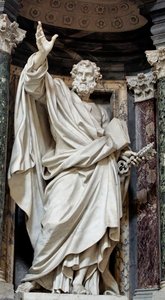
pierre etienne monnot
1657 - 1733 , France
Snabbfakta
- Artistic Movement Or Style: Late Baroque
- Artists Who Influenced This Artist:
- Domenico Guidi
- Alessandro Algardi
- Carlo Maratta
- Date Of Birth: 1657
- Date Of Death: 1733
- Full Name: Pierre-Étienne Monnot
- Nationality: French
- Notable Artworks:
- Nativity relief
- Flight into Egypt relief
- Tomb of Pope Innocent XI
- Angels with IHS monogram
- Place Of Birth: Doubs, France