Visa i rummet
 Skicka
 Dela
Dela
 Detaljer
 Studentguide för konstverk

 Ladda ner
 Liknande objekt
 Röntgen
 Bildspel
 Besökstatistik
Angel


 Läs mer
Giclée / Konsttryck
Giclée- eller canvasprint av museumskvalitet med snabb produktion och flexibla ytbehandlingsalternativ. ( Köp handmålat konstverk Byt till digital bildförsäljning)




P118B Skr10

P118H Skr10

P118W Skr10

P438Z Skr10

P508JH Skr12

P508YH Skr12

P805H Skr10

P805Z Skr10

P919BZ Skr10

P919G Skr10

P919XJ Skr10

P959ZH Skr10

P968JZ Skr12

W106C Skr8

W218G Skr10

W218JH Skr8

W218Y Skr10

W307PJ Skr10

W316G Skr10

W316PJ Skr8

W316Y Skr10

W398PJ Skr8

W4111J Skr10

W500HY Skr15

W500JH Skr15

W692G Skr12

W849H Skr8

W940BG Skr15

W953PJ Skr8




Välj bland våra förinställda storlekar som motsvarar konstverkets ursprungliga proportioner.

Ange den bredd och höjd du behöver, för att passa din ram eller din vägg. Ett tryck kan endast beskäras, aldrig göras större än bilden, vilket innebär att ett format med en annan formform leder till att en del av bilden går förlorad. Vi skickar en digital mockup för godkännande innan vi trycker något. Bilden som visas på denna sida visar inte den faktiska beskärningen — det är endast mockuppen som gör det.
Leverans över hela världen () på 2 veckor istället för standard 4/5 veckor. (21 oktober)

Fri expressfrakt över hela världen

Högkvalitativ linnecanvas

Fullständig fraktförsäkring

Garantier för återbetalning av tullavgifter

Garantier för exakt färgåtergivning

100 dagars returrätt vid fabrikationsfel

100% pengarna tillbaka-garanti

Mängdrabatt erbjuds
 Glasalternativet är endast tillgängligt i storlekar under 110 cm.

Angel
Giclée / Konsttryck
Reproduktionsstorlek
-


Totalpris
Skr 787
A Celestial Encounter: The Serenity of Piero della Francesca’s Angel
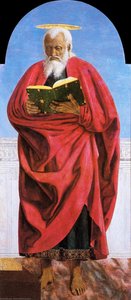
In the quietude of the Early Renaissance, few works capture the intersection of divine mystery and mathematical precision as poignantly as Piero della Francesca’s “Angel.” Painted around 1452, this masterpiece serves as a profound window into a world where the spiritual and the physical are harmoniously entwined. The painting presents us with an angelic figure, a woman of ethereal beauty whose presence commands a profound stillness. Adorned with a delicate crown, her gaze is not one of overwhelming power, but of a deep, contemplative grace. As she emerges from soft shadows, her serene expression invites the viewer into a state of meditative reflection, making the artwork much more than a mere religious icon; it is an emotional sanctuary.
The composition is a masterclass in the Early Renaissance style, characterized by a unique blend of humanism and geometric rigor. Piero della Francesca, a painter who was as much a mathematician as an artist, utilized the revolutionary principles of linear perspective to construct a space that feels both tangible and transcendent. Through his meticulous use of light and shadow, he achieves a sculptural quality in the figure’s features, lending the angel a weight and reality that grounds her celestial nature. The color palette is intentionally restrained, favoring muted, earthy tones and soft highlights that avoid the distraction of vibrant hues, thereby focusing the observer's attention on the purity of form and the solemnity of the subject.
Symbolism Woven into the Landscape
The surrounding landscape is far from arbitrary; it serves as a rich tapestry of symbolic references that deepen the painting's intellectual complexity. The jagged rocks represent obstacles to faith and earthly concerns, while simultaneously symbolizing resilience and permanence—qualities associated with God’s unwavering presence throughout history. Scattered birds—one perched atop the rocky outcrop and another nestled at the base—are traditional emblems of hope and resurrection, mirroring the angel's gaze towards a future filled with promise.
Furthermore, the inclusion of specific objects adds layers of profound meaning to the scene. A clock can be seen on the upper right side of the painting, symbolizing the passage of time and the inevitability of mortality, reminding viewers of the ephemeral nature of earthly existence. In contrast, a bowl visible at the lower center represents purity and contemplation, inviting the observer to reflect on eternal spiritual values. This careful arrangement of elements ensures that every detail contributes to the overall equilibrium of the piece, creating a visual symphony of meaning.
An Enduring Legacy for the Modern Collector
Today, the allure of Piero della Francesca’s genius continues to inspire art lovers and interior designers alike. The Angel possesses an undeniable emotional impact that transcends its era, offering a sense of peace and intellectual depth that is rare in contemporary collections. For those seeking to bring a touch of Renaissance grace into a living space, a high-quality reproduction offers a unique opportunity to embrace a connection to one of the most influential thinkers of the Italian Renaissance.
Investing in a meticulous print of this work allows for the appreciation of its luminous quality and textural detail. Whether placed in a quiet study or as a focal point in a sophisticated gallery, the “Angel” serves as a testament to the enduring power of artistic vision, inviting anyone who views it into a space of quiet reverence and timeless beauty.
Frågor och svar
Vilken användning och vilken yta rekommenderas för "Angel" av Piero della Francesca?
"Angel" av Piero della Francesca rekommenderas för Focal, helst i ett Bedroom. Användningsområde och rymd hjälper dig att avgöra var en reproduktion passar bäst.
Vilken kontrastnivå uppvisar "Angel" av Piero della Francesca?
Kontrastnivån i "Angel" av Piero della Francesca är Statement.
Vad föreställer "Angel" av Piero della Francesca och vilken stämning förmedlar det?
"Angel" visar religious symbolism, medieval art, italian renaissance, angel figure, landscape composition, geometric ornamentation, symbolic objects och dess förmedlade stämning är Ethereal.
Om konstnären
En visionär från Toscana: Piero della Francescas liv och konst
Piero di Benedetto de’ Franceschi, född omkring 1415 i den stillsamma umbriska staden Sansepolcro, reste sig ur en relativt obemärkt bakgrund för att bli en av de mest intellektuellt krävande och djupt inflytelserika målarna under tidig renässans. Till skillnad från många samtida vars liv är väl dokumenterade, förblir Piero något gåtfull; detaljer om hans familj och tidiga utbildning är knapphändiga. Vad som med säkerhet kan sägas är att han besatt ett extraordinärt sinne, lika fängslad av Florens framväxande konstnärliga strömningar som av matematikens och geometrins precisa språk. Hans far var skomakare och garvare, vilket gav Piero en stabil om än anspråkslös uppväxt, och det antas att hans första konstnärliga utbildning ägde rum lokalt, där han absorberade traditionerna inom centralitaliensisk målning innan de seismiska förändringar som initierades av Masaccio och Brunelleschi. Denna tidiga grund skulle visa sig vara avgörande för att forma hans unika syntes av gotisk grace och renässansinnovation.
Florens och en ny estets ågrymning
Runt 1439 begav sig Piero till Florens, en stad som då pulserade av konstnärlig energi. Denna period visade sig vara omvälvande. Han samarbetade med Domenico Veneziano i fresker för Sant’Egidios kyrka, en erfarenhet som exponerade honom direkt för den spirande florentinska stilen. Ännu viktigare var att han fördjupade sig i studiet av Masaccios banbrytande fresker i Brancacci-kapellet – en uppenbarelse inom naturalism och rumslig illusion. Brunelleschis arkitektoniska innovationer, särskilt hans behärskning av linjär perspektiv, påverkade också Pieros konstnärliga utveckling djupt. Han nöjde sig inte med att bara anta dessa tekniker; han *analyserade* dem, dissekerade deras underliggande matematiska principer. Detta analytiska tillvägagångssätt skulle bli kännetecknet för hans verk och skilja honom från många av hans jämnåriga. Han absorberade Florens betoning på realism och anatomi men filtrerade det genom en distinkt personlig lins, präglad av stillhet, klarhet och en nästan asketisk skönhet. Efter att ha återvänt till Sansepolcro på 1440-talet började Piero etablera sig som en ledande konstnär, även om han fortsatte att resa och arbeta i hela Italien under decennier.
Mästerverk av ljus och geometri
Piero della Francescas konstnärliga arv vilar på ett relativt litet men exceptionellt kraftfullt verk. Förmodligen är hans mest kända prestation freskcykeln *Det sanna korsets historia* i San Francesco-kyrkan i Arezzo. Detta monumentala narrativ vecklas ut med anmärkningsvärd klarhet och serenitet, som skildrar scener från legenden om korsets trä med en oöverträffad känsla av rumsdjup och psykologisk insikt. Figurerna är inte bara representationer av bibliska karaktärer; de är genomsyrade av en tyst värdighet och kontemplativ stillhet som lyfter dem till arketypiska former. *Montefeltro-altartavlan*, nu i Brera Gallery i Milano, visar hans behärskning av oljemålning och förfinad porträttkonst, med slående skildringar av Federico da Montefeltro och Battista Sforza – porträtt som hyllas för deras psykologiska skärpa och minutiösa detaljer. *Kristi dop* i National Gallery i London är ett annat bevis på hans skicklighet; dess eleganta komposition, lysande färger och subtila utforskning av ljus skapar en atmosfär av djup andlig resonans. Hans stil visar konsekvent ett engagemang för geometrisk precision, balanserade kompositioner och en återhållsam palett, som använder ljus och skugga inte bara för estetisk effekt utan som verktyg för att definiera form och skapa en känsla av påtaglig volym.
Bortom penseln: En matematikers vision
Det som verkligen utmärker Piero della Francesca är hans unika intellektuella bredd. Han var inte bara en konstnär; han var också matematiker, geometrer och författare. Hans avhandling *De Prospectiva Pingendi* (Om perspektivmålning) står som en av de tidigaste formella avhandlingarna om perspektiv, vilket visar hans djupa förståelse för matematiska principer och deras tillämpning på konst. Detta verk var inte bara teoretiskt; det informerade alla aspekter av hans målning. Han beräknade minutiöst rumsförhållanden, använde geometriska konstruktioner för att organisera kompositioner och använde ljus inte bara för att belysa utan också för att definiera form med vetenskaplig precision. Hans intresse för optik förbättrade ytterligare hans förmåga att skapa illusioner av djup och realism. Denna sammansmältning av konstnärlig känslighet och matematisk stringens är det som ger Pieros verk dess bestående kraft och intellektuella vikt. Han trodde att skönheten låg i ordning och proportion, och han strävade efter att översätta dessa principer till visuell form.
Ett varaktigt arv
Piero della Francesca dog 1492 och lämnade ett arv som inte skulle bli fullt uppskattat förrän århundraden senare. Även om han inte var lika produktiv som några av sina samtida som Leonardo da Vinci eller Michelangelo, utövade hans överlevande verk en subtil men djupgående inverkan på generationer av konstnärer. Leonardo studerade själv Pieros tekniker och beundrade hans behärskning av ljus och skugga. Raphael hämtade också inspiration från hans kompositioner och rumsarrangemang. Under 1900-talet återupptäckte konsthistoriker Pieros verk, erkände honom som en nyckelfigur i utvecklingen av renässanskonsten – en bro mellan den internationella gotiska stilen och högrenässansen. Hans betoning på matematiskt perspektiv, realistisk representation och lugn humanism fortsätter att resonera med konstnärer och tittare lika mycket, vilket befäster hans plats som en av de viktigaste och mest bestående mästarna under den italienska renässansen. Hans målningar är inte bara vackra föremål; de är fönster in i en värld där konst, vetenskap och andlighet konvergerar i harmonisk balans.

Piero della Francesca
1415 - 1492 , Italien
Snabbfakta
- Artistic Movement Or Style: Tidig renässans
- Artists Or Movements Influenced By This Artist:
- Leonardo da Vinci
- Raphael
- Artists Who Influenced This Artist:
- Masaccio
- Domenico Veneziano
- Date Of Birth: ca 1415
- Date Of Death: 1492
- Full Name: Piero di Benedetto de’ Franceschi
- Nationality: Italiensk
- Notable Artworks:
- Sanna korsets historia
- Montefeltro altarskåp
- Kristi dop
- Place Of Birth (City And Country): Sansepolcro, Italien
Relaterade artiklar

Celestial Messengers: A Comprehensive Exploration of Angelic Representation in Art History
Explore the captivating history of angels in art! Discover symbolism, iconic Renaissance masterpieces & renowned artists. Expert insights for art lovers & collectors at OriginalUniqueArt.

Romantiska landskap: Topp 10 mästerverk som definierade en epok – OriginalUniqueArt.se
Utforska de 10 mest ikoniska mästerverken inom romantisk landskapsmålning! Lär känna Caspar David Friedrich, Turner & andra. Hitta inspiration och köp museumkvalitativa konsttryck på OriginalUniqueArt.com.

Celestial Messengers: Angels in Painting – A Historical & Artistic Exploration
Explore the captivating history of angels in painting! Discover symbolism, iconic Renaissance & Byzantine masterpieces, and renowned artists. Expert insights for art lovers & collectors at OriginalUniqueArt.

Vita mästerverk: Topp 10 målningar som hyllar ljuset – OriginalUniqueArt.com
Utforska 10 ikoniska vita målningar av Monet, Whistler & fler! Lär känna historien bakom dessa ljusa konstverk och upptäck hur vitt används för att skapa stämning. Köp museumkvalitativa tryck på OriginalUniqueArt.com.

Paul Cézannes 25 Mästerverk: En Konsthistorisk Resa för Hemmet
Utforska Paul Cézannes 25 mest ikoniska målningar! Fördjupa dig i impressionismens värld, från Mont Sainte-Victoire till stillsben. Hitta inspiration & museumkvalitativa konsttryck på OriginalUniqueArt.com.