- Hem

- Reproduktion av oljemålning
- Phyllida Barlow
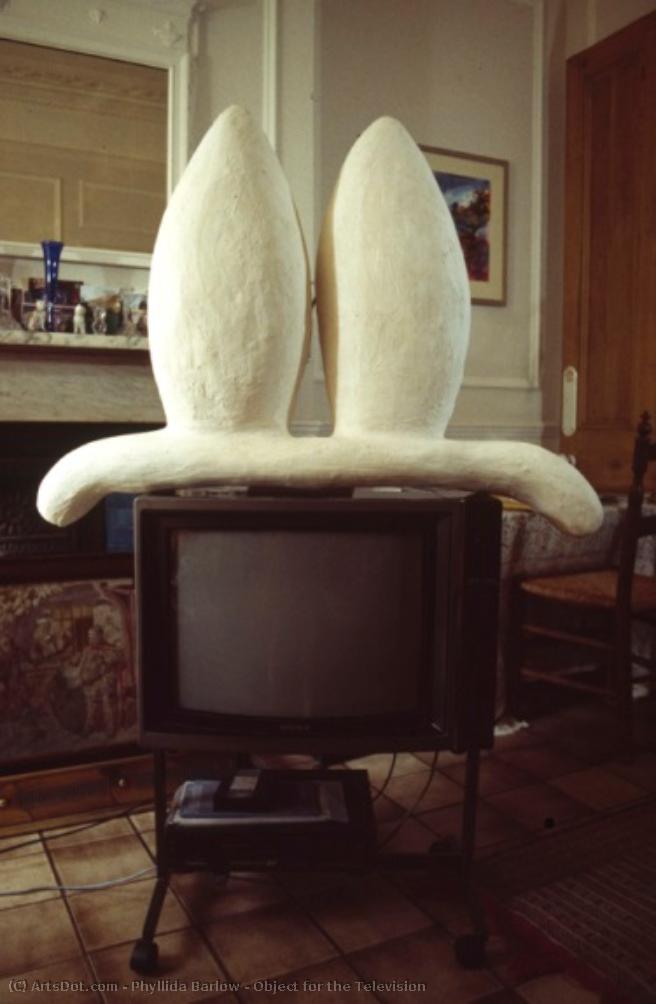
- Object for the Television
 Preview
 Köp tryck Köp högupplöst digital bild
 Skicka
 Dela
Dela
 Visa detaljer
 Lägg till i favoriter

 Ladda ner
 Liknande objekt
 Röntgen
 Bildspel
Object for the Television


 Visa mer
Handgjord oljereproduktion
Handmålad olja på duk i din valda storlek och ram, tillverkad efter beställning av våra konstnärer.




































Välj bland våra förinställda storlekar som motsvarar konstverkets ursprungliga proportioner.

Du kan ange egna mått för att passa en specifik ram eller yta. Om den valda storleken inte matchar originalbildens proportioner kommer vi antingen att beskära konstverket eller utöka målningen med ytterligare handmålade element. En digital skiss skickas till dig för godkännande innan produktionen påbörjas.
Observera att förhandsvisningen på skärmen inte återspeglar den faktiska beskärningen eller utökningen. Endast skissen visar den slutgiltiga kompositionen korrekt.
Även om anpassade storlekar är möjliga, rekommenderar vi att du väljer en dimension från den fördefinierade listan för att bevara originalproportionerna.
Efter beställning kommer OriginalUniqueArt.com team att mejla kunden för instruktioner och tillhandahålla en skissförhandsvisning
Leverans över hela världen () på 3–4 veckor istället för standard 5 veckor. (24 juli). Inga kompromisser med kvaliteten.

Fri expressfrakt över hela världen

Högkvalitativ linnecanvas

Fullständig fraktförsäkring

Garantier för återbetalning av tullavgifter

Garantier för exakt färgåtergivning

60 dagars returrätt (endast vid fabrikationsfel)

100% pengarna tillbaka-garanti

Mängdrabatt erbjuds
 Glasalternativet är endast tillgängligt i storlekar under 110 cm.

Object for the Television
Teknik för reproduktion
Storlek på reproduktion
-


Slutgiltigt pris
-
Konstnärsbiografi
Phyllida Barlow: A Colossal Presence in Sculpture
Phyllida Barlow (1944-2023), a British visual artist, carved an extraordinary path through the world of sculpture and installation art, leaving behind a legacy of monumental, playful, and profoundly engaging works. Born in Newcastle upon Tyne and raised amidst the post-war landscape of London, her artistic journey was shaped by both personal experiences – including childhood memories of bomb damage – and a deep engagement with the evolving practices of contemporary art. Barlow’s career spanned over six decades, marked by a consistent exploration of materiality, scale, and the relationship between the artwork and its environment. She wasn't simply creating objects; she was constructing immersive experiences that challenged viewers to reconsider their perceptions of space, form, and meaning.Early Life and Artistic Training
Phyllida Barlow’s artistic development began at Chelsea College of Art in 1960, where she studied under George Fullard, a pivotal figure who instilled in her a belief that the act of making itself was an adventure. This early influence encouraged a playful approach to sculpture, rejecting traditional notions and embracing experimentation with unconventional materials. She continued her studies at the Slade School of Fine Art from 1963 to 1966, further honing her skills and developing her distinctive style. Her marriage to Fabian Benedict Peake, the son of renowned author Mervyn Peake, provided a supportive creative partnership, and their family life nurtured a vibrant artistic environment. Barlow’s time at the Slade was not just about technical proficiency; it was a period of intellectual growth, shaping her understanding of art's potential to disrupt and provoke. She later became a respected teacher at the Slade for over forty years, mentoring generations of artists including Rachel Whiteread and Ángela de la Cruz, leaving an indelible mark on the British art scene.A Distinctive Material Language
What truly set Barlow’s work apart was her masterful manipulation of materials. Rather than relying on precious metals or polished stone, she embraced a vocabulary of inexpensive, readily available elements – cardboard, plywood, plaster, cement, fabric, and paint. These humble materials were transformed through layers of accumulation, removal, and juxtaposition, creating forms that seemed to defy gravity and logic. Her sculptures often appeared simultaneously heavy and light, imposing yet strangely delicate. This deliberate choice of materials wasn’t simply a stylistic decision; it was a conscious rejection of monumentality and an embrace of the inherent qualities of each substance. Barlow herself described her process as “more functional than artistic,” highlighting her focus on the physical act of creation and the exploration of material potential.Major Achievements and Recognition
Phyllida Barlow’s influence extended far beyond the British art world. In 2017, she represented Great Britain at the Venice Biennale, a prestigious international exhibition that brought her work to a global audience. Her monumental installation for the event, “The Place Where We Met,” was particularly notable for its scale and its ability to transform the viewer’s experience of the gallery space. Throughout her career, Barlow received numerous awards and accolades, including the Aachen Art Prize in 2012 and recognition as a Royal Academician in 2011. Her work has been exhibited extensively in major museums and galleries around the world, solidifying her position as one of the most important sculptors of her generation. Her later years were marked by continued creative output and a commitment to pushing the boundaries of sculptural practice.Legacy and Influence
Phyllida Barlow’s legacy is complex and multifaceted. She challenged conventional notions of sculpture, moving away from traditional representations and embracing abstraction, process, and the inherent qualities of her chosen materials. Her work invites viewers to engage with it on a physical and emotional level, prompting reflection on themes of space, materiality, and the nature of art itself. Her anti-monumental approach—leaving seams visible, revealing the construction process—demanded that viewers consider not just the finished object but also the act of making. Barlow’s influence can be seen in the work of countless artists who followed in her footsteps, demonstrating the enduring power of her vision and her profound contribution to contemporary art. Her passing in 2023 marked the loss of a truly unique artistic voice, but her monumental sculptures will continue to inspire and challenge audiences for generations to come.
Phyllida Barlow
1944 - 2023 , United Kingdom
Kortfattad information
- Artistic Movement Or Style: Sculpture, Installation art
- Artists Or Movements Influenced By This Artist: ['New Generation Sculpture']
- Artists Who Influenced This Artist: ['George Fullard']
- Date Of Birth: April 4, 1944
- Date Of Death: March 12, 2023
- Full Name: Dame Gillian Phyllida Barlow
- Nationality: British
- Notable Artworks:
- untitled: female
- Object for the Television
- Place Of Birth: Newcastle upon Tyne, UK

