

 Förhandsvisa
 Skicka
 Dela
Dela
 Visa detaljer
 Guide
Guide

 Ladda ner
 Liknande objekt
 Röntgen
 Bildspel
 Statistik
La prairie


 Visa mer
Giclée / Konsttryck
Giclée- eller canvasprint av museumskvalitet med snabb produktion och flexibla ytbehandlingsalternativ. ( Beställ handmålad reproduktion Byt till digital bild)




P118B Skr10

P118H Skr10

P118W Skr10

P438Z Skr10

P508JH Skr12

P508YH Skr12

P805H Skr10

P805Z Skr10

P919BZ Skr10

P919G Skr10

P919XJ Skr10

P959ZH Skr10

P968JZ Skr12

W106C Skr8

W218G Skr10

W218JH Skr8

W218Y Skr10

W307PJ Skr10

W316G Skr10

W316PJ Skr8

W316Y Skr10

W398PJ Skr8

W4111J Skr10

W500HY Skr15

W500JH Skr15

W692G Skr12

W849H Skr8

W940BG Skr15

W953PJ Skr8




Välj bland våra förinställda storlekar som motsvarar konstverkets ursprungliga proportioner.

Ange den bredd och höjd du behöver för att passa din ram eller vägg. Ett tryck kan endast beskäras, aldrig göras större än originalbilden, vilket innebär att ett format med en annan proportion leder till att en del av bilden går förlorad. Vi skickar en digital mockup för godkännande innan vi påbörjar tryckningen. Bilden som visas på denna sida visar inte den faktiska beskärningen — det är endast mockuppen som gör det.
Leverans över hela världen () på 2 veckor istället för standard 4/5 veckor. (25 oktober)

Fri expressfrakt över hela världen

Högkvalitativ linnecanvas

Fullständig fraktförsäkring

Garantier för återbetalning av tullavgifter

Garantier för exakt färgåtergivning

100 dagars returrätt (endast vid fel)

100% pengarna tillbaka-garanti

Mängdrabatt erbjuds
 Glasalternativet är endast tillgängligt i storlekar under 110 cm.

La prairie
Giclée / Konsttryck
Storlek på reproduktion
-


Slutgiltigt pris
Skr 793
La Prairie: A Window Into Dutch Pastoral Perfection
Paulus Potter’s “La Prairie,” painted circa 1652, stands as an iconic exemplar of the Dutch Golden Age's fascination with the natural world and its masterful depiction of rural life. More than just a landscape scene—it’s a carefully constructed meditation on beauty, tranquility, and the harmonious relationship between humanity and nature, themes deeply resonant within the artistic sensibilities of the era.
The painting captures a serene meadow populated by cows grazing peacefully beneath a cloudy sky. Potter's meticulous observation is evident in every detail—the subtle variations in grass color, the texture of bark on the dominant tree, and the realistic rendering of bovine anatomy. This dedication to realism distinguishes “La Prairie” from earlier artistic conventions and firmly establishes it as a cornerstone of Romanticism’s burgeoning influence.
- Composition: Potter employs a classic landscape arrangement—a low horizon line emphasizing the expansive sky—creating a balanced visual composition. The cows are positioned strategically in the foreground and midground, drawing the viewer's gaze inwards, while a substantial oak tree anchors the scene on the left side, providing vertical stability.
- Color Palette: Dominated by earthy hues – muted greens, browns, and blues—the color palette reflects the subdued lighting conditions of the meadow. Highlights of white accentuate the cows’ coats, contrasting effectively with darker shades of their bodies and foliage.
- Technique: Potter skillfully utilizes oil paint on canvas, layering pigments to achieve depth and subtle gradations in color. Brushstrokes are predominantly smooth and blended, contributing to a remarkably lifelike appearance—a testament to the artist’s mastery of chiaroscuro (light and shadow).
Beyond its aesthetic beauty, “La Prairie” carries symbolic weight. The cows represent domesticity and prosperity – symbols central to Dutch society during Potter's time. Simultaneously, the overcast sky evokes a sense of contemplative melancholy—a subtle suggestion that even in idyllic landscapes, life is punctuated by moments of quiet reflection. This duality underscores Potter’s profound understanding of human emotion and his ability to translate it into visual form.
The painting’s enduring appeal lies not only in its technical brilliance but also in its timeless portrayal of pastoral serenity. It serves as a poignant reminder of the beauty found in simplicity and the importance of appreciating the natural world—a sentiment that continues to inspire artists and collectors alike. Its inclusion in the Louvre Museum's collection ensures its legacy as one of the most celebrated landscapes of the Dutch Golden Age.
Frågor och svar
Vilken konstnärlig inriktning tillhör "La prairie" av Paulus Potter?
Konststilen som förknippas med "La prairie" av Paulus Potter är Dutch Golden Age. Denna klassificering placerar verket bland relaterade konstnärer och konstverk.
Är "La prairie" ett av Paulus Potters mest populära verk?
"La prairie" klassificeras som Iconic.
Vilken användning och vilken yta rekommenderas för "La prairie" av Paulus Potter?
"La prairie" av Paulus Potter rekommenderas för Accent, helst i ett Living Room. Användningsområde och rymd hjälper dig att avgöra var en reproduktion passar bäst.
Konstnärsbiografi
A Brief Life Illuminated: The World of Paulus Potter
Paulus Potter, a name inextricably linked to the heart of the Dutch Golden Age, lived a life tragically short yet profoundly impactful on the landscape of art. Born in Enkhuizen on November 20, 1625, and baptized that very same day, his artistic journey began within a family already steeped in creative tradition. His father, Pieter Symonsz Potter, was a highly respected painter specializing in the intricate craft of gilded leather hangings and charming genre scenes – capturing everyday life with remarkable detail and warmth. His mother, Aaltje Paulusdr Bartsius, possessed familial ties to Willem Bartsius, another esteemed artist whose legacy continued through her lineage. This rich artistic heritage provided a fertile ground for young Paulus’s burgeoning talent, nurturing his innate sensitivity to beauty and form. The family's relocation first to Leiden in 1628, and then to the bustling metropolis of Amsterdam in 1631, proved pivotal moments, offering him access to a wider world of artistic influence and opportunity – a vibrant hub teeming with workshops, galleries, and fellow artists eager to exchange ideas. It was within the dynamic atmosphere of Amsterdam that Paulus began his formal training under his father’s guidance, absorbing not only technical skills but also a deep appreciation for the traditions of Dutch painting. While some scholars suggest potential influences from Claes Moeyaert, a prominent painter based in Amsterdam known for his dramatic landscapes and theatrical compositions, the precise nature of his early artistic development remains subject to ongoing research.From Delft Guilds to Hague Landscapes
Paulus’s ambition quickly propelled him towards recognition within the established art world. He joined the prestigious Guild of Saint Luke in Delft, a crucial step for any aspiring artist seeking legitimacy and professional standing in the Dutch Republic. However, his artistic trajectory truly began to take shape upon his move to The Hague around 1649. Establishing himself near the renowned landscape painter Jan van Goyen proved an exceptionally influential decision; Van Goyen’s mastery of atmospheric effects – the subtle interplay of light and shadow, the evocative use of mist and haze – would subtly permeate Potter's own style, shaping his approach to depicting the natural world. This period also marked a significant personal transformation in Paulus’s life. On July 1650, he married Adriana van Balckeneynde, a union that opened doors to influential circles thanks to her father, a prominent building contractor and respected figure within Dutch society. Through this connection, Potter gained access to the company of wealthy patrons, including Amalia of Solms-Braunfels, an esteemed noblewoman who would become a significant supporter of his artistic endeavors. A brief return to Amsterdam in May 1652, prompted by an invitation from physician and art enthusiast Nicolaes Tulp – who commissioned a portrait of his son Dirck – provided further recognition and exposure within the city’s artistic community. Sadly, this period of burgeoning success was tragically cut short; Paulus Potter succumbed to tuberculosis on January 17, 1654, at the young age of twenty-eight, leaving behind a legacy of breathtaking beauty and profound emotional resonance.The Pastoral Vision: Style and Major Works
Paulus Potter carved a unique and instantly recognizable niche for himself within the vibrant landscape of Dutch Golden Age painting. He is most celebrated for his captivating depictions of animals – particularly cattle – seamlessly integrated into expansive, meticulously rendered landscapes. His compositions are often characterized by a strikingly low vantage point, an artistic choice that dramatically emphasizes the scale and grandeur of nature, dwarfing even the majestic beasts he portrays. *The Young Bull*, created around 1647, remains his most iconic work, now housed in the Mauritshuis in The Hague. Initially met with some critical reservation – some critics found the subject matter somewhat unconventional for a painter of his stature – it later gained widespread acclaim as a pioneering example of Romanticism’s nascent sensibility – a profound emotional connection to the natural world. Beyond this masterpiece, Potter produced other notable paintings such as *Figures with Horses by a Stable* (1647), depicting a serene scene of livestock grazing near a rustic stable; *Punishment of a Hunter* (circa 1647), a dramatic portrayal of a hunter confronting his quarry in the wilderness; *Two Pigs in a Sty* (1649), capturing a simple yet poignant moment of domestic tranquility; and *Wolf-hound* (approximately 1650–1652), an evocative depiction of a lone wolf surveying its domain. He also demonstrated his versatility through numerous etchings, often focusing on the detailed portrayal of cattle and other animals – showcasing his remarkable technical skill and artistic sensitivity.Influences and Historical Significance
Paulus Potter’s work stands as a testament to both his exceptional talent and his unique artistic vision. While undeniably influenced by the traditions of Dutch landscape painting, particularly the atmospheric techniques of Jan van Goyen, Potter transcended mere imitation; he infused his scenes with an emotional depth that resonated deeply with viewers then, and continues to do so today. He is now widely recognized as a precursor to the Romantic movement – anticipating its emphasis on the sublime power of nature and the emotional response it evokes. His paintings capture not just the visual beauty of the Dutch countryside but also a sense of profound connection to the natural world, reflecting a growing awareness of the importance of preserving this precious resource. Potter’s work was rediscovered in the 19th century, gaining renewed appreciation for its naturalism and emotional resonance. His legacy endures as a reminder of the power of art to capture beauty, evoke emotion, and inspire contemplation about our relationship with the world around us.Key Artistic Characteristics
- Low Horizon Lines: Potter consistently employed low horizon lines in his compositions, creating a sense of vastness and emphasizing the scale of the landscape.
- Realistic Animal Depiction: He was renowned for his meticulous attention to detail when rendering animals, capturing their anatomy and behavior with remarkable accuracy.
- Atmospheric Effects: His landscapes frequently feature subtle atmospheric effects – light, shadow, and mist – that contribute significantly to the overall mood and realism of each scene.
- Subtle Color Palette: Potter typically favored a muted color palette dominated by earth tones, reflecting the natural hues of the Dutch countryside. This restrained approach further enhances the sense of authenticity and harmony within his paintings.

Paulus Potter
1625 - 1654 , Nederländerna
Kortfakta
- Artistic Movement Or Style: Romantik
- Artists Or Movements Influenced By This Artist: ['Romantik']
- Artists Who Influenced This Artist: ['Jan van Goyen']
- Date Of Birth: 20 nov 1625
- Date Of Death: 17 jan 1654
- Full Name: Paulus Potter
- Nationality: Nederländsk
- Notable Artworks:
- Ungtjuren
- Figurer med hästar
- Jaktens straff
- Place Of Birth: Enkhuizen, Nederl.
Relaterade artiklar

Golden Light & Dutch Skies: The Timeless Magic of Dutch Golden Age Landscapes
Discover the breathtaking beauty of Dutch Golden Age landscapes. Explore the mastery of light, chiaroscuro, and 17th-century realism through an expert art history lens, celebrating the enduring legacy of the Dutch Masters for discerning collectors and art lovers.

Golden Light & Dutch Skies: Bringing the Magic of Dutch Golden Age Landscapes into Your Home
Transform your home with the breathtaking light of Dutch Golden Age landscapes. Discover how hand-painted oil reproductions of masterworks like Ruisdael and Vermeer bring timeless elegance, atmosphere, and soulful texture to modern interiors. Elevate your space with museum-quality art.

Masterpieces of Light: A Definitive Guide to the Landscapes of the Dutch Golden Age
Discover the luminous mastery of Dutch Golden Age landscapes. Our expert guide explores the atmospheric realism of masters like Van Goyen and Cuyp. Elevate your space with museum-quality, hand-painted oil reproductions from OriginalUniqueArt.com. Art history, beautifully realized.

Nederländsk Guldålder: Topp 10 mästerverk som definierade epoken – konst & heminredning
Utforska de 10 ikoniska mästerverken från den nederländska guldåldern! Lär känna Rembrandt, Vermeer och Hals – deras teknik & berättelser. Hitta konsttryck och inspiration för din heminredning på OriginalUniqueArt.com. Upptäck hela samlingen online!
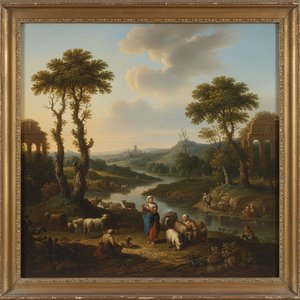
Nicolaes Berchem: Dutch Golden Age Pastoralism & the Evolution of Landscape Painting
Explore the captivating world of Nicolaes Berchem, a leading Dutch Golden Age painter. Discover his idyllic landscapes, masterful technique & lasting influence on art history. Learn more at OriginalUniqueArt.

