

 Förhandsvisa
 Skicka
 Dela
Dela
 Visa detaljer

 Ladda ner
 Liknande objekt
 Röntgen
 Bildspel
 Statistik
Morphine Addicts
 Acrylic On Canvas
- WallArt
- Impressionism
 1887
1887 24.0 x 37.0 cm
 Metropolitan Museum of Art
 Visa mer
Köp en högupplöst, förbättrad digital bild med betydligt högre kvalitet än förhandsvisningen online.
Varje fil är noggrant förberedd av våra interna specialister med hjälp av avancerade verktyg och professionell manuell retuschering. Vi säkerställer att varje bild har exceptionell skärpa, exakt färgåtergivning och fina detaljer.
Den slutgiltiga filen levereras via e-post inom 72 timmar, optimerad för omedelbar användning i professionella sammanhang, redaktionellt bruk och tryckmiljöer. Detta är samma kvalitet som med förtroende används av ledande designstudior, förlag och gallerier.
Digital bild
Ladda ner en högupplöst fil för personlig visning, utskrift och kreativa projekt. ( Byt till tryck Beställ handmålad reproduktion)
Ingår i varje beställning av digital bild
Professionell digital leverans, garanterad
När du väljer OriginalUniqueArt.com får du inte bara en bild – du får ett professionellt förädlat digitalt konstverk, skapat med precision och med en garanterad tillfredsställelse. Här är allt som ingår i din beställning, automatiskt:

Snabb leverans via e-post
Din högupplösta digitala bild skickas till dig via e-post inom 72 timmar efter beställning – redo för omedelbar användning.

AI-förbättrad digital bild
Ditt konstverk optimeras professionellt med hjälp av avancerade AI-verktyg och manuell redigering, vilket garanterar maximal detaljrikedom, skärpa och färgnoggrannhet.

Gratis livstidsåterutskick
Har du råkat radera eller tappa bort din fil? Ingen oro – vi skickar den kostnadsfritt till dig när som helst.

Inga importavgifter – någonsin
Njut av ditt konstverk omedelbart utan tull, importavgifter eller leveranskostnader – digitala nedladdningar är alltid skattefria.

Garanterad färgåtergivning
Vi säkerställer att din digitala bild återger de ursprungliga färgerna så exakt som möjligt med hjälp av professionella verktyg och färghantering.

100 dagars nöjdhetsgaranti
Om du inte är nöjd med din digitala bild kommer vi att revidera den eller återbetala 100% inom 100 dagar – utan frågor.

100% pengarna-tillbaka-garanti
Inte nöjd? Få full återbetalning inom 100 dagar efter att du mottagit din digitala fil – utan frågor.

Rabatt vid storköp
Köp 3 bilder, spara 10% – Köp 5, spara 15% – Köp 10+, spara 20%. Perfekt för kreativa projekt, gallerier och byråer.
Paul Albert Besnard - Morphine Addicts
Paul Albert Besnard (1849-1934) stands as a singular figure in French art of the late nineteenth and early twentieth centuries—a painter who stubbornly resisted categorization while simultaneously achieving remarkable success across diverse artistic mediums. Born in Paris, he possessed an innate talent nurtured by formal training at the École des Beaux-Arts under Jean Bremond and profoundly shaped by the pioneering spirit of Alexandre Cabanel, whose meticulous realism served as a cornerstone for Besnard’s initial artistic explorations. His academic grounding provided a disciplined foundation upon which he would later forge his own distinctive path, one characterized by an unwavering fascination with color and light—concepts championed by the Impressionists. Despite eschewing the overtly dramatic aesthetic favored by his contemporaries, Besnard skillfully adapted Impressionistic techniques to monumental decorative pro Besnard’s oeuvre is marked by a profound sensitivity to human emotion and psychological nuance, particularly evident in his portraits of women – figures rendered with exquisite detail and imbued with an aura of melancholy. “Morphine Addicts,” completed in 1887, exemplifies this artistic approach, presenting two women presented in a starkly lit laboratory setting—a juxtaposition that immediately invites contemplation on themes of illness, addiction, and the complexities of human experience. The artist’s masterful command of etching technique contributes significantly to the artwork's expressive power, capturing subtle tonal variations and textural nuances with remarkable precision. The composition itself is deliberately restrained, focusing intently on the faces and upper bodies of the subjects—a stylistic choice that underscores Besnard’s commitment to realism while simultaneously conveying a sense of intimacy. The figures are positioned slightly off-center, creating visual balance and drawing the viewer's gaze towards their expressive eyes. A table laden with scientific glassware serves as a grounding element, anchoring the scene within its clinical context and subtly hinting at the underlying narrative. Besnard’s meticulous hatching and crosshatching techniques—inherited from Cabanel’s influence—are employed to build up areas of shadow, enhancing depth and creating an atmosphere of quiet contemplation. Color plays a crucial role in conveying emotion, though Besnard eschews vibrant hues characteristic of Impressionism, opting instead for a monochrome palette dominated by shades of grey and white. This tonal scheme amplifies the artwork’s melancholic mood, emphasizing the vulnerability of the subjects and fostering a connection with the viewer on an emotional level. The artist skillfully utilizes light and shadow to sculpt the forms of the women's faces, highlighting their expressions and conveying subtle nuances of emotion—a testament to Besnard’s artistic prowess. Ultimately, “Morphine Addicts” transcends mere visual representation; it functions as a poignant meditation on human suffering and resilience. Besnard’s stylistic blend of academic realism with Impressionistic sensibilities captures the essence of his era—a period marked by intellectual curiosity and an exploration of psychological states. The artwork's enduring appeal lies in its ability to provoke reflection on themes of addiction, vulnerability, and the profound beauty found within moments of quiet introspection. It remains a compelling example of Besnard’s artistic vision and a testament to the power of art to communicate complex emotions with grace and subtlety.Konstnärsbiografi
Paul Albert Besnards lysande arv
Paul Albert Besnard (1849-1934) framstår som en unik gestalt i den franska konstens väv, en målare som navigerade genom det sena nittonde och tidiga tjugonde århundradets skiftande strömningar med en särpräglad och ogreppbar elegans. Hans konstnärliga resa tog sin början i Paris, inom de strikta ramarna för École des Beaux-Arts, där han var elev under Jean Bremond. Hans tidiga utveckling präglades djupt av Alexandre Cabanels noggranna realism, ett inflytande som gav Besnard en disciplinerad akademisk grund. Men under denna klassiska skolning bultade hjärtat hos en moderniserare, en konstnär som slutligen skulle röra sig bortom traditionens stela gränser för att omfamna ljusets och atmosfänens förgängliga skönhet.
Allt eftersom hans karriär mognade, började Besnard överbrygga klyftan mellan den strukturerade akademiska måleriet och impressionismens livfulla, sensoriska utforskningar. Även om han aldrig helt övergav formen till förmån för ren abstraktion, blev han en mästare på färg, där han använde en palett som kändes både lysande och djupt emotionell. Hans verk kännetecknas av en orubblig fascination för hur ljuset samspelar med ytor, vare sig det rör sig om den skira huden i ett porträtt eller de vidsträckta arkitektoniska vyerna i hans mest storslagna beställningsverk. Denna förmåga att förena det monumentala med det intima gjorde att han kunde transcendera sin tids etiketter och skapa en stil som kändes både tidlös och slående samtida.
En mästare av skala och själ
Besnards sanna geni var kanske som tydligast i hans förmåga att översätta moderna förnimmelser till en storslagen, dekorativ skala. Han målade inte bara bilder; han transformerade rum. Hans ambitiösa fresker, som pryder några av Frankrikes mest prestigefyllda institutioner, står som ett vittnesbörd om hans vision om konsten som en offentlig och omslutande upplevelse. Dessa verk kan finnas på platser såsom:
- Sorbonne, där hans penseldrag ger liv åt den akademiska storheten.
- École de Pharmacie, som visar hans förmåga att integrera konst med funktionell arkitektur.
- Comédie Françaisas Salle des Sciences, en triumf av dekorativt berättande.
- Hôtel de Ville, som speglar Paris medborgerliga stolthet och estetiska sofistikering.
- Kapellet på sjukhuset i Berck, där hans stationer vid korset omformulerade religiös ikonografi genom en modern, humanistisk lins.
I dessa massiva projekt undvek Besnard den överdrivet dramatiska eller teatrala estetik som många av hans samtida föredrog. Istället använde han ett mer subtilt och atmosfäriskt tillvägagångssätt som lät ljuset vägleda betraktarens öga, vilket säkerställde att även de mest omfattande kompositionerna behöll en känsla av poetisk intimitet och andligt djup.
Porträttkonst och formens intimitet
Bortom freskernas vidsträckta vyer var Besnard en flitig skapare av betydligt mer personliga verk. Han besatt en extraordinär förmåga att fånga sina motivs psykologiska essens genom olja, akvarell, pastell och etsning. Hans porträtt hyllas inte bara för sin tekniska precision, utan för sin djupa emotionella resonans. I hans skildring av Madame Georges Rodenbach finner man en djärv utforskning av skönhet som utmanar konventionella normer, och som visar hans skicklighet i att återge textur och karaktär med lika stor passion.
Hans mångsidighet som grafiker och tecknare tillät honom att experimentera med samspelet mellan skugga och ljus på en mycket mer delikat skala. Oavsett om han fångade den kungliga närvaron hos Belgiens kung och drottning eller ett landskaps stillhet, förblir Besnards verk förankrade i ett inflytande som påminner om Thomas Gainsborough—en viss elegans och rytmisk flöde som lyfter motivet. I slutändan ligger Paul Albert Besnards betydelse i just denna dualitet: han var en konstnär som kunde bemästra Frankrikes största salar, samtidigt som han fångade ljusets mest flyktiga och sköra viskningar.
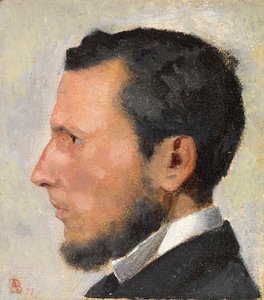
Paul Albert Besnard
1849 - 1934 , Frankrike
Snabbfakta
- Artistic Movement Or Style: Impressionism
- Artists Or Movements Influenced By This Artist: ['Akademiskt måleri']
- Artists Who Influenced This Artist:
- Alexandre Cabanel
- Thomas Gainsborough
- Date Of Birth: Paris, Frankrike (1849)
- Date Of Death: 1934
- Full Name: Paul Albert Besnard
- Nationality: Fransk
- Notable Artworks:
- Timofanes död
- Fred genom skiljedom
- Porträtt av Madame Georges Rodenbach
- Place Of Birth: Paris