
 Förhandsvisa
 Skicka
 Dela
Dela
 Visa detaljer
 Guide
Guide

 Ladda ner
 Liknande objekt
 Röntgen
 Bildspel
 Frågor och svar
 Statistik
The Hunt in the Forest

- 73.0 x 177.0 cm


 Visa mer
Giclée / Konsttryck
Giclée- eller canvasprint av museumskvalitet med snabb produktion och flexibla ytbehandlingsalternativ. ( Beställ handmålad reproduktion Byt till digital bild)




P118B Skr10

P118H Skr10

P118W Skr10

P438Z Skr10

P508JH Skr12

P508YH Skr12

P805H Skr10

P805Z Skr10

P919BZ Skr10

P919G Skr10

P919XJ Skr10

P959ZH Skr10

P968JZ Skr12

W106C Skr8

W218G Skr10

W218JH Skr8

W218Y Skr10

W307PJ Skr10

W316G Skr10

W316PJ Skr8

W316Y Skr10

W398PJ Skr8

W4111J Skr10

W500HY Skr15

W500JH Skr15

W692G Skr12

W849H Skr8

W940BG Skr15

W953PJ Skr8




Välj bland våra förinställda storlekar som motsvarar konstverkets ursprungliga proportioner.

Ange den bredd och höjd du behöver för att passa din ram eller vägg. Ett tryck kan endast beskäras, aldrig göras större än originalbilden, vilket innebär att ett format med en annan proportion leder till att en del av bilden går förlorad. Vi skickar en digital mockup för godkännande innan vi påbörjar tryckningen. Bilden som visas på denna sida visar inte den faktiska beskärningen — det är endast mockuppen som gör det.
Leverans över hela världen () på 2 veckor istället för standard 4/5 veckor. (4 november)

Fri expressfrakt över hela världen

Högkvalitativ linnecanvas

Fullständig fraktförsäkring

Garantier för återbetalning av tullavgifter

Garantier för exakt färgåtergivning

100 dagars returrätt (endast vid fel)

100% pengarna tillbaka-garanti

Mängdrabatt erbjuds
 Glasalternativet är endast tillgängligt i storlekar under 110 cm.

The Hunt in the Forest
Giclée / Konsttryck
Storlek på reproduktion
-


Slutgiltigt pris
Skr 810
A Symphony of Shadow and Light: The Magic of Uccello’s Forest
Step into a world where the boundaries between reality and mathematical illusion dissolve. Paolo Uccello’s “The Hunt in the Forest,” painted around 1470, is not merely a depiction of a noble pastime; it is a breathtaking window into the soul of the Early Renaissance. As you gaze upon this masterpiece, you are immediately swept into a nocturnal landscape that feels both dreamlike and intensely structured. The scene captures the exhilarating energy of a hunting party moving through a dense, mysterious woodland, where the flickering light plays across the armor of riders and the muscular tension of horses. It is a visual symphony orchestrated with meticulous precision, designed to pull the viewer deep into the heart of the thicket, making one feel less like an observer and more like a silent participant in the chase.
The atmosphere of the painting is thick with the palpable excitement of the hunt. Uccello masterfully uses light and shadow to create a sense of drama that resonates through the centuries. There is a rhythmic movement to the composition, as figures on foot and riders on horseback weave through the trees, their weapons glinting faintly in the dim light. For the collector or interior designer, this piece offers a profound emotional depth; it possesses a quiet intensity that can anchor a room, providing a focal point that invites long periods of contemplation and discovery.
The Architect of Perspective: Mastering the Illusion of Depth
What truly sets this work apart is Uccello’s obsessive devotion to the science of linear perspective. Often described as a mathematician of the canvas, Uccello was captivated by the challenge of translating a three-dimensional world onto a flat surface. In “The Hunt in the Forest,” he employs converging lines and carefully calculated spatial arrangements to create an unprecedented sense of depth. This was a revolutionary departure from the flatter, more decorative styles of the preceding Gothic era. By utilizing these mathematical advancements, Uccello does not just paint a forest; he constructs a believable reality.
Every element, from the placement of the furthest trees to the foreshortening of the figures in the foreground, serves the greater goal of spatial illusion. This technical brilliance creates a sense of immersion that is rare even in the greatest works of the Renaissance. For those seeking a high-quality reproduction, this structural complexity translates into a stunning visual texture. The way the eye is drawn inward by the geometric arrangement of the landscape provides a dynamic energy that breathes life into any sophisticated interior space, offering a sense of architectural grandeur and intellectual rigor.
A Legacy of Florentine Innovation
To understand the weight of this painting, one must look to the golden age of Florence. Created during an era of immense humanist growth, the work reflects the intellectual curiosity that defined the period. Uccello’s ability to blend the decorative elegance of his predecessors with the new, scientific realism of his contemporaries makes this piece a bridge between two worlds. The painting likely served as a spalliera—a decorative panel intended to be viewed at shoulder height, perhaps as part of a grand chest or the elegant wood paneling of a noble Florentine residence.
Owning a reproduction of such a significant historical artifact is an opportunity to bring a piece of the Renaissance spirit into the modern home. It represents a time when art and science were inextricably linked, and when every brushstroke was an attempt to decode the mysteries of the natural world. Whether placed in a library, a study, or a grand living area, “The Hunt in the Forest” serves as a testament to human ingenuity, offering timeless inspiration through its perfect balance of movement, mathematics, and mystery.
Frågor och svar
Vilket material har "The Hunt in the Forest" använts med, och i vilken stil är det utfört?
"The Hunt in the Forest" är utförd i Tempera On Panel, i Renaissance Perspective Innovation-stil.
Hur gammal var Paolo Uccello när "The Hunt in the Forest" skapades?
När "The Hunt in the Forest" skapades år 1470, var Paolo Uccello – född 1397 – 73 år gammal.
Finns det ett bildspel för "The Hunt in the Forest" av Paolo Uccello?
Ett bildspel finns tillgängligt på sidan Bildspel för "The Hunt in the Forest" av Paolo Uccello.
Konstnärsbiografi
A Florentine Visionary: The Life and Art of Paolo Uccello
Paolo Uccello, född Paolo di Dono omkring 1397 i Pratovecchio nära Arezzo, är en av de mest fascinerande och gåtfulla figurerna inom den tidiga renässansen. Hans smeknamn – “Uccello” (italiensk för ”fågel”) – antyder en lekfull natur och ett konstnärligt intresse för fågelliv, men döljer en tankefull personlighet djupt engagerad i de växande intellektuella strömningarna under hans tid. Han var inte bara en målare; han var en pionjär, en matematiker av duken, som sökte upplösa hemligheterna bakom visuell rymd och översätta dem till betagande konstverk. Hans far, Dono di Paolo, bedrev både barber-kirurgi och konst, medan hans mor, Antonia, härstammade från en florentinsk adelsfamilj – en bakgrund som kanske inställde både en praktisk känsla och ett uppskattande för raffinerad estetik hos den unga Paolo. Mellan 1412 och 1416 tillbringades Uccellos formativa år under Lorenzo Ghibertis ledning, vars verkstad var en katalysator för konstnärliga innovationer, fokuserad på skapandet av de magnifika bronsdörrarna till Florens Baptisterium. Denna tidiga exponering etsade in den rådande gotiska stilen, med dess betoning på dekorativ elegans och berättande klarhet, men tände också en längtan efter att gå utöver etablerade gränser.The Pursuit of Perspective: A Mathematical Mind at Play
Uccello’s konstnärliga utveckling var inte bara ett äventyr i teknik; den drevs av en outtröttlig nyfikenhet kring de underliggande principerna som styr perception. Han blev besatt av matematik, särskilt geometri och perspektiv, inte som abstrakta discipliner utan som verktyg för att låsa upp en mer sanningsenlig representation av verkligheten. Medan Filippo Brunelleschi ofta krediteras med att upptäcka linjärt perspektiv, var Uccello bland de första att systematiskt tillämpa det på målning, noggrant beräkna vanishing points och ortogonala linjer för att skapa en illusion av djup som tidigare hade varit i stort sett obefintlig i konsten. Detta handlade inte bara om teknisk precision; för Uccello var perspektiv ett medel för att strukturera berättelser, förstärka drama och införliva en känsla av ordning och intellektuell rigor i hans kompositioner. Hans fascination gränsade till besatthet, som beskrivs av Giorgio Vasari, som beskrev Uccello som ständigt sysselsatt med att studera vanishing points och rumsliga relationer sent på kvällen. Denna dedikation, även om den ibland uppfattades som excentrisk, förändrade i grunden måleriet och banade väg för framtida generationers konstnärer.Masterpieces of Illusion: Key Works and Stylistic Traits
Uccello’s oeuvre, även om den är relativt liten, kännetecknas av en distinkt stil som blandar gotisk elegans med renässansinnovation. The Battle of San Romano, en serie på tre pannåer beställda för att minnesmärka en florentinsk seger, står som kanske hans mest berömda prestation. Dessa målningar är inte bara skildringar av krigföring; de är dynamiska kompositioner fyllda med virvlande figurer, fragmenterade rustningar och dramatiskt förkortade lansar – allt målat i livfulla färger och arrangerat enligt noggrant beräknade perspektiv. The Birth of the Virgin visar Uccello’s behärskning av linjärt perspektiv, vilket skapar en övertygande illusion av djup inom ett begränsat utrymme, medan hans St George and the Dragon presenterar en slående skildring av den legendariske helgonen, präglad av djärva färger och stiliserade former. Även i verk som *The Flood and the Ark*, del av freskerna i San Miniato al Monte, Uccello’s fascination med arkitektoniska detaljer och komplexa kompositioner märks tydligt. Hans stil avslöjar konsekvent:- En livfull palett och en djärv användning av färg.
- En betoning på linjärt perspektiv, ofta pressat till sina gränser för dramatiska effekter.
- Stiliserade figurer och dekorativa mönster som är typiska för gotisk konst.
- En djupgående fascination med geometriska former och rumsliga relationer.
Historical Significance and Lasting Influence
Paolo Uccello’s bidrag till renässansen sträcker sig bortom hans individuella målningar. Hans banbrytande utforskning av perspektiv förändrade i grunden konstens gång, och påverkade otaliga konstnärer som följde efter honom. Albrecht Dürer, den kända tyska tryckaren och målaren, var djupt inspirerad av Uccello’s verk och ägnade sig åt att studera perspektiv och införliva dess principer i sin egen konstpraktik. Även om Uccello’s stil förblev något excentrisk under hela hans karriär – en unik blandning av gotisk elegans och renässansinnovation – säkerställde hans banbrytande syn på rymd och form hans plats som en nyckelperson i utvecklingen av västerländsk konst. Han dog i Florens 1475, lämnade efter sig ett arv inte bara av vackra målningar utan också av intellektuell nyfikenhet och konstnärligt mod. Hans verk fortsätter att inspirera beundran och upptäckt, påminner oss om att sanna konst ligger inte bara i det som ses, utan i förståelsen av hur vi ser det.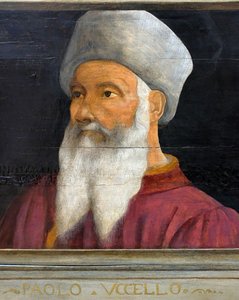
Paolo Uccello
1397 - 1475 , Italien
Kortfakta
- Artistic Movement Or Style: Tidig Renässans
- Artists Or Movements Influenced By This Artist:
- Dürer
- Renässans
- Artists Who Influenced This Artist:
- Ghiberti
- Donatello
- Date Of Birth: 1397
- Date Of Death: 1475
- Full Name: Paolo di Dono
- Nationality: Italienare
- Notable Artworks:
- San Romano
- Jungfrukristens födelse
- Sankt Göran och draken
- Place Of Birth: Pratovecchio, Italien
Relaterade artiklar

Paul Cézannes 25 Mästerverk: En Konsthistorisk Resa för Hemmet
Utforska Paul Cézannes 25 mest ikoniska målningar! Fördjupa dig i impressionismens värld, från Mont Sainte-Victoire till stillsben. Hitta inspiration & museumkvalitativa konsttryck på OriginalUniqueArt.com.

John Constables 25 Mästerverk: En Konstnärlig Resa i Det Engelska Landskapet | OriginalUniqueArt
Utforska John Constables 25 mest ikoniska målningar – romantikens mästare av det engelska landskapet. Upptäck historien, tekniken & skönheten i verk som 'Hay Wain'. Köp exklusiva konsttryck på OriginalUniqueArt.com.

Evocations of Place: A Historical Journey Through Landscape Art
Explore the rich history of landscape art with OriginalUniqueArt. Discover renowned artists, movements like Impressionism & Romanticism, and expert guidance for collecting timeless pieces. Find your perfect serene escape today!
Capturing Stillness: A Curated Exploration of the Most Iconic Lake Landscapes in Art History
Journey through art history's most serene lake landscapes. From Romantic vistas to light-drenched Impressionist waters, discover the stories behind these iconic masterpieces and find museum-quality, hand-painted oil reproductions for your private collection.

Romantiska landskap: Topp 10 mästerverk som definierade en epok – OriginalUniqueArt.se
Utforska de 10 mest ikoniska mästerverken inom romantisk landskapsmålning! Lär känna Caspar David Friedrich, Turner & andra. Hitta inspiration och köp museumkvalitativa konsttryck på OriginalUniqueArt.com.


