

 Förhandsvisa
 Skicka
 Dela
Dela
 Visa detaljer
 Guide
Guide

 Ladda ner
 Liknande objekt
 Röntgen
 Bildspel
 Statistik
Kittens


 Visa mer
Giclée / Konsttryck
Giclée- eller canvasprint av museumskvalitet med snabb produktion och flexibla ytbehandlingsalternativ. ( Beställ handmålad reproduktion Byt till digital bild)




P118B Skr10

P118H Skr10

P118W Skr10

P438Z Skr10

P508JH Skr12

P508YH Skr12

P805H Skr10

P805Z Skr10

P919BZ Skr10

P919G Skr10

P919XJ Skr10

P959ZH Skr10

P968JZ Skr12

W106C Skr8

W218G Skr10

W218JH Skr8

W218Y Skr10

W307PJ Skr10

W316G Skr10

W316PJ Skr8

W316Y Skr10

W398PJ Skr8

W4111J Skr10

W500HY Skr15

W500JH Skr15

W692G Skr12

W849H Skr8

W940BG Skr15

W953PJ Skr8




Välj bland våra förinställda storlekar som motsvarar konstverkets ursprungliga proportioner.

Ange den bredd och höjd du behöver för att passa din ram eller vägg. Ett tryck kan endast beskäras, aldrig göras större än originalbilden, vilket innebär att ett format med en annan proportion leder till att en del av bilden går förlorad. Vi skickar en digital mockup för godkännande innan vi påbörjar tryckningen. Bilden som visas på denna sida visar inte den faktiska beskärningen — det är endast mockuppen som gör det.
Leverans över hela världen () på 2 veckor istället för standard 4/5 veckor. (26 oktober)

Fri expressfrakt över hela världen

Högkvalitativ linnecanvas

Fullständig fraktförsäkring

Garantier för återbetalning av tullavgifter

Garantier för exakt färgåtergivning

100 dagars returrätt (endast vid fel)

100% pengarna tillbaka-garanti

Mängdrabatt erbjuds
 Glasalternativet är endast tillgängligt i storlekar under 110 cm.

Kittens
Giclée / Konsttryck
Storlek på reproduktion
-


Slutgiltigt pris
Skr 793
Konstnärsbiografi
The Beginnings of a Painter
Born in 1865 in Ohtake, Japan, the man known to history as Ohashi Uichiro—or by his chosen name, Ohashi Suiseki—was the second son of a dye shop owner named Ohashi Kamesaburo. His early years in Mono Province were shaped by a natural affinity for painting that appeared almost from birth. By the age of fifteen, he began formal training in the Nanga style under Toda Modo. This foundation in traditional Southern School painting provided the technical groundwork for what would become a highly specialized career.
His path led him through the major artistic centers of Japan. At eighteen, he moved to Kyoto to study under Amano Hoko, the teacher of his first mentor. Later, he traveled to Tokyo to learn from Watanabe Shoka. These years of apprenticeship allowed him to absorb diverse techniques, eventually leading him to develop a style that blended traditional Japanese methods with a realistic approach influenced by Western tastes. In 1912, he moved to Suma in Kobe, where he created what is known as the "Suma style," characterized by dense and heavy background treatments.
A Focus on the Wild
While Uichiro mastered the fundamentals of landscape and flower-and-bird painting, his true passion lay in the animal kingdom. He became particularly noted for his depictions of tigers. His ability to render the texture of fur and the physical presence of these creatures was remarkable. This focus was not merely a matter of subject choice but a deep engagement with the physical details of the animals he painted.
His work gained significant attention on the international stage during the late Meiji and early Showa eras. His achievements include:
- A silver medal and commendation at the 4th National Industrial Exhibition in 1895 for his tiger painting.
- The Gold Medal of Honour at the Exposition Universelle de Paris in 1900, where he was the only Japanese painter to receive such an award for his work "Fierce Tiger."
- A gold prize at the Louisiana Purchase Exposition in St. Louis in 1904.
- A gold medal at the Japan-British Exhibition in 1910.
Legacy and Final Years
Uichiro lived through a period of immense change in Japan, moving from the Meiji era into the Showa era. His reputation as a specialist in animal painting remained steady throughout his life. He was often recognized for the precision of his work, particularly in how he handled the pelage of the tigers he depicted. Even as he moved between cities like Kyoto, Tokyo, and Kobe, his dedication to his specific subject matter remained a constant feature of his career.
He passed away on August 31, 1945, at the age of 81. He left behind a body of work that bridged the gap between traditional Japanese ink and color on silk and a more modern, observational realism. His paintings of tigers and other animals remain documented in collections and auction records as significant examples of his unique technical approach.

Ohashi Uichiro
1865 - 1945 , Japan
Kortfakta
- Artistic Movement Or Style: Nihonga/Nanga style
- Artists Who Influenced This Artist:
- Toda Modo
- Amano Hoko
- Watanabe Shoka
- Full Name: Usaburo
- Nationality: Japanese
- Notable Artworks:
- Kittens
- Tigers (left screen)
- Place Of Birth: Ohtake, Japan
- Date Of Birth: 1865
- Date Of Death: 1945
Relaterade artiklar

Beyond the Great Wave: The High-Impact Visual Revolution of Japanese Landscape Art
Go beyond Hokusai's Great Wave. Explore the high-impact, graphic world of Japanese Ukiyo-e landscapes and urban prints. Discover how these bold, vibrant woodblock masterpieces continue to shape modern pop culture and contemporary design aesthetics.
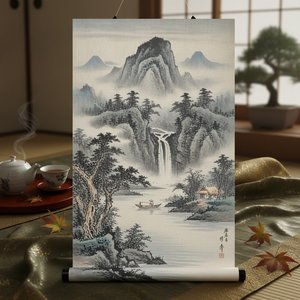
Serenity on Canvas: A Guide to the Timeless Beauty of Japanese Landscape Painting
Discover the serene beauty of Japanese landscape painting. From Hokusai's iconic woodblock prints to meditative sumi-e ink washes, explore a visual journey through the 'floating world' and learn how to bring this timeless Zen aesthetic into your modern home decor.

Floating Worlds: A Definitive Guide to the Mastery and Philosophy of Japanese Ukiyo-e Woodblock Prints
Explore the profound beauty of Ukiyo-e. Discover the history, philosophy, and legendary masters of Japanese woodblock prints, from Hokusai to Kuniyoshi, in this expert guide to the 'Floating World'.
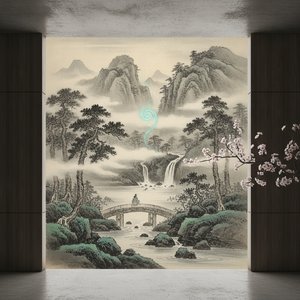
Echoes of Eternity: Unveiling the Spiritual Depth and Timeless Beauty of Japanese Landscape Painting
Embark on a soulful journey through the ephemeral beauty of Japanese landscape painting. Discover the profound philosophy of Ukiyo-e and the legendary mastery of Hokusai. Explore timeless artistry and find inspiration in the spiritual depth of nature's most captivating landscapes.

Timeless Elegance: Capturing the Spirit of Japanese Culture Through the Lens of Ukiyo-e Fine Art
Explore the profound beauty of Japanese Ukiyo-e art. Discover the legacy of Hokusai and the Utagawa school through an expert exploration of Edo-period aesthetics, seasonal motifs, and the enduring global influence of Japan's 'Floating World' on fine art history.