

 Förhandsvisa
 Skicka
 Dela
Dela
 Visa detaljer

 Ladda ner
 Liknande objekt
 Röntgen
 Bildspel
 Stats
StatsPartridge in a Niche
 Acrylic On Canvas
- WallArt
- Baroque
 1680
1680 72.0 x 59.0 cm
 Musée du Petit Palais
 Visa mer
Giclée / Konsttryck
Giclée- eller canvasprint av museumskvalitet med snabb produktion och flexibla ytbehandlingsalternativ. ( Beställ handmålad reproduktion Switch to Digital Image)




P118B $10

P118H $10

P118W $10

P438Z $10

P508JH $12

P508YH $12

P805H $10

P805Z $10

P919BZ $10

P919G $10

P919XJ $10

P959ZH $10

P968JZ $12

W106C $8

W218G $10

W218JH $8

W218Y $10

W307PJ $10

W316G $10

W316PJ $8

W316Y $10

W398PJ $8

W4111J $10

W500HY $15

W500JH $15

W692G $12

W849H $8

W940BG $15

W953PJ $8




Välj bland våra förinställda storlekar som motsvarar konstverkets ursprungliga proportioner.

Du kan ange egna mått för att passa en specifik ram eller yta. Om det valda måttet inte överensstämmer med originalbildens proportioner kommer vi antingen att beskära konstverket eller utöka bilden med en speglad eller enfärgad kant. En digital mockup skickas för ditt godkännande innan produktionen påbörjas.
Vänligen notera att förhandsvisningen på skärmen inte återspeglar den faktiska beskärningen eller utökningen. Endast mockuppen visar den slutgiltiga kompositionen korrekt.
Även om anpassade storlekar är möjliga, rekommenderar vi att du väljer ett mått från den fördefinierade listan för att bevara de ursprungliga proportionerna.
Leverans över hela världen () på 2 veckor istället för standard 4/5 veckor. (8 september)

Fri expressfrakt över hela världen

Högkvalitativ linnecanvas

Fullständig fraktförsäkring

Garantier för återbetalning av tullavgifter

Garantier för exakt färgåtergivning

100 dagars returrätt (endast vid defekter)

100% pengarna tillbaka-garanti

Mängdrabatt erbjuds
 Glasalternativet är endast tillgängligt i storlekar under 110 cm.

Partridge in a Niche
Giclée / Konsttryck
Storlek på reproduktion
-


Slutgiltigt pris
$ 80
A Moment of Refined Tranquility: Nicolas de Largillière’s “Partridge in a Niche”
Nicolas de Largillière's "Partridge in a Niche," painted in 1680, isn’t merely a depiction of a bird; it’s a carefully constructed tableau of Renaissance ideals and the burgeoning comforts of 17th-century French aristocratic life. The painting immediately draws the eye to its central subject – a plump partridge, rendered with an almost unsettling realism, perched within a meticulously crafted niche carved from wood. This isn't a wild creature thrust into an artificial setting; it’s presented as a symbol of domesticity and abundance, a miniature world reflecting the wealth and status of its owner.
Largillière, a master of the French Baroque portrait style, was deeply influenced by the Flemish tradition, particularly the meticulous detail and use of light characteristic of artists like Peter Paul Rubens. This influence is evident in the painting’s rich textures – the velvety plumage of the partridge, the smooth sheen of the fruit, and the subtly aged wood of the niche itself. He masterfully employs chiaroscuro, a technique of dramatic contrasts between light and shadow, to sculpt form and create a sense of depth, pulling the viewer into this intimate scene.
The Language of Still Life: Symbolism and Aristocratic Taste
Beyond its technical brilliance, “Partridge in a Niche” is laden with symbolic meaning. The niche itself represents a carefully curated space – a microcosm reflecting the owner’s refined taste and prosperity. Surrounding the partridge are an array of fruits and vegetables: apples, oranges, grapes, and a bowl overflowing with seasonal bounty. These aren't simply decorative elements; they represent fertility, abundance, and the pleasures of earthly life—themes central to Renaissance art and philosophy. The inclusion of specific items like grapes and pomegranates further suggests a connection to religious iconography, alluding to the Eucharist and the celebration of God’s gifts.
The partridge itself is a potent symbol. In this era, it represented not just sustenance but also grace, beauty, and even resurrection – qualities highly valued within aristocratic circles. Its placement within the niche elevates it beyond a mere subject; it becomes an emblem of refined taste and a testament to the owner’s ability to cultivate both material wealth and spiritual appreciation.
A Window into 17th-Century Parisian Life
The painting offers a fascinating glimpse into the world of 17th-century Paris. Largillière's subject matter—domestic scenes, portraits of nobility, and still lifes—reflects the growing importance of the middle class and their desire to emulate the lifestyle of the wealthy elite. “Partridge in a Niche” wasn’t intended for public display; it was likely commissioned as a private piece, meant to adorn the walls of a grand salon or study. The painting's meticulous detail and luxurious materials underscore the importance of appearances and social status within this era.
Currently residing at the Musée du Petit Palais in Paris, “Partridge in a Niche” stands as a testament to Largillière’s skill and his ability to capture not just likenesses but also the essence of human experience. It's a captivating work that invites contemplation on themes of beauty, abundance, and the enduring power of art to reflect and shape our understanding of the world.
Reproductions: Bringing Baroque Elegance Home
OriginalUniqueArt offers high-quality reproductions of “Partridge in a Niche,” meticulously crafted to capture the painting’s original detail and atmosphere. Whether you're an art collector, an interior designer seeking to infuse your space with timeless elegance, or simply someone who appreciates exquisite artistry, our reproductions provide a beautiful way to experience this remarkable masterpiece. Each reproduction is printed on archival-quality canvas using advanced printing techniques, ensuring that the colors remain vibrant and true for generations to come.
Konstnärsbiografi
A Parisian Life in Portraiture
Nicolas de Largillière, a name inextricably linked to the elegance and refinement of French Baroque portraiture, was born into a bustling commercial world in Paris in 1656. His father, a hatmaker, moved the family to Antwerp when Nicolas was just three years old, a pivotal relocation that would profoundly shape his artistic trajectory. This early immersion in the vibrant art scene of Antwerp—a center for Flemish painting—laid the groundwork for his future endeavors, exposing him to the rich traditions and techniques that would later inform his own distinctive style. Though initially destined for commerce, Largillière’s innate artistic inclination led him away from the family trade and toward a life dedicated to capturing the likenesses of those around him. A brief sojourn in London followed, where he absorbed the nuances of portraiture under prominent artists before returning to Antwerp and briefly studying with Anton Goubau. It was his four-year apprenticeship under Sir Peter Lely at Windsor, however, that truly solidified his artistic foundation, instilling a meticulous attention to detail and a skillful rendering of textures that would become hallmarks of his work. The political turmoil surrounding the Rye House Plot ultimately prompted Largillière’s return to Paris, a move that would define his career and establish him as one of the leading portraitists of his era. Largillière's artistic journey began amidst the burgeoning Baroque movement, inheriting influences from masters like Rubens and Van Dyck—artists who championed dramatic lighting and opulent compositions. These formative experiences instilled in him a deep understanding of classical ideals and a commitment to achieving unparalleled realism. He wasn’t merely striving for accurate representation; he sought to convey not just physical appearance but also character and social standing, recognizing the importance of portraiture as a medium for self-expression and social commentary. His early works demonstrated an impressive command of technique—particularly in capturing subtle nuances of expression and conveying psychological depth—skills honed during his apprenticeship with Sir Peter Lely, whose studio at Windsor served as a crucible for artistic innovation. This period cemented Largillière’s stylistic sensibilities and established him as a disciple of the foremost portraitist of his time.Ascension within the Parisian Art World
Largillière swiftly ascended to prominence in Paris's artistic circles, attracting the patronage of nobility and the burgeoning merchant class. His ability to capture not merely physical resemblance but also character and status proved immensely appealing to those desiring to immortalize themselves for posterity. He quickly gained recognition as a master craftsman, meticulously blending classical principles with Baroque dynamism—a hallmark of his distinctive style. The Academy’s appointment in 1686 marked a pivotal moment, signifying validation from the established artistic elite and unlocking doors to commissions and prestige. This achievement wasn't merely symbolic; it underscored Largillière’s unwavering dedication to his craft and elevated him to the ranks of France’s most celebrated artists. He became known for orchestrating complex group portraits with remarkable skill—as exemplified by *The Royal Family Portrait* (1709)—a monumental work showcasing his mastery of composition and ability to convey individual personalities within a cohesive whole. This portrait, depicting Louis XIV alongside Madame de Ventadour and his grandchildren, remains an iconic representation of royal grandeur and artistic achievement. Largillière’s oeuvre encompasses a diverse range of subjects—from portraits of monarchs and aristocrats to depictions of biblical scenes and mythological narratives—demonstrating his versatility as an artist. However, it was his unwavering focus on portraiture that cemented his legacy as one of the most influential figures in French Baroque art. His meticulous attention to detail—particularly in capturing textures and conveying psychological depth—established him as a pioneer of realism and a champion of expressive portraiture. He skillfully employed chiaroscuro—the dramatic interplay of light and shadow—to sculpt form and imbue his subjects with palpable emotion, techniques perfected during his formative years under Sir Peter Lely’s tutelage. His portraits are not merely representations of individuals; they are windows into their souls—capturing fleeting expressions of thought and feeling with breathtaking precision.Mastery of Style and Technique
Largillière's artistic style is characterized by an exquisite blend of realism, elegance, and meticulous attention to detail. He possessed a remarkable skill in manipulating light and shadow to create depth and dimension, bringing his subjects vividly to life on the canvas. His compositions were often carefully structured, reflecting a Renaissance sensibility while incorporating the dynamism of the Baroque period. Later in his career, he developed a distinctive pose—often featuring sitters with spread fingers subtly concealing a letter or positioned against a Doric column—that became his signature style. This formula, while seemingly repetitive, allowed him to focus on the nuances of expression and the intricacies of costume and adornment. His dedication to capturing the textures of fabrics, the gleam of jewelry, and the subtle expressions on faces reveals a meticulous craftsman deeply committed to his art. He wasn’t simply recording appearances; he was delving into character, conveying status, and immortalizing his sitters for posterity. His enduring influence can be seen in subsequent generations of artists who embraced his stylistic innovations—particularly his masterful use of chiaroscuro and his penchant for capturing psychological depth. Largillière's legacy extends beyond his individual artworks; it resides in the foundational principles he instilled within the artistic tradition—a testament to his unwavering commitment to excellence and a cornerstone of French Baroque art history. He remains a symbol of artistic refinement and technical virtuosity, ensuring that his artistry continues to inspire admiration and scholarly study for centuries to come. Nicolas de Largillière’s contribution to the visual arts is undeniable – he elevated portraiture to new heights of sophistication and realism, shaping the course of French Baroque art history
Nicolas de Largillierre
1656 - 1746 , Frankrike
Kortfakta
- Artistic Movement Or Style: Barock, Rokoko
- Artists Who Influenced This Artist:
- Peter Lely
- Anton Goubau
- Rubens
- Van Dyck
- Date Of Birth: 1656
- Date Of Death: 1746
- Full Name: Nicolas de Largillière
- Nationality: Fransk
- Notable Artworks:
- Selvporträtt (1707)
- Kunglig familjens porträtt
- Montausier porträtt
- Elevens porträtt
- Place Of Birth: Paris, Frankrike
Relaterade artiklar

Goyas 25 Mästerverk: En Konstnärlig Resa Genom Spansk Historia | OriginalUniqueArt
Utforska Goyas 25 mest ikoniska målningar! Fördjupa dig i spansk konsthistoria, romantikens dramatik och mörka färger. Köp museumkvalitativa reproduktioner & inred med tidlösa klassiker på OriginalUniqueArt.com.
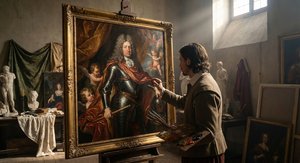
The Grandeur of Baroque Portraiture: Power, Emotion & Artistic Innovation
Explore the grandeur of Baroque portraiture! Discover Rubens, Van Dyck & the masters of 17th-century art. Uncover symbolism, techniques & lasting influence. Expert insights for collectors and enthusiasts.

Om oss
Upptäck vår historia! Vi för in konst i världsklass i ditt liv genom experturval, skräddarsydda lösningar och kostnadsfria förhandsvisningar. Godkänt av privatpersoner och företag sedan år 2000.

Barockens Mästerverk: Topp 10 konstverk som definierade en epok – OriginalUniqueArt.se
Upptäck barockens 10 största mästerverk! Caravaggio, Rembrandt, Bernini och fler. Lär känna historien bakom ikoniska målningar & skulpturer. Köp reproduktioner av hög kvalitet på OriginalUniqueArt.com – för en lyxig heminredning.

Barockens dramatik: Att föra prakt och känsla in i samtida interiörer
Upptäck barockens dramatik och lyx! Lär dig hur du integrerar denna klassiska stil i ditt hem med våra experttips och inspirerande exempel. Skapa en palatskänsla idag!