Text size

() ·

A painting made for you, by hand

Way to Shambala

Handgjord oljereproduktion

Handmålad olja på duk i din valda storlek och ram, tillverkad efter beställning av våra konstnärer. ( Byt till tryck Byt till digital bild)

Beskrivning av samlarobjekt

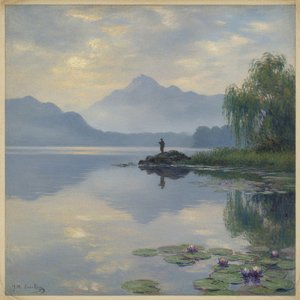
‘Way to Shambala’ is a 1933 Symbolism masterpiece by Nicholas Roerich depicting breathtaking Himalayan mountains under a vibrant purple sky. Featuring two prominent peaks and serene hills, this painting embodies Roerich's fascination with spirituality and nature.

Konstnärens biografi

Utforska Nicholas Roerichs fascinerande konst: Symbolism, himalajlandskap & mystiska målningar. Scenografi för Balett Ryska och förespråkare för kulturskydd.

from ·

Chapter 1

How large should it be?

Slide to change the size; the picture on the left shows the frame at its real width. The proportions of the original are kept.

Standardstorlek
skräddarsydd
CM
INCH

Välj bland våra förinställda storlekar som motsvarar konstverkets ursprungliga proportioner.

bredd
höjd

Ange den bredd och höjd du behöver för att passa din ram eller din vägg. Eftersom detta är handmålat kan konstnären, vid ett annat format, måla lite mer runt bilden eller beskära den något – det är du som väljer. Vi skickar en digital mockup för godkännande innan målningen påbörjas. Bilden som visas på denna sida representerar inte det slutgiltiga resultatet — det är endast mockuppen som visar det.

Chapter 2

How should it arrive?

Choose the edges of the stretched canvas

Choose your frame

Corner sample of the WhiteWrap canvas edge finish, stretched on massivt trä bars
White Skr1
Corner sample of the BlurSideWrap canvas edge finish, stretched on massivt trä bars
Blurside Skr1
Corner sample of the ExtendedWrap canvas edge finish, stretched on massivt trä bars
Extended Skr1
Corner sample of the P118B picture frame: formgjuten polystyren, 5 cm wide and 3 cm thick
P118B Skr10
Corner sample of the P118H picture frame: formgjuten polystyren, 5 cm wide and 3 cm thick
P118H Skr10
Corner sample of the P118W picture frame: formgjuten polystyren, 5 cm wide and 3 cm thick
P118W Skr10
Corner sample of the P438Z picture frame: formgjuten polystyren, 5.5 cm wide and 3.5 cm thick
P438Z Skr10
Corner sample of the P508JH picture frame: formgjuten polystyren, 7 cm wide and 3.5 cm thick
P508JH Skr12
Corner sample of the P508YH picture frame: formgjuten polystyren, 7 cm wide and 3.5 cm thick
P508YH Skr12
Corner sample of the P805H picture frame: formgjuten polystyren, 5 cm wide and 3.5 cm thick
P805H Skr10
Corner sample of the P805Z picture frame: formgjuten polystyren, 5 cm wide and 3.5 cm thick
P805Z Skr10
Corner sample of the P919BZ picture frame: formgjuten polystyren, 7 cm wide and 3.5 cm thick
P919BZ Skr10
Corner sample of the P919G picture frame: formgjuten polystyren, 7 cm wide and 3.5 cm thick
P919G Skr10
Corner sample of the P919XJ picture frame: formgjuten polystyren, 7 cm wide and 3.5 cm thick
P919XJ Skr10
Corner sample of the P959ZH picture frame: formgjuten polystyren, 5 cm wide and 3 cm thick
P959ZH Skr10
Corner sample of the P968JZ picture frame: formgjuten polystyren, 6 cm wide and 4 cm thick
P968JZ Skr12
Corner sample of the W106C picture frame: massivt trä, 5 cm wide and 3 cm thick
W106C Skr8
Corner sample of the W218G picture frame: massivt trä, 5 cm wide and 3 cm thick
W218G Skr10
Corner sample of the W218JH picture frame: massivt trä, 5 cm wide and 3 cm thick
W218JH Skr8
Corner sample of the W218Y picture frame: massivt trä, 5 cm wide and 3 cm thick
W218Y Skr10
Corner sample of the W307PJ picture frame: massivt trä, 6 cm wide and 3 cm thick
W307PJ Skr10
Corner sample of the W316G picture frame: massivt trä, 6 cm wide and 3 cm thick
W316G Skr10
Corner sample of the W316PJ picture frame: massivt trä, 6 cm wide and 3 cm thick
W316PJ Skr8
Corner sample of the W316Y picture frame: massivt trä, 6 cm wide and 3 cm thick
W316Y Skr10
Corner sample of the W398PJ picture frame: massivt trä, 5 cm wide and 3 cm thick
W398PJ Skr8
Corner sample of the W4111J picture frame: massivt trä, 6.5 cm wide and 3.5 cm thick
W4111J Skr10
Corner sample of the W500HY picture frame: massivt trä, 7 cm wide and 5 cm thick
W500HY Skr15
Corner sample of the W500JH picture frame: massivt trä, 7 cm wide and 5 cm thick
W500JH Skr15
Corner sample of the W692G picture frame: massivt trä, 8 cm wide and 4 cm thick
W692G Skr12
Corner sample of the W849H picture frame: massivt trä, 5 cm wide and 3 cm thick
W849H Skr8
Corner sample of the W940BG picture frame: massivt trä, 7.5 cm wide and 4.5 cm thick
W940BG Skr15
Corner sample of the W953PJ picture frame: massivt trä, 6 cm wide and 3.5 cm thick
W953PJ Skr8
Corner sample of the H24-GOLD picture frame: snidad trä med gesso, 10 cm wide and 6 cm thick
H24-GOLD Skr30
Corner sample of the H24-SILVER picture frame: snidad trä med gesso, 10 cm wide and 6 cm thick
H24-SILVER Skr30
Corner sample of the H36-GOLD picture frame: snidad trä med gesso, 15 cm wide and 6.5 cm thick
H36-GOLD Skr45
Corner sample of the H36-SILVER picture frame: snidad trä med gesso, 15 cm wide and 6.5 cm thick
H36-SILVER Skr45
Förhandsvisning av ram
Inramad

Moulding: . Overall size with the frame: .

Chapter 3

Who paints it, and should anything change?

Examples of what can be changed: Replace face with customer photo; Add pet (e.g., replace cat with dog); Include hidden message in background; Change background landscape or elements.

After order, OriginalUniqueArt.com team will email client for instructions and provide a mockup preview

Leverans över hela världen () på 3–4 veckor istället för standard 5 veckor. (2 november). Inga kompromisser med kvaliteten.

Chapter 4

The finishing touches

A nameplate, as in a museum?

Detaljer för graverad bronsplatta

This elegant plaque features the artist's name and the title of the artwork, finely engraved for a timeless presentation.

It is made from bronze with a refined, elegant finish. The text is precisely laser-engraved for a sharp and permanent result. Measuring 9x2 cm, the plaque is compact yet easy to read. It's built to be durable and scratch-resistant, offering a professional, museum-quality look. Mounting is simple thanks to the included adhesive backing.

Detaljer för transparent akrylplatta

The plaque includes essential engraved details such as the artist's name, the title of the artwork, the date it was created, the type of media used-like oil on canvas or watercolor-a brief description of the piece, and a QR code that links to the complete artwork information.

It is crafted from clear acrylic, offering a sleek, modern appearance. The text is UV-engraved in black to ensure strong visual contrast. With a size of 10x15 cm, it ensures optimal readability. It comes equipped with two metal hooks for secure wall mounting. The plaque is designed to be weather-resistant, making it suitable for various environments, and it includes interactive features that work seamlessly with smartphone scanning.

Detaljer för svart akrylplatta

This elegant plaque includes engraved information such as the artist's name, the title of the artwork, the date it was created, the type of media used (like oil on canvas or watercolor), a short description of the artwork, and a QR code for quick access to more information.

The plaque itself is made from refined black acrylic with a premium finish. The text is laser-engraved in white for high contrast and readability. Its size is 10x15 cm, designed to be easy to read. It comes with two metal hooks for professional mounting. The design is sleek and fits any interior style. It is also weather-resistant and durable, with built-in digital integration for mobile compatibility.

A protective varnish?

When do you need it?

Chapter 5

Your painting, as you ordered it

Way to Shambala

Reproduktionsmetod

Storlek på reproduktion

-

Elitkonstnär av högsta klass

Mer detaljrikedom, finess och extra produktionstid

-

Inramning av reproduktion

-

-

För konstverk eller reproduktioner som är större än 105 cm (cirka 41 tum) på någon sida, levereras ramen som ett isärplockat kit. Denna metod säkerställer en trygg leverans och förhindrar skador under transport.

Professionell montering krävs – detta är inte en produkt för självmontering.
Kitet måste monteras och duken spännas av en erfaren professionell inramare med hjälp av trälim (ingår ej), en spänntång för duk och klämmor för att hålla sargen rak medan limmet torkar. Felaktig montering eller ojämn spänning av duken kan orsaka permanenta skador på konstverket och täcks inte av vår garanti.

  • Alla massiva träribbor ingår, exakt tillkapade efter mått.

  • Monteras med de medföljande skruvarna, samt trälim för hörnfogarna, vilket inte ingår och måste anskaffas av din ramverkare.

  • Professionella verktyg krävs och ingår ej: en dukspännare och klämmor för att hålla listerna raka medan limmet torkar.

Viktigt:
Hörnjunctionerna kräver trälim, listerna måste hållas på plats med tvingar tills limmet har torkat helt, och för att spänna duken på den monterade ramen krävs en spänntång för duk. Inget av detta ingår i kitet. Vänligen kontakta en erfaren professionell rammakare innan du beställer denna storlek.

Namnskylt

-

-

Skyddande fernissa

Glansig fernissa (förstärker färgerna, skyddar mot ljus och fukt)

-

Anpassa mitt konstverk

Exempel på vad som kan ändras: Byt ut ansiktet mot ett foto från kunden; Lägg till ett husdjur (t.ex. byt ut en katt mot en hund); Inkludera ett dolt meddelande i bakgrunden; Ändra bakgrundens landskap eller detaljer.

-

Expressleverans

Leverans över hela världen () inom 3–4 veckor istället för standardiserade 5 veckor. (2 november). Inga kompromisser med kvaliteten.

-

Expressleverans

Leverans över hela världen () inom 5 veckor. (9 november).

Ingår

Slutgiltigt pris

Skr 3012

Totalt pris Skr 3012

Glasalternativet är endast tillgängligt i storlekar under 110 cm.

Included with every order

  • Fri expressfrakt över hela världen
  • Högkvalitativ linnecanvas
  • Fullständig fraktförsäkring
  • Garantier för återbetalning av tullavgifter
  • Garantier för exakt färgåtergivning
  • 100 dagars returrätt (endast vid fel)
  • 100% pengarna tillbaka-garanti
  • Mängdrabatt erbjuds

Way to Shambala – A Journey Through Symbolism

Nicholas Roerich’s “Way to Shambhala” stands as a monumental testament to the artist's profound engagement with Eastern mysticism and his unwavering belief in the interconnectedness of humanity and nature. Painted in 1933, during a period marked by fervent exploration of shamanic traditions and spiritual quests, this tempera on canvas masterpiece embodies Roerich’s distinctive Symbolism style—a movement characterized by its deliberate use of color, form, and imagery to convey abstract ideas and emotions rather than literal representations. The painting transports the viewer into a breathtaking Himalayan landscape dominated by towering peaks bathed in an ethereal purple sky, instantly establishing a mood of serenity and grandeur.
  • Composition: Roerich meticulously crafted a panoramic vista emphasizing horizontal lines, mirroring the expansive horizons of the Himalayas and symbolizing continuity and transcendence. Two prominent mountains dominate the scene on either side, representing stability and resilience amidst the turbulent forces of change—a recurring motif in Roerich’s oeuvre.
  • Color Palette: The dominant hue is a deep violet – purple – which Roerich himself termed “Shambhala Violet,” reflecting his conviction that it embodies the essence of Shambhala, the mythical paradise at the center of Tibetan Buddhism and shamanic cosmology. Accompanying shades of ochre and crimson punctuate the canvas, symbolizing vitality and spiritual illumination.
  • Technique: Roerich employed a layered technique—applying thin washes of pigment followed by thicker impasto strokes—to achieve remarkable textural depth and luminosity. This meticulous approach allowed him to capture not only the visual splendor of the mountains but also their vibrational energy, aligning with Roerich’s belief in the power of art to influence consciousness.

Historical Context & Roerich's Visionary Beliefs

Roerich’s artistic endeavors were inextricably linked to his spiritual explorations and his fervent advocacy for Agni Yoga—a mystical system he developed based on Hindu and Buddhist principles. Inspired by Tibetan shamanic rituals and the legends surrounding Shambhala, Roerich envisioned this landscape as a gateway to enlightenment—a symbolic representation of humanity's journey toward inner peace and cosmic harmony. The painting reflects Roerich’s conviction that art could serve as a catalyst for spiritual transformation, mirroring his broader philosophical stance on the importance of uniting science and mysticism.
  • Influence of Tibetan Buddhism: Roerich drew inspiration from Tibetan Buddhist cosmology, particularly the concept of Shambhala—a hidden paradise believed to exist beyond conventional perception—and its symbolic representation as a mountain range shrouded in mist.
  • Symbolism Beyond Landscape: The mountains themselves are imbued with profound symbolism, representing stability, aspiration, and the ascent toward spiritual realization. Roerich’s meticulous attention to detail—the subtle gradations of color, the textured surface—aimed to evoke an emotional response that transcends mere visual representation.
  • Roerichism: The painting exemplifies Roerich's overarching artistic philosophy known as Roerichism—a synthesis of Eastern mysticism and Western science—which sought to unlock the hidden potential of human consciousness through art and ritual.

Emotional Impact & Artistic Legacy

“Way to Shambhala” transcends its formal qualities, captivating viewers with its palpable sense of awe and wonder. Roerich’s masterful depiction of Himalayan grandeur evokes feelings of tranquility, contemplation, and reverence—a testament to the artist's ability to translate spiritual experience into visual form. The painting continues to resonate with audiences today as a symbol of hope for humanity’s future—a reminder that beauty, harmony, and enlightenment can be found in embracing both inner reflection and engagement with the natural world. Its enduring appeal underscores Roerich’s legacy as one of the most influential artists of the 20th century, whose work remains profoundly relevant to contemporary concerns about environmental stewardship and spiritual renewal.

Reproductions & Further Exploration

High-quality reproductions of “Way to Shambhala” are available from reputable art dealers and online platforms like WikiArt.com, allowing enthusiasts worldwide to experience the painting’s breathtaking beauty and symbolic depth. For a deeper understanding of Roerich's artistic vision and his contribution to Symbolism, consider visiting the Nicholas Roerich Museum in New York City or delving into scholarly publications exploring his life and work.

Frågor och svar

Vilken tryckstorlek på "Way to Shambala" av Nicholas Roerich passar det rekommenderade rummet?

Rekommenderad kombination för "Way to Shambala" av Nicholas Roerich: ett tryck i storlek Large för ett Living Room.

Vilken teknik användes för "Way to Shambala" av Nicholas Roerich?

Nicholas Roerich använde tekniken Acrylic On Canvas för "Way to Shambala". Tekniken definierar det ursprungliga verkets materiella karaktär.

Vilken färgharmoni uppvisar "Way to Shambala" av Nicholas Roerich?

"Way to Shambala" av Nicholas Roerich uppvisar en Strong Color Unity färgharmoni.

More about this painting

Förhandsvisa Förhandsgranska i AR Byt till tryck Byt till digital bild Skicka
Visa detaljer Guide Lägg till i favoriter Ladda ner Liknande objekt Röntgen Bildspel Q&A Statistik

In numbers

  • 1933the year it was painted
  • 29frames to choose from
  • standard sizes, in its own proportions
  • 5weeks to paint and deliver it
Nicholas Roerich

Nicholas Roerich

1874 - 1947, Ryssland

Quick facts about Nicholas Roerich

  • Artistic Movement Or Style: Symbolism, Spiritual konst
  • Artists Or Movements Influenced By This Artist: ['Rysk Symbolism']
  • Artists Who Influenced This Artist: ['Sergej Diaghilev']
  • Date Of Birth: 9 okt 1874
  • Date Of Death: 13 dec 1947
  • Full Name: Nicholas Konstantinovich Roerich
  • Nationality: Rysk
  • Notable Artworks:
    • Saint Nicholas
    • City
    • Lake av Nagas
  • Place Of Birth: Sankt Petersburg, Ryssland

Konstnärsbiografi

A Life Immersed in Art and Spirit

Nicholas Roerich, född den 9 oktober 1874 i det pulserande kulturella hjärtat av Sankt Petersburg, Ryssland, var en gestalt vars liv sträckte sig bortom de konstnärliga uttryckens gränser. Han var inte bara en målare; han var en arkeolog, en författare, en filosof och en envis förespråkare för fred och kulturell bevarande. Hans uppväxt, djupt rotad i både intellektuell rigor – hans far var notarie – och konstnärlig uppskattning tack vare sin mor, lade grunden för en otroligt mångfacetterad karriär. Roerich studerade samtidigt juridik och konsthantverk vid Sankt Petersburgs universitet och den kejserliga konstakademin från 1893, vilket visade ett tidigt engagemang för att förstå världen i sin helhet. Detta dubbla väg var inte motsägelsefullt för honom; snarare återspeglade det en tro på att konstnärlig vision behövde vara grundad i historiskt sammanhang och intellektuell disciplin. Han fick sin konstnärliga betygning 1897 och avslutade sin juristutbildning året därpå, vilket lade grunden för ett liv dedikerat till både kreativ utforskning och välgrundad handling.

Den Lockande Symbolismen och Teaterns Innovation

Roerichs konstnärliga utveckling formas djupt av de strömningar som präglade den ryska symbolismen, en rörelse som sökte framkalla emotionella och andliga djup genom suggestiva bilder och ledande former. Han engagerade sig snabbt i Sergei Diaghilevs inflytelserika “World of Art” – samhället, och tog senare dess presidentskap från 1910 till 1916. Detta förhållande visade sig vara avgörande, eftersom det exponerade honom för ett nätverk av innovativa konstnärer, kompositörer och tänkare som omdefinierade den ryska konstens landskap. Hans tidiga verk avslöjade en fascination för arkeologi och scenografi, vilket ledde till banbrytande samarbeten med Diaghilevs Ballets Russes. Roerichs design för produktioner som Alexander Borodins *Prince Igor* (1909) och framför allt Igor Stravinskijs revolutionerande *The Rite of Spring* (1913), var inte bara bakgrunder; de var integrerade delar av den teateriska upplevelsen. Han blandade noggrann historisk forskning med en djärv fantasivision, skapade därför visuellt slående miljöer som förstärkte musiken och koreografins känslomässiga kraft. Dessa design var inte bara dekorativa; de var försök att väcka primordiala krafter och gamla ritualer, vilket återspeglade symbolistens intresse för mytologi och andlighet. Hans verk påverkades också av apokryfa texter och medeltida sektära skrifter som *Dove Book*, vilket lade till djupare esoteriska betydelser till hans konstnärliga skapelser.

En Resa Mot Mystik och Himalajas Visioner

När Roerichs karriär utvecklades, förändrades hans målningar avsevärt och omfamnade alltmer mystiska och andliga teman. Denna förflyttning drevs av hans växande intresse för Theosophin och österländska religioner, filosofier som betonade sammanhanget mellan alla ting och strävan efter inre visdom. Hans *Architectural Studies* – serien (1904–1905) visade inte bara hans arkitektoniska skicklighet utan också ett djupt engagemang för att bevara kulturarv, vilket förutspådde hans senare förespråkande för att skydda konsten under tider av konflikt. Återkommande motiv började dyka upp i hans verk: majestätiska landskap, gamla städer vilseledande i mysterium och figurer fyllda med andlig betydelse som St. Panteleimon och Kuan Yin. Han företog omfattande resor genom Centralasien, där han utförde arkeologisk forskning och dokumenterade antika kulturer, upplevelser som djupt påverkade hans konstnärliga vision och förstärkte tron ​​på vikten av kulturell förståelse.

Arv av Bevarande och Bestående Inverkan

Nicholas Roerichs engagemang sträckte sig bortom duken; han var en dedikerad förespråkare för att skydda konsten och arkitekturen under tider av krig. Erkännande av den sårbara egenskapen hos kulturella skatter, initierade han skapandet av Roerich Pact 1935 – ett internationellt avtal som var utformat för att skydda konstobjekt från förstörelse. Denna initiativ gav honom flera nomineringar till Nobelpriset, vilket understryker hans djupa humanitära engagemang. Hans uttråkade ansträngningar visade en tro på att bevara kulturarv inte bara var viktigt för att förstå det förflutna utan också för att bygga en fredligare framtid. Idag hyllas Roerichs verk i framstående museisamlingar över hela världen, inklusive Astrakhan State Picture Gallery och framför allt Nicholas Roerich Museum i New York City. Hans inflytande på den ryska konsten och kulturen är obestridligt. Han brottade gapet mellan konstnärligt uttryck och andlig utforskning, vilket påverkade generationer av konstnärer och tänkare med sin visionära metodik.

Nyckelverk & Bestående Relevans

  • Saint Nicholas: En detaljerad svartvit fresk som visar medeltida konst och heraldiska symboler.
  • City: Suggestiva bilder av gamla stadslandskap, som återspeglar hans arkeologiska intressen.
  • Lake of the Nagas: Ett temperafärg som blandar symbolik och natur, exemplifierar hans unika konstnärliga vision.

Kortfakta

  • Title: Way to Shambala
  • Medium: Tempera on Canvas
  • Influences: Russian Cosmism
  • Location: Nicholas Roerich Museum, New York City, NY
  • Notable elements or techniques: Detailed mountain landscape; Mystical symbolism

Konstquiz

Det finns endast ett korrekt svar på varje fråga.

Fråga 1:
What artistic style is ‘Way to Shambala’ primarily associated with?
Fråga 2:
The painting depicts a mountainous landscape. Where was Nicholas Roerich inspired to create this artwork?
Fråga 3:
What medium did Nicholas Roerich use to produce ‘Way to Shambala’?
Fråga 4:
Who collaborated with Roerich on the libretto and sets for the ballet “Rite of Spring”?
Fråga 5:
What is a key thematic element explored in Roerich’s artwork ‘Way to Shambala’?