 Förhandsvisa
 Skicka
 Dela
Dela
 Visa detaljer
 Guide
Guide

 Ladda ner
 Liknande objekt
 Röntgen
 Bildspel
 Frågor och svar
 Statistik
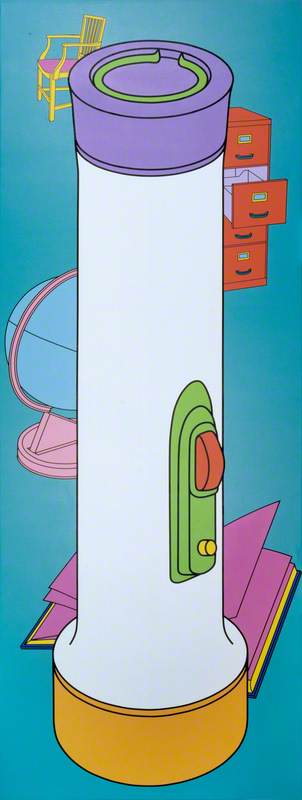
Lighthouse

- 525.0 x 194.0 cm


 Visa mer
Få en utskriftsfärdig fil som vida överträffar webbförhandsvisningen. Varje digital bild vi säljer kommer från en högupplöst master i vår bilddatabas – vanligtvis mellan 5 000 och 15 000 pixlar bred – så att du med trygghet kan göra stora utskrifter, beskära tätt eller återge fina detaljer.
Ingen fil lämnar vår studio utan att ha bearbetats. En digital expert kontrollerar färgerna mot originalmålningen och korrigerar dem vid behov, för att sedan förbättra skärpa och detaljrikedom med professionella retuscheringsverktyg — alltid med full respekt för konstnärens penseldrag och stil. Resultatet är en bild som ser ut som målningen, inte som en filtrerad skanning.
Du godkänner innan arbetet slutförs: vår expert skickar bilden via e-post inom 72 timmar för din granskning. Inte nöjd? Be om förbättringar eller korrigeringar, eller begär återbetalning om kvaliteten inte lever upp till förväntningarna.
Detta är den kvalitet som förlag, designstudior, gallerier och tryckerier litar på.
Digital bild
Ladda ner en högupplöst fil för personlig visning, utskrift och kreativa projekt. ( Byt till tryck Beställ handmålad reproduktion)
Ingår i varje beställning av digital bild
Professionell digital leverans, garanterad
När du väljer OriginalUniqueArt.com får du inte bara en bild – du får ett professionellt förädlat digitalt konstverk, skapat med precision och med en garanterad tillfredsställelse. Här är allt som ingår i din beställning, automatiskt:

Snabb leverans via e-post
Din högupplösta digitala bild skickas till dig via e-post inom 72 timmar efter beställning – redo för omedelbar användning.

AI-förbättrad digital fil
Ditt konstverk optimeras professionellt med hjälp av avancerade AI-verktyg och manuell redigering, vilket garanterar maximal detaljrikedom, skärpa och färgnoggrannhet.

Fri livstidsåterleverans
Har du råkat radera eller tappa bort din fil? Ingen oro – vi skickar den kostnadsfritt till dig när som helst.

Inga importavgifter – någonsin
Njut av ditt konstverk omedelbart utan tull, importavgifter eller leveranskostnader – digitala nedladdningar är alltid skattefria.

Garanterad färgåtergivning
Vi säkerställer att din digitala bild återger de ursprungliga färgerna så exakt som möjligt med hjälp av professionella verktyg och färghantering.

100 dagars nöjdhetsgaranti
Om du inte är nöjd med din digitala bild kommer vi att revidera den eller återbetala 100% inom 100 dagar – utan frågor.

100% pengarna-tillbaka-garanti
Inte nöjd? Få full återbetalning inom 100 dagar efter att du mottagit din digitala fil – utan frågor.

Rabatt vid storköp
Köp 3 bilder, spara 10% – Köp 5, spara 15% – Köp 10+, spara 20%. Perfekt för kreativa projekt, gallerier och byråer.
Konstnärsbiografi
The Architect of Precision
Sir Michael Craig-Martin stands as a monumental figure in the landscape of contemporary art, a conceptual artist and painter whose influence stretches far beyond the canvas. Born in Dublin, Ireland, his early life was marked by a global journey, spending much of his childhood in Washington, D.C. This international upbringing provided a diverse backdrop for a developing eye, shaped by encounters with religious imagery in stained-glass windows and the profound impact of Mark Rothko’s work at the Phillips Collection. His artistic education was equally expansive, moving from the Lycée Français in Bogotá, Colombia, to the prestigious Académie de la Grande Chaumière in Paris, and eventually to Yale University. It was during his time at Yale that he encountered the minimalist theories of Josef Albers, a transformative experience that would forever inform his understanding of color and form.
A Legacy of Conceptual Clarity
The work of Craig-Martin is defined by an unwavering commitment to geometric precision and a deliberate rejection of illusionistic depth. His aesthetic often utilizes bold, flat planes of color and meticulously rendered objects that invite the viewer into a meditative state. Whether depicting a vibrant red can filled with toothbrushes in Savarin Can (Turquoise) or exploring the profound themes of absence and memory in Tricycle, his technique remains strikingly consistent. He employs a signature style characterized by clean lines and an intellectual rigor that emphasizes the materiality of the subject. In pieces like Full Life, he demonstrates a unique ability to blend disparate elements—such as a blue motorcycle and scattered chairs—to create a sense of complexity and depth through color contrast rather than traditional shading.
Mentorship and Artistic Impact
Beyond his individual creations, Craig-Martin’s historical significance is deeply rooted in his role as a mentor and educator. As an emeritus Professor of Fine Art at Goldsmiths, he played a pivotal role in fostering the development of the Young British Artists, many of whom were his students. His conceptual masterpiece, An Oak Tree, remains one of the most iconic works associated with his name, embodying the experimental spirit of his era. Through his memoir, On Being An Artist, he has shared his wisdom and reflections on the creative process with aspiring artists worldwide. His career is a testament to the power of conceptual clarity, bridging the gap between the rigorous traditions of minimalism and the provocative energy of contemporary movement.

Michael Craig Martin
1941 - , Ireland
Kort om konstnären
- Artistic Movement Or Style: Contemporary conceptual artist and painter
- Artists Or Movements Influenced By This Artist: ['Young British Artists']
- Artists Who Influenced This Artist:
- Mark Rothko
- Josef Albers
- Full Name: Sir Michael Craig-Martin
- Nationality: Irish
- Notable Artworks:
- An Oak Tree
- Tricycle
- Full Life
- Savarin Can (Turquoise)
- History Painting
- Place Of Birth: Dublin, Ireland
- Date Of Birth: 1941