

 Visa i rummet
 Skicka
 Dela
Dela
 Detaljer
 Studentguide för konstverk

 Ladda ner
 Liknande objekt
 Röntgen
 Bildspel
 Besökstatistik
The Old Actress
 Oil On Canvas
- WallArt
- German Expressionism
 1926
1926- Modern
 101.0 x 71.0 cm
 Metropolitan Museum of Art
 Läs mer
Giclée / Konsttryck
Giclée- eller canvasprint av museumskvalitet med snabb produktion och flexibla ytbehandlingsalternativ. ( Köp handmålat konstverk Byt till digital bildförsäljning)




P118B Skr10

P118H Skr10

P118W Skr10

P438Z Skr10

P508JH Skr12

P508YH Skr12

P805H Skr10

P805Z Skr10

P919BZ Skr10

P919G Skr10

P919XJ Skr10

P959ZH Skr10

P968JZ Skr12

W106C Skr8

W218G Skr10

W218JH Skr8

W218Y Skr10

W307PJ Skr10

W316G Skr10

W316PJ Skr8

W316Y Skr10

W398PJ Skr8

W4111J Skr10

W500HY Skr15

W500JH Skr15

W692G Skr12

W849H Skr8

W940BG Skr15

W953PJ Skr8




Välj bland våra förinställda storlekar som motsvarar konstverkets ursprungliga proportioner.

Ange den bredd och höjd du behöver, för att passa din ram eller din vägg. Ett tryck kan endast beskäras, aldrig göras större än bilden, vilket innebär att ett format med en annan formform leder till att en del av bilden går förlorad. Vi skickar en digital mockup för godkännande innan vi trycker något. Bilden som visas på denna sida visar inte den faktiska beskärningen — det är endast mockuppen som gör det.
Leverans över hela världen () på 2 veckor istället för standard 4/5 veckor. (21 oktober)

Fri expressfrakt över hela världen

Högkvalitativ linnecanvas

Fullständig fraktförsäkring

Garantier för återbetalning av tullavgifter

Garantier för exakt färgåtergivning

100 dagars returrätt vid fabrikationsfel

100% pengarna tillbaka-garanti

Mängdrabatt erbjuds
 Glasalternativet är endast tillgängligt i storlekar under 110 cm.

The Old Actress
Giclée / Konsttryck
Reproduktionsstorlek
-


Totalpris
Skr 787
A Gaze Through Time: The Soul of Max Beckmann’s The Old Actress
In the quiet, heavy atmosphere of 1926, Max Beckmann captured a moment that transcends mere portraiture to become a profound meditation on the human condition. The Old Actress is not simply a depiction of a woman in repose; it is a hauntingly beautiful window into the psyche of an era caught between the trauma of the past and the uncertainty of the future. As the viewer approaches this masterpiece, they are immediately met by the piercing, yet distant gaze of the subject, whose eyes seem to wander far beyond the confines of the canvas, searching for memories or perhaps contemplating the inevitable passage of time. This sense of introspection is palpable, inviting anyone who hangs a reproduction of this work in their home to participate in a silent dialogue with history.
The composition is anchored by the striking presence of the woman, seated with a dignified yet weary posture. Her attire—a severe black dress accented with delicate white lace—carries a weight of solemnity, subtly evoking the austerity of clerical garments and hinting at a life lived with deep moral or spiritual consideration. Nestled in her lap, a ginger cat provides the only warmth in an otherwise somber palette, acting as a tender symbol of companionship that simultaneously highlights the profound solitude of the sitter. Beckmann’s mastery of New Objectivity is on full display here; through his use of distorted spatial perspectives and thick, textured brushstrokes, he creates an environment that feels both physically present and psychologically unsettling.
The Texture of Melancholy and Modernity
Technically, the painting is a triumph of expressionistic depth. Beckmann utilizes oil on canvas to build a surface that is as much about tactile emotion as it is about visual representation. The heavy application of paint creates a palpable atmosphere of melancholy, where every stroke contributes to the sense of unease and gravity. This technique serves to ground the subject in a reality that feels weighted by experience. For the discerning collector or interior designer, this piece offers a sophisticated focal point that brings a layer of intellectual and emotional complexity to any space, whether it be a curated gallery wall or a contemplative study.
To understand The Old Actress is to understand the spirit of post-World War I Europe. The painting breathes the disillusionment of a generation that had witnessed the collapse of old certainties. Beckmann, having served as a medical orderly during the Great War, infused his work with an altered vision of humanity—one where figures are often compressed or slightly skewed to reflect internal tension. In this portrait, the stillness is deceptive; beneath the surface lies the restless energy of a world in transition. It is this duality—the outward calm of the actress and the inward turbulence of her era—that makes this work an enduring icon of modern art, offering timeless inspiration for those who appreciate art that speaks to the resilience of the human spirit.
Frågor och svar
Vilket stämningsläge uttrycker "The Old Actress" av Max Beckmann inom German Expressionism?
Den Melancholic känslan i "The Old Actress" ackompanjeras av dess German Expressionism-stil.
Vilka är måtten på originalet av "The Old Actress" av Max Beckmann?
"The Old Actress" mäter 101 x 71 cm i sin originalform. Originalmåtten är en bra referens när du väljer storlek på en reproduktion.
Hur är "The Old Actress" placerad ur ett historiskt perspektiv?
Den konsthistoriska klassificeringen av "The Old Actress" av Max Beckmann är German Expressionism, under perioden Modern.
Om konstnären
Early Life and Artistic Development
Max Beckmann, a German painter, draftsman, printmaker, sculptor, and writer, was born on February 12, 1884, in Leipzig, Saxony. His artistic journey commenced with academically correct depictions—a stylistic choice reflecting the prevailing academic tradition of his time—which subsequently underwent a dramatic transformation into distorted figures and spaces. This shift mirrored Beckmann’s profoundly altered perception of humanity following his harrowing experience as a medical orderly during World War I, an event that indelibly shaped his artistic vision. The trauma of witnessing the horrors of war instilled in him a preoccupation with themes of suffering and decay, influencing his stylistic evolution.Artistic Style and Influences
Beckmann’s distinctive style drew inspiration from a diverse array of artists, establishing connections to movements like Expressionism and Neue Sachlichkeit. Notably, he acknowledged the profound impact of Cézanne's geometric explorations on his compositional approach, mirroring Cézanne's deliberate simplification of forms. Furthermore, Vincent van Gogh’s expressive brushwork served as a crucial model for Beckmann’s technique—a bold departure from academic conventions—capturing the emotional intensity characteristic of Van Gogh’s oeuvre. Blake’s visionary imagery and Rembrandt’s masterful use of chiaroscuro also exerted considerable influence on Beckmann's artistic sensibilities, guiding him toward conveying psychological depth and dramatic tension. Finally, Rubens’ monumental canvases instilled in Beckmann a fascination with grandeur and theatrical presentation.Notable Works and Exhibitions
Beckmann’s oeuvre encompasses a remarkable range of subjects—from landscapes imbued with symbolic resonance to portraits capturing the complexities of human emotion—demonstrating his versatility as an artist. Among his most celebrated creations is “The Bark,” acquired by the National Gallery in Berlin, a monumental canvas depicting a desolate seascape rendered with meticulous detail and conveying a palpable sense of isolation. Equally significant is “Self-Portrait in Tuxedo,” purchased in 1928, which presents Beckmann’s self-image as a figure grappling with existential anxieties—a testament to his introspective artistic spirit. Beckmann's work was showcased in retrospectives at the Städelschule Mannheim (1928) and Basel and Zurich (1930), cementing his position as one of the foremost artists of his era.Later Life and Exile
Beckmann’s life took a decisive turn with the ascent of Adolf Hitler to power, triggering his expulsion from the Frankfurt Art School and resulting in the confiscation of over 500 of his artworks—a devastating blow to his artistic career and personal freedom. Forced into exile, he sought refuge in Amsterdam for ten years, enduring bureaucratic obstacles that prevented him from securing a visa for the United States. During this period, Beckmann continued to produce prolifically, exploring themes of displacement and resilience—themes that would permeate his subsequent artistic endeavors. His unwavering commitment to artistic integrity fueled his determination to resist Nazi oppression and preserve his creative vocation.Legacy
Max Beckmann’s enduring legacy resides in his profound contribution to German Expressionism and his exploration of existential concerns through art. He was honored as a teacher at Washington University in St. Louis and the Brooklyn Museum, nurturing the talents of aspiring artists and fostering intellectual discourse. His first retrospective in the United States occurred in 1948 at the City Art Museum, Saint Louis, marking a pivotal moment in recognizing his artistic significance on an international scale. Beckmann’s unwavering belief in the transformative power of art—expressed eloquently in his correspondence with fellow artist Marie-Louise von Motesiczky—continues to inspire artists and scholars alike. Max Beckmann's influence extends beyond the realm of painting, permeating literature and philosophy, solidifying his place as a multifaceted intellectual figure who wrestled with profound questions about human existence.
Max Beckmann
1884 - 1950 , Tyskland
Snabbfakta
- Artistic Movement Or Style: Expressionism
- Artists Or Movements Influenced By This Artist: ['Georges Seurat']
- Artists Who Influenced This Artist:
- Rembrandt
- Bosch
- Date Of Birth: Feb 12, 1884
- Date Of Death: Dec 27, 1950
- Full Name: Max Carl Friedrich Beckmann
- Nationality: German
- Notable Artworks:
- The Bark
- Self-Portrait in Tuxedo
- Place Of Birth: Leipzig, Germany
Relaterade artiklar
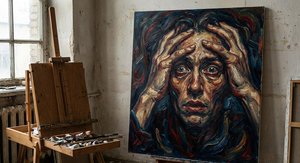
Figurative Expressionism: Emotional Intensity & Subjective Reality in 20th-Century Art
Explore the powerful world of Figurative Expressionism with OriginalUniqueArt. Discover key artists like Kirchner & Beckmann, understand its emotional depth, and learn how to collect this influential 20th-century art movement.

Tysk Expressionism: 10 Mästerverk som Definierade en Epok – Konst & Inredning
Utforska 10 ikoniska mästerverk inom tysk expressionism! Lär känna konstnärer som Nolde, Kirchner & Heckel. Upptäck historien bakom dessa färgstarka målningar och finn inspiration till din inredning med OriginalUniqueArt.com – museumkvalitet för ditt hem.

Max Beckmann: Navigating Trauma & Modernity Through a Distorted Lens
Explore the powerful world of Max Beckmann's art – a journey through trauma, modernity & distortion. Discover his key works, influences, and lasting legacy with expert analysis.

Unmasking Emotion: A Journey Through the Raw Power and Visceral Beauty of German Expressionism
Explore the raw emotional power of German Expressionism. From Kirchner to Die Brücke, discover how artists used distortion and vibrant color to unmask the human psyche. A deep dive into art history for the discerning collector and enthusiast.
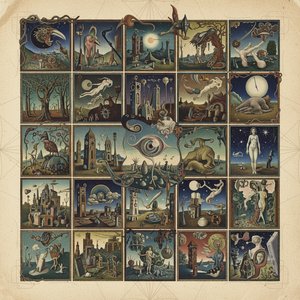
Max Ernsts 25 Mästerverk: Surrealismens Geni i Konst och Hemmets Atmosfär
Utforska Max Ernsts 25 mest ikoniska surrealistiska målningar och collage. Lär känna historien bakom dadaismens genier och expressionismens färgstarka värld. Hitta inspiration till din heminredning med museumskvalitativa konsttryck på OriginalUniqueArt.com.


