

 Förhandsvisa
 Skicka
 Dela
Dela
 Visa detaljer
 Guide
Guide

 Ladda ner
 Liknande objekt
 Röntgen
 Bildspel
 Statistik
Self-Portrait with Trumpet
 Oil On Canvas
- WallArt
- Expressionist Portraiture
 1938
1938- Modern
 101.0 x 110.0 cm
 Visa mer
Giclée / Konsttryck
Giclée- eller canvasprint av museumskvalitet med snabb produktion och flexibla ytbehandlingsalternativ. ( Beställ handmålad reproduktion Byt till digital bild)




P118B Skr10

P118H Skr10

P118W Skr10

P438Z Skr10

P508JH Skr12

P508YH Skr12

P805H Skr10

P805Z Skr10

P919BZ Skr10

P919G Skr10

P919XJ Skr10

P959ZH Skr10

P968JZ Skr12

W106C Skr8

W218G Skr10

W218JH Skr8

W218Y Skr10

W307PJ Skr10

W316G Skr10

W316PJ Skr8

W316Y Skr10

W398PJ Skr8

W4111J Skr10

W500HY Skr15

W500JH Skr15

W692G Skr12

W849H Skr8

W940BG Skr15

W953PJ Skr8




Välj bland våra förinställda storlekar som motsvarar konstverkets ursprungliga proportioner.

Ange den bredd och höjd du behöver för att passa din ram eller vägg. Ett tryck kan endast beskäras, aldrig göras större än originalbilden, vilket innebär att ett format med en annan proportion leder till att en del av bilden går förlorad. Vi skickar en digital mockup för godkännande innan vi påbörjar tryckningen. Bilden som visas på denna sida visar inte den faktiska beskärningen — det är endast mockuppen som gör det.
Leverans över hela världen () på 2 veckor istället för standard 4/5 veckor. (25 oktober)

Fri expressfrakt över hela världen

Högkvalitativ linnecanvas

Fullständig fraktförsäkring

Garantier för återbetalning av tullavgifter

Garantier för exakt färgåtergivning

100 dagars returrätt (endast vid fel)

100% pengarna tillbaka-garanti

Mängdrabatt erbjuds
 Glasalternativet är endast tillgängligt i storlekar under 110 cm.

Self-Portrait with Trumpet
Giclée / Konsttryck
Storlek på reproduktion
-


Slutgiltigt pris
Skr 793
Max Beckmann's 'Self-Portrait with Trumpet': A Study in Disquiet
Max Beckmann’s 1938 ‘Self-Portrait with Trumpet’ is not merely a representation of the artist; it’s a raw, unsettling exploration of identity and disillusionment rendered with the characteristic intensity of his expressionist style. Completed during a period of profound personal and artistic transformation, this oil on canvas offers a glimpse into Beckmann's evolving worldview – one shaped by the trauma of World War I and a growing sense of alienation from the societal norms of his time. The painting’s immediate impact lies in its unsettling composition: a man, clad in a striking red garment, stares directly at the viewer with an almost accusatory gaze. His posture is rigid, conveying a palpable tension, while the trumpet he holds to his lips suggests both aspiration and perhaps a desperate attempt to find solace or expression within a world seemingly devoid of meaning.
- Subject & Composition: The central figure dominates the canvas, immediately drawing the viewer into a confrontation. The inclusion of the bottle and cup adds layers of complexity, hinting at themes of indulgence, contemplation, and perhaps even self-medication – common anxieties reflected in Beckmann’s oeuvre.
- Technique & Materials: Executed in oil on canvas, the painting showcases Beckmann's masterful control over texture and color. Thick impasto strokes build a sense of physicality, while his use of muted reds, browns, and blues creates an atmosphere of brooding melancholy. The deliberate distortion of perspective further amplifies the emotional impact.
Echoes of Medieval Iconography & Artistic Influences
Beckmann’s artistic development was profoundly influenced by a deep engagement with medieval art, particularly stained glass and late Gothic painting. This fascination is evident in the flattened perspectives, symbolic imagery, and almost ritualistic quality of ‘Self-Portrait with Trumpet.’ He drew heavily from artists like Rembrandt, whose use of chiaroscuro – the dramatic interplay of light and shadow – resonates powerfully within this work, as well as the Northern European masters Bosch and Grünewald, known for their unsettling depictions of human folly and spiritual struggle. Cézanne’s influence is also discernible in Beckmann's exploration of form and space, while Van Gogh’s emotional intensity undoubtedly contributed to his own expressive approach.
Historical Context & The Artist's Psyche
Painted in 1938, a year marked by rising political tensions in Germany, the painting reflects the anxieties of the era. Beckmann’s experiences as a medical orderly during World War I left an indelible mark on his psyche, contributing to his later artistic preoccupation with themes of suffering, loss, and the dehumanizing effects of conflict. The self-portrait can be interpreted as a deeply personal statement – a struggle to reconcile his own identity with the fractured realities of the modern world. It’s a testament to Beckmann's courage in confronting difficult truths about himself and humanity.
A Timeless Expression of Human Condition
'Self-Portrait with Trumpet' transcends its historical context, offering a timeless meditation on the human condition. Its raw emotional power and unsettling imagery continue to resonate with viewers today, solidifying Beckmann’s place as one of the most significant artists of the 20th century. This meticulously crafted reproduction captures not just an image but the very essence of Beckmann's artistic vision – a poignant reminder of our shared vulnerability and the enduring search for meaning in a chaotic world.
Frågor och svar
Under vilket år och inom vilken stil skapades "Self-Portrait with Trumpet"?
"Self-Portrait with Trumpet" skapades år 1938 inom Expressionist Portraiture-rörelsen.
Var kan jag köpa en digital bild av "Self-Portrait with Trumpet" av Max Beckmann?
En digital bild av "Self-Portrait with Trumpet" av Max Beckmann kan köpas på dess sida för Digital bild i hög upplösning: en högupplöst digital bildnedladdning.
Vilken luminans har "Self-Portrait with Trumpet" av Max Beckmann?
Färgerna i "Self-Portrait with Trumpet" har en Dark luminans.
Konstnärsbiografi
Early Life and Artistic Development
Max Beckmann, a German painter, draftsman, printmaker, sculptor, and writer, was born on February 12, 1884, in Leipzig, Saxony. His artistic journey commenced with academically correct depictions—a stylistic choice reflecting the prevailing academic tradition of his time—which subsequently underwent a dramatic transformation into distorted figures and spaces. This shift mirrored Beckmann’s profoundly altered perception of humanity following his harrowing experience as a medical orderly during World War I, an event that indelibly shaped his artistic vision. The trauma of witnessing the horrors of war instilled in him a preoccupation with themes of suffering and decay, influencing his stylistic evolution.Artistic Style and Influences
Beckmann’s distinctive style drew inspiration from a diverse array of artists, establishing connections to movements like Expressionism and Neue Sachlichkeit. Notably, he acknowledged the profound impact of Cézanne's geometric explorations on his compositional approach, mirroring Cézanne's deliberate simplification of forms. Furthermore, Vincent van Gogh’s expressive brushwork served as a crucial model for Beckmann’s technique—a bold departure from academic conventions—capturing the emotional intensity characteristic of Van Gogh’s oeuvre. Blake’s visionary imagery and Rembrandt’s masterful use of chiaroscuro also exerted considerable influence on Beckmann's artistic sensibilities, guiding him toward conveying psychological depth and dramatic tension. Finally, Rubens’ monumental canvases instilled in Beckmann a fascination with grandeur and theatrical presentation.Notable Works and Exhibitions
Beckmann’s oeuvre encompasses a remarkable range of subjects—from landscapes imbued with symbolic resonance to portraits capturing the complexities of human emotion—demonstrating his versatility as an artist. Among his most celebrated creations is “The Bark,” acquired by the National Gallery in Berlin, a monumental canvas depicting a desolate seascape rendered with meticulous detail and conveying a palpable sense of isolation. Equally significant is “Self-Portrait in Tuxedo,” purchased in 1928, which presents Beckmann’s self-image as a figure grappling with existential anxieties—a testament to his introspective artistic spirit. Beckmann's work was showcased in retrospectives at the Städelschule Mannheim (1928) and Basel and Zurich (1930), cementing his position as one of the foremost artists of his era.Later Life and Exile
Beckmann’s life took a decisive turn with the ascent of Adolf Hitler to power, triggering his expulsion from the Frankfurt Art School and resulting in the confiscation of over 500 of his artworks—a devastating blow to his artistic career and personal freedom. Forced into exile, he sought refuge in Amsterdam for ten years, enduring bureaucratic obstacles that prevented him from securing a visa for the United States. During this period, Beckmann continued to produce prolifically, exploring themes of displacement and resilience—themes that would permeate his subsequent artistic endeavors. His unwavering commitment to artistic integrity fueled his determination to resist Nazi oppression and preserve his creative vocation.Legacy
Max Beckmann’s enduring legacy resides in his profound contribution to German Expressionism and his exploration of existential concerns through art. He was honored as a teacher at Washington University in St. Louis and the Brooklyn Museum, nurturing the talents of aspiring artists and fostering intellectual discourse. His first retrospective in the United States occurred in 1948 at the City Art Museum, Saint Louis, marking a pivotal moment in recognizing his artistic significance on an international scale. Beckmann’s unwavering belief in the transformative power of art—expressed eloquently in his correspondence with fellow artist Marie-Louise von Motesiczky—continues to inspire artists and scholars alike. Max Beckmann's influence extends beyond the realm of painting, permeating literature and philosophy, solidifying his place as a multifaceted intellectual figure who wrestled with profound questions about human existence.
Max Beckmann
1884 - 1950 , Tyskland
Kortfakta
- Artistic Movement Or Style: Expressionism
- Artists Or Movements Influenced By This Artist: ['Georges Seurat']
- Artists Who Influenced This Artist:
- Rembrandt
- Bosch
- Date Of Birth: Feb 12, 1884
- Date Of Death: Dec 27, 1950
- Full Name: Max Carl Friedrich Beckmann
- Nationality: German
- Notable Artworks:
- The Bark
- Self-Portrait in Tuxedo
- Place Of Birth: Leipzig, Germany
Relaterade artiklar

Giclée Prints: Archival Quality & Aesthetic Nuances for the Discerning Collector
Explore the world of giclée prints with OriginalUniqueArt. Learn about archival quality, aesthetic nuances & investment potential. Expert guidance for discerning art collectors seeking museum-quality reproductions and lasting value.
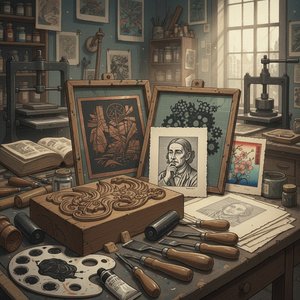
The Enduring Legacy of Printmaking: Techniques, Themes & Artistic Innovation Across Centuries
Explore the rich history of printmaking with OriginalUniqueArt. Discover techniques from intaglio to lithography, learn about collecting valuable prints & find museum-quality reproductions. Expert insights for art enthusiasts and collectors.

Crimson Threads of Narrative: Exploring Symbolism & Representation in Artworks Featuring the Red Dress
Explore the rich symbolism of the red dress in art history! From ancient power displays to iconic portraits like Cézanne’s 'Madame Cezanne', discover the cultural and artistic significance behind this captivating color. Expert analysis & insights.

The Enduring Legacy of Fine Art Prints: Technique, History & Aesthetic Impact
Explore the rich history & techniques of fine art prints. Discover investment potential, assess authenticity, and learn how to preserve your collection with expert guidance. Trusted insights for discerning collectors.

Echoes of Time: Exploring the Enduring Appeal & Historical Context of Vintage Art Prints
Explore the captivating world of vintage art prints! Discover their history, collecting tips & enduring appeal. Expert insights on chromolithography and building a legacy collection with OriginalUniqueArt.


