

 Visa i rummet
 Skicka
 Dela
Dela
 Detaljer
 Studentguide för konstverk

 Ladda ner
 Liknande objekt
 Röntgen
 Bildspel
 Besökstatistik
Oppositions 5, 6, 7, 8
 Acrylic On Canvas
- WallArt
- Oppositions Architecture
 1975
1975 61.0 x 61.0 cm
 Vignelli Center for Design Studies
 Läs mer
Konstverket som visas på denna sida skyddas av upphovsrättslagen, vilket innebär att vi inte lagligt kan skapa eller sälja en identisk reproduktion. Detta skydd upprätthålls genom internationella avtal såsom den Bernkonventionen och genom nationella lagar, inklusive de som fastställs av Amerikansk upphovsrättslag – Titel 17. Alla rättigheter förbehållna. Återgivning av konstverk är förbjuden utan skriftligt tillstånd från WahooArt.
Denna metod följer fullt ut upphovsrättsliga regler eftersom den inte innebär kopiering eller duplicering av det skyddade konstverket. Istället är det en kreativ nytolkning – en ny målning som är influerad av originalet men inte identisk med det.
Giclée / Konsttryck
Giclée- eller canvasprint av museumskvalitet med snabb produktion och flexibla ytbehandlingsalternativ. ( Köp handmålat konstverk Byt till digital bildförsäljning)




P118B Skr10

P118H Skr10

P118W Skr10

P438Z Skr10

P508JH Skr12

P508YH Skr12

P805H Skr10

P805Z Skr10

P919BZ Skr10

P919G Skr10

P919XJ Skr10

P959ZH Skr10

P968JZ Skr12

W106C Skr8

W218G Skr10

W218JH Skr8

W218Y Skr10

W307PJ Skr10

W316G Skr10

W316PJ Skr8

W316Y Skr10

W398PJ Skr8

W4111J Skr10

W500HY Skr15

W500JH Skr15

W692G Skr12

W849H Skr8

W940BG Skr15

W953PJ Skr8




Välj bland våra förinställda storlekar som motsvarar konstverkets ursprungliga proportioner.

Ange den bredd och höjd du behöver, för att passa din ram eller din vägg. Ett tryck kan endast beskäras, aldrig göras större än bilden, vilket innebär att ett format med en annan formform leder till att en del av bilden går förlorad. Vi skickar en digital mockup för godkännande innan vi trycker något. Bilden som visas på denna sida visar inte den faktiska beskärningen — det är endast mockuppen som gör det.
Leverans över hela världen () på 2 veckor istället för standard 4/5 veckor. (24 oktober)

Fri expressfrakt över hela världen

Högkvalitativ linnecanvas

Fullständig fraktförsäkring

Garantier för återbetalning av tullavgifter

Garantier för exakt färgåtergivning

100 dagars returrätt vid fabrikationsfel

100% pengarna tillbaka-garanti

Mängdrabatt erbjuds
 Glasalternativet är endast tillgängligt i storlekar under 110 cm.

Oppositions 5, 6, 7, 8
Giclée / Konsttryck
Reproduktionsstorlek
-


Totalpris
Skr 793
The Genesis of a Dialogue: Massimo Vignelli’s “Oppositions”
Massimo Vignelli's "Oppositions 5, 6, 7, 8," created in 1975 for the Institute for Architecture and Urban Studies (IAUS), isn’t merely a poster; it’s a carefully constructed visual argument. Born from a period of intense architectural theory and critique – a time grappling with the shifting landscape of urban design and the role of the architect – this work embodies the IAUS's commitment to fostering rigorous debate and challenging established norms. The piece, designed by Vignelli himself, immediately establishes a sense of controlled chaos, a deliberate juxtaposition of seemingly disparate elements that speaks volumes about the journal’s core mission: to explore the tensions and contradictions within contemporary architecture.
The design's stark simplicity is its most striking feature. A grid-based layout, dominated by bold, sans-serif typography – Vignelli’s signature choice – presents a list of book titles, each meticulously arranged against a muted background. The numbers 5 through 8 are not simply identifiers; they function as anchors, grounding the viewer within the specific issues addressed in that particular iteration of the journal. The subtle use of crossed-out books hints at critical engagement and the inherent limitations of any single perspective – a key tenet of the IAUS’s approach.
A Masterclass in Graphic Minimalism
Vignelli's genius lies not just in his aesthetic choices, but in their profound impact. The limited color palette—primarily shades of gray and white—forces the viewer to focus entirely on the content and the arrangement of the text. The geometric precision of the layout mirrors the principles of modernist architecture, reflecting a belief in clarity, functionality, and rational design. This isn’t decoration; it's an exercise in visual communication, prioritizing information delivery over superfluous embellishment. The use of Helvetica, a typeface chosen for its legibility and neutrality, further reinforces this commitment to clarity – a deliberate rejection of the ornate typography prevalent at the time.
The poster’s design also reflects Vignelli's broader philosophy regarding graphic design: that it should be invisible, serving as a vehicle for the content rather than competing with it. He famously stated, “Design is not about making things beautiful; it’s about making things useful.” This principle is perfectly embodied in "Oppositions," where the visual elements are subordinate to the intellectual discourse they represent.
Historical Context and Architectural Critique
To understand the significance of “Oppositions,” one must consider the context in which it was created. The 1970s were a turbulent period for architecture, marked by debates surrounding postmodernism, deconstructivism, and the role of the architect in shaping urban environments. The IAUS, founded by Peter Eisenman, served as a vital forum for these discussions, bringing together leading architects, theorists, and critics to challenge conventional thinking. “Oppositions” functioned as a visual representation of this intellectual ferment – a condensed distillation of the complex ideas being explored within the journal.
The inclusion of figures like Kenneth Frampton, Mario Gandelsonas, and David Morton highlights the diverse range of perspectives engaged in by the IAUS. These were architects and thinkers who questioned established hierarchies and advocated for a more critical approach to design. The crossed-out books subtly acknowledge that even within this vibrant intellectual community, there would inevitably be disagreements and competing viewpoints.
Symbolism and Enduring Legacy
Beyond its immediate function as a promotional piece, “Oppositions” carries a deeper symbolic weight. The arrangement of the book titles—each representing a specific issue—suggests a complex web of interconnected ideas. The use of numbers creates a sense of order and structure, while the crossed-out books represent the inherent contradictions and unresolved questions within architectural theory. Ultimately, the poster invites viewers to engage in their own critical analysis – to consider the challenges facing architecture and to formulate their own perspectives on the future of design.
Today, “Oppositions 5, 6, 7, 8” stands as a testament to Massimo Vignelli’s enduring legacy. His minimalist aesthetic continues to influence graphic designers worldwide, while his commitment to clarity and intellectual rigor remains remarkably relevant in an increasingly complex world. Reproductions of this iconic poster offer a powerful reminder of the importance of critical thinking and the transformative potential of design.
Frågor och svar
Var kan jag ladda ner "Oppositions 5, 6, 7, 8" av Massimo Vignelli, Vignelli Associates?
Bilden av "Oppositions 5, 6, 7, 8" av Massimo Vignelli, Vignelli Associates kan laddas ner från verkets Ladda ner-sida: en högupplöst digital bildnedladdning.
Hur förhåller sig färgerna i "Oppositions 5, 6, 7, 8" till varandra?
Färgerna i "Oppositions 5, 6, 7, 8" av Massimo Vignelli, Vignelli Associates uppvisar en Strong Color Unity harmoni. Harmoni beskriver hur färgerna förhåller sig till varandra.
Upplevs färgerna i "Oppositions 5, 6, 7, 8" som starka eller mjuka?
Färgerna i "Oppositions 5, 6, 7, 8" av Massimo Vignelli, Vignelli Associates har en Vivid intensitet.
Om konstnären
Ett liv tillägnat formen: Massimo Vignellis värld
Född i Milano, Italien, 1931, var Massimo Vignellis resa en berättelse om orubblig hängivenhet till den modernistiska designens principer. Redan från tidig ungdom uppvisade han en medfödd förståelse för visuell kommunikation, vilket lade grunden för hans formella utbildning inom arkitektur vid Politecnico di Milano och senare vid Università Iuav di Venezia. Det var dock lärlingsskapen hos de ansedda bröderna Castiglioni – pionjärer inom italiensk industridesign – som verkligen tände hans passion för att forma världen genom genomtänkt skapande. Denna tidiga exponering ingöt en tro på funktionalitet, enkelhet och kraften i eleganta lösningar på vardagens problem. Han designade inte bara objekt; han formade upplevelser, strömlinjeformade interaktioner och förvandlade det vardagliga till något minnesvärt. Denna formativa period lade grunden för en karriär som skulle komma att omdefiniera den visuella kulturen över hela kontinenter.Från Italien till New York: En transatlantisk vision
Vignellis väg ledde honom till Amerika 1966, där han spelade en avgörande roll i etableringen av Unimark Internationals kontor i New York. Detta markerade en vändpunkt, inte bara för hans egen karriär utan även för det amerikanska designlandskapet. Unimark steg snabbt till framträdande positioner, och Vignellis bidrag – mest märkbart den bestående logotypen för American Airlines – befäste hans rykte som en mästare inom företagsidentitet. En växande skillnad i kreativ filosofi drev honom dock att påbörja ett självständigt äventyr. År 1971 grundade han, tillsammans med sin hustru och livslånga samarbetspartner Lella Vignelli, Vignelli Associates. Detta partnerskap visade sig vara extraordinärt fruktbart och blev synonymt med sofistikerade designlösningar som spände över grafisk design, inredning, produktdesign och arkitektur. Firmans etos var rotat i en övertygelse om att god design ska vara tillgänglig, tidlös och djupt användbar – principer som de konsekvent försvarade under hela sin karriär.Ikoniska skapelser: Ett arv av klarhet
Massimo Vignellis inflytande är vävt in i det moderna livets struktur. Hans kanske mest igenkännbara prestation är ritningen om New York City Subways tunnelbanekarta 1972. Även om den initialt var kontroversiell på grund av sin avvikelse från strikt geografisk noggrannhet, var den ett djärvt uttalande om klarhet och användbarhet. Vignelli prioriterade läsbarhet och intuitiv navigering framför bokstavlig representation, vilket skapade en diagrammatisk karta som än idag vägleder miljontals pendlare dagligen. Detta projekt exemplifierar hans kärnfilosofi: att prioritera kommunikation framför allt annat. Utöver tunnelbanekartan lämnade Vignelli Associates ett outplånligt avtryck på otaliga varumärken och institutioner. Deras arbete för Bloomingdale’s – inklusive den ikoniska bruna papperspåsen med sin enkla vita logotyp – förvandlade en shoppingupplevelse till ett stiluttryck. De designade möbler för Knoll, förpackningar för Heller och företagsidentiteter som blev omedelbart igenkännbara symboler för kvalitet och innovation. Hans Heller Rainbow Dinnerware står som ett testamente till hans minimalistiska estetik, där vibrerande färger visas upp inom rena geometriska former. Affischen för Tredicesima Triennale di Milano exemplifierar hans djärva användning av färg och form, medan omslaget till Knoll Design demonstrerar hans förmåga att skapa slående visuella uttryck för världsberömda varumärken.Ett bestående inflytande: Bortom estetiken
Massimo Vignellis inverkan sträcker sig långt bortom enskilda projekt; han omformade fundamentalt hur vi uppfattar design i sig. Han var en hängiven förespråkare för typografisk disciplin och förespråkade berömt en begränsad palett av typsnitt – i tron att sann kreativitet inte ligger i oändliga valmöjligheter, utan i mästerlig utförande med noggrant utvalda verktyg. Hans bok, The Vignelli Canon, blev ett manifest för designers och skisserade hans principer om klarhet, enkelhet och varaktig elegans. Han skapade inte bara visuellt tilltalande objekt; han strävade efter att skapa ordning ur kaos, att kommunicera effektivt och att höja den mänskliga upplevelsen genom genomtänkt design. Hans arbete fortsätter att inspirera generationer av designers och påminner dem om att sann innovation ligger i att skala bort det onödiga och fokusera på det essentiella. Vignelli Center for Design Studies vid Rochester Institute of Technology fungerar som en bestående hyllning till hans arv, där ett omfattande arkiv av hans arbete bevaras och fortsatta utforskningar av hans banbrytande idéer främjas. Han gick bort 2014, men hans designer förblir kraftfullt närvarande och formar vår värld med sin tidlösa elegans och orubbliga engagemang för klarhet.
Massimo Vignelli, Vignelli Associates
1931 - 2014 , Italien
Snabbfakta
- Artistic Movement Or Style: Modernism
- Artists Or Movements Influenced By This Artist: ['Minimalism']
- Artists Who Influenced This Artist:
- Achille Castiglioni
- Pier Giacomo Castiglioni
- Date Of Birth: 1931-05-28
- Date Of Death: 2014-07-16
- Full Name: Massimo Vignelli
- Nationality: Italien
- Notable Artworks:
- American Airlines logo
- NYC Subway map
- Bloomingdale's Paper Bag
- Place Of Birth: Milano, Italien
Relaterade artiklar
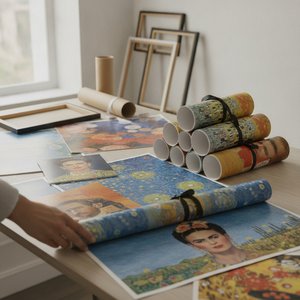
OriginalUniqueArt.com F.A.Q.: Premium Art Poster Prints – Vivid Colors & Versatile Sizing
Discover OriginalUniqueArt.com's premium art poster prints. Featuring 12-color archival pigments for vivid color fidelity and versatile sizing for bespoke decor. Expertly crafted museum-quality reproductions designed for discerning collectors and professional decorators.


