

 Förhandsvisa
 Skicka
 Dela
Dela
 Visa detaljer

 Ladda ner
 Liknande objekt
 Röntgen
 Bildspel
 Statistik
St. Andrew


 Visa mer
Handgjord oljereproduktion
Handmålad olja på duk i din valda storlek och ram, tillverkad efter beställning av våra konstnärer. ( Byt till tryck Byt till digital bild)




P118B $10

P118H $10

P118W $10

P438Z $10

P508JH $12

P508YH $12

P805H $10

P805Z $10

P919BZ $10

P919G $10

P919XJ $10

P959ZH $10

P968JZ $12

W106C $8

W218G $10

W218JH $8

W218Y $10

W307PJ $10

W316G $10

W316PJ $8

W316Y $10

W398PJ $8

W4111J $10

W500HY $15

W500JH $15

W692G $12

W849H $8

W940BG $15

W953PJ $8




Välj bland våra förinställda storlekar som motsvarar konstverkets ursprungliga proportioner.

Du kan ange egna mått för att passa en specifik ram eller yta. Om den valda storleken inte matchar originalbildens proportioner kommer vi antingen att beskära konstverket eller utöka målningen med ytterligare handmålade element. En digital skiss skickas till dig för godkännande innan produktionen påbörjas.
Observera att förhandsvisningen på skärmen inte återspeglar den faktiska beskärningen eller utökningen. Endast skissen visar den slutgiltiga kompositionen korrekt.
Även om anpassade storlekar är möjliga, rekommenderar vi att du väljer en dimension från den fördefinierade listan för att bevara originalproportionerna.
Efter beställning kommer OriginalUniqueArt.com team att mejla kunden för instruktioner och tillhandahålla en skissförhandsvisning
Leverans över hela världen () på 3–4 veckor istället för standard 5 veckor. (12 september). Inga kompromisser med kvaliteten.

Fri expressfrakt över hela världen

Högkvalitativ linnecanvas

Fullständig fraktförsäkring

Garantier för återbetalning av tullavgifter

Garantier för exakt färgåtergivning

100 dagars returrätt (endast vid defekter)

100% pengarna tillbaka-garanti

Mängdrabatt erbjuds
 Glasalternativet är endast tillgängligt i storlekar under 110 cm.

St. Andrew
Reproduktionsmedium
Storlek på reproduktion
-


Slutgiltigt pris
$ 300
A Revolutionary Vision of Faith: Masaccio’s St. Andrew
Masaccio's *St. Andrew*, painted in 1426, is a landmark work of the Early Renaissance, embodying the seismic shift towards naturalism and humanistic expression that defined the Quattrocento. This isn’t merely a religious depiction; it’s a profound psychological portrait rendered with groundbreaking artistic skill. The painting presents St. Andrew, one of Jesus Christ's first apostles, in a strikingly intimate manner. He is depicted as a man – not an ethereal saint – with a neatly trimmed beard and wearing a simple green robe. His downward gaze suggests contemplation or prayer, inviting the viewer into his inner world.Technical Mastery & Artistic Innovation
Masaccio’s genius lies in his ability to create a sense of *realism* previously unseen in painting. He achieves this through several key techniques. While the size of the original work is unknown, its impact is immense. The use of chiaroscuro – the dramatic contrast between light and shadow – sculpts Andrew’s face and robe, giving them a tangible three-dimensionality. This technique, combined with his emerging understanding of linear perspective (though not fully developed as in *The Trinity*), creates a sense of depth and presence. The subtle modeling of features and drapery demonstrates Masaccio's meticulous observation of the natural world – a hallmark of Renaissance art. He moves away from the stylized conventions of the International Gothic period, favoring anatomical accuracy and believable form.Symbolism & Religious Context
The composition is rich in symbolic meaning. The two crosses visible in the background immediately signify St. Andrew’s martyrdom – he was crucified on an X-shaped cross. Their placement subtly frames the figure, reminding us of his ultimate sacrifice. The book held in Andrew's hands likely represents knowledge, scripture, or perhaps even the Gospels themselves, emphasizing his role as a foundational figure in Christianity and a disseminator of faith. The green robe, while seemingly simple, can be interpreted as symbolizing hope and renewal – themes central to Christian belief. Masaccio’s choice to depict Andrew with such human vulnerability underscores the accessibility of faith and the relatable nature of even the most revered figures.A Lasting Legacy
Despite his tragically short life (he died at just 27), Masaccio fundamentally altered the course of Western art. His innovations in perspective, realism, and emotional depth profoundly influenced generations of artists, including Michelangelo and Leonardo da Vinci. *St. Andrew* stands as a testament to his revolutionary vision – a powerful blend of religious devotion and humanist inquiry. For collectors and interior designers, a reproduction of this work offers not only aesthetic beauty but also a connection to the very origins of Renaissance art, bringing a sense of historical weight and intellectual sophistication to any space. It’s a piece that invites contemplation and embodies the spirit of artistic innovation.Konstnärsbiografi
Masaccio (1401-1428): The Dawn of Renaissance Realism
Tommaso di Ser Giovanni di Simone Guidi Cassai, better known as Masaccio (meaning "clumsy Tom"), was a pivotal figure in the Early Italian Renaissance. Born on December 21, 1401, in San Giovanni Valdarno, Italy, and dying tragically young in 1428, his brief career revolutionized painting with groundbreaking realism, perspective, and chiaroscuro (the use of strong contrasts between light and dark). Despite his short life, Masaccio’s impact on subsequent generations of artists was profound, establishing a new standard for naturalism and influencing the course of Western art.Early Life and Training
Masaccio's origins were humble; he descended from a family involved in cabinet making – Ser Giovanni di Simone Cassai, his father, was a notary, and Monna Iacopa di Martinozzo di Dino, his mother. Orphaned at age five when his father died unexpectedly, Masaccio’s brother, Giovanni (Lo Scheggia), also pursued artistic endeavors, though he signed only one painting – a testament to the secretive nature of Renaissance artists' lives. The details surrounding Masaccio’s formative years remain frustratingly sparse; no definitive master has been identified, which contributes to the enduring mystery surrounding his rapid ascent to artistic mastery and his revolutionary techniques. Despite this lack of documented training, scholars believe he likely apprenticed around 1415, absorbing influences from masters like Giotto di Bondone – a predecessor celebrated for his pioneering naturalism – and Filippo Brunelleschi, whose rediscovery of linear perspective fundamentally reshaped artistic representation.Artistic Development and Major Works
Masaccio’s artistic journey began with an initial fascination for Giotto's expressive frescoes in Padua Cathedral, where he meticulously studied the artist’s masterful use of color and emotion. However, Masaccio swiftly surpassed Giotto’s achievements in perspective and anatomical accuracy, demonstrating a profound understanding of mathematical principles and human anatomy—skills honed through observation and experimentation. He was profoundly impacted by Brunelleschi's architectural innovations, particularly his groundbreaking application of linear perspective in the Duomo of Florence – an endeavor that inspired Masaccio to translate these spatial concepts into his paintings. His artistic breakthroughs centered around mastering linear perspective and chiaroscuro. Masaccio skillfully employed vanishing points and mathematical precision to create a convincing illusion of depth on a two-dimensional surface, mirroring Brunelleschi’s architectural vision. Simultaneously, he achieved unparalleled realism by manipulating light and shadow—a technique known as chiaroscuro—to sculpt forms and imbue his figures with palpable emotion. This dramatic interplay of light and dark elevated Masaccio's paintings beyond mere representation; they conveyed a sense of psychological depth previously unheard of in art. Masaccio’s most celebrated achievement was undoubtedly the Brancacci Chapel frescoes in Santa Maria del Carmine, Florence – a collaborative effort with Masolino—which remain among the finest examples of Early Renaissance painting. The frescoes depict scenes from Saint Peter's life, capturing dramatic narratives and conveying profound emotional resonance through masterful use of perspective and chiaroscuro. Particularly noteworthy is “The Tribute Money,” where Masaccio’s innovative depiction of spatial recession and anatomical detail established a new standard for naturalism—a standard that would inspire Leonardo da Vinci and Michelangelo centuries later. His influence extended beyond Florence, shaping the artistic sensibilities of artists across Italy and cementing his place as one of the foundational figures of Western art history.Historical Significance and Legacy
Masaccio’s legacy transcends mere stylistic innovation; he fundamentally altered the intellectual landscape of Renaissance art. By rejecting medieval conventions and embracing humanist ideals—inspired by classical antiquity—he ushered in a new era of artistic exploration and creativity. Giorgio Vasari, the renowned biographer of artists, recognized Masaccio's genius as unparalleled, proclaiming him "the best painter of his generation" and highlighting his ability to imitate nature with breathtaking precision. Despite dying prematurely at the age of twenty-six – circumstances shrouded in mystery—Masaccio’s brief but brilliant career continues to captivate scholars and artists alike, serving as a poignant reminder of the transformative power of artistic talent and innovation. His work remains an enduring testament to the dawn of Renaissance realism and its profound impact on Western culture.
Masaccio
1401 - 1429 , Italien
Kortfakta
- Artistic Movement Or Style: Early Renaissance
- Artists Or Movements Influenced By This Artist: ['Leonardo da Vinci']
- Artists Who Influenced This Artist:
- Giotto
- Filippo Brunelleschi
- Date Of Birth: December 21, 1401
- Full Name: Tommaso di Ser Giovanni Guidi Cassai
- Nationality: Italien
- Notable Artworks:
- Brancacci Chapel Frescoes
- Holy Trinity
- Tribute Money
- Place Of Birth: San Giovanni Valdarno, Italien
Relaterade artiklar
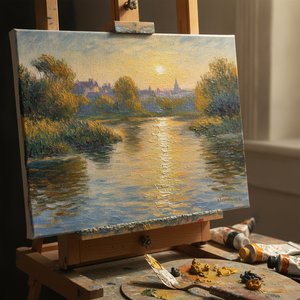
The Soul of Impressionism: Why Oil on Canvas Captures Eternal Light and Timeless Emotion
Discover the enchanting alchemy of Impressionism. Explore how the mastery of oil on canvas, through glazing and impasto, captures eternal light and emotion. Perfect for lovers of Monet and Van Gogh seeking the profound depth of hand-painted fine art.

The Enduring Legacy of Oil on Canvas: Technique, History & Aesthetic Impact
Explore the rich history & techniques of oil painting – from Renaissance masters to Impressionism. Discover pigments, layering methods, and why this timeless medium endures. Expert insights for artists & art enthusiasts.

Olja på duk: En tidlös teknik – Historik, process och konstnärliga möjligheter
Utforska oljemålningskonsten! Lär dig om flamländsk teknik, materialval och historisk utveckling. Expertguider för både nybörjare och erfarna konstnärer – bevara dina målningar med bästa praxis.

Olja på dukens bestående arv: Teknik, historia och samtida praktik
Utforska oljemåleriets rika historia och tekniker – från renässansens mästare till dagens konstnärer. Lär dig om material, metoder och konservering för att bevara konsten.
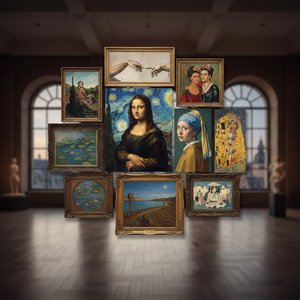
Topp 10 ikoniska oljemålningar som förändrade konsthistorien – OriginalUniqueArt.com
Utforska de 10 mest ikoniska oljemålningarna som revolutionerade konsthistorien! Lär känna Monet, Van Gogh och Da Vinci. Hitta inspiration & köp museumkvalitativa reproduktioner på OriginalUniqueArt.com – för en tidlös inredning.


