Visa i rummet
 Skicka
 Dela
Dela
 Detaljer
 Studentguide för konstverk

 Ladda ner
 Liknande objekt
 Röntgen
 Bildspel
 Besökstatistik
Nativity
 Oil On Canvas
- WallArt
- Northern Renaissance
 1480
1480- Renaissance
 37.0 x 28.0 cm
 Staatliche Museen zu Berlin
 Läs mer
Giclée / Konsttryck
Giclée- eller canvasprint av museumskvalitet med snabb produktion och flexibla ytbehandlingsalternativ. ( Köp handmålat konstverk Byt till digital bildförsäljning)




P118B Skr10

P118H Skr10

P118W Skr10

P438Z Skr10

P508JH Skr12

P508YH Skr12

P805H Skr10

P805Z Skr10

P919BZ Skr10

P919G Skr10

P919XJ Skr10

P959ZH Skr10

P968JZ Skr12

W106C Skr8

W218G Skr10

W218JH Skr8

W218Y Skr10

W307PJ Skr10

W316G Skr10

W316PJ Skr8

W316Y Skr10

W398PJ Skr8

W4111J Skr10

W500HY Skr15

W500JH Skr15

W692G Skr12

W849H Skr8

W940BG Skr15

W953PJ Skr8




Välj bland våra förinställda storlekar som motsvarar konstverkets ursprungliga proportioner.

Du kan ange egna mått för att passa en specifik ram eller yta. Om det valda måttet inte överensstämmer med originalbildens proportioner kommer vi antingen att beskära konstverket eller utöka bilden med en speglad eller enfärgad kant. En digital mockup skickas för ditt godkännande innan produktionen påbörjas.
Vänligen notera att förhandsvisningen på skärmen inte återspeglar den faktiska beskärningen eller utökningen. Endast mockuppen visar den slutgiltiga kompositionen korrekt.
Även om anpassade storlekar är möjliga, rekommenderar vi att du väljer ett mått från den fördefinierade listan för att bevara de ursprungliga proportionerna.
Leverans över hela världen () på 2 veckor istället för standard 4/5 veckor. (13 oktober)

Fri expressfrakt över hela världen

Högkvalitativ linnecanvas

Fullständig fraktförsäkring

Garantier för återbetalning av tullavgifter

Garantier för exakt färgåtergivning

100 dagars returrätt vid fabrikationsfel

100% pengarna tillbaka-garanti

Mängdrabatt erbjuds
 Glasalternativet är endast tillgängligt i storlekar under 110 cm.

Nativity
Giclée / Konsttryck
Reproduktionsstorlek
-


Totalpris
Skr 776
A Moment of Divine Grace: Martin Schongauer's Nativity
Martin Schongauer’s “Nativity,” painted around 1480, is more than just a depiction of the biblical story; it’s a profound meditation on faith, humility, and the quiet majesty of the divine. Executed in meticulous detail with the characteristic precision of Northern Renaissance art, this work offers a deeply moving glimpse into the heart of Christian belief. Measuring 37 x 28 cm, its intimate scale invites viewers to contemplate the scene with focused attention, drawing them into the sacred narrative.
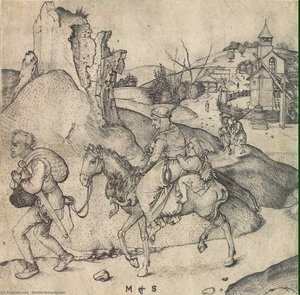
- The Scene: The painting portrays the traditional Nativity – Mary kneeling in reverence before Joseph, who cradles the infant Jesus. The presence of animals—two cows and three horses—is not merely decorative; it’s laden with symbolic weight. Animals were often associated with Christ's humility and sacrifice, mirroring the creatures present at his crucifixion.
- Schongauer’s Technique: Schongauer was a master printmaker, and this painting reflects his extraordinary skill in engraving. His meticulous attention to detail is evident in every brushstroke, from the delicate folds of Mary’s robes to the textured fur of the animals. The use of oil paint allowed for subtle gradations of tone and color, creating a remarkable sense of realism and depth.
A Window into the Northern Renaissance
Schongauer's work stands as a pivotal example of the artistic currents flowing through the Northern Renaissance. Influenced by Early Netherlandish masters like Rogier van der Weyden, he embraced a style characterized by its realism, emotional intensity, and meticulous observation of nature. Unlike the idealized forms often found in Italian art of the period, Schongauer’s figures possess a tangible humanity – their expressions conveying a sense of vulnerability and devotion. The painting's composition reflects the influence of panel painting traditions prevalent at the time, emphasizing narrative clarity and symbolic resonance within a carefully structured space.
- Historical Context: Created around 1480, this “Nativity” emerged during a period of significant religious and intellectual ferment. The rise of humanism was challenging traditional dogma, while simultaneously fostering a renewed appreciation for classical learning and artistic achievement. Schongauer’s work embodies this tension – a devout expression of Christian faith rendered with the highest standards of technical skill.
- The Artist's Background: Born in Augsburg, Germany, Martin Schongauer inherited his father’s goldsmithing skills, which profoundly shaped his artistic approach. This training instilled in him an unparalleled ability to render intricate detail and texture, a hallmark of his work. His early apprenticeship with Caspar Isenmann further honed his technical abilities and exposed him to the prevailing artistic trends of the time.
Symbolism and Emotional Resonance
Beyond its technical brilliance, “Nativity” resonates deeply through its carefully considered symbolism. The arrangement of figures—Mary’s kneeling posture, Joseph’s protective embrace of Jesus—evokes a sense of reverence and guardianship. The animals, representing innocence and humility, underscore the central themes of the Nativity: the arrival of the Messiah as a humble servant. The painting's emotional impact is palpable – it invites viewers to contemplate the miracle of birth, the promise of salvation, and the profound love at the heart of the Christian faith. It’s a scene brimming with quiet dignity and spiritual significance.
A Timeless Masterpiece
This hand-painted reproduction captures the essence of Schongauer's masterpiece, offering an exceptional opportunity to bring this iconic work of art into your home or office. Its dimensions (37 x 28 cm) make it suitable for a variety of spaces, while its enduring beauty and profound symbolism ensure that it will remain a cherished addition to any collection. A testament to Schongauer’s genius, this reproduction allows you to experience the power and grace of this timeless depiction of the Nativity.
Frågor och svar
Finns det en nedladdningsbar version av "Nativity" tillgänglig?
"Nativity" av Martin Schongauer kan laddas ner från verkets Ladda ner-sida som en högupplöst digital bildnedladdning.
Vilket medium och vilka mått har "Nativity" av Martin Schongauer?
Originalet "Nativity" av Martin Schongauer är ett verk i Oil On Canvas med måtten 37 x 28 cm. Teknik och storlek beskriver det ursprungliga objektet.
Vilken är den övergripande stämningen i "Nativity" av Martin Schongauer?
"Nativity" av Martin Schongauer beskrivs ha en Calm stämning. Denna klassificering kan hjälpa till att matcha verket med en miljö.
I vilken rörelse och i vilken epok kan "Nativity" av Martin Schongauer placeras?
I "Nativity" av Martin Schongauer möter Northern Renaissance-rörelsen Renässansen-eran.
Var kan jag hitta en guide till "Nativity"?
En Guide-sida finns tillgänglig för "Nativity" av Martin Schongauer: ett utskrivbart faktablad om konstverket, utformat för studenter och undervisning i klassrummet.
Vem är konstnären bakom "Nativity"?
"Nativity" skapades av Martin Schongauer. Informationen på denna sida beskriver Martin Schongauers originalverk.
Vilken reproduktionsstorlek rekommenderas för "Nativity" av Martin Schongauer?
En reproduktion i storleken Medium rekommenderas för "Nativity" av Martin Schongauer. Storleken kan justeras med bibehållna proportioner.
Vilket stämningsläge och vilken känsla förenas i "Nativity"?
"Nativity" av Martin Schongauer förmedlar en Spiritual känsla inom en övergripande Calm stämning.
Om konstnären
Martin Schongauer: Liv och arv
Tidigt liv och utbildning
Martin Schongauer, född omkring 1450 i Colmar i Elsass (nuvarande Frankrike), var en avgörande gestalt i utvecklingen av grafiken under den nordliga renässansen. Han kom från en familj av hantverkare; hans far, Caspar Schongauers, var en guldsmed som hade flyttat till Colmar från Augsburg i Tyskland omkring 1440. Denna bakgrund kom att prägla Martins tidiga konstnärliga fostran djupt, då guldsmedskonsten gav en solid grund i precision och metallbearbetning – färdigheter som var direkt överförbara till kopparsticket.
Utbildning och konstnärlig utveckling
År 1465 studerade Schongauer kortvarigt vid universitetet i Leipzig, men han övergav snart de akademiska sysslorna för att helt ägna sig åt konsten. Han fick sin första utbildning som målare under Caspar Isenmann, en lokal mästare som var influerad av det tidiga nederländska måleriet, och i synnerhet av Rogier van der Weydens verk. Denna tidiga exponering för den nederländska realismen och omsorgen om detaljer skulle komma att bli kännetecken för Schongauers egen unika stil.
Konstnärlig stil och influenser
Schongauers konstnärliga uttryck präglas av en klar och organiserad gotisk estetik, sammanvävd med de framväxande influenserna från den nordliga renässansen. Han saknade märkbart direkt italiensk påverkan och hämtade istället sin inspiration från tyska och tidigt nederländska traditioner. Hans verk uppvisar en minutiös detaljrikedom, uttrycksfulla figurer och en sofistikerad förståelse för komposition.
- Viktiga egenskaper: Precisionsgravering, realistiska skildringar, dramatiska berättelser, gotisk struktur
- Influenser: Rogier van der Weyden, Caspar Isenmann, tyska gotiska traditioner
Stora prestationer och verk
Schongauer är främst känd för sina 116 kopparstick, där varje blad är identifierat med hans monogram. Dessa tryck spreds vidsträckt över hela Europa och fick en betydande inverkan på utvecklingen av grafiska tekniker och konstnärliga stilar. Hans gravyrer skildrade ofta religiösa scener, porträtt och allegoriska motiv.
- Madonna i Rosengården (1473): En betydelsefull målning som visar hans förmåga att avbilda delikata detaljer och emotionellt djup.
- Kopparstick: Inklusive Sankt Antonius frestelse, Hyrdenas tillbedjan och många andra, vilka demonstrerar hans mästerskap inom gravyren.
Historisk betydelse och arv
Martin Schongauers inverkan på konstvärlden var omfattande. Han var en av de första tyska konstnärerna som uppnådde internationellt erkännande som gravör. Hans tryck var högt eftertraktade och kopierades i stor skala, vilket spred hans konstnärliga stil över hela Europa. Det är till och med dokumenterat att Michelangelo själv studerade och kopierade ett av Schongauers kopparstick – Sankt Antonius prövning – vilket vittnar om den höga vördnad som senare mästare kände för Schongauer.
Schongauers arbete överbryggade klyftan mellan gotisk konst och renässansen, och banade väg för konstnärer som Albrecht Dürer. Hans innovativa användning av gravyrtekniker och hans hängivenhet till konstnärlig detalj lämnade ett bestående arv inom den grafiska historien och den nordeuropeiska konsten.
Död
Martin Schongauer avled i Breisach den 2 februari 1491, och efterlämnade ett enastående konstnärskap som än idag hyllas för sin konstnärliga kvalitet och historiska betydelse.

Martin Schongauer
1450 - 1491 , Frankrike
Snabbfakta
- Artistic Movement Or Style: Gothic och Nordens Renässans
- Artists Or Movements Influenced By This Artist: ['Albrecht Dürer']
- Artists Who Influenced This Artist:
- Rogier van der Weyden
- Caspar Isenmann
- Date Of Birth: ca 1450–53
- Full Name: Martin Schongauer
- Nationality: Tysk
- Notable Artworks:
- Madonna i Rosengården
- St. Antonius förödmjukande
- Place Of Birth: Colmar, Alsace
Relaterade artiklar

High Medieval Art: 10 Masterpieces That Shaped an Era | OriginalUniqueArt
Journey through High Medieval Art! Explore 10 iconic masterpieces – from Giotto's frescoes to stunning Gothic cathedrals. Discover the stories behind these timeless paintings, sculptures & illuminated manuscripts. Find museum-quality art reproductions at OriginalUniqueArt.com.

Gravyrkonstens Intrikata Värld: En Historisk Översikt över Teknik, Konstnärligt Uttryck och Bestående Arv
Utforska gravyrkonstens fascinerande värld – från dess tidiga ursprung till moderna tekniker. Lär dig om kopparstick, intaglio och kända mästare. Expertinsikter & historisk översikt.

Engraving: A Historical Survey of Technique, Artistic Expression & Enduring Legacy
Explore the rich history of engraving with OriginalUniqueArt. Discover techniques, iconic artists like Dürer & Callot, collecting tips, and expert guidance for preserving your art investment. Learn about intaglio printing & more!
10 ikoniska gravyrer som förändrade konsthistorien – Upptäck mästerverk för ditt hem
Utforska 10 legendariska gravyrer av Dürer, Rembrandt & Goya! Upptäck konsthistorien bakom mästerverk från renässans till romantik. Köp museumkvalitativa tryck och förvandla ditt hem med tidlös skönhet på OriginalUniqueArt.com.

The Northern Renaissance: A Flourishing of Realism, Religious Reform & Artistic Innovation
Explore the Northern Renaissance! Discover Jan van Eyck's innovations, religious shifts, & key artists of this influential period. Expert analysis and insights into Early Netherlandish painting at OriginalUniqueArt.