Meny

() ·

A painting made for you, by hand

Handgjord oljereproduktion

Handmålad olja på duk i din valda storlek och ram, tillverkad efter beställning av våra konstnärer. ( Byt till tryck Byt till digital bild)

Beskrivning av samlarobjekt

Utforska Mark Rothkos Three – ett mästerverk i Color Field med djupt rött och svart. Upptäck det emotionella djupet i detta ikoniska verk från 1951.

Konstnärens biografi

Utforska Mark Rothko (1903-1970) ikoniska Color Field målningar & Abstrakta Expressionismen! Upptäck känslornas djup och konstnärns betydelsefulla arv inom modern konst.

from ·

Chapter 1

How large should it be?

Slide to change the size; the wall on the left shows it at its real scale. The proportions of the original are kept.

Standardstorlek
skräddarsydd
CM
INCH

Välj bland våra förinställda storlekar som motsvarar konstverkets ursprungliga proportioner.

bredd
höjd

Ange den bredd och höjd du behöver för att passa din ram eller din vägg. Eftersom detta är handmålat kan konstnären, vid ett annat format, måla lite mer runt bilden eller beskära den något – det är du som väljer. Vi skickar en digital mockup för godkännande innan målningen påbörjas. Bilden som visas på denna sida representerar inte det slutgiltiga resultatet — det är endast mockuppen som visar det.

Chapter 2

How should it arrive?

Choose the edges of the stretched canvas

Choose your frame

Corner sample of the WhiteWrap canvas edge finish, stretched on massivt trä bars
White Skr1
Corner sample of the BlurSideWrap canvas edge finish, stretched on massivt trä bars
Blurside Skr1
Corner sample of the ExtendedWrap canvas edge finish, stretched on massivt trä bars
Extended Skr1
Corner sample of the P118B picture frame: formgjuten polystyren, 5 cm wide and 3 cm thick
P118B Skr10
Corner sample of the P118H picture frame: formgjuten polystyren, 5 cm wide and 3 cm thick
P118H Skr10
Corner sample of the P118W picture frame: formgjuten polystyren, 5 cm wide and 3 cm thick
P118W Skr10
Corner sample of the P438Z picture frame: formgjuten polystyren, 5.5 cm wide and 3.5 cm thick
P438Z Skr10
Corner sample of the P508JH picture frame: formgjuten polystyren, 7 cm wide and 3.5 cm thick
P508JH Skr12
Corner sample of the P508YH picture frame: formgjuten polystyren, 7 cm wide and 3.5 cm thick
P508YH Skr12
Corner sample of the P805H picture frame: formgjuten polystyren, 5 cm wide and 3.5 cm thick
P805H Skr10
Corner sample of the P805Z picture frame: formgjuten polystyren, 5 cm wide and 3.5 cm thick
P805Z Skr10
Corner sample of the P919BZ picture frame: formgjuten polystyren, 7 cm wide and 3.5 cm thick
P919BZ Skr10
Corner sample of the P919G picture frame: formgjuten polystyren, 7 cm wide and 3.5 cm thick
P919G Skr10
Corner sample of the P919XJ picture frame: formgjuten polystyren, 7 cm wide and 3.5 cm thick
P919XJ Skr10
Corner sample of the P959ZH picture frame: formgjuten polystyren, 5 cm wide and 3 cm thick
P959ZH Skr10
Corner sample of the P968JZ picture frame: formgjuten polystyren, 6 cm wide and 4 cm thick
P968JZ Skr12
Corner sample of the W106C picture frame: massivt trä, 5 cm wide and 3 cm thick
W106C Skr8
Corner sample of the W218G picture frame: massivt trä, 5 cm wide and 3 cm thick
W218G Skr10
Corner sample of the W218JH picture frame: massivt trä, 5 cm wide and 3 cm thick
W218JH Skr8
Corner sample of the W218Y picture frame: massivt trä, 5 cm wide and 3 cm thick
W218Y Skr10
Corner sample of the W307PJ picture frame: massivt trä, 6 cm wide and 3 cm thick
W307PJ Skr10
Corner sample of the W316G picture frame: massivt trä, 6 cm wide and 3 cm thick
W316G Skr10
Corner sample of the W316PJ picture frame: massivt trä, 6 cm wide and 3 cm thick
W316PJ Skr8
Corner sample of the W316Y picture frame: massivt trä, 6 cm wide and 3 cm thick
W316Y Skr10
Corner sample of the W398PJ picture frame: massivt trä, 5 cm wide and 3 cm thick
W398PJ Skr8
Corner sample of the W4111J picture frame: massivt trä, 6.5 cm wide and 3.5 cm thick
W4111J Skr10
Corner sample of the W500HY picture frame: massivt trä, 7 cm wide and 5 cm thick
W500HY Skr15
Corner sample of the W500JH picture frame: massivt trä, 7 cm wide and 5 cm thick
W500JH Skr15
Corner sample of the W692G picture frame: massivt trä, 8 cm wide and 4 cm thick
W692G Skr12
Corner sample of the W849H picture frame: massivt trä, 5 cm wide and 3 cm thick
W849H Skr8
Corner sample of the W940BG picture frame: massivt trä, 7.5 cm wide and 4.5 cm thick
W940BG Skr15
Corner sample of the W953PJ picture frame: massivt trä, 6 cm wide and 3.5 cm thick
W953PJ Skr8
Corner sample of the H24-GOLD picture frame: snidad trä med gesso, 10 cm wide and 6 cm thick
H24-GOLD Skr30
Corner sample of the H24-SILVER picture frame: snidad trä med gesso, 10 cm wide and 6 cm thick
H24-SILVER Skr30
Corner sample of the H36-GOLD picture frame: snidad trä med gesso, 15 cm wide and 6.5 cm thick
H36-GOLD Skr45
Corner sample of the H36-SILVER picture frame: snidad trä med gesso, 15 cm wide and 6.5 cm thick
H36-SILVER Skr45
Förhandsvisning av ram
Inramad

Moulding: . Overall size with the frame: .

Chapter 3

Who paints it, and should anything change?

Examples of what can be changed: Replace face with customer photo; Add pet (e.g., replace cat with dog); Include hidden message in background; Change background landscape or elements.

After order, OriginalUniqueArt.com team will email client for instructions and provide a mockup preview

Leverans över hela världen () på 3–4 veckor istället för standard 5 veckor. (29 oktober). Inga kompromisser med kvaliteten.

Chapter 4

The finishing touches

A nameplate, as in a museum?

Detaljer för graverad bronsplatta

This elegant plaque features the artist's name and the title of the artwork, finely engraved for a timeless presentation.

It is made from bronze with a refined, elegant finish. The text is precisely laser-engraved for a sharp and permanent result. Measuring 9x2 cm, the plaque is compact yet easy to read. It's built to be durable and scratch-resistant, offering a professional, museum-quality look. Mounting is simple thanks to the included adhesive backing.

Detaljer för transparent akrylplatta

The plaque includes essential engraved details such as the artist's name, the title of the artwork, the date it was created, the type of media used-like oil on canvas or watercolor-a brief description of the piece, and a QR code that links to the complete artwork information.

It is crafted from clear acrylic, offering a sleek, modern appearance. The text is UV-engraved in black to ensure strong visual contrast. With a size of 10x15 cm, it ensures optimal readability. It comes equipped with two metal hooks for secure wall mounting. The plaque is designed to be weather-resistant, making it suitable for various environments, and it includes interactive features that work seamlessly with smartphone scanning.

Detaljer för svart akrylplatta

This elegant plaque includes engraved information such as the artist's name, the title of the artwork, the date it was created, the type of media used (like oil on canvas or watercolor), a short description of the artwork, and a QR code for quick access to more information.

The plaque itself is made from refined black acrylic with a premium finish. The text is laser-engraved in white for high contrast and readability. Its size is 10x15 cm, designed to be easy to read. It comes with two metal hooks for professional mounting. The design is sleek and fits any interior style. It is also weather-resistant and durable, with built-in digital integration for mobile compatibility.

A protective varnish?

When do you need it?

Chapter 5

Your painting, as you ordered it

Tre

Reproduktionsmetod

Storlek på reproduktion

-

Elitkonstnär av högsta klass

Mer detaljrikedom, finess och extra produktionstid

-

Inramning av reproduktion

-

-

För konstverk eller reproduktioner som är större än 105 cm (cirka 41 tum) på någon sida, levereras ramen som ett isärplockat kit. Denna metod säkerställer en trygg leverans och förhindrar skador under transport.

Professionell montering krävs – detta är inte en produkt för självmontering.
Kitet måste monteras och duken spännas av en erfaren professionell inramare med hjälp av trälim (ingår ej), en spänntång för duk och klämmor för att hålla sargen rak medan limmet torkar. Felaktig montering eller ojämn spänning av duken kan orsaka permanenta skador på konstverket och täcks inte av vår garanti.

  • Alla massiva träribbor ingår, exakt tillkapade efter mått.

  • Monteras med de medföljande skruvarna, samt trälim för hörnfogarna, vilket inte ingår och måste anskaffas av din ramverkare.

  • Professionella verktyg krävs och ingår ej: en dukspännare och klämmor för att hålla listerna raka medan limmet torkar.

Viktigt:
Hörnjunctionerna kräver trälim, listerna måste hållas på plats med tvingar tills limmet har torkat helt, och för att spänna duken på den monterade ramen krävs en spänntång för duk. Inget av detta ingår i kitet. Vänligen kontakta en erfaren professionell rammakare innan du beställer denna storlek.

Namnskylt

-

-

Skyddande fernissa

Glansig fernissa (förstärker färgerna, skyddar mot ljus och fukt)

-

Anpassa mitt konstverk

Exempel på vad som kan ändras: Byt ut ansiktet mot ett foto från kunden; Lägg till ett husdjur (t.ex. byt ut en katt mot en hund); Inkludera ett dolt meddelande i bakgrunden; Ändra bakgrundens landskap eller detaljer.

-

Expressleverans

Leverans över hela världen () inom 3–4 veckor istället för standardiserade 5 veckor. (29 oktober). Inga kompromisser med kvaliteten.

-

Expressleverans

Leverans över hela världen () inom 5 veckor. (5 november).

Ingår

Slutgiltigt pris

Skr 2998

Totalt pris Skr 2998

Glasalternativet är endast tillgängligt i storlekar under 110 cm.

Included with every order

  • Fri expressfrakt över hela världen
  • Högkvalitativ linnecanvas
  • Fullständig fraktförsäkring
  • Garantier för återbetalning av tullavgifter
  • Garantier för exakt färgåtergivning
  • 100 dagars returrätt (endast vid fel)
  • 100% pengarna tillbaka-garanti
  • Mängdrabatt erbjuds

En symfoni av färg: En utforskning av Mark Rothkos ”Tre”

Mark Rothko, en central gestalt i den amerikanska efterkrigskonstens utveckling, bjuder in oss till ett djupt kontemplativt rum med sitt måleri från 1951, ”Tre”. Detta verk handlar inte om *vad* som avbildas, utan snarare om *hur* det upplevs – ett kännetecken för den abstrakta expressionismen och Rothkos signifikativa Color Field-stil.

Konstnären och hans vision

Född som Markus Yakovlevich Rothkowitz i Lettland, emigrerade Rothko (1903–1970) till USA som barn. Denna erfarenhet av förflyttning och kulturell övergång formade hans konstnärliga sinne på ett genomgripande sätt. Inledningsvis arbetade han med figurativa motiv, men rörde sig gradvis mot abstraktionen i en strävan efter att uttrycka fundamentala mänskliga känslor genom ren färg. Han trodde att konsten skulle vara ett intensivt personligt möte, där representativa element skalades bort för att blottlägga universella sanningar. Rothko var inte intresserad av att bara måla en bild; hans mål var att skapa en upplevelse.

Dekonstruktion av ”Tre”: Stil och teknik

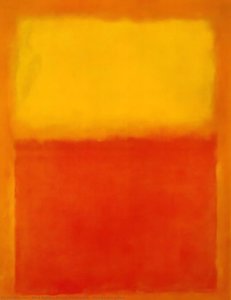
”Tre” är ett utmärkt exempel på Rothkos mogna stil. Duken domineras av tre stora, rektangulära färgblock – djupt rött, vinrött och svart – som svävar mot en mörkare bakgrund. Dessa är inte skarpt definierade former; istället är kanterna mjuka och suddiga, uppnådda genom lager av tunt applicerad färg. Denna teknik skapar en lysande kvalitet, som om färgerna strålar inifrån själva duken. Rothkos metod handlade inte om precisa penseldrag utan snarare om en meditativ lagerprocess som lät färgen interagera och andas. Verkets skala är också avgörande; det är avsett att omsluta betraktaren och skapa en immersiv miljö.

Historisk kontext: Abstrakt expressionism

”Tre” växte fram under en period av betydande konstnärlig omvälvning i New York City. Abstrakt expressionism, född ur de ångestfyllda och energiska strömningarna i efterkrigstidens Amerika, förkastade traditionella konstnärliga konventioner. Konstnärer som Jackson Pollock, Arshile Gorky och Willem de Kooning sökte uttrycka inre tillstånd genom spontana gester och icke-representativa former. Påverkad av europeiska rörelser som futurism, Bauhaus och syntetisk kubism, markerade den abstrakta expressionismen ett avgörande brott med det förflutna och etablerade New York som ett globalt konstcentrum. Rothkos bidrag var att destillera denna energi till färgfält som frammanade djupa emotionella responser.

Symbolik och emotionell resonans

Även om Rothko motsatte sig explicita tolkningar av sitt arbete, ses ”Tre” ofta som något som frammanar känslor av högtidlighet, kontemplation och till och med tragedi. De mörka nyanserna kan antyda en känsla av melankoli eller den mänskliga existensens vidd. De staplade rektanglarna kan tolkas som figurer, arkitektoniska former eller helt enkelt rena färgrelationer. I slutändan ligger meningen i betraktarens personliga respons. Rothko avsåg att hans målningar skulle upplevas visceralt, vilket uppmanar till introspektion och emotionell koppling. Målningens kraft ligger i dess tvetydighet – den *berättar* inte för dig vad du ska känna; den låter dig *känna*.

”Tre” som ett designelement

För inredningsarkitekter erbjuder Rothkos ”Tre” ett kraftfullt uttryck. Dess rika färgpalett och stora skala kan förankra ett rum och skapa en fokuspunkt som drar blicken till sig. Målningens kontemplativa natur passar väl i rum designade för avkoppling och reflektion – såsom vardagsrum, bibliotek eller meditationsytor. Konstverket harmonierar vackert med minimalistiska möbler och neutrala toner, vilket låter färgerna verkligen stråla. En reproduktion av hög kvalitet fångar essensen av Rothkos vision och tillför en touch av konstnärlig sofistikering till vilken miljö som helst.
  • Viktig rörelse: Abstrakt expressionism, Color Field Painting
  • Betydande samtida: Jackson Pollock, Willem de Koonning, Clyfford Still.
  • Vidare utforskning: Rothko Chapel i Houston erbjuder en unik, omslutande upplevelse med Rothkos verk.

Frågor och svar

Vilken atmosfär förmedlar "Tre"?

Den övergripande stämningen i "Tre" av Mark Rothko är Lugn. Stämningen beskriver verkets allmänna atmosfär.

Vilken känsla förmedlar färgerna i "Tre" av Mark Rothko?

I "Tre" ackompanjeras en Melankolisk känsla av Mörka toner färger.

Hur kan jag se "Tre" av Mark Rothko som ett bildspel?

Se diaporamat för "Tre" på konstverkets sida Bildspel.

In numbers

  • 29frames to choose from
  • standard sizes, in its own proportions
  • 5weeks to paint and deliver it

About the original

Mark Rothko

Mark Rothko

1903 - 1970, Lettland

Kortfakta

  • Artistic Movement Or Style: Color Field Painting
  • Artists Or Movements Influenced By This Artist: ['Minimalism']
  • Date Of Birth: September 25, 1903
  • Date Of Death: February 25, 1970
  • Full Name: Mark Rothko
  • Nationality: Russisk
  • Notable Artworks:
    • No. 10 (1950)
    • Seagram Murals
    • Rothko Chapel
  • Place Of Birth: Dvinsk, Latvia

Konstnärsbiografi

Early Life and the Seeds of Artistic Vision

Mark Rothko, born Markus Yakovlevich Rothkowitz in Dvinsk, Latvia, in 1903, carried within him from the outset a sense of displacement that would profoundly shape his artistic journey. His early years were marked by the anxieties of a Jewish family living within the Pale of Settlement, shadowed by pogroms and political unrest. This atmosphere instilled a deep sensitivity to human suffering, a theme that would resonate throughout his oeuvre. The 1913 immigration to Portland, Oregon, represented not just a geographical shift but a cultural upheaval for the young Rothko. While his father, a pharmacist and intellectual with socialist leanings, fostered a home filled with debate and learning, the loss of Jacob Rothkowitz shortly after their arrival cast a long shadow. This early experience of loss, coupled with the challenges of assimilation, fueled a lifelong exploration of existential themes – mortality, trauma, and the search for meaning in a chaotic world. Though he excelled academically at Yale University, Rothko found himself drawn more to the vibrant energy of New York City, abandoning formal studies to pursue his passion for art at the Art Students League. These formative years laid the groundwork for an artistic vision that would ultimately challenge conventional notions of painting and redefine the emotional power of color.

From Figurative Beginnings to Abstract Expressionism

Rothko’s initial artistic explorations were firmly rooted in realism, depicting urban scenes and portraits with a keen eye for detail. However, these early works already hinted at the psychological depth that would become his hallmark. As the 1940s unfolded, and the world grappled with the horrors of World War II, Rothko’s art underwent a dramatic transformation. Influenced by Surrealism and mythology, he began to move away from representational imagery, seeking instead to express universal human emotions through symbolic forms. This period saw the emergence of multi-form paintings – canvases populated by ambiguous, biomorphic shapes that seemed to hover between figuration and abstraction. These works were not merely experiments in form; they were deeply felt responses to the anxieties and uncertainties of a world at war. By the late 1940s, Rothko had arrived at his signature style: large-scale canvases featuring rectangular blocks of color that appeared to float and resonate with one another. He stripped away all vestiges of recognizable imagery, focusing instead on the pure emotional impact of color and form. This marked a pivotal moment in the development of Abstract Expressionism, and established Rothko as a leading figure in this groundbreaking movement.

The Color Field and the Pursuit of Transcendence

Rothko’s mature work is defined by what came to be known as “Color Field” painting – vast expanses of luminous color that envelop the viewer in an immersive experience. These paintings are not about *what* they depict, but rather *how* they make you feel. Rothko believed that art should engage the viewer viscerally, bypassing intellectual analysis and speaking directly to the emotions. He meticulously layered thin washes of paint, creating subtle variations in tone and texture that seemed to emanate from within the canvas. The edges of his rectangular forms are often blurred, allowing them to blend and interact with one another, creating a sense of depth and movement. Rothko deliberately avoided titles beyond numbers – “No. 1,” “No. 6” – encouraging viewers to confront the paintings without preconceived notions and allow their own emotional responses to guide their experience. He sought to create a space for contemplation, a sanctuary where viewers could connect with something larger than themselves. His ambition was nothing less than to evoke profound spiritual experiences through the language of color.

Major Achievements and Lasting Legacy

Among Rothko’s most significant achievements are “No. 10 (1950),” a pivotal work that exemplifies his evolving style, and the Seagram Murals (1958). Commissioned for the Four Seasons Restaurant in New York City, these murals were ultimately rejected by Rothko, who felt they would be compromised by their intended environment. He instead donated them to the Tate Gallery in London, where they continue to inspire awe and contemplation. Perhaps his most ambitious project was the Rothko Chapel (1971) in Houston, Texas – a non-denominational sanctuary housing fourteen of his paintings. Designed as a space for quiet reflection, the chapel is considered a sacred place by many, embodying Rothko’s belief in the spiritual power of art. Rothko's influence on subsequent generations of artists has been immense. He paved the way for Minimalist art and continues to inspire contemporary painters who explore the emotional possibilities of abstraction. Despite struggling with depression throughout his life, culminating in his tragic suicide in 1970, Mark Rothko remains one of the most important and influential artists of the 20th century – a master of color whose work continues to resonate with audiences around the world.

The Enduring Power of Emotional Resonance

  • Rothko’s paintings are celebrated for their ability to convey universal human emotions—tragedy, ecstasy, despair, and hope.
  • His exploration of color as a vehicle for emotional expression revolutionized abstract painting.
  • The Rothko Chapel stands as a testament to his belief in the spiritual power of art.
  • He remains a pivotal figure in Abstract Expressionism and a major influence on contemporary artists.

Kortfakta

  • year: 1951
  • subject: Abstrakt
  • style: Color Field
  • movement: Abstrakt expressionism, Color Field-måleri, Color Field-expressionism

More about this painting

Förhandsvisa Förhandsgranska i AR Byt till tryck Byt till digital bild Skicka
Visa detaljer Guide Lägg till i favoriter Ladda ner Liknande objekt Röntgen Bildspel Q&A Statistik