
 Förhandsvisa
 Skicka
 Dela
Dela
 Visa detaljer
 Guide
Guide

 Ladda ner
 Liknande objekt
 Röntgen
 Bildspel
 Frågor och svar
 Statistik
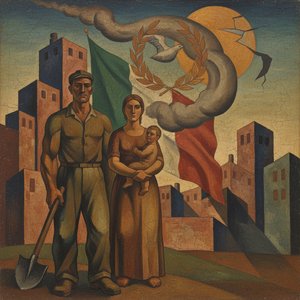
Il lavoratore

- 202.0 x 325.0 cm


 Visa mer
Konstverket som visas på denna sida skyddas av upphovsrättslagen, vilket innebär att vi inte lagligt kan skapa eller sälja en identisk reproduktion. Detta skydd upprätthålls genom internationella avtal såsom den Bernkonventionen och genom nationella lagar, inklusive de som fastställs av Amerikansk upphovsrättslag – Titel 17. Alla rättigheter förbehållna. Återgivning av konstverk är förbjuden utan skriftligt tillstånd från WahooArt.
Denna metod följer fullt ut upphovsrättsliga regler eftersom den inte innebär kopiering eller duplicering av det skyddade konstverket. Istället är det en kreativ nytolkning – en ny målning som är influerad av originalet men inte identisk med det.
Giclée / Konsttryck
Giclée- eller canvasprint av museumskvalitet med snabb produktion och flexibla ytbehandlingsalternativ. ( Beställ handmålad reproduktion Byt till digital bild)




P118B Skr10

P118H Skr10

P118W Skr10

P438Z Skr10

P508JH Skr12

P508YH Skr12

P805H Skr10

P805Z Skr10

P919BZ Skr10

P919G Skr10

P919XJ Skr10

P959ZH Skr10

P968JZ Skr12

W106C Skr8

W218G Skr10

W218JH Skr8

W218Y Skr10

W307PJ Skr10

W316G Skr10

W316PJ Skr8

W316Y Skr10

W398PJ Skr8

W4111J Skr10

W500HY Skr15

W500JH Skr15

W692G Skr12

W849H Skr8

W940BG Skr15

W953PJ Skr8




Välj bland våra förinställda storlekar som motsvarar konstverkets ursprungliga proportioner.

Ange den bredd och höjd du behöver för att passa din ram eller vägg. Ett tryck kan endast beskäras, aldrig göras större än originalbilden, vilket innebär att ett format med en annan proportion leder till att en del av bilden går förlorad. Vi skickar en digital mockup för godkännande innan vi påbörjar tryckningen. Bilden som visas på denna sida visar inte den faktiska beskärningen — det är endast mockuppen som gör det.
Leverans över hela världen () på 2 veckor istället för standard 4/5 veckor. (4 november)

Fri expressfrakt över hela världen

Högkvalitativ linnecanvas

Fullständig fraktförsäkring

Garantier för återbetalning av tullavgifter

Garantier för exakt färgåtergivning

100 dagars returrätt (endast vid fel)

100% pengarna tillbaka-garanti

Mängdrabatt erbjuds
 Glasalternativet är endast tillgängligt i storlekar under 110 cm.

Il lavoratore
Giclée / Konsttryck
Storlek på reproduktion
-


Slutgiltigt pris
Skr 810
A Monumental Vision of Labor and Solitude
In the profound depths of Mario Sironi’s Il Lavoratore, we encounter more than a mere preparatory study; we witness a monumental dialogue between the individual and the weight of history. Created as a preparatory cartoon for the massive mosaic commissioned for the 1936 Milan Triennial, this work serves as a powerful window into the socio-political soul of Fascist Italy. Yet, beneath the surface-level nod to Mussolini’s vision of a disciplined, industrious citizenry, lies a much more intimate and haunting exploration of the human condition. The painting captures a solitary figure, rendered with a gravity that transcends its original political intent, embodying a sense of profound isolation and the quiet, enduring struggle for meaning amidst the relentless march of industrial progress.
The composition is masterfully structured to command the viewer's attention, utilizing a verticality that emphasizes the weight of the subject. A single figure dominates the space, positioned in a posture that oscillates between humble submission and defiant endurance. Through Sironi’s lens, the act of labor is stripped of its romanticized glory and instead presented as an existential state—a moment of stillness within a world of shifting shadows. For the discerning collector or interior designer, this piece offers a commanding presence, bringing a sense of historical weight and intellectual depth to any curated space.
The Alchemy of Shadow and Form
Technically, Il Lavoratore is a triumph of early Modernist expression, showcasing Sironi’s departure from the luminous, fragmented light of his Divisionist roots toward something far more substantial and somber. The artist employs a palette dominated by earthy ochres, deep blacks, and rich golds, creating a chiaroscuro effect that breathes life into the geometric forms. There is a palpable sense of impasto here; the visible, thick brushstrokes suggest a tactile reality, as if the paint itself were labored over with the same intensity as the subject it depicts.
The style leans heavily into the metaphysical and the expressionistic, where shapes are simplified into powerful, architectural blocks. The lines defining the figure and the surrounding environment are not sharp or clinical but possess a smoky, blurred quality that contributes to a claustrophobic, almost dreamlike atmosphere. This lack of traditional linear perspective flattens the space, forcing the viewer to confront the emotional volume of the figure rather than getting lost in a receding landscape. The interplay of light, appearing to descend from above, casts dramatic shadows that carve out the musculature and the heavy folds of the composition, lending the work an almost sculptural permanence.
Symbolism and the Emotional Resonance
To gaze upon Il Lavoratore is to engage with a complex tapestry of symbolism. The outstretched arms of the figure can be interpreted as a gesture of both vulnerability and strength—a reaching out toward a connection that remains perpetually out of grasp. Sironi, influenced by the psychological depth of Giorgio de Chirico, uses these massive, immobile forms to evoke a sense of timelessness and melancholy. The geometric rigidity of the background elements contrasts sharply with the organic, albeit stylized, form of the human body, mirroring the tension between the individual spirit and the cold, industrial structures of modern society.
For those seeking to incorporate art into a sophisticated interior, this reproduction offers an unparalleled emotional impact. It is a piece that invites contemplation, acting as a focal point that stimulates conversation about identity, resilience, and the passage of time. Whether placed in a quiet study or a grand gallery, Il Lavoratore radiates a somber elegance, making it an exquisite choice for those who appreciate art that speaks to the complexities of the human experience through a lens of monumental beauty.
Frågor och svar
Vilket rum föreslås för visning av "Il lavoratore", med tanke på dess färgpalett?
Med sin Earthy-palett rekommenderas "Il lavoratore" av Mario Sironi för ett Living Room. Färgerna är en del av anledningen till detta förslag.
Var kan jag köpa en handmålad reproduktion av "Il lavoratore" av Mario Sironi?
"Il lavoratore" finns tillgänglig som en handmålad oljereproduktion på linneväv. Du kan lägga din beställning på dess Handmålad reproduktion-sida, där du kan välja mellan olika storlekar.
Är "Il lavoratore" fri från upphovsrätt?
När det gäller upphovsrätt är "Il lavoratore" fortfarande skyddat av upphovsrätt.
Konstnärsbiografi
Mario Sironi: En Pionjär i Italiens Moderna Konst
Mario Sironi, född den 12 maj 1885 i den pittoreska staden Sassari på Sardinien, var en konstnär vars liv och verk är djupt sammanflätade med Italiens turbulenta moderna historia. Hans resa från en initial ambition att bli ingenjör till en av de mest inflytelserika figurerna inom italiensk modernism – präglad av både futuristiska influenser och en efterföljande, introspektiv stil – är en fascinerande berättelse om konstnärlig utveckling och samhälleliga förhållanden. Sironis konst, ofta beskriven som dyster och monumental, utforskar teman kring ensamhet, alienation och den mänskliga existensens komplexitet i en tid av förändring och osäkerhet.Tidiga År och Konstnärlig Utbildning
Sironi växte upp i en familj med starka konstnärliga rötter. Hans far var ingenjör vid järnvägen, men hans morfar, Ignazio Villa, var en respekterad arkitekt och skulptur – vilket gav den unga Mario tidig exponering för den visuella världen. Trots detta valde han att studera teknik på universitetet i Rom, men eftergav sig efter en nervös sammanbrott 1903, vilket markerade en avgörande vändpunkt i hans liv och ledde honom mot konstens värld. Han sökte sedan in till den berömda *Scuola Libera del Nudo* vid Accademia di Belle Arti di Roma, där han fick Giacomo Balla som sin första betydelsefulla lärare – en figur som skulle komma att påverka hans tidiga stilmarkeringar. Denna utbildning gav honom grunden för att utforska divisionism, en teknik som betonade separata färger för att skapa ljus och atmosfär, vilket syns tydligt i verk som ”Studenten”.Inflytanden och Experiment
Sironis tidiga arbete var starkt influerat av divisionismen, men han experimenterade också kort med futurismen runt 1914. Han deltog i en utställning på Galleria Sprovieri i Rom, där han mötte andra futuristiska konstnärer och utforskade den nya rörelsens idéer om hastighet och dynamik. Trots detta kände han snabbt att futurismens fokus inte stämde överens med hans egna konstnärliga ambitioner. En nyckelövergång skedde efter första världskriget, då han utvecklade en stil präglad av massiva, immobila former och geometriska element. Denna förändring var starkt påverkad av hans krigserfarenheter och en växande känsla av isolering. Viktiga influenser inkluderade Giacomo Balla (för tidig utbildning), Giorgio de Chirico och Carlo Carrà (effekten av metafysisk målning på formen) samt element från neoklassicism och primitivistisk klassicism.Novecento Italiano och Mognad Stil
År 1922 blev Sironi en grundare av *Novecento Italiano*-rörelsen, ett svar mot den efterkrigstida europeiska konsten som sökte återställa ordning och tradition. Hans mogna stil kännetecknas av: betoning på geometriska former och förenklade former, en medvetet klumpig estetik i senare verk, utforskande av teman kring ensamhet, alienation och den mänskliga tillståndets komplexitet samt undersökning av industriella landskap och arbetarklassens liv. Verk från denna period inkluderar ”Venere” (1921-1923) och ”Solitudine” (“Ensamheten”, 1925). Sironis konst under denna period speglade ofta de politiska och sociala oroligheterna i Italien, med en mörk underton som reflekterar den tidens oro.Politiska Affilieringar och Senare Liv
Sironi var en stark anhängare av Benito Mussolini och bidrog aktivt till fascistiska publikationer genom över 1700 teckningar. Han menade att konsten och arkitekturen skulle vara integrerade, med målet att skapa monumentala verk för allmänheten – vilket återspeglade de fascistiska idealen. Efter andra världskriget ledde hans koppling till fascismen till en nedgång i popularitet och kritisk uppskattning. Han drog sig tillbaka från offentligheten, fortsatte att måla i relativ isolering fram till sin död 1961. Trots kontroverserna kring hans politiska åsikter har Sironis konst fått erkännande som en viktig del av italiensk modernism och en kraftfull utforskning av den mänskliga erfarenheten. Hans verk fortsätter att inspirera och utmana betraktare med sina djupsinniga teman och distinkta visuella stil.
Mario Sironi
1885 - 1961 , Italien
Kortfakta
- Artistic Movement Or Style:
- Futurism
- Novecento Italiano
- Artists Or Movements Influenced By This Artist:
- De Chirico
- Carrà
- Artists Who Influenced This Artist: ['Giacomo Balla']
- Date Of Birth: 12 maj 1885
- Date Of Death: 13 aug 1961
- Full Name: Mario Sironi
- Nationality: Italien
- Notable Artworks:
- La Lampada
- Venere
- Solitudine
- Place Of Birth: Sassari, Italien
Relaterade artiklar

Konst som strategisk kommunikation: Att stärka varumärkesidentitet och relationer genom kuraterade företagspresenter
Stärk ditt varumärke med konst! Vi erbjuder expertkonsultation och kuraterade samlingar för att skapa minnesvärda upplevelser och stärka relationer. Upptäck hur strategisk kommunikation genom konst kan öka ROI och engagemang.
Mario Sironi: A Poetic of Modern Italian Identity Through Symbolism & Social Commentary
Explore the profound works of Mario Sironi, a key figure in Italian Modernism. Discover his evolution from Futurism to Metaphysical painting and his powerful social commentary. Learn about his legacy at OriginalUniqueArt.

Konstens strategiska värde i företagsevenemang: En concierge-tjänst för personligt konstval och leverans
Upptäck konsten som en strategisk tillgång för ditt företagsevenemang! Vår concierge-tjänst erbjuder personlig konstval, smidig leverans och expertkonsultation. Skapa minnesvärda upplevelser och stärkt varumärke.

Beyond Swag: Why Personalized Art is the Ultimate High-Impact Corporate Gift
Discover why personalized fine art is the ultimate high-impact corporate gift. Move beyond commodity swag to cultivate lasting prestige and brand loyalty through bespoke, hand-painted masterpieces designed for executives and discerning clients.

Varför personlig konst är den företagspresenten som alla kommer ihåg
Upptäck kraften i personlig konst som företagspresent! Vi hjälper dig att skapa unika gåvor som stärker relationer och bygger ditt varumärke. Expertkonsultation & hög kvalitet.
