Förhandsvisa
 Skicka
 Dela
Dela
 Visa detaljer
 Guide
Guide

 Ladda ner
 Liknande objekt
 Röntgen
 Bildspel
 Frågor och svar
 Statistik
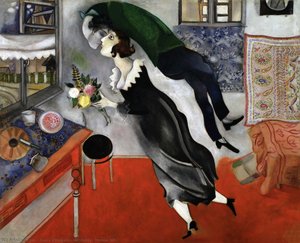
The Jacob's Dream (9)

- 38.0 x 53.0 cm


 Visa mer
Konstverket som visas på denna sida skyddas av upphovsrättslagen, vilket innebär att vi inte lagligt kan skapa eller sälja en identisk reproduktion. Detta skydd upprätthålls genom internationella avtal såsom den Bernkonventionen och genom nationella lagar, inklusive de som fastställs av Amerikansk upphovsrättslag – Titel 17. Alla rättigheter förbehållna. Återgivning av konstverk är förbjuden utan skriftligt tillstånd från WahooArt.
Denna metod följer fullt ut upphovsrättsliga regler eftersom den inte innebär kopiering eller duplicering av det skyddade konstverket. Istället är det en kreativ nytolkning – en ny målning som är influerad av originalet men inte identisk med det.
Giclée / Konsttryck
Giclée- eller canvasprint av museumskvalitet med snabb produktion och flexibla ytbehandlingsalternativ. ( Beställ handmålad reproduktion Byt till digital bild)




P118B Skr10

P118H Skr10

P118W Skr10

P438Z Skr10

P508JH Skr12

P508YH Skr12

P805H Skr10

P805Z Skr10

P919BZ Skr10

P919G Skr10

P919XJ Skr10

P959ZH Skr10

P968JZ Skr12

W106C Skr8

W218G Skr10

W218JH Skr8

W218Y Skr10

W307PJ Skr10

W316G Skr10

W316PJ Skr8

W316Y Skr10

W398PJ Skr8

W4111J Skr10

W500HY Skr15

W500JH Skr15

W692G Skr12

W849H Skr8

W940BG Skr15

W953PJ Skr8




Välj bland våra förinställda storlekar som motsvarar konstverkets ursprungliga proportioner.

Ange den bredd och höjd du behöver för att passa din ram eller vägg. Ett tryck kan endast beskäras, aldrig göras större än originalbilden, vilket innebär att ett format med en annan proportion leder till att en del av bilden går förlorad. Vi skickar en digital mockup för godkännande innan vi påbörjar tryckningen. Bilden som visas på denna sida visar inte den faktiska beskärningen — det är endast mockuppen som gör det.
Leverans över hela världen () på 2 veckor istället för standard 4/5 veckor. (3 november)

Fri expressfrakt över hela världen

Högkvalitativ linnecanvas

Fullständig fraktförsäkring

Garantier för återbetalning av tullavgifter

Garantier för exakt färgåtergivning

100 dagars returrätt (endast vid fel)

100% pengarna tillbaka-garanti

Mängdrabatt erbjuds
 Glasalternativet är endast tillgängligt i storlekar under 110 cm.

The Jacob's Dream (9)
Giclée / Konsttryck
Storlek på reproduktion
-


Slutgiltigt pris
Skr 803
A Symphony of Dreams: Decoding Marc Chagall’s “The Jacob's Dream”
Marc Chagall’s “The Jacob’s Dream,” created in 1963, isn’t merely a painting; it’s an immersion into the artist’s deeply personal mythology—a visual testament to his unwavering belief in the transformative power of imagination. Executed with gouache, oil, pastel and paper, this monumental work embodies Chagall's signature Expressionist style, characterized by flattened perspectives, vibrant color palettes and fantastical imagery that transcends literal representation. The photograph captures a charcoal rendition of this iconic piece, highlighting its distinctive naive art aesthetic—a stylistic choice deliberately rejecting academic conventions in favor of conveying emotion and spiritual resonance.The Visual Narrative: Angels Amidst Familiar Landscapes
The composition pulsates with movement and invites contemplation. Figures populate the canvas in seemingly random positions, yet they are united by a palpable sense of interconnectedness. Dominating the scene is a ladder—a motif recurrent throughout Chagall’s oeuvre—representing Jacob's ascent to heaven as recounted in Genesis, symbolizing faith, aspiration, and divine grace. Surrounding the ladder are stylized depictions of human figures engaged in various activities: one angel appears to be gazing upwards with serene contemplation, while others interact playfully amidst a landscape reminiscent of Vitebsk – Chagall’s birthplace—a place imbued with profound cultural significance. The artist skillfully blends recognizable elements from Jewish folklore with surrealist techniques, creating an atmosphere both comforting and unsettling.Technique and Color: Embracing Naïve Art's Emotional Truth
Chagall’s masterful use of color is particularly striking. Bold hues—primarily yellows, blues, reds, and greens—explode across the surface, conveying a visceral emotional response to the biblical narrative. The artist deliberately eschews meticulous detail, opting for simplified forms and expressive brushstrokes that prioritize feeling over accuracy. This technique aligns perfectly with the principles of Naïve Art, which seeks to capture subjective experience without resorting to illusionistic representation. The pastel medium lends itself beautifully to capturing subtle tonal variations and enhancing the painting’s ethereal quality.Historical Context: Chagall's Artistic Journey Amidst Turbulent Times
Created during a period marked by significant political upheaval—the artist endured persecution under Nazi rule—"The Jacob's Dream" reflects Chagall’s enduring preoccupation with themes of spirituality, memory, and exile. His artistic vision stemmed from his formative years in Vitebsk, where he absorbed the influences of Orthodox Christianity and Jewish tradition. This duality informs the painting’s symbolism: the ladder symbolizes ascension towards salvation, mirroring the biblical narrative while simultaneously acknowledging the artist's own personal struggles for survival and artistic expression.Emotional Resonance: A Window into Chagall’s Soul
Ultimately, “The Jacob’s Dream” transcends its formal elements to communicate a profound emotional depth. It speaks to the human yearning for transcendence—for connection with something greater than oneself—and invites viewers to contemplate the mysteries of faith and existence. Like many of Chagall's works, it possesses an undeniable charm, capturing a moment of childlike wonder and conveying a sense of timeless beauty that continues to captivate audiences today. Its vibrant colors and evocative imagery serve as an enduring reminder of the artist’s unwavering commitment to portraying dreams—and thereby, the very essence of human experience.Frågor och svar
Är färgerna i "The Jacob's Dream (9)" klara eller dämpade?
"The Jacob's Dream (9)" av Marc Chagall återges med en Subtle Color mättnad och en Balanced intensitet.
Vilken fas av Marc Chagalls konstnärliga utveckling representerar "The Jacob's Dream (9)"?
"The Jacob's Dream (9)" representerar Marc Chagalls Mature Period.
Vilken konststil och vilken epok kan "The Jacob's Dream (9)" av Marc Chagall placeras i?
"The Jacob's Dream (9)" tillhör den Surrealist Expressionism rörelsen och dess skapare verkade under Modernismen-eran.
Konstnärsbiografi
A Life Painted in Dreams: The World of Marc Chagall
Marc Chagall, born Moishe Shagal in 1887 in the small Belarussian town of Liozna near Vitebsk, wasn’t merely a painter; he was a poet of color, a weaver of dreams, and a chronicler of memory. His life, spanning nearly a century, mirrored the tumultuous currents of the 20th century, yet his art remained steadfastly rooted in a deeply personal vision—one infused with the folklore of his Hasidic Jewish upbringing and an unwavering belief in the power of imagination. Vitebsk itself was more than just a birthplace; it became the emotional core of his artistic universe, a recurring motif populated by flying figures, whimsical animals, and the vibrant hues of remembered landscapes. The town’s unique blend of cultures—Russian Orthodox churches alongside bustling Jewish marketplaces—forged an aesthetic sensibility that would defy easy categorization throughout his long career. Though he sought formal training first with a local sign painter and later in St. Petersburg under Léon Bakst, and then in Paris at the Académie de la Grande Chaumière, Chagall never fully embraced any single artistic movement. He absorbed elements of Cubism, Symbolism, and Fauvism, but always filtered them through his own intensely personal lens, creating a style that was uniquely, unmistakably Chagall.Early Influences and Artistic Beginnings
Chagall’s formative years were marked by the traditions of Vitebsk’s Jewish community—a world steeped in ritual, storytelling, and vibrant visual culture. These influences would permeate his artistic vision throughout his life. His initial training was modest, focusing on practical skills as a sign painter, but he quickly developed an interest in broader artistic concepts. St. Petersburg provided him with access to influential teachers like Léon Bakst, who encouraged experimentation and challenged conventional stylistic norms. This exposure to theatrical design—particularly Ballets Russes productions—would prove crucial in shaping his approach to composition and visual storytelling. However, Chagall resisted the allure of rigid academic doctrines, prioritizing intuition and emotional expression over technical precision. He sought inspiration from Impressionism and Post-Impressionism, particularly Cézanne and Gauguin, recognizing their ability to capture fleeting moments of beauty and emotion.The Symbolist Vision: Fragments of Memory
Chagall’s early paintings—such as I and the Village (1911)—demonstrate his fascination with Symbolism's exploration of psychological states and subconscious imagery. The village isn’t rendered realistically but as a fragmented collection of recollections, imbued with symbolic meaning. Figures float and dance across the canvas, defying gravity and logic, creating a dreamlike atmosphere that invites viewers into his inner world. This stylistic approach wasn’t accidental; it stemmed from a desire to move beyond mere imitation of reality and capture the essence of feeling, the weight of memory, and the power of folklore. The use of color—bold, non-naturalistic hues—served as a conduit for emotion rather than literal representation. Recurring motifs like birds, apples, and musical instruments reflect Chagall’s preoccupation with themes of flight, fertility, and artistic inspiration. These images are not simply decorative; they carry profound symbolic significance, conveying ideas about identity, spirituality, and the relationship between humanity and nature.Cubism's Influence and Artistic Evolution
Despite his rejection of formal academic movements, Chagall absorbed elements of Cubism, particularly Picasso’s pioneering explorations of fractured perspectives. This influence is evident in works like The Musicians (1917), where figures are depicted simultaneously from multiple viewpoints—a technique that disrupts traditional spatial conventions and emphasizes the multiplicity of experience. However, Chagall skillfully blended Cubist principles with his own distinctive visual language, retaining a lyrical quality and emotional depth that distinguishes him from more intellectually rigorous artists. He continued to experiment with color and form throughout his career, refining his style while maintaining its core expressive power. The Russian Revolution profoundly impacted Chagall’s life and artistic practice, returning him to Vitebsk where he established an art school—a brief but significant endeavor aimed at fostering creativity and cultural renewal amidst the upheavals of the era.International Recognition and Legacy
Chagall's emigration to Paris in 1923 marked a turning point in his artistic trajectory, propelling him onto the international stage. He embraced Surrealism’s fascination with dreams and irrationality, producing canvases that pulsate with imaginative energy—works like *White Crucifixion* (1938) reflecting the anxieties of wartime Europe. His subsequent move to New York City during World War II provided him with a new creative impetus, resulting in monumental paintings inspired by biblical narratives and American landscapes. Chagall’s influence extended far beyond his own lifetime, inspiring countless artists across disciplines—painting, sculpture, theater, and film—who sought to emulate his poetic vision and expressive style. His enduring legacy resides not only in his iconic artworks but also in the profound exploration of human emotion and spiritual yearning that characterizes his oeuvre. Marc Chagall remains one of the most celebrated artists of the twentieth century, a testament to the transformative power of imagination and the unwavering pursuit of artistic truth.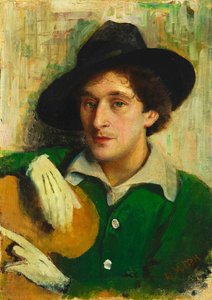
Marc Chagall
1887 - 1985 , Belarus
Kortfakta
- Artistic Movement Or Style: Modernism, Kubism
- Artists Or Movements Influenced By This Artist: ['Surrealism']
- Artists Who Influenced This Artist:
- Bakst
- Delaunay
- Borovikovsky
- Date Of Birth: 7 juli 1887
- Date Of Death: 28 mars 1985
- Full Name: Marc Chagall
- Nationality: Russisk, senare fransk
- Notable Artworks:
- I och byen
- Den Liggande Poeten
- Valentina
- Place Of Birth: Liozna, Belarus
Relaterade artiklar
Raw, Bold, Unfiltered: Why Naive Art is the Ultimate Vibe for Your Space
Ditch the boring decor. Discover why Naive Art's raw, bold, and unfiltered aesthetic is the ultimate trend for modern urban spaces. Learn how to use vibrant colors and unstudied sincerity to create a high-impact, authentic vibe in your home or studio.
10 Legendariska Litografier Som Förändrade Konsthistorien – Upptäck Mästerverk Nu!
Utforska 10 legendariska litografier av Toulouse-Lautrec, Munch & Picasso! Upptäck konsthistorien bakom dessa mästerverk och låt dig inspireras. Köp museumkvalitativa reproduktioner på OriginalUniqueArt.com – för en stilfull inredning.
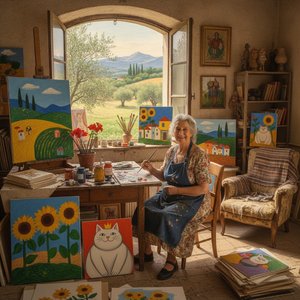
The Essence of Naïve Art: A Professional Guide to Unfiltered Creativity and Aesthetic Sincerity
Explore the profound beauty of Naïve Art. Discover its unique characteristics, historical significance, and how this unfiltered, sincere aesthetic can elevate professional interior design through high-quality, hand-painted reproductions.

Tysk Expressionism: 10 Mästerverk som Definierade en Epok – Konst & Inredning
Utforska 10 ikoniska mästerverk inom tysk expressionism! Lär känna konstnärer som Nolde, Kirchner & Heckel. Upptäck historien bakom dessa färgstarka målningar och finn inspiration till din inredning med OriginalUniqueArt.com – museumkvalitet för ditt hem.

The Pure Charm of Naïve Art: Finding Beauty in Simplicity, Soul, and the Unfiltered Vision
Discover the profound beauty of Naïve Art. Explore how self-taught masters bypass academic tradition to capture raw emotional truth through vibrant color and soulful simplicity. A cultural journey for the true art lover seeking depth beyond convention.