Förhandsvisa
 Skicka
 Dela
Dela
 Visa detaljer
 Guide
Guide

 Ladda ner
 Liknande objekt
 Röntgen
 Bildspel
 Q&A
Q&A Statistik
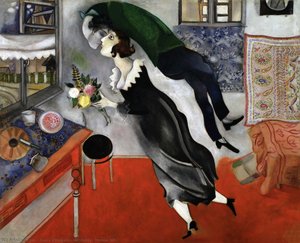
Birth
 Oil On Canvas
- WallArt
- Expressionism
 1910
1910 65.0 x 89.0 cm
 Visa mer
Konstverket som visas på denna sida skyddas av upphovsrättslagen, vilket innebär att vi inte lagligt kan skapa eller sälja en identisk reproduktion. Detta skydd upprätthålls genom internationella avtal såsom den Bernkonventionen och genom nationella lagar, inklusive de som fastställs av Amerikansk upphovsrättslag – Titel 17. Alla rättigheter förbehållna. Återgivning av konstverk är förbjuden utan skriftligt tillstånd från WahooArt.
Denna metod följer fullt ut upphovsrättsliga regler eftersom den inte innebär kopiering eller duplicering av det skyddade konstverket. Istället är det en kreativ nytolkning – en ny målning som är influerad av originalet men inte identisk med det.
Giclée / Konsttryck
Giclée- eller canvasprint av museumskvalitet med snabb produktion och flexibla ytbehandlingsalternativ. ( Beställ handmålad reproduktion Byt till digital bild)




































Välj bland våra förinställda storlekar som motsvarar konstverkets ursprungliga proportioner.

Ange den bredd och höjd du behöver för att passa din ram eller vägg. Ett tryck kan endast beskäras, aldrig göras större än originalbilden, vilket innebär att ett format med en annan proportion leder till att en del av bilden går förlorad. Vi skickar en digital mockup för godkännande innan vi påbörjar tryckningen. Bilden som visas på denna sida visar inte den faktiska beskärningen — det är endast mockuppen som gör det.
Leverans över hela världen () på 2 veckor istället för standard 4/5 veckor. (29 oktober)

Fri expressfrakt över hela världen

Högkvalitativ linnecanvas

Fullständig fraktförsäkring

Garantier för återbetalning av tullavgifter

Garantier för exakt färgåtergivning

100 dagars returrätt (endast vid fel)

100% pengarna tillbaka-garanti

Mängdrabatt erbjuds
 Glasalternativet är endast tillgängligt i storlekar under 110 cm.

Birth
Giclée / Konsttryck
Storlek på reproduktion
-


Slutgiltigt pris
Skr 799
A Dreamscape of Maternal Joy
Marc Chagall's “Birth,” painted in 1910, stands as a cornerstone of Expressionism and an enduring testament to the artist’s unparalleled ability to translate emotion into visual form. Measuring 65 x 89 cm, this oil on canvas masterpiece transcends mere representation; it plunges viewers into a realm of subconscious imagery and profound feeling—a characteristic hallmark of Chagall's distinctive artistic vision.
The Expressionist Spirit: Beyond Reality
Born Moishe Shagal in Vitebsk, Belarus, in 1887, Chagall’s formative years were steeped in the vibrant cultural tapestry of his Jewish heritage and profoundly shaped by the seismic shifts brought about by the Russian Revolution. Unlike Impressionists or Cubists who sought to capture objective reality, Expressionist artists prioritized conveying inner experience—a principle vividly embodied in “Birth.” Chagall, alongside luminaries like Wassily Kandinsky and Franz Marc, spearheaded this movement, establishing a radical departure from academic conventions.
Composition and Symbolism: Layers of Meaning
The painting depicts a woman giving birth within a bedroom setting—a scene laden with symbolic resonance. Dominating the canvas is the central figure, representing motherhood and universal femininity. Surrounding her are several individuals, including a midwife and men engaged in conversation, adding to the narrative complexity. Notably, two dogs flank the composition, symbolizing fertility and guarding the sanctity of domestic life – motifs frequently recurring throughout Chagall’s oeuvre.
Influences Beyond Style: Folk Art Roots
Chagall's artistic trajectory was influenced by diverse currents, including Fauvism and Cubism. However, his stylistic signature distinguishes itself through a masterful fusion of folk art traditions—particularly Belarusian folklore—with elements of Surrealism. This is palpable in “Birth,” where vibrant hues—primarily reds, yellows, and blues—are juxtaposed with distorted forms that create an ethereal atmosphere reminiscent of dreams.
Legacy: Shaping Modern Art
"Birth" cemented Chagall’s reputation as a visionary artist whose innovations reverberated throughout subsequent art movements. Surrealists like Salvador Dalí embraced his dreamlike aesthetic, recognizing its capacity to bypass rational thought and tap into primal emotions. Chagall's pioneering use of color and form continues to inspire artists today, securing his place as one of the most influential figures in 20th-century art.
Experience the captivating beauty of Marc Chagall’s “Birth” through a meticulously crafted oil painting reproduction available at OriginalUniqueArt.com. For those seeking to adorn their homes with art that speaks to the soul, explore similar masterpieces at Charles Ebert’s evocative landscapes and portraits!
Frågor och svar
Vilka är måtten på originalet av "Birth" av Marc Chagall?
Originalet av "Birth" av Marc Chagall mäter 65 x 89 cm.
Vilken teknik och vilket årtal gäller för "Birth" av Marc Chagall?
"Birth" skapades år 1910 med tekniken Oil On Canvas. Material och datum beskriver hur och när originalet tillverkades.
Var rekommenderas det att visa "Birth" i Landscape-formatet?
Format (Landscape) och rekommenderat utrymme (Living Room) är de två placeringsfakta som finns registrerade för "Birth" av Marc Chagall.
Konstnärsbiografi
A Life Painted in Dreams: The World of Marc Chagall
Marc Chagall, born Moishe Shagal in 1887 in the small Belarussian town of Liozna near Vitebsk, wasn’t merely a painter; he was a poet of color, a weaver of dreams, and a chronicler of memory. His life, spanning nearly a century, mirrored the tumultuous currents of the 20th century, yet his art remained steadfastly rooted in a deeply personal vision—one infused with the folklore of his Hasidic Jewish upbringing and an unwavering belief in the power of imagination. Vitebsk itself was more than just a birthplace; it became the emotional core of his artistic universe, a recurring motif populated by flying figures, whimsical animals, and the vibrant hues of remembered landscapes. The town’s unique blend of cultures—Russian Orthodox churches alongside bustling Jewish marketplaces—forged an aesthetic sensibility that would defy easy categorization throughout his long career. Though he sought formal training first with a local sign painter and later in St. Petersburg under Léon Bakst, and then in Paris at the Académie de la Grande Chaumière, Chagall never fully embraced any single artistic movement. He absorbed elements of Cubism, Symbolism, and Fauvism, but always filtered them through his own intensely personal lens, creating a style that was uniquely, unmistakably Chagall.Early Influences and Artistic Beginnings
Chagall’s formative years were marked by the traditions of Vitebsk’s Jewish community—a world steeped in ritual, storytelling, and vibrant visual culture. These influences would permeate his artistic vision throughout his life. His initial training was modest, focusing on practical skills as a sign painter, but he quickly developed an interest in broader artistic concepts. St. Petersburg provided him with access to influential teachers like Léon Bakst, who encouraged experimentation and challenged conventional stylistic norms. This exposure to theatrical design—particularly Ballets Russes productions—would prove crucial in shaping his approach to composition and visual storytelling. However, Chagall resisted the allure of rigid academic doctrines, prioritizing intuition and emotional expression over technical precision. He sought inspiration from Impressionism and Post-Impressionism, particularly Cézanne and Gauguin, recognizing their ability to capture fleeting moments of beauty and emotion.The Symbolist Vision: Fragments of Memory
Chagall’s early paintings—such as I and the Village (1911)—demonstrate his fascination with Symbolism's exploration of psychological states and subconscious imagery. The village isn’t rendered realistically but as a fragmented collection of recollections, imbued with symbolic meaning. Figures float and dance across the canvas, defying gravity and logic, creating a dreamlike atmosphere that invites viewers into his inner world. This stylistic approach wasn’t accidental; it stemmed from a desire to move beyond mere imitation of reality and capture the essence of feeling, the weight of memory, and the power of folklore. The use of color—bold, non-naturalistic hues—served as a conduit for emotion rather than literal representation. Recurring motifs like birds, apples, and musical instruments reflect Chagall’s preoccupation with themes of flight, fertility, and artistic inspiration. These images are not simply decorative; they carry profound symbolic significance, conveying ideas about identity, spirituality, and the relationship between humanity and nature.Cubism's Influence and Artistic Evolution
Despite his rejection of formal academic movements, Chagall absorbed elements of Cubism, particularly Picasso’s pioneering explorations of fractured perspectives. This influence is evident in works like The Musicians (1917), where figures are depicted simultaneously from multiple viewpoints—a technique that disrupts traditional spatial conventions and emphasizes the multiplicity of experience. However, Chagall skillfully blended Cubist principles with his own distinctive visual language, retaining a lyrical quality and emotional depth that distinguishes him from more intellectually rigorous artists. He continued to experiment with color and form throughout his career, refining his style while maintaining its core expressive power. The Russian Revolution profoundly impacted Chagall’s life and artistic practice, returning him to Vitebsk where he established an art school—a brief but significant endeavor aimed at fostering creativity and cultural renewal amidst the upheavals of the era.International Recognition and Legacy
Chagall's emigration to Paris in 1923 marked a turning point in his artistic trajectory, propelling him onto the international stage. He embraced Surrealism’s fascination with dreams and irrationality, producing canvases that pulsate with imaginative energy—works like *White Crucifixion* (1938) reflecting the anxieties of wartime Europe. His subsequent move to New York City during World War II provided him with a new creative impetus, resulting in monumental paintings inspired by biblical narratives and American landscapes. Chagall’s influence extended far beyond his own lifetime, inspiring countless artists across disciplines—painting, sculpture, theater, and film—who sought to emulate his poetic vision and expressive style. His enduring legacy resides not only in his iconic artworks but also in the profound exploration of human emotion and spiritual yearning that characterizes his oeuvre. Marc Chagall remains one of the most celebrated artists of the twentieth century, a testament to the transformative power of imagination and the unwavering pursuit of artistic truth.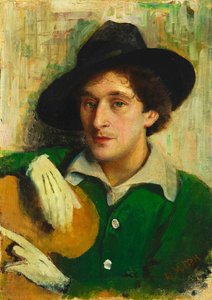
Marc Chagall
1887 - 1985 , Belarus
Kortfakta
- Artistic Movement Or Style: Modernism, Kubism
- Artists Or Movements Influenced By This Artist: ['Surrealism']
- Artists Who Influenced This Artist:
- Bakst
- Delaunay
- Borovikovsky
- Date Of Birth: 7 juli 1887
- Date Of Death: 28 mars 1985
- Full Name: Marc Chagall
- Nationality: Russisk, senare fransk
- Notable Artworks:
- I och byen
- Den Liggande Poeten
- Valentina
- Place Of Birth: Liozna, Belarus
Relaterade artiklar
Den bestående kvaliteten hos handmålade oljemålningar: Estetiskt värde, livslängd och emotionell resonans
Upptäck den bestående kvaliteten hos handmålade oljemålningar. Expertguide om värde, bevarande och investering i konst. Våra reproduktioner är skapade av professionella artister – för en livslång njutning.
Konstens Återskapande: En Guide till Olja, Canvas och Pappersreproduktionstekniker
Utforska konsten att återskapa mästerverk! Lär dig om olika reproduktionstekniker – från olja på canvas till grafiska tryck. Guide till autenticitet och val av konst för ditt hem.
From Initial Sketch to Enduring Legacy: A Comprehensive Exploration of the Oil Painting Reproduction Process
Discover the art of museum-quality oil painting reproduction. Explore our expert process, skilled artists & authentic replicas. Elevate your home with timeless beauty – handcrafted and customized to your vision.

Tysk Expressionism: 10 Mästerverk som Definierade en Epok – Konst & Inredning
Utforska 10 ikoniska mästerverk inom tysk expressionism! Lär känna konstnärer som Nolde, Kirchner & Heckel. Upptäck historien bakom dessa färgstarka målningar och finn inspiration till din inredning med OriginalUniqueArt.com – museumkvalitet för ditt hem.
Omvandla dina NFT till exklusiva oljemålningar – hög vinst, museumskvalitet och smidig logistik
Våra handmålade oljemålningar förvandlar digitala NFT till museumskvalitet med expertis och full garanti. Fri frakt, personlig konsultation och 100% nöjdhetsgaranti – investera i konst som varar.