- Hem

- Tryck på duk
- luis de carbajal
- Circumcision

 Beställ målning Köp högupplöst digital bild
 Skicka
 Dela
Dela
 Visa detaljer
 Lägg till i favoriter

 Ladda ner
 Liknande objekt
 Röntgen
 Bildspel
Circumcision
 Akryl på duk
- Väggkonst
- Baroque Revival
 1580
1580 95.0 x 73.0 cm
 Ermitaget
 Visa mer
Giclée / Konsttryck
Giclée- eller canvasprint av museumskvalitet med snabb produktion och flexibla ytbehandlingsalternativ.




P118B $10

P118H $10

P118W $10

P438Z $10

P508JH $12

P508YH $12

P805H $10

P805Z $10

P919BZ $10

P919G $10

P919XJ $10

P959ZH $10

P968JZ $12

W106C $8

W218G $10

W218JH $8

W218Y $10

W307PJ $10

W316G $10

W316PJ $8

W316Y $10

W398PJ $8

W4111J $10

W500HY $15

W500JH $15

W692G $12

W849H $8

W940BG $15

W953PJ $8




Välj bland våra förinställda storlekar som motsvarar konstverkets ursprungliga proportioner.

Du kan ange egna mått för att passa en specifik ram eller yta. Om det valda måttet inte överensstämmer med originalbildens proportioner kommer vi antingen att beskära konstverket eller utöka bilden med en speglad eller enfärgad kant. En digital mockup skickas för ditt godkännande innan produktionen påbörjas.
Vänligen notera att förhandsvisningen på skärmen inte återspeglar den faktiska beskärningen eller utökningen. Endast mockuppen visar den slutgiltiga kompositionen korrekt.
Även om anpassade storlekar är möjliga, rekommenderar vi att du väljer ett mått från den fördefinierade listan för att bevara de ursprungliga proportionerna.
Leverans över hela världen () på 2 veckor istället för standard 4/5 veckor. (23 juli)

Fri expressfrakt över hela världen

Högkvalitativ linnecanvas

Fullständig fraktförsäkring

Garantier för återbetalning av tullavgifter

Garantier för exakt färgåtergivning

60 dagars returrätt (endast vid fabrikationsfel)

100% pengarna tillbaka-garanti

Mängdrabatt erbjuds
 Glasalternativet är endast tillgängligt i storlekar under 110 cm.

Circumcision
Giclée / Konsttryck
Storlek på reproduktion
-


Slutgiltigt pris
-
Beskrivning av samlarobjektet
Luis de Carbajal: En Toledo’s Spirit – A Masterpiece of Gothic Revival
Luis de Carbajal (c. 1531 – after 1618), born in Toledo, Spain, stands as one of the most prolific and influential painters of the Spanish Renaissance, particularly renowned for his monumental cathedral altarpieces that embody the grandeur and spiritual fervor of the era. While overshadowed by contemporaries like El Greco—with whom he shared a formative artistic connection—Carvajal’s distinctive style cemented his place in art history as a pivotal figure in Toledo’s artistic revival and a masterful interpreter of Gothic sensibilities adapted to the burgeoning humanist spirit. His output spanned decades, leaving behind an impressive legacy that continues to inspire admiration for its meticulous detail and emotive power – a testament to his unwavering dedication to capturing the sublime. ### The Crucible of Influence: Early Training & El Greco's Legacy Carvajal’s artistic journey began within the crucible of Toledo’s intellectual landscape—a city pulsating with religious tradition and increasingly receptive to European ideas circulating from Italy. Crucially, he was educated under the tutelage of Juan de Villoldo, whose mastery of classical proportions instilled in Carbajal a grounding in humanist principles alongside his innate inclination for spiritual expression. However, it was his formative relationship with El Greco—who established himself as a teacher and profoundly shaped Carbajal’s artistic vision—that truly defined his stylistic trajectory. El Greco's dramatic use of chiaroscuro – the interplay between light and shadow – became an indelible imprint on Carbajal’s technique, fostering a fascination for luminous effects and capturing profound emotional depth through meticulously rendered figures. This influence ensured that Carbajal’s paintings would resonate with the solemn grandeur characteristic of Gothic art, reimagined within the humanist framework of the Renaissance. ### Cathedral Altarpieces: Monumental Expressions of Faith – A Synthesis of Tradition & Innovation Carvajal’s fame rests primarily on his monumental cathedral altarpieces—a genre that flourished during the Habsburg reign and served as a powerful vehicle for disseminating theological narratives. His most celebrated commissions included seven canvases depicting saints for the Escorial Cathedral, commissioned by Philip II to commemorate the Holy Spirit. These works exemplify Carbajal's mastery of technique: he employed oil paint on canvas with painstaking precision, layering translucent glazes to achieve luminous effects and capturing subtle nuances of expression in his figures. The composition—characterized by pyramidal structures and dramatic diagonals—mirrors the architectural grandeur of the cathedral itself, reinforcing its symbolic significance as a locus of divine presence. Each saint is portrayed with palpable emotion, conveying not merely doctrinal correctness but also spiritual contemplation – reflecting the humanist values championed by thinkers like Erasmus and Pico della Mirandola. Carbajal skillfully blended Gothic stylistic elements—such as stylized drapery and elongated figures—with Renaissance compositional principles, creating artworks that simultaneously honored Toledo’s ecclesiastical heritage and embraced the intellectual currents of his time. ### Symbolism & Emotion: Capturing the Sublime – A Painter's Vision Beyond mere visual representation, Carbajal sought to evoke a profound emotional response in viewers—a quest for what Edmund Burke termed “the sublime.” He achieved this goal through meticulous attention to detail—from the folds of robes to the expressions on faces—demonstrating an unparalleled understanding of human psychology. The saints depicted are not merely symbols of biblical figures but embodiments of virtues – compassion, humility, courage – reflecting moral values that resonated deeply with humanist ideals. Carbajal’s canvases pulsate with spiritual energy, conveying a sense of awe and reverence—a testament to his artistic genius and unwavering commitment to capturing the sublime. His masterful use of color—particularly rich reds and golds—further enhances the visual impact of his paintings, creating immersive experiences that transport viewers into the realm of sacred contemplation. ### Legacy & Rediscovery: Toledo’s Artistic Soul Preserved Today, Carbajal’s canvases reside primarily in the Museo del Prado in Madrid, where they continue to captivate audiences with their breathtaking beauty and spiritual depth. Recent scholarship has illuminated the significance of his work within the broader context of Toledo’s artistic revival—a period marked by a renewed interest in classical ideals alongside an enduring devotion to Christian faith. His paintings stand as testament to Carbajal's skill, creativity, and unwavering commitment to conveying the sublime – a legacy that secures his place among Spain’s greatest artists and ensures that his masterpieces endure for generations to come. They serve as poignant reminders of Toledo’s artistic soul—a spirit captured forever on canvas by one of Spain’s most luminous masters.Konstnärsbiografi
Luis de Carbajal: A Toledo Master Shaping Gothic Faith
Luis de Carbajal (c. 1531 – after 1618), born in Toledo, Spain, stands as one of the most prolific and influential painters of the Spanish Renaissance, particularly renowned for his monumental cathedral altarpieces that embody the grandeur and spiritual fervor of the era. While overshadowed by contemporaries like El Greco—with whom he shared a formative artistic connection—Carvajal’s distinctive style cemented his place in art history as a pivotal figure in Toledo’s artistic revival and a masterful interpreter of Gothic sensibilities adapted to the burgeoning humanist spirit.- Early Life & Artistic Training: Carbajal's origins remain somewhat obscure, though he was undoubtedly educated within the vibrant intellectual milieu of Toledo, a city steeped in religious tradition and increasingly receptive to European ideas circulating from Italy. His formative years coincided with El Greco’s arrival in Toledo, establishing himself as a teacher and profoundly impacting Carbajal’s artistic vision. This mentorship instilled a deep appreciation for dramatic chiaroscuro—the interplay of light and shadow—a technique that would become a hallmark of Carbajal's oeuvre.
- The Gothic Influence: Unlike El Greco’s ethereal mysticism, Carbajal’s paintings retain an unwavering grounding in the architectural vocabulary of Gothic churches. He meticulously studied cathedrals like Toledo Cathedral itself, absorbing their soaring vaults, ribbed arches, and stained glass windows—elements he skillfully incorporated into his compositions to convey a sense of awe and reverence. This stylistic choice reflects not merely aesthetic preference but also a deliberate engagement with the theological concerns of the time.
- Notable Works & Artistic Style: Carbajal’s output spanned decades, producing an astonishing number of paintings – estimated at over 300 – primarily focused on religious subjects. His most celebrated achievements include the monumental altarpiece for Toledo Cathedral (completed in 1591), depicting scenes from the Passion of Christ and embodying the apex of Gothic artistic expression. Other significant commissions included works for monasteries and noble patrons, showcasing his mastery of color palettes—often rich hues accented by gold leaf—and meticulous detail.
- El Greco’s Legacy & Artistic Dialogue: Carbajal's relationship with El Greco was complex yet undeniably formative. While he absorbed El Greco’s dramatic style, Carbajal tempered it with a more restrained elegance and a greater emphasis on architectural precision. Critics have noted subtle influences from El Greco in Carbajal’s compositions—particularly in the expressive gestures of figures and the use of luminous color—suggesting a continuous artistic conversation across generations.
- Historical Significance & Artistic Reputation: Carbajal's contribution to Toledo’s artistic heritage is undeniable, shaping the visual landscape of one of Spain’s most historically significant cities. His paintings continue to inspire admiration for their technical virtuosity and spiritual depth, securing his legacy as a cornerstone of Spanish Renaissance art and a testament to the enduring power of Gothic aesthetics.

luis de carbajal
1531 - 1618 , Spain
Kortfattad information
- Artistic Movement Or Style: Religious Painting; Gothic Art Style
- Artists Or Movements Influenced By This Artist: ['El Greco']
- Artists Who Influenced This Artist: ['Alonso Berruguete']
- Date Of Birth: 1531
- Full Name: Luis de Carbajal y de la Cueva
- Nationality: Spanish
- Notable Artworks: ['Circumcision']
- Place Of Birth: Toledo, Spain
Relaterade artiklar
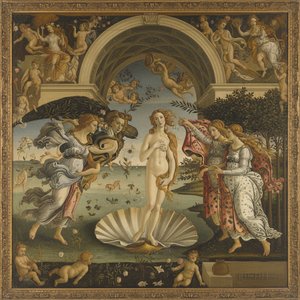
Sandro Botticellis 25 Mästerverk: En Konsthistorisk Resa för Hemmet
Utforska Sandro Botticellis 25 mest ikoniska målningar! Fördjupa dig i renässansens skönhet, klassisk mytologi och tidlösa konstverk. Köp högkvalitativa reproduktioner & hitta inspiration för ditt hem på OriginalUniqueArt.com.
Tio Renässansmästerverk som Formade Konsten – Upptäck Klassikerna med OriginalUniqueArt
Upptäck 10 renässansmästerverk av Botticelli, Leonardo da Vinci & Michelangelo! Fördjupa dig i italiensk konsthistoria och tidig renässans. Hitta inspiration för ditt hem med museumskvalitets reproduktioner på OriginalUniqueArt.com.

El Grecos 25 Mästerverk: En Konsthistorisk Resa för Hemmet & Själens Frid
Utforska El Grecos 25 mest ikoniska tavlor! Fördjupa dig i spansk renässanskonst, dramatik och sakrala motiv. Köp högkvalitativa konsttryck & inred med tidlösa mästerverk från OriginalUniqueArt.com.
Alte Pinakotekets 25 Mästerverk: En Konsthistorisk Resa för Hemmet
Utforska Alte Pinakotekets 25 mest ikoniska målningar! Lär känna renässansens och barockens mästerverk av Leonardo da Vinci, Rembrandt & fler. Hitta inspiration till din heminredning med konsttryck i museumskvalitet på OriginalUniqueArt.com.

Claude Monet: Topp 25 mästerverk – Impressionismens ljus i ditt hem
Utforska Claude Monets 25 mest ikoniska målningar – från vattenliljor till soluppgång. Lär känna impressionismens mästare och hitta inspiration för ditt hem med konsttryck av högsta kvalitet på OriginalUniqueArt.com.


