
 Förhandsvisa
 Skicka
 Dela
Dela
 Visa detaljer

 Ladda ner
 Liknande objekt
 Röntgen
 Bildspel
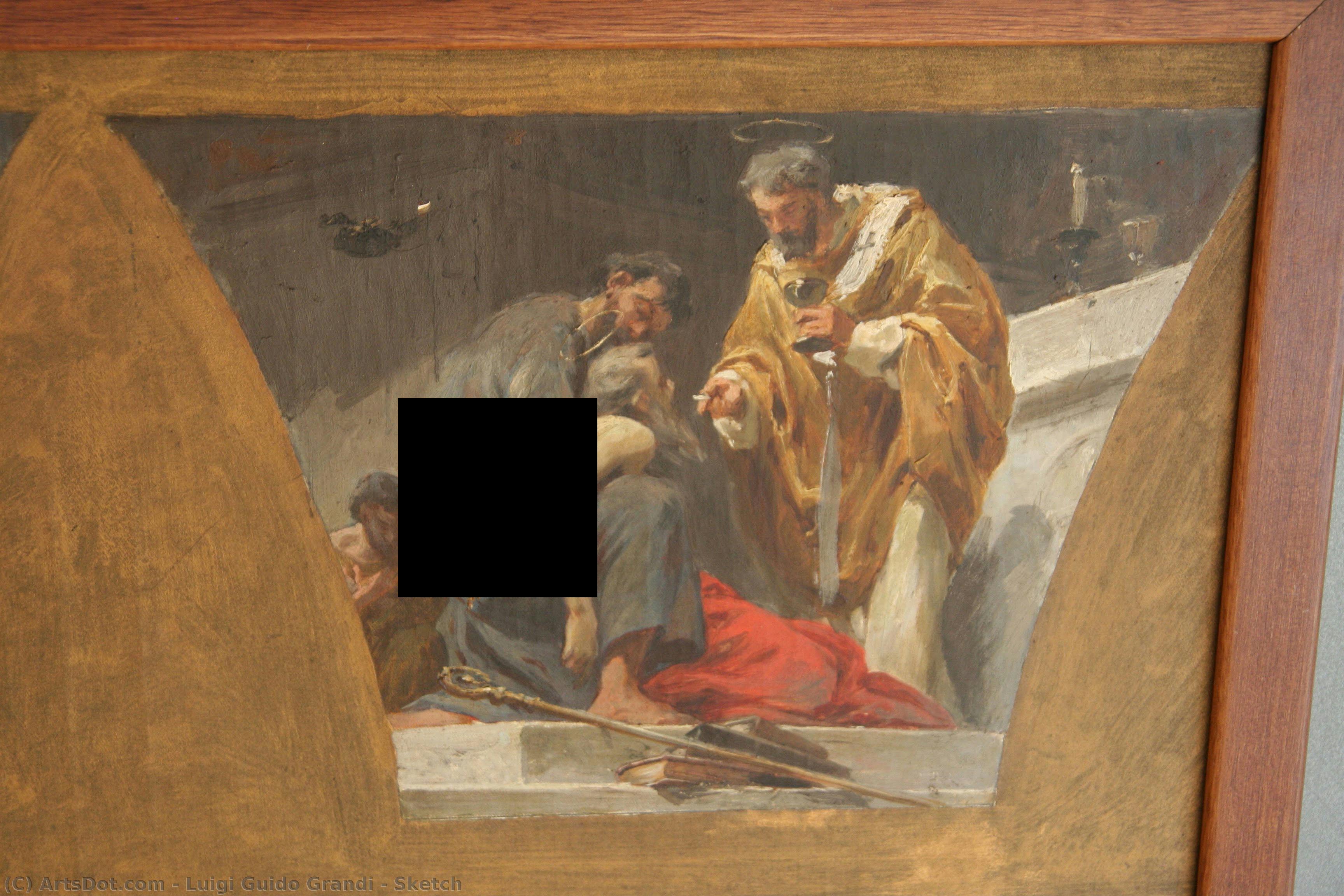
Sketch

 Visa mer
Giclée / Konsttryck
Giclée- eller canvasprint av museumskvalitet med snabb produktion och flexibla ytbehandlingsalternativ. ( Beställ handmålad reproduktion Köp högupplöst bild)




































Välj bland våra förinställda storlekar som motsvarar konstverkets ursprungliga proportioner.

Du kan ange egna mått för att passa en specifik ram eller yta. Om det valda måttet inte överensstämmer med originalbildens proportioner kommer vi antingen att beskära konstverket eller utöka bilden med en speglad eller enfärgad kant. En digital mockup skickas för ditt godkännande innan produktionen påbörjas.
Vänligen notera att förhandsvisningen på skärmen inte återspeglar den faktiska beskärningen eller utökningen. Endast mockuppen visar den slutgiltiga kompositionen korrekt.
Även om anpassade storlekar är möjliga, rekommenderar vi att du väljer ett mått från den fördefinierade listan för att bevara de ursprungliga proportionerna.
Leverans över hela världen () på 2 veckor istället för standard 4/5 veckor. (21 augusti)

Fri expressfrakt över hela världen

Högkvalitativ linnecanvas

Fullständig fraktförsäkring

Garantier för återbetalning av tullavgifter

Garantier för exakt färgåtergivning

60 dagars returrätt (endast vid fabrikationsfel)

100% pengarna tillbaka-garanti

Mängdrabatt erbjuds
 Glasalternativet är endast tillgängligt i storlekar under 110 cm.

Sketch
Giclée / Konsttryck
Storlek på reproduktion
-


Slutgiltigt pris
$ 80
Konstnärsbiografi
The Divine Geometry of Dom Luigi Guido Grandi
In the twilight of the Baroque era, a period defined by dramatic movement and profound spiritual intensity, there emerged a figure who sought to find the fingerprints of the Creator within the precise language of mathematics. Dom Luigi Guido Grandi (1671–1742) was far more than a mere scholar; he was a Benedictine monk whose life served as a bridge between the contemplative silence of the monastery and the burgeoning analytical rigor of the Enlightenment. Born in Italy, Grandi’s existence was shaped by the sacred atmosphere of San Luigi dei Francesi in Rome, where the intersection of Catholic theology and classical learning provided the fertile soil for his intellectual blossoming.
To understand Grandi is to understand a mind that viewed geometry not as an abstract set of rules, but as a window into the divine order. His early education instilled in him a reverence for the structural beauty of the universe, leading him to pursue mathematical truths as a form of worship. Influenced by the revolutionary spirit of Galileo Galilei, Grandi navigated the delicate tension between established religious dogma and the emerging scientific discoveries that were reshaping the European consciousness. He did not see science and faith as opposing forces, but rather as two different lenses through which one might perceive the same eternal truth.
Mathematical Elegance and the Rose Curve
The legacy of Grandi is etched into the very fabric of mathematical history through his breathtaking contributions to geometry and calculus. Perhaps his most visually captivating achievement is the formulation of what is now known as the Rose Curve. This geometric marvel, characterized by its delicate, petal-like symmetry radiating from a central point, serves as a perfect metaphor for his life's work—a marriage of mathematical precision and organic beauty. When one observes the rhythmic expansion of these curves, one sees the same elegance that Grandi sought to find in the heavens.
Beyond the visual splendor of his geometric discoveries, Grandi made profound strides in numerical analysis. His development of Grandis Series provided mathematicians with a powerful instrument for approximating irrational numbers, such as pi, marking a significant milestone in the evolution of mathematical thought. His explorations into the foundations of calculus, though occurring in an era of intense intellectual transition, demonstrated a precocious understanding of infinite processes and limits. These achievements were not merely academic exercises; they were attempts to map the infinite complexities of a universe governed by logic and grace.
A Lasting Intellectual Legacy
The historical significance of Luigi Guido Grandi lies in his ability to transcend the boundaries of a single discipline. As an engineer, mathematician, and theologian, he embodied the Renaissance ideal of the polymath, proving that the pursuit of reason could enhance, rather than diminish, the depth of spiritual conviction. His work continues to resonate within the halls of mathematics, where his name is still invoked in discussions of series and trigonometric functions.
In reflecting upon his life, we find a narrative of profound harmony. Grandi’s ability to weave together the following elements remains his greatest triumph:
- Theological Inquiry: Using mathematical patterns to contemplate the divine architecture of creation.
- Scientific Innovation: Contributing foundational concepts to the development of modern calculus and trigonometry.
- Philosophical Synthesis: Reconciling the revolutionary observations of the scientific revolution with the enduring traditions of the Church.
Ultimately, the story of Dom Luigi Guido Grandi is a testament to the power of curiosity. He reminds us that whether we are looking through the lens of a telescope or the equations of a geometric curve, we are all searching for the same underlying truth: a sense of order, beauty, and meaning in an infinite universe.

luigi guido grandi
1671 - 1742 , Italy
Kortfakta
- Artistic Movement Or Style: Baroque
- Artists Or Movements Influenced By Artist: ['Calculus']
- Artists Who Influenced This Artist: ['Galileo Galilei']
- Date Of Death: 1742
- Full Name: Luigi Guido Grandi
- Nationality: Italian
- Notable Artworks: ['Sketch']
- Place Of Birth: Italy

