

 Förhandsvisa
 Skicka
 Dela
Dela
 Visa detaljer

 Ladda ner
 Liknande objekt
 Röntgen
 Bildspel
Cain and Abel
 Acrylic On Canvas
- WallArt
- Renaissance Humanism
 1425
1425 79.0 x 79.0 cm
 Baptisteriet i Florens
 Visa mer
Handgjord oljereproduktion
Handmålad olja på duk i din valda storlek och ram, tillverkad efter beställning av våra konstnärer. ( Beställ tryck Köp högupplöst bild)




P118B $10

P118H $10

P118W $10

P438Z $10

P508JH $12

P508YH $12

P805H $10

P805Z $10

P919BZ $10

P919G $10

P919XJ $10

P959ZH $10

P968JZ $12

W106C $8

W218G $10

W218JH $8

W218Y $10

W307PJ $10

W316G $10

W316PJ $8

W316Y $10

W398PJ $8

W4111J $10

W500HY $15

W500JH $15

W692G $12

W849H $8

W940BG $15

W953PJ $8




Välj bland våra förinställda storlekar som motsvarar konstverkets ursprungliga proportioner.

Du kan ange egna mått för att passa en specifik ram eller yta. Om den valda storleken inte matchar originalbildens proportioner kommer vi antingen att beskära konstverket eller utöka målningen med ytterligare handmålade element. En digital skiss skickas till dig för godkännande innan produktionen påbörjas.
Observera att förhandsvisningen på skärmen inte återspeglar den faktiska beskärningen eller utökningen. Endast skissen visar den slutgiltiga kompositionen korrekt.
Även om anpassade storlekar är möjliga, rekommenderar vi att du väljer en dimension från den fördefinierade listan för att bevara originalproportionerna.
Efter beställning kommer OriginalUniqueArt.com team att mejla kunden för instruktioner och tillhandahålla en skissförhandsvisning
Leverans över hela världen () på 3–4 veckor istället för standard 5 veckor. (22 augusti). Inga kompromisser med kvaliteten.

Fri expressfrakt över hela världen

Högkvalitativ linnecanvas

Fullständig fraktförsäkring

Garantier för återbetalning av tullavgifter

Garantier för exakt färgåtergivning

60 dagars returrätt (endast vid fabrikationsfel)

100% pengarna tillbaka-garanti

Mängdrabatt erbjuds
 Glasalternativet är endast tillgängligt i storlekar under 110 cm.

Cain and Abel
Reproduktionsmedium
Storlek på reproduktion
-


Slutgiltigt pris
$ 300
Beskrivning av konstverket
Lorenzo Ghiberti’s Gates of Paradise: A Symphony in Bronze
The Florence Baptistery’s Gates of Paradise—officially known as Porta Nuova—stand as an unparalleled testament to Renaissance artistic genius, spearheaded by Lorenzo Ghiberti. Completed between 1425 and 1452, these monumental bronze doors represent more than just architectural embellishment; they embody the humanist ideals that defined Florence during its golden age and continue to inspire awe centuries later. Commissioned by Archbishop Giovanni Pier Paolo Carafa, Cardinal Domenico Giuliano della Pergola, and Pope Nicholas V, Ghiberti’s undertaking was ambitious in scope—a collaborative effort involving numerous artisans—yet he alone conceived and executed the overarching vision for this iconic masterpiece.- Style: The Gates exemplify Early Renaissance sculpture, characterized by a renewed interest in classical ideals of proportion and harmony. However, Ghiberti’s approach transcends mere imitation; he infused his work with profound psychological depth and emotional resonance—a hallmark of humanist art.
- Technique: Ghiberti pioneered innovative casting methods utilizing the lost wax technique, pushing the boundaries of metallurgical craftsmanship. This meticulous process ensured exceptional detail and surface finish, capturing the textures and nuances of human anatomy and drapery with breathtaking accuracy.
- Historical Context: Constructed during a period of fervent artistic patronage—fueled by papal ambition and civic pride—the Gates stand as a symbol of Florence’s cultural ascendancy. They reflect the humanist spirit prevalent at the time, emphasizing human dignity and intellectual curiosity alongside religious piety.
Panel No. 2: Cain and Abel – A Narrative of Jealousy and Divine Justice
The second panel depicting Cain and Abel is arguably the most emotionally charged segment of the Gates’ narrative cycle. Ghiberti skillfully captures the pivotal moment of fratricide—the brutal slaying of Abel by his brother Cain—transforming it into a powerful visual allegory. The composition emphasizes the stark contrast between the righteous Abel, depicted in serene repose with his flock, and Cain, consumed by rage and driven to violence.- Symbolism: Ghiberti’s depiction utilizes symbolic gestures and facial expressions to convey profound psychological states—jealousy, remorse, and despair. The knife held aloft by Cain represents the destructive impulse of envy, while Abel's gaze conveys unwavering faith and moral integrity.
- Composition: The artist employs a pyramidal structure to create visual stability and heighten dramatic tension. Careful attention to detail—particularly in rendering Abel’s face—underscores Ghiberti’s mastery of anatomical realism and expressive portraiture.
Beyond Imitation: Ghiberti's Innovation and Legacy
While deeply rooted in classical tradition, Ghiberti’s Gates transcend mere stylistic homage. He achieved a breakthrough in perspective—a technique previously unexplored in sculpture—creating an illusion of depth that dramatically enhances the visual impact of the panels. This pioneering innovation demonstrates Ghiberti’s intellectual curiosity and his commitment to advancing artistic boundaries.- Influence: The Gates of Paradise profoundly influenced subsequent generations of sculptors, establishing a new standard for realism and expressive power. Michelangelo himself famously declared that Ghiberti had “made the stone speak.”
- Enduring Relevance: Today, reproductions of Ghiberti’s masterpiece continue to captivate audiences worldwide—serving as reminders of Florence's artistic heritage and inspiring contemplation on themes of morality, justice, and human vulnerability.
Exploring the Emotional Landscape
The Gates of Paradise are not merely aesthetically impressive; they evoke a visceral response in viewers—a confrontation with fundamental questions about human nature and divine providence. Ghiberti’s masterful portrayal of Cain and Abel compels us to grapple with the destructive consequences of envy and the importance of unwavering moral conviction. As you gaze upon this enduring symbol of Renaissance artistry, allow yourself to be transported back to Florence's vibrant cultural milieu—a testament to the transformative power of art and its ability to illuminate the human condition.Konstnärsbiografi
A Florentine Renaissance Forged in Bronze: The Life and Legacy of Lorenzo Ghiberti
Lorenzo di Bartolo – a name that would forever be intertwined with artistic innovation – was born near Florence in 1378, embarking on a journey that would reshape the very landscape of sculpture. His early years were steeped in the practical artistry of goldsmithing, nurtured under the watchful eye of his stepfather, Bartolo di Michele. This foundational training instilled within him an unparalleled mastery of metalwork, a skill he would later elevate to breathtaking heights, transforming it into a vehicle for profound artistic expression. Yet, Ghiberti’s ambitions stretched far beyond the confines of the workshop; formal painting lessons from Gherardo Starnina broadened his horizons, laying the groundwork for a multifaceted talent that would soon captivate the heart of Florence and beyond. A brief sojourn in Rimini, assisting Carlo I Malatesta with frescoes during the devastating plague of 1400, exposed him to diverse artistic currents and honed his observational skills – experiences that subtly shaped his evolving vision. Little did he realize that these formative years were meticulously preparing him for a competition that would etch his name into the annals of art history.The Baptistery Doors: A Triumph of Skill and Vision
In 1401, Florence held a contest of unparalleled significance – a chance to select an artist to create new bronze doors for the city’s magnificent Baptistery. This commission was considered the most prestigious in the region, a testament to the artistic prowess of those chosen to adorn its sacred space. Lorenzo Ghiberti entered this arena alongside some of the era's brightest minds, including the formidable Filippo Brunelleschi, a rival whose architectural genius would soon challenge Ghiberti’s own. The challenge: to depict the *Sacrifice of Isaac* in relief – a biblical narrative brimming with symbolism and moral weight. Ghiberti’s panel was not merely a demonstration of technical skill; it was a revelation. His innovative approach, characterized by graceful figures rendered with an astonishing degree of naturalism and a sophisticated understanding of perspective, secured his victory. This triumph wasn't simply about winning a commission; it was a declaration of a new artistic sensibility – a bold assertion that the possibilities of sculpture were far greater than previously imagined. He immediately set to work on the North Doors, a project that would consume over two decades and fundamentally transform the Baptistery into a showcase of Renaissance artistry.The “Gates of Paradise”: A Masterpiece Unveiled
Following the resounding success of the North Doors, Ghiberti was entrusted with an even more ambitious undertaking: the creation of a second set for the Baptistery’s east entrance – doors that would eventually earn him the enduring nickname "the Gates of Paradise." Completed in 1452, these panels represent the pinnacle of his artistic achievement. Each panel depicts scenes from the Old Testament with an unprecedented level of realism, detail, and emotional depth. Ghiberti's mastery of bronze casting and relief sculpture reached its zenith in these works. The figures are not merely representations; they are imbued with a palpable sense of life – their gestures, expressions, and drapery rendered with meticulous precision. He pioneered the use of perspective to create a breathtaking illusion of depth and space, drawing the viewer into the narrative and making them feel as though they are witnessing the events unfold before their eyes. The sheer scale and complexity of the “Gates of Paradise” were astonishing for their time, demonstrating Ghiberti’s extraordinary technical skill and his profound understanding of artistic principles.Style, Influences, and Lasting Impact
Ghiberti's artistic style represents a beautiful synthesis of Gothic elegance and the burgeoning principles of Renaissance humanism. While rooted in the traditions of medieval craftsmanship – the intricate detailing, the rich colors, and the emphasis on symbolic representation – he embraced classical antiquity, incorporating elements of Roman art and sculpture into his work. This fusion created a unique aesthetic that was both refined and emotionally resonant. He wasn’t simply imitating the past; he was reinterpreting it through a distinctly Renaissance lens, imbuing it with a sense of humanism and spiritual depth. His workshop became a vibrant hub for emerging talent, nurturing future masters like Donatello, Masolino, and Paolo Uccello – a testament to his generosity and influence as a mentor. Beyond his artistic achievements, Ghiberti left behind a valuable intellectual legacy in the form of *Commentarii*, three treatises on art history, theory, and technique – one of the earliest examples of its kind by an artist. He meticulously documented his creative process, offering insights into his methods, inspirations, and philosophical beliefs.A Legacy Cast in Bronze
The historical significance of Lorenzo Ghiberti extends far beyond his technical brilliance. He embodied the spirit of the Early Renaissance – a period marked by intellectual curiosity, artistic innovation, and a renewed appreciation for classical learning. His work not only transformed the aesthetic landscape of Florence but also helped to define the humanist ideals that would shape Western culture for centuries to come. *His legacy continues to inspire artists and art lovers alike*, reminding us of the power of human creativity and the enduring beauty of Renaissance artistry. Ghiberti’s meticulous attention to detail, his mastery of perspective, and his ability to imbue his sculptures with emotional depth set a new standard for artistic excellence. *His influence can be seen in countless works of art throughout history*, solidifying his place as a pivotal figure in Western art history. The “Gates of Paradise” remain an enduring symbol of Florentine civic pride and artistic achievement, a testament to the genius of Lorenzo Ghiberti – a sculptor who forged his legacy in bronze.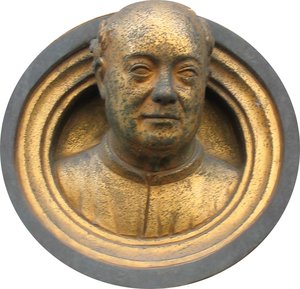
Lorenzo Ghiberti
1378 - 1455 , Italien
Kortfakta
- Artistic Movement Or Style: Tidig Renässans
- Artists Or Movements Influenced By This Artist:
- Donatello
- Masolino
- Artists Who Influenced This Artist:
- Gherardo Starnina
- Bartolo di Michele
- Date Of Birth: c. 1378
- Date Of Death: 1455
- Full Name: Lorenzo Ghiberti
- Nationality: Italienare
- Notable Artworks:
- Portarna till Paradiset
- Isaac offret
- Place Of Birth: Florens, Italien
Relaterade artiklar
Galleria degli Uffizi: Topp 25 Mästerverk – Renässansens Skönhet för Ditt Hem
Upptäck de 25 mest ikoniska mästerverken på Galleria degli Uffizi i Florens! Fördjupa dig i renässanskonst av Botticelli, Leonardo da Vinci & Michelangelo. Köp museumkvalitativa konsttryck och inred ditt hem med tidlös skönhet – utforska samlingen online hos OriginalUniqueArt.com.

Lorenzo Lotto: Unveiling the Enigma of a Venetian Master's Portraits
Explore the captivating world of Lorenzo Lotto, a Venetian Renaissance master renowned for his psychologically insightful portraits & enigmatic symbolism. Discover his life, style, and rediscovered legacy with OriginalUniqueArt.
Gian Lorenzo Bernini: Sculpting Baroque Emotion & the Roman Imagination
Explore the life & revolutionary art of Gian Lorenzo Bernini, the master sculptor of the Baroque era. Discover his iconic works like David and Ecstasy of Saint Teresa – a journey into Roman artistic genius.
Cultivating Paradise: A Historical & Artistic Exploration of Gardens in Painting
Explore the rich history of gardens in painting! Discover masterpieces from Renaissance to Impressionism & beyond. Learn about symbolism, artists like Monet & Klimt, and find your perfect artwork at OriginalUniqueArt.
Fra Angelicos 25 Mästerverk: Upptäck Renässansens Andliga Skönhet | OriginalUniqueArt
Utforska Fra Angelicos 25 mest ikoniska mästerverk – en resa genom renässansens andliga skönhet. Upptäck historien bakom varje fresk och panelmålning. Köp museumkvalitativa konsttryck på OriginalUniqueArt.com.

