Meny
Text size

() ·

A painting made for you, by hand

Codici di Madrid

Handgjord oljereproduktion

Handmålad olja på duk i din valda storlek och ram, tillverkad efter beställning av våra konstnärer. ( Byt till tryck Byt till digital bild)

Beskrivning av samlarobjekt

Konstnärens biografi

Utforska Leonardo da Vinci (1452-1519): Renässansgeniet bakom Mona Lisa & Nattvarden! Upptäck hans sfumato-teknik, anatomiska studier och banbrytande uppfinningar.

from ·

Chapter 1

How large should it be?

Slide to change the size; the picture on the left shows the frame at its real width. The proportions of the original are kept.

Standardstorlek
skräddarsydd
CM
INCH

Välj bland våra förinställda storlekar som motsvarar konstverkets ursprungliga proportioner.

bredd
höjd

Ange den bredd och höjd du behöver för att passa din ram eller din vägg. Eftersom detta är handmålat kan konstnären, vid ett annat format, måla lite mer runt bilden eller beskära den något – det är du som väljer. Vi skickar en digital mockup för godkännande innan målningen påbörjas. Bilden som visas på denna sida representerar inte det slutgiltiga resultatet — det är endast mockuppen som visar det.

Chapter 2

How should it arrive?

Choose the edges of the stretched canvas

Choose your frame

Corner sample of the WhiteWrap canvas edge finish, stretched on massivt trä bars
White Skr1
Corner sample of the BlurSideWrap canvas edge finish, stretched on massivt trä bars
Blurside Skr1
Corner sample of the ExtendedWrap canvas edge finish, stretched on massivt trä bars
Extended Skr1
Corner sample of the P118B picture frame: formgjuten polystyren, 5 cm wide and 3 cm thick
P118B Skr10
Corner sample of the P118H picture frame: formgjuten polystyren, 5 cm wide and 3 cm thick
P118H Skr10
Corner sample of the P118W picture frame: formgjuten polystyren, 5 cm wide and 3 cm thick
P118W Skr10
Corner sample of the P438Z picture frame: formgjuten polystyren, 5.5 cm wide and 3.5 cm thick
P438Z Skr10
Corner sample of the P508JH picture frame: formgjuten polystyren, 7 cm wide and 3.5 cm thick
P508JH Skr12
Corner sample of the P508YH picture frame: formgjuten polystyren, 7 cm wide and 3.5 cm thick
P508YH Skr12
Corner sample of the P805H picture frame: formgjuten polystyren, 5 cm wide and 3.5 cm thick
P805H Skr10
Corner sample of the P805Z picture frame: formgjuten polystyren, 5 cm wide and 3.5 cm thick
P805Z Skr10
Corner sample of the P919BZ picture frame: formgjuten polystyren, 7 cm wide and 3.5 cm thick
P919BZ Skr10
Corner sample of the P919G picture frame: formgjuten polystyren, 7 cm wide and 3.5 cm thick
P919G Skr10
Corner sample of the P919XJ picture frame: formgjuten polystyren, 7 cm wide and 3.5 cm thick
P919XJ Skr10
Corner sample of the P959ZH picture frame: formgjuten polystyren, 5 cm wide and 3 cm thick
P959ZH Skr10
Corner sample of the P968JZ picture frame: formgjuten polystyren, 6 cm wide and 4 cm thick
P968JZ Skr12
Corner sample of the W106C picture frame: massivt trä, 5 cm wide and 3 cm thick
W106C Skr8
Corner sample of the W218G picture frame: massivt trä, 5 cm wide and 3 cm thick
W218G Skr10
Corner sample of the W218JH picture frame: massivt trä, 5 cm wide and 3 cm thick
W218JH Skr8
Corner sample of the W218Y picture frame: massivt trä, 5 cm wide and 3 cm thick
W218Y Skr10
Corner sample of the W307PJ picture frame: massivt trä, 6 cm wide and 3 cm thick
W307PJ Skr10
Corner sample of the W316G picture frame: massivt trä, 6 cm wide and 3 cm thick
W316G Skr10
Corner sample of the W316PJ picture frame: massivt trä, 6 cm wide and 3 cm thick
W316PJ Skr8
Corner sample of the W316Y picture frame: massivt trä, 6 cm wide and 3 cm thick
W316Y Skr10
Corner sample of the W398PJ picture frame: massivt trä, 5 cm wide and 3 cm thick
W398PJ Skr8
Corner sample of the W4111J picture frame: massivt trä, 6.5 cm wide and 3.5 cm thick
W4111J Skr10
Corner sample of the W500HY picture frame: massivt trä, 7 cm wide and 5 cm thick
W500HY Skr15
Corner sample of the W500JH picture frame: massivt trä, 7 cm wide and 5 cm thick
W500JH Skr15
Corner sample of the W692G picture frame: massivt trä, 8 cm wide and 4 cm thick
W692G Skr12
Corner sample of the W849H picture frame: massivt trä, 5 cm wide and 3 cm thick
W849H Skr8
Corner sample of the W940BG picture frame: massivt trä, 7.5 cm wide and 4.5 cm thick
W940BG Skr15
Corner sample of the W953PJ picture frame: massivt trä, 6 cm wide and 3.5 cm thick
W953PJ Skr8
Corner sample of the H24-GOLD picture frame: snidad trä med gesso, 10 cm wide and 6 cm thick
H24-GOLD Skr30
Corner sample of the H24-SILVER picture frame: snidad trä med gesso, 10 cm wide and 6 cm thick
H24-SILVER Skr30
Corner sample of the H36-GOLD picture frame: snidad trä med gesso, 15 cm wide and 6.5 cm thick
H36-GOLD Skr45
Corner sample of the H36-SILVER picture frame: snidad trä med gesso, 15 cm wide and 6.5 cm thick
H36-SILVER Skr45
Förhandsvisning av ram
Inramad

Moulding: . Overall size with the frame: .

Chapter 3

Who paints it, and should anything change?

Examples of what can be changed: Replace face with customer photo; Add pet (e.g., replace cat with dog); Include hidden message in background; Change background landscape or elements.

After order, OriginalUniqueArt.com team will email client for instructions and provide a mockup preview

Leverans över hela världen () på 3–4 veckor istället för standard 5 veckor. (30 oktober). Inga kompromisser med kvaliteten.

Chapter 4

The finishing touches

A nameplate, as in a museum?

Detaljer för graverad bronsplatta

This elegant plaque features the artist's name and the title of the artwork, finely engraved for a timeless presentation.

It is made from bronze with a refined, elegant finish. The text is precisely laser-engraved for a sharp and permanent result. Measuring 9x2 cm, the plaque is compact yet easy to read. It's built to be durable and scratch-resistant, offering a professional, museum-quality look. Mounting is simple thanks to the included adhesive backing.

Detaljer för transparent akrylplatta

The plaque includes essential engraved details such as the artist's name, the title of the artwork, the date it was created, the type of media used-like oil on canvas or watercolor-a brief description of the piece, and a QR code that links to the complete artwork information.

It is crafted from clear acrylic, offering a sleek, modern appearance. The text is UV-engraved in black to ensure strong visual contrast. With a size of 10x15 cm, it ensures optimal readability. It comes equipped with two metal hooks for secure wall mounting. The plaque is designed to be weather-resistant, making it suitable for various environments, and it includes interactive features that work seamlessly with smartphone scanning.

Detaljer för svart akrylplatta

This elegant plaque includes engraved information such as the artist's name, the title of the artwork, the date it was created, the type of media used (like oil on canvas or watercolor), a short description of the artwork, and a QR code for quick access to more information.

The plaque itself is made from refined black acrylic with a premium finish. The text is laser-engraved in white for high contrast and readability. Its size is 10x15 cm, designed to be easy to read. It comes with two metal hooks for professional mounting. The design is sleek and fits any interior style. It is also weather-resistant and durable, with built-in digital integration for mobile compatibility.

A protective varnish?

When do you need it?

Chapter 5

Your painting, as you ordered it

Codici di Madrid

Reproduktionsmetod

Storlek på reproduktion

-

Elitkonstnär av högsta klass

Mer detaljrikedom, finess och extra produktionstid

-

Inramning av reproduktion

-

-

För konstverk eller reproduktioner som är större än 105 cm (cirka 41 tum) på någon sida, levereras ramen som ett isärplockat kit. Denna metod säkerställer en trygg leverans och förhindrar skador under transport.

Professionell montering krävs – detta är inte en produkt för självmontering.
Kitet måste monteras och duken spännas av en erfaren professionell inramare med hjälp av trälim (ingår ej), en spänntång för duk och klämmor för att hålla sargen rak medan limmet torkar. Felaktig montering eller ojämn spänning av duken kan orsaka permanenta skador på konstverket och täcks inte av vår garanti.

  • Alla massiva träribbor ingår, exakt tillkapade efter mått.

  • Monteras med de medföljande skruvarna, samt trälim för hörnfogarna, vilket inte ingår och måste anskaffas av din ramverkare.

  • Professionella verktyg krävs och ingår ej: en dukspännare och klämmor för att hålla listerna raka medan limmet torkar.

Viktigt:
Hörnjunctionerna kräver trälim, listerna måste hållas på plats med tvingar tills limmet har torkat helt, och för att spänna duken på den monterade ramen krävs en spänntång för duk. Inget av detta ingår i kitet. Vänligen kontakta en erfaren professionell rammakare innan du beställer denna storlek.

Namnskylt

-

-

Skyddande fernissa

Glansig fernissa (förstärker färgerna, skyddar mot ljus och fukt)

-

Anpassa mitt konstverk

Exempel på vad som kan ändras: Byt ut ansiktet mot ett foto från kunden; Lägg till ett husdjur (t.ex. byt ut en katt mot en hund); Inkludera ett dolt meddelande i bakgrunden; Ändra bakgrundens landskap eller detaljer.

-

Expressleverans

Leverans över hela världen () inom 3–4 veckor istället för standardiserade 5 veckor. (30 oktober). Inga kompromisser med kvaliteten.

-

Expressleverans

Leverans över hela världen () inom 5 veckor. (6 november).

Ingår

Slutgiltigt pris

Skr 3014

Totalt pris Skr 3014

Glasalternativet är endast tillgängligt i storlekar under 110 cm.

Included with every order

  • Fri expressfrakt över hela världen
  • Högkvalitativ linnecanvas
  • Fullständig fraktförsäkring
  • Garantier för återbetalning av tullavgifter
  • Garantier för exakt färgåtergivning
  • 100 dagars returrätt (endast vid fel)
  • 100% pengarna tillbaka-garanti
  • Mängdrabatt erbjuds

The Enigmatic Vessel: Exploring Leonardo da Vinci’s “Codici di Madrid”

Leonardo da Vinci's "Codici di Madrid," though shrouded in the mystery of its origins and current whereabouts, represents a fascinating intersection of observation, artistic invention, and perhaps even a subtle commentary on the nature of representation itself. This seemingly simple depiction of a ceramic or metal vase—a commonplace object elevated to an extraordinary study—offers a glimpse into the mind of one of history’s most profound thinkers. The painting, likely conceived as a preparatory drawing or sketchbook page, isn't merely a record of a physical form; it’s a distillation of da Vinci’s relentless pursuit of understanding – how light interacts with surface, how volume is perceived, and ultimately, how to capture the essence of an object on a two-dimensional plane.

The composition immediately draws the eye to the vase's distinctive spiral motif. This isn’t a purely decorative flourish; it speaks to da Vinci’s deep interest in geometry, proportion, and the underlying mathematical harmony he believed governed all things. The spiral, a recurring symbol throughout his work – from the swirling patterns of water to the graceful curves of human anatomy – suggests an exploration of growth, movement, and the cyclical nature of existence. It's a visual echo of concepts explored in his scientific notebooks, hinting at a mind constantly seeking connections between art and science.

A Study in Observation and Technique

Da Vinci’s approach to this seemingly straightforward subject is remarkably detailed, reflecting his meticulous method of observation. He wasn’t simply copying the vase; he was dissecting it visually, analyzing its form from multiple angles, and rendering each subtle curve and shadow with painstaking accuracy. The use of *spolvero*, a technique involving dusting charcoal onto the wet paint surface to create delicate lines and shading, is particularly evident here, lending an ethereal quality to the ceramic’s texture. This method allowed him to build up layers of tone and value with incredible precision, capturing not just the appearance but also the *feeling* of the material.

The choice of medium – likely charcoal on paper or perhaps a preliminary sketch for fresco – further illuminates da Vinci's working process. These preparatory drawings were crucial to his artistic development, serving as a laboratory where he could experiment with ideas and refine his techniques before committing them to larger-scale works. “Codici di Madrid” stands as a testament to this iterative approach, demonstrating how even the most familiar subject could become a vehicle for profound exploration.

Symbolism and Renaissance Ideals

Within the context of the High Renaissance, “Codici di Madrid” can be interpreted through the lens of humanist ideals. Da Vinci’s fascination with nature – a cornerstone of Renaissance thought – is powerfully evident in his detailed rendering of this everyday object. He elevates it to an object worthy of study and artistic representation, reflecting a belief in the inherent beauty and intellectual value of the natural world. The vase itself could be seen as a symbol of containment, holding within its form the potential for growth, knowledge, or even life – themes frequently explored by Renaissance artists and philosophers.

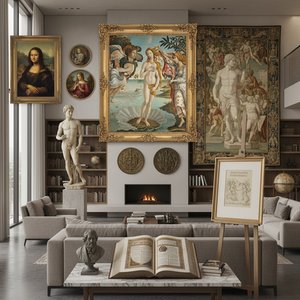
Furthermore, the image’s placement within a book—as depicted in the photograph—suggests a deliberate act of preservation and study. Books were repositories of knowledge during this period, and da Vinci's inclusion of his drawing within one reinforces the importance of observation, documentation, and the transmission of ideas across generations. It speaks to a legacy of learning and a deep appreciation for the power of visual representation.

A Timeless Masterpiece: Reproduction Possibilities

OriginalUniqueArt offers exquisite hand-painted reproductions of “Codici di Madrid,” meticulously crafted by our team of skilled artists who emulate da Vinci’s techniques with unparalleled accuracy. Each reproduction captures not only the image's visual details but also its underlying atmosphere and emotional resonance. Whether you are an art collector, interior designer seeking to infuse a space with Renaissance elegance, or simply an admirer of da Vinci’s genius, our reproductions provide a beautiful and authentic way to experience this enigmatic masterpiece. Explore our collection today and bring the intellectual depth and artistic beauty of “Codici di Madrid” into your home or studio.

Frågor och svar

Ur vilket land kommer High Renaissance-verket "Codici di Madrid"?

"Codici di Madrid" förenar High Renaissance-rörelsen med Italien genom sin skapares födelseplats.

Är "Codici di Madrid" av Leonardo Da Vinci ett välkänt konstverk?

"Codici di Madrid" av Leonardo Da Vinci har en Iconic popularitetsnivå. Denna klassificering återspeglar hur väl känt verket är.

Är "Codici di Madrid" av Leonardo Da Vinci en målning, en teckning eller ett tryck?

I katalogen är "Codici di Madrid" av Leonardo Da Vinci registrerad som WallArt. Kategorin hjälper till att hitta liknande verk.

More about this painting

Förhandsvisa Förhandsgranska i AR Byt till tryck Byt till digital bild Skicka
Visa detaljer Guide Lägg till i favoriter Ladda ner Liknande objekt Röntgen Bildspel Q&A Statistik

In numbers

  • 29frames to choose from
  • standard sizes, in its own proportions
  • 5weeks to paint and deliver it
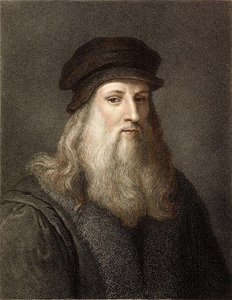
Leonardo Da Vinci

Leonardo Da Vinci

1452 - 1519, Italien

Quick facts about Leonardo Da Vinci

  • Artistic Movement Or Style: Högrenässans
  • Artists Or Movements Influenced By This Artist: ['Renässanskonst']
  • Artists Who Influenced This Artist: ['Andrea del Verrocchio']
  • Date Of Birth: 15 april 1452
  • Date Of Death: 2 maj 1519
  • Full Name: Leonardo di ser Piero da Vinci
  • Nationality: Italiensk
  • Notable Artworks (List Of Titles):
    • Mona Lisa
    • Nattvarden
  • Place Of Birth (City And Country): Vinci, Italien

Konstnärsbiografi

Leonardo da Vincis liv och arv.

Leonardo di ser Piero da Vinci, född 1452 nära den toskanska byn Vinci, förblir utan tvekan en av de mest universellt erkända figurerna från renässansen – en sann polymath vars outsläckliga nyfikenhet drev honom över disciplinernas gränser och lämnade ett bestående avtryck inom konst, vetenskap och ingenjörskonst. Hans namn har blivit synonymt med geni, ett bevis på hans extraordinära bredd av talang och visionära tänkande. Leonardo föddes utomäktenskapligt som son till Piero da Vinci, en notarie, och Caterina, en bondekvinna, och hans tidiga liv var okonventionellt men gav honom tillgång till både den praktiska världen och en uppskattning för naturen som skulle forma hans konstnärliga vision i grunden. Han fick en grundläggande utbildning i läsning, skrivning och aritmetik, men det var hans lärlingsutbildning hos Andrea del Verrocchio i Florens som verkligen tände hans kreativa gnista. Inom Verrocchios verkstad lärde sig Leonardo inte bara att måla eller skulptera; han fördjupades i en värld av teknisk skicklighet, där han bemästrade metallarbete, snickeri, teckning och de konstnärliga skapandets komplexitet – en grund som han senare skulle bygga sin mångfacetterade genialitet på. Redan under denna formativa period spreds rykten om hans exceptionella talang, och berättelser antyder att Verrocchio själv lade ner sitt måleri efter att ha bevittnat Leonardos överlägsna förmåga.

Milanese innovationer och konstnärlig blomstring

År 1482 påbörjade Leonardo ett nytt kapitel när han träffade tjänsten hos Ludovico Sforza, hertig av Milano. Detta var inte enbart en konstnärlig anställning; Leonardo fungerade som militäringeniör, arkitekt, skulptör och designer för hovet – ett bevis på hans mångsidiga färdigheter. Han utformade innovativa befästningar, designade påkostade scenografier och skissade till och med planer för fantastiska maskiner. Det var dock under denna period som han påbörjade arbetet med ett av sina mest ikoniska mästerverk: Nattvarden. Verket, som målades som en fresco i refektoriet i klostret Santa Maria delle Grazie, sträcker sig bortom ren representation; det är en djup utforskning av mänskliga känslor och psykologiskt drama, som fångar det exakta ögonblicket då Kristus tillkännager sitt förräderi. Kompositionen, innovativ för sin tid, och den mästerliga användningen av perspektiv skulle påverka västerländsk konst djupt under århundradena som följde. Även om många skulpturala projekt förblev ofullbordade under hans tid i Milano, fortsatte Leonardos uppfinningsrika anda att blomstra och lade grunden för framtida vetenskapliga utforskningar.

Återkomsten till Florens och strävan efter perfektion

Efter den franska invasionen av Milano 1499 återvände Leonardo till Florens, en stad som befann sig i en kulmen av konstnärlig utveckling. Trots att han producerade färre fullbordade verk under denna tid, var deras genomslag enormt. Det var här han påbörjade arbetet med vad som skulle bli utan tvekan världens mest kända målning: Mona Lisa (La Gioconda). Motivets gåtfulla leende och fångande blick har fascinerat betraktare i generationer, medan Leonardos revolutionerande sfumato-teknik – den subtila övergången mellan ljus och skugga för att skapa disiga konturer och atmosfäriskt perspektiv – bidrog avsevärt till målningens eteriska kvalitet. Denna period innebar också en fortsatt förfinande av hans anatomiska studier, driven av en orubblig önskan att förstå den mänskliga formen med vetenskaplig precision. Han dissekerade lik och dokumenterade noggrant muskler, ben och organ i en serie otroligt detaljerade teckningar som låg århundraden före sin tid.

Ett arv bortom konsten: Vetenskap, uppfinning och bestående inflytande

Leonardos senare år präglades av resor mellan Florens, Milano och Rom, där han alltid eftertraktades för sin expertis men ofta lämnade projekt ofullbordade – kanske en reflektion av hans rastlösa intellekt och de enorma omfattningarna av hans intressen. År 1516 accepterade han en inbjudan från kung Frans I att leva och arbeta vid Château du Clos Lucé nära Amboise i Frankrike, där han tillbringade sina sista år. Han dog där 1519 och lämnade efter sig ett enormt arv som sträker sig långt bortom konstens rike. Hans anteckningsböcker avslöjar banbrytande arbete inom anatomi, optik, hydraulik, geologi och kartografi – samt konceptualiserade uppfinningar som låg århundraden före sin tid, inklusive flygmaskiner, stridsvagnar och avancerade vapen. Leonardo da Vincis påverkan på konsthistorien är omätbar. Han höjde konstnärens status från skicklig hantverkare till intellektuell gestalt och visade att konstnärligt skapande kunde informeras av vetenskaplig undersökning och en djup förståelse för den naturliga världen. Hans målningar hyllas för sin realism, psykologiska djup och innovativa tekniker. Han förblir en symbol för mänsklig nyfikenhet, kreativitet och den outtröttliga strävan efter kunskap – en sann förkroppsligande av renässansens anda vars arv fortsätter att inge vördnad och fascination århundraden efter hans död.

Viktiga prestationer & bestående inflytande

  • Måleri: Mona Lisa, Nattvarden, Madonnan i klippgrottan, Bebådelsen
  • Teckning & skissering: Omfattande anatomiska studier, Ingenjörskonst (flygmaskiner, vapen), Botaniska illustrationer
  • Vetenskap & teknik: Banbrytande arbete inom anatomi, optik, hydraulik, geologi och kartografi. Konceptualiserade uppfinningar som låg århundraden före sin tid.

Kortfakta

  • Artist: Leonardo da Vinci
  • Influences: Da Vinci
  • Movement: Renaissance
  • Location: Madrid, Spain
  • Artistic style: High Renaissance

Konstquiz

Det finns endast ett korrekt svar på varje fråga.

Fråga 1:
The painting ‘Codici di Madrid’ depicts which of the following?
Fråga 2:
Considering Leonardo da Vinci’s known interests, what artistic influence is most likely reflected in the vase’s spiral design?
Fråga 3:
What does the depiction of the vase within a book suggest about its purpose?
Fråga 4:
Leonardo da Vinci’s early apprenticeship with Andrea del Verrocchio significantly impacted his artistic development. What did this apprenticeship primarily involve?