
 Förhandsvisa
 Skicka
 Dela
Dela
 Visa detaljer

 Ladda ner
 Liknande objekt
 Röntgen
 Bildspel
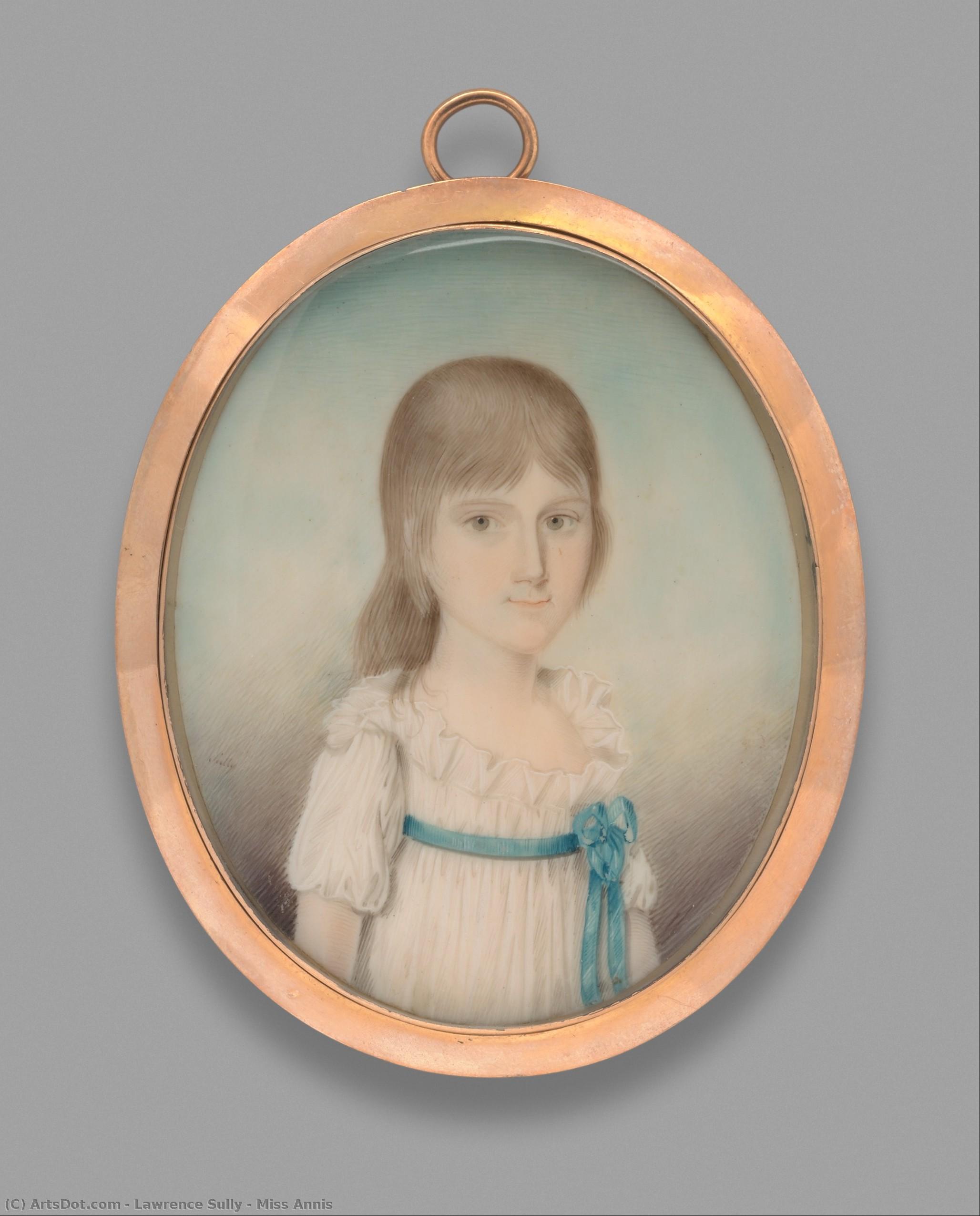
Miss Annis
 Neoclassicism
 1800
1800 6.0 x 5.0 cm
 Visa mer
Handgjord oljereproduktion
Handmålad olja på duk i din valda storlek och ram, tillverkad efter beställning av våra konstnärer. ( Beställ tryck Köp högupplöst bild)




































Välj bland våra förinställda storlekar som motsvarar konstverkets ursprungliga proportioner.

Du kan ange egna mått för att passa en specifik ram eller yta. Om den valda storleken inte matchar originalbildens proportioner kommer vi antingen att beskära konstverket eller utöka målningen med ytterligare handmålade element. En digital skiss skickas till dig för godkännande innan produktionen påbörjas.
Observera att förhandsvisningen på skärmen inte återspeglar den faktiska beskärningen eller utökningen. Endast skissen visar den slutgiltiga kompositionen korrekt.
Även om anpassade storlekar är möjliga, rekommenderar vi att du väljer en dimension från den fördefinierade listan för att bevara originalproportionerna.
Efter beställning kommer OriginalUniqueArt.com team att mejla kunden för instruktioner och tillhandahålla en skissförhandsvisning
Leverans över hela världen () på 3–4 veckor istället för standard 5 veckor. (26 augusti). Inga kompromisser med kvaliteten.

Fri expressfrakt över hela världen

Högkvalitativ linnecanvas

Fullständig fraktförsäkring

Garantier för återbetalning av tullavgifter

Garantier för exakt färgåtergivning

60 dagars returrätt (endast vid fabrikationsfel)

100% pengarna tillbaka-garanti

Mängdrabatt erbjuds
 Glasalternativet är endast tillgängligt i storlekar under 110 cm.

Miss Annis
Reproduktionsmedium
Storlek på reproduktion
-


Slutgiltigt pris
$ 300
Beskrivning av konstverket
Konstnärsbiografi
A Legacy of Light and Line: The Life of Lawrence Sully
In the vibrant, burgeoning landscape of early 19th-century American art, few figures capture the ephemeral transition from European classical tradition to a distinct American spirit as poignantly as Lawrence Sully. Born in 1783 in the quiet town of Horncastle, Lincolnshire, England, Sully’s life was an extraordinary tapestry woven from the threads of performance and fine art. The son of actors Matthew and Sarah Sully, his earliest memories were likely shaped by the footlights and drama of the stage; indeed, he made his theatrical debut at the Charleston Theatre when he was a mere eleven years old. This early exposure to the dramatic arts would later manifest in his paintings, where a profound sense of character and narrative presence breathed life into every subject he encountered.
Sully’s journey from the English stage to the American canvas was marked by both wandering and intense dedication. After a brief, unfulfilling period working as an insurance broker, his true calling emerged through the delicate medium of miniature painting. Under the rigorous tutelage of Jean Belzons, a French miniaturist, Sully mastered the art of meticulous detail and refined aesthetic sensibilities. While their professional partnership ended abruptly in 1799 due to irreconcilable differences, the technical foundation laid by Belzons remained indelible. By the age of eighteen, Sully had emerged as a professional painter in Charleston, Virginia, establishing himself with a maturity that belied his youth.
The Pursuit of Artistic Excellence
As his career progressed, Sully’s artistic vision expanded far beyond the confines of small-scale miniatures. His relocation to Richmond, Virginia, alongside his elder brother, allowed for a creative synergy that propelled him toward more ambitious, large-scale portraiture. This period was defined by an intense dialogue between established European conventions and the emerging ideals of the young American republic. The influence of Benjamin West, the renowned American artist who had found great success in London, loomed large over Sully’s development. Through a dedicated three-week intensive study session in Boston, Sully refined his ability to blend classical grandeur with an authentic, soulful portrayal of his sitters.
His work became a bridge between worlds, capturing the likenesses of those who would shape history. The prestige of his subjects—ranging from the intellectual gravity of John Quincy Adams to the heroic aura of the Marquis de Lafayette—cemented his reputation as one of Philadelphia’s most distinguished portraitists. His technique was characterized by a remarkable ability to capture not just the physical features, but the very essence and temperament of his subjects, making his portraits much more than mere records of appearance; they were psychological studies rendered in oil.
A Brief but Brilliant Flame
Though his life was tragically short, ending in 1804, the impact of Lawrence Sully’s work resonated through the decades. His movement through the cultural hubs of Charleston, Richmond, and eventually New York City allowed him to weave himself into the very fabric of American social history. While often overshadowed by the broader legacy of his contemporaries, his ability to navigate the complexities of portraiture—balancing the formal requirements of the era with a burgeoning sense of American identity—remains a testament to his skill.
The historical significance of Sully lies in his role as a pioneer of the American portrait tradition. His life serves as a poignant reminder of the transformative power of art, where a child of the theater could evolve into a master of the brush, leaving behind a visual legacy that continues to invite viewers into the intimate, dignified world of the early American elite.

Lawrence Sully
1783 - 1804 , United Kingdom
Kortfakta
- Artistic Movement Or Style: Classical Portrait Style
- Artists Or Movements Influenced By This Artist: ['Benjamin West']
- Artists Who Influenced This Artist: ['Jean Belzons']
- Date Of Birth: June 19, 1783
- Date Of Death: 1804
- Full Name: Lawrence Sully
- Nationality: British
- Notable Artworks:
- Portrait of Miss Annis
- Edward C. Cunningham
- Place Of Birth: Horncastle, United Kingdom
Relaterade artiklar

Rokokons mästerverk: Topp 10 konstverk som definierade epoken | OriginalUniqueArt.com
Upptäck rokokons 10 mest ikoniska mästerverk! Lär känna Boucher, Watteau & andra stora konstnärer. Vackra målningar fyllda av pastellfärger och elegans. Hitta din favorit – utforska hela kollektionen online på OriginalUniqueArt.com.

The Rococo Aesthetic: Opulence, Rebellion & the Pursuit of Pleasure in 18th-Century Art
Explore the opulent world of Rococo art! Discover its origins, key artists like Watteau & Boucher, and lasting influence on design. Expert insights for collectors & enthusiasts.

Rococo Art Guide: Integrating Elegant Curves and Pastel Opulence into Luxury Hotel Design
Master the Rococo aesthetic for luxury hospitality. Our expert guide explores integrating pastel palettes, ornate curves, and large-scale fine art reproductions into high-end hotel design through professional procurement and custom canvas solutions.

The Elegance of Rococo: A Journey Through Pastel Dreams and Ornate Splendor
Embark on an elegant journey through the Rococo era. Discover the delicate beauty of pastel masterpieces, the intricate artistry of 18th-century French masters, and how this era of ornate splendor continues to inspire timeless luxury in fine art collecting.

The Allure of Elegance in Art: A Historical & Aesthetic Exploration of Refinement & Grace
Explore the exquisite world of Rococo art! Discover its history, masters (Watteau, Boucher & more), and defining elegance. Expert insights for collectors seeking museum-quality reproductions & custom portraits.

