- Hem

- Tryck på canvas
- kushiro unsen
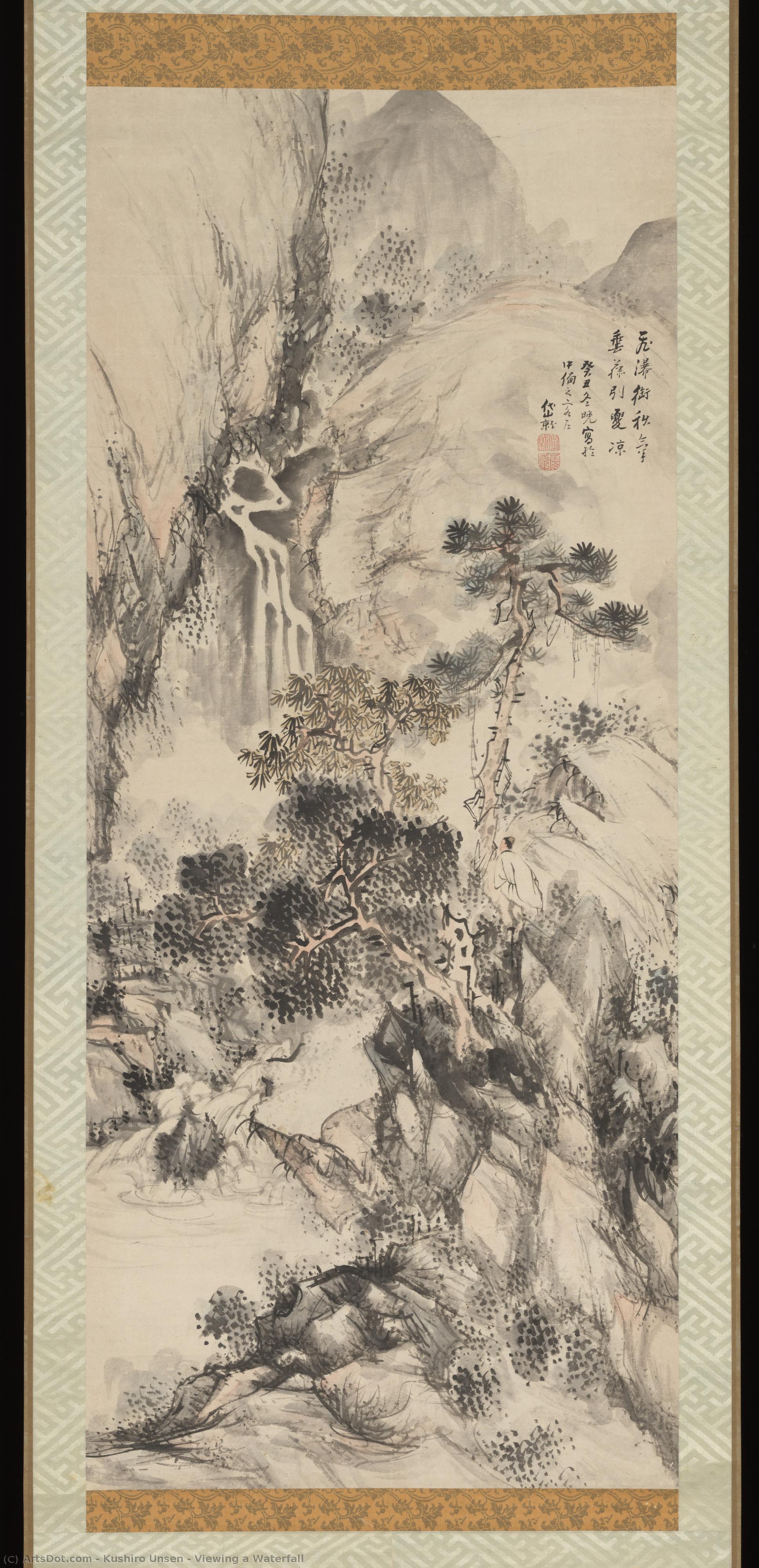
- Viewing a Waterfall
 Visa i rummet
 Skicka
 Dela
Dela
 Detaljer

 Ladda ner
 Liknande objekt
 Röntgen
 Bildspel
Viewing a Waterfall
 Literati School
 1793
1793 129.0 x 56.0 cm
 Läs mer
Giclée / Konsttryck
Giclée- eller canvasprint av museumskvalitet med snabb produktion och flexibla ytbehandlingsalternativ. ( Byt till handmålad målning Byt till bild)




































Välj bland våra förinställda storlekar som motsvarar konstverkets ursprungliga proportioner.

Du kan ange egna mått för att passa en specifik ram eller yta. Om det valda måttet inte överensstämmer med originalbildens proportioner kommer vi antingen att beskära konstverket eller utöka bilden med en speglad eller enfärgad kant. En digital mockup skickas för ditt godkännande innan produktionen påbörjas.
Vänligen notera att förhandsvisningen på skärmen inte återspeglar den faktiska beskärningen eller utökningen. Endast mockuppen visar den slutgiltiga kompositionen korrekt.
Även om anpassade storlekar är möjliga, rekommenderar vi att du väljer ett mått från den fördefinierade listan för att bevara de ursprungliga proportionerna.
Leverans över hela världen () på 2 veckor istället för standard 4/5 veckor. (4 augusti)

Fri expressfrakt över hela världen

Högkvalitativ linnecanvas

Fullständig fraktförsäkring

Garantier för återbetalning av tullavgifter

Garantier för exakt färgåtergivning

60 dagars returrätt (endast vid fabrikationsfel)

100% pengarna tillbaka-garanti

Mängdrabatt erbjuds
 Glasalternativet är endast tillgängligt i storlekar under 110 cm.

Viewing a Waterfall
Giclée / Konsttryck
Reproduktionsstorlek
-


Totalpris
$ 80
Beskrivning av samlarobjektet
Om konstnären
Kushiro Unsen: A Vision of Tranquility Amidst Turbulent Times
Kushiro Unsen (釧雲泉, 1759 – 1811) stands as a singular figure in Japanese landscape painting, embodying the aesthetic ideals of Edo-period Japan—a period marked by social stratification, political intrigue, and burgeoning commercial activity. Unlike many artists of his era who sought patronage from powerful clans or focused on grand historical narratives, Unsen cultivated a deeply personal style rooted in Zen Buddhism and characterized by an unparalleled sensitivity to atmospheric conditions.
Born in Nagasaki, Unsen’s early life remains shrouded in some mystery. He apprenticed under Chinese painters, absorbing techniques that emphasized subtle tonal gradations and meticulous brushwork—a hallmark of Ming Dynasty landscape art. However, he swiftly rejected the conventions of formal portraiture and historical painting, opting instead for a contemplative approach to capturing the beauty of the natural world.
- Early Influences: Unsen’s formative years coincided with Nagasaki's role as Japan’s gateway to Western trade. Exposure to European art and ideas undoubtedly broadened his artistic horizons, though he skillfully filtered these influences through his own Zen worldview.
- Zen Buddhism & Artistic Philosophy: Unsen’s unwavering devotion to Zen profoundly shaped his artistic sensibilities. He believed that true beauty resided in capturing the essence of nature—its impermanence and interconnectedness—rather than merely reproducing its outward appearance. This conviction fueled his relentless pursuit of achieving “wu wei,” or effortless action, mirroring the Buddhist ideal of aligning oneself with the natural flow of existence.
- Technique & Style: Unsen’s distinctive style is instantly recognizable by its masterful use of atmospheric perspective—particularly mist and haze—to create a sense of depth and luminosity. He employed delicate brushstrokes and subtle color palettes to convey mood and emotion, prioritizing tonal harmony over vibrant hues. His landscapes are renowned for their serene stillness and evocative beauty.
Unsen’s prolific output spanned several decades, producing approximately 300 paintings—a remarkable feat considering the constraints of his time. He primarily focused on depicting mountainous regions surrounding Nagasaki Prefecture, capturing scenes of misty valleys, snow-capped peaks, and tranquil lakes. Recurring motifs included pine trees, plum blossoms, and cranes—symbols laden with Buddhist significance representing longevity and aspiration.
- Notable Works: Among his most celebrated paintings are “Pine Trees Over Lake” (松林湖上), “Snowy Mount Fuji” (雪富士), and “Autumn Landscape” (秋景). These works exemplify Unsen’s mastery of atmospheric perspective and tonal harmony, transporting viewers to breathtaking vistas imbued with spiritual resonance.
- Legacy & Significance: Kushiro Unsen's influence extends far beyond his own lifetime. He is considered one of the foremost landscape painters of the Edo period and a pivotal figure in establishing Japanese landscape painting as an independent genre—distinct from portraiture or calligraphy. His unwavering commitment to Zen aesthetics continues to inspire artists today, reminding us that true beauty lies not merely in visual splendor but also in profound contemplation.
Unsen’s artistic legacy resides not only in his stunning paintings but also in his contribution to the philosophical underpinning of Japanese art. He championed a vision of nature as a source of spiritual enlightenment—a perspective that resonates powerfully with contemporary concerns about environmental stewardship and mindfulness. Kushiro Unsen remains an enduring testament to the transformative power of art and its capacity to elevate our understanding of the world around us.

kushiro unsen
1759 - 1811 , Japan
Snabbfakta
- Artistic Movement Or Style: Landscape Painting
- Artists Or Movements Influenced By This Artist: ['Romanticism']
- Artists Who Influenced This Artist: ['Chinese Painters']
- Date Of Birth: 1759
- Full Name: Kushiro Unsen
- Nationality: Japanese
- Notable Artworks: ['The Moonlit Landscape']
- Place Of Birth: Nagasaki, Japan
Relaterade artiklar

Katsushika Hokusais 25 Mästerverk: Ukiyo-e Konst & Heminredning | OriginalUniqueArt
Utforska Katsushika Hokusais 25 mest ikoniska ukiyo-e konstverk. Lär känna historien bakom 'The Great Wave' och andra mästerverk från japansk konst. Köp högkvalitativa reproduktioner & inred med tidlös skönhet på OriginalUniqueArt.com.

Ephemeral Expressions: Exploring the Nuances of Ink on Paper Through History & Contemporary Art
Explore the captivating world of ink wash painting – from its ancient origins to contemporary masters. Discover techniques, symbolism & conservation insights with OriginalUniqueArt.com.
Claude Monet: Topp 25 mästerverk – Impressionismens ljus i ditt hem
Utforska Claude Monets 25 mest ikoniska målningar – från vattenliljor till soluppgång. Lär känna impressionismens mästare och hitta inspiration för ditt hem med konsttryck av högsta kvalitet på OriginalUniqueArt.com.

Paul Cézannes 25 Mästerverk: En Konsthistorisk Resa för Hemmet
Utforska Paul Cézannes 25 mest ikoniska målningar! Fördjupa dig i impressionismens värld, från Mont Sainte-Victoire till stillsben. Hitta inspiration & museumkvalitativa konsttryck på OriginalUniqueArt.com.
Bortom Fotografiet: Beställningsmålningar av Bröllopslokaler som Eviga Minnesmärken – En Konsthistorisk och Emotionell Analys
Skapa ett evigt minnesmärke av er bröllopsdag! Vi erbjuder skräddarsydda målningar av bröllopslokaler, utförda av professionella konstnärer. Fånga känslan och atmosfären – kontakta oss för en personlig konsultation.

