
 Förhandsvisa
 Skicka
 Dela
Dela
 Visa detaljer
 Guide
Guide

 Ladda ner
 Liknande objekt
 Röntgen
 Bildspel
 Frågor och svar
 Statistik
Demon


 Visa mer
Giclée / Konsttryck
Giclée- eller canvasprint av museumskvalitet med snabb produktion och flexibla ytbehandlingsalternativ. ( Beställ handmålad reproduktion Byt till digital bild)




P118B Skr10

P118H Skr10

P118W Skr10

P438Z Skr10

P508JH Skr12

P508YH Skr12

P805H Skr10

P805Z Skr10

P919BZ Skr10

P919G Skr10

P919XJ Skr10

P959ZH Skr10

P968JZ Skr12

W106C Skr8

W218G Skr10

W218JH Skr8

W218Y Skr10

W307PJ Skr10

W316G Skr10

W316PJ Skr8

W316Y Skr10

W398PJ Skr8

W4111J Skr10

W500HY Skr15

W500JH Skr15

W692G Skr12

W849H Skr8

W940BG Skr15

W953PJ Skr8




Välj bland våra förinställda storlekar som motsvarar konstverkets ursprungliga proportioner.

Ange den bredd och höjd du behöver för att passa din ram eller vägg. Ett tryck kan endast beskäras, aldrig göras större än originalbilden, vilket innebär att ett format med en annan proportion leder till att en del av bilden går förlorad. Vi skickar en digital mockup för godkännande innan vi påbörjar tryckningen. Bilden som visas på denna sida visar inte den faktiska beskärningen — det är endast mockuppen som gör det.
Leverans över hela världen () på 2 veckor istället för standard 4/5 veckor. (5 november)

Fri expressfrakt över hela världen

Högkvalitativ linnecanvas

Fullständig fraktförsäkring

Garantier för återbetalning av tullavgifter

Garantier för exakt färgåtergivning

100 dagars returrätt (endast vid fel)

100% pengarna tillbaka-garanti

Mängdrabatt erbjuds
 Glasalternativet är endast tillgängligt i storlekar under 110 cm.

Demon
Giclée / Konsttryck
Storlek på reproduktion
-


Slutgiltigt pris
Skr 810
A Stark Vision of the Unseen: Kazimir Malevich's 'Demon'
Kazimir Malevich’s 1914 painting, “Demon,” is not merely a depiction of a monstrous figure; it’s a visceral exploration of primal fear and the unsettling power of suggestion. Rendered in a deceptively simple style—bold black outlines against a bleached-white backdrop—the artwork immediately commands attention with its raw intensity. This isn't the polished, idealized representation of art history; instead, we encounter a world stripped bare to its essential elements, echoing the nascent principles of Suprematism and hinting at the anxieties simmering beneath the surface of early 20th-century Europe.
The composition is dominated by the central demon itself. Its elongated form, with disproportionately large head, pointed ears, and a gaping mouth, evokes a sense of grotesque power. Malevich’s deliberate use of thick black lines doesn't simply define the figure; they pulsate with energy, creating an immediate and unsettling visual impact. The simplification of features—the vacant eyes, the sharp angles—heightens the feeling of otherworldliness, as if we are glimpsing a being from beyond our comprehension. Crucially, the painting’s stark palette – primarily black and off-white – amplifies this effect, creating an atmosphere of profound isolation and dread.
The Language of Symbols: Cyrillic Text and Spiritual Weight
What initially appears as a minimalist composition is profoundly enriched by the dense field of Cyrillic text that dominates the right side of the canvas. This isn’t mere decoration; it's integral to understanding the artwork’s meaning. While the exact translation remains debated, scholars believe this incantation or narrative likely served as a key to unlocking the demon’s nature and purpose within Malevich’s artistic vision. The inclusion of text adds layers of mystery, suggesting a connection between the visual image and a deeper spiritual or occult context – reflecting the prevalent interest in mysticism and the supernatural during that period.
The choice of Cyrillic script is particularly significant given Malevich's Ukrainian heritage and the painting’s creation during a time of shifting national identities. It subtly connects the artwork to Eastern European folklore and traditions, hinting at ancient beliefs surrounding demons and spirits. The text acts as a conduit, inviting the viewer to actively participate in deciphering the demon’s story – transforming the image from a static representation into an interactive experience.
Roots in Expressionism and the Dawn of Suprematism
“Demon” sits at a fascinating crossroads within art history. While undeniably influenced by the raw emotionality of Expressionism—evident in its distorted forms and unsettling subject matter—it also anticipates the revolutionary principles of Suprematism, which Malevich would later fully develop. The painting’s emphasis on pure form, reduced to its essential elements, foreshadows his later explorations of geometric abstraction. Malevich's early exposure to folk art, combined with a desire for modern expression, formed the foundation of his unique style. This piece demonstrates that journey—a deliberate move away from representational forms towards a purely abstract and spiritual realm.
Considering Malevich’s biography – born in Kyiv Oblast, Ukraine – adds another layer of complexity to the work. The painting can be viewed as a reflection on the anxieties and uncertainties of a nation undergoing rapid change and grappling with its identity. The demon, therefore, becomes not just a supernatural entity but also a symbol of internal conflict and the darker aspects of human nature.
A Legacy of Shadow and Form
“Demon” is more than simply a depiction of a frightening figure; it’s a profound meditation on fear, spirituality, and the power of visual language. Reproductions of this artwork offer a unique opportunity to experience Malevich's groundbreaking vision – a stark reminder that art can be both unsettling and deeply evocative. Its enduring appeal lies in its ability to tap into our primal anxieties while simultaneously pushing the boundaries of artistic expression.
Frågor och svar
Vilken är den emotionella tonen i "Demon" av Kazimir Malevich?
"Demon" förknippas med en Mysterious känsla. Den emotionella tonen beskriver det intryck som verket förmedlar.
Hur hög är kontrasten i "Demon" av Kazimir Malevich?
Ljus-mörker-kontrasten i "Demon" är registrerad som Statement. Kontrast beskriver hur starkt ljusa och mörka partier skiljer sig åt.
Är färgerna i "Demon" av Kazimir Malevich mättade eller dämpade?
Färgerna i "Demon" av Kazimir Malevich har en Muted mättnad. Mättnad beskriver hur livfulla eller dämpade färgerna är.
Konstnärsbiografi
Kazimir Malevich: En pionjär inom abstrakt konst
Tidigt liv och influenser
- Född 1878 i Kyiv oblast, Ukraina, i en polsk familj, formades Kazimir Severinovich Malevich tidiga år av det ukrainska landsbygdslanskapet och dess rika folkkultur.
- Hans uppväxt gav honom en uppskattning för traditionella konstnärliga uttryck som senare skulle påverka hans verk på ett subtilt sätt.
- Den formella utbildningen började i Kyiv, men Malevich sökte snabbt bredare konstnärliga horisonter genom att röra sig mot Moskva, för att slutligen engagera sig i Europas framväxande avantgarderörelser.
- Viktiga influenser: Tidig exponering för folkkonst, kombinerat med en längtan efter modernt uttryck, lade grunden till hans unika stil.
Konstnärlig utveckling och centrala rörelser
- Inledningsvis utforskade Malevich olika stilar, inklusive impressionism, symbolism, fauvism och
kubism. En avgörande resa till Paris 1912 exponerade honom för de senaste utvecklingarna inom den europeiska konsten. - Han rörde sig gradvis bort från föreställande former i sökandet efter ett rent konstnärligt språk baserat på geometriska former och färg.
- Detta ledde till utvecklingen av suprematismen kring 1915 – en abstrakt rörelse fokuserad på ”det rena känslans överhöghet” inom konsten.
- Suprematismen förkastade alla försök att avbilda objekt från den synliga världen och prioriterade istället grundläggande geometriska former som kvadrater, cirklar och rektanglar.
Stora prestationer och betydelsefulla verk
- Svart kvadrat (1915): Möjligen hans mest kända verk, vilket representerar ett radikalt avsteg från traditionell konst och betraktas som ett fundamentalt stycke inom det abstrakta måleriet.
- Vit på vit (191rag): En serie som utforskar formens och färgens renhet, med vita geometriska former mot en vit bakgrund – vilket pressar abstraktionen till dess yttersta gränser.
- Stroyuschiysya dom [Hus under konstruktion] (1916): Ett tidigt exempel på suprematism som visar hans unika perspektiv på ukrainsk kultur genom abstrakta former.
- Han skrev även omfattande om konstteori, där han artikulerade de filosofiska principerna bakom suprematismen och förespråkade ett nytt konstnärligt medvetande.
Historisk betydelse och arv
- Malevichs arbete fick en djupgående inverkan på utvecklingen av 1900-talets abstrakta konst och influerade rörelser som minimalism och konstruktivism.
- Han utmanade konventionella föreställningar om representation och banade väg för den icke-objektiva konsten.
- Hans idéer om ren känsla och geometrisk abstraktion fortsätter att resonera hos konstnärer än idag.
- Trots politisk förföljelse under Stalin – först stöttad, sedan förtryckt – höll Malevich fast vid sitt skapande och sitt lärande.
- Inflytande på senare konstnärer: Han påverkade direkt konstnärer som El Lissitzky och formade indirekt otaliga andra genom suprematismens bestående arv.
Sena år och död
- Under sina senare år återvände Malevich till figurativt måleri i ett försök att syntetisera sina abstrakta principer med föreställande former.
- Han fortsatte att undervisa och skriva om konst fram till sin död i Leningrad (nuvarande Sankt Petersburg) 1935.
- Hans arbete förblev relativt okänt i decennier efter hans död, men upplevde en renässans under den senare hälften av 20:e århundradet, vilket befäste hans plats som en av de viktigaste gestalterna i den moderna konsthistorien.

Kazimir Malevich
1878 - 1935 , Ukraina
Kortfakta
- Artistic Movement Or Style: Suprematism, Abstrakt konst
- Artists Or Movements Influenced By This Artist:
- Minimalism
- Konstruktivism
- El Lissitzky
- Artists Who Influenced This Artist:
- Impressionism
- Fauvismer
- Kubism
- Date Of Birth: 1878
- Date Of Death: 1935
- Full Name: Kazimir Severinovitj Malevich
- Nationality: Ukrainsk/Rysk
- Notable Artworks:
- Svart cirkel
- Vit på vit
- Hus under konstruktion
- Place Of Birth: Kyiv, Ukraina
Relaterade artiklar

Kazimir Malevichs 25 Mästerverk: Abstrakt Konst & Hemmets Själ – OriginalUniqueArt
Utforska Kazimir Malevichs 25 mest ikoniska verk – en resa genom Suprematism, abstrakt konst och rysk modernism. Upptäck historien bakom 'Svarta kvadraten' & mer. Köp museumkvalitativa reproduktioner på OriginalUniqueArt.com.

Geometrisk Abstraktion: Topp 10 Mästverk som Formade Konsten | OriginalUniqueArt.com
Utforska de 10 mästerverk som definierade geometrisk abstraktion! Lär känna Mondrian, Kandinsky & Malevich. Hitta inspiration och museumskvalitativa konsttryck för ditt hem på OriginalUniqueArt.com. Upptäck hela samlingen online!

Kandinskys 25 Mästerverk: En Färgstark Resa i Abstrakt Konst | OriginalUniqueArt
Utforska Wassily Kandinskys 25 mest ikoniska verk – från expressionism till abstrakt konst. Lär känna historien bakom mästerverken och hitta inspiration för din heminredning med OriginalUniqueArt.com. Upptäck hela samlingen online!

Topp 10 mästerverk inom abstrakt expressionism – konst för ditt hem | OriginalUniqueArt.com
Utforska de 10 mest inflytelserika verken inom abstrakt expressionism – från Rothkos färgfält till Pollocks action painting. Lär känna konstnärerna och deras teknik. Hitta museumskvalitativa tryck på OriginalUniqueArt.com och förvandla ditt hem med tidlös konst!
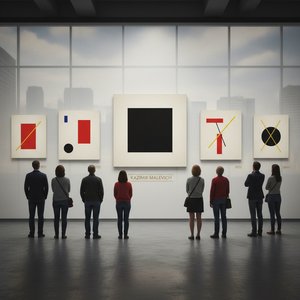
Kazimir Malevich: Pioneering Suprematism & the Quest for Non-Objective Art
Explore the revolutionary art of Kazimir Malevich & his groundbreaking Suprematism movement. Discover the origins, core principles, and lasting impact of this pivotal force in modern abstract painting.


