
 Förhandsvisa
 Skicka
 Dela
Dela
 Visa detaljer
 Guide
Guide

 Ladda ner
 Liknande objekt
 Röntgen
 Bildspel
 Frågor och svar
 Statistik
L'étang


 Visa mer
Giclée / Konsttryck
Giclée- eller canvasprint av museumskvalitet med snabb produktion och flexibla ytbehandlingsalternativ. ( Beställ handmålad reproduktion Byt till digital bild)




P118B Skr10

P118H Skr10

P118W Skr10

P438Z Skr10

P508JH Skr12

P508YH Skr12

P805H Skr10

P805Z Skr10

P919BZ Skr10

P919G Skr10

P919XJ Skr10

P959ZH Skr10

P968JZ Skr12

W106C Skr8

W218G Skr10

W218JH Skr8

W218Y Skr10

W307PJ Skr10

W316G Skr10

W316PJ Skr8

W316Y Skr10

W398PJ Skr8

W4111J Skr10

W500HY Skr15

W500JH Skr15

W692G Skr12

W849H Skr8

W940BG Skr15

W953PJ Skr8




Välj bland våra förinställda storlekar som motsvarar konstverkets ursprungliga proportioner.

Ange den bredd och höjd du behöver för att passa din ram eller vägg. Ett tryck kan endast beskäras, aldrig göras större än originalbilden, vilket innebär att ett format med en annan proportion leder till att en del av bilden går förlorad. Vi skickar en digital mockup för godkännande innan vi påbörjar tryckningen. Bilden som visas på denna sida visar inte den faktiska beskärningen — det är endast mockuppen som gör det.
Leverans över hela världen () på 2 veckor istället för standard 4/5 veckor. (7 november)

Fri expressfrakt över hela världen

Högkvalitativ linnecanvas

Fullständig fraktförsäkring

Garantier för återbetalning av tullavgifter

Garantier för exakt färgåtergivning

100 dagars returrätt (endast vid fel)

100% pengarna tillbaka-garanti

Mängdrabatt erbjuds
 Glasalternativet är endast tillgängligt i storlekar under 110 cm.

L'étang
Giclée / Konsttryck
Storlek på reproduktion
-


Slutgiltigt pris
Skr 809
L'étang: A Tranquil Reflection of Barbizon Landscape Painting
Jules Dupré’s “L’étang” (The Pond) stands as a quintessential example of the Barbizon School’s artistic ethos—a profound engagement with nature driven by emotion and observation rather than idealized beauty. Painted circa 1870, this oil on canvas captures a serene riverside scene bathed in diffused sunlight, transporting viewers to the heart of rural France during its Belle Époque period. The artwork's understated palette – dominated by browns, muted greens, and grays – contributes to an atmosphere of contemplative melancholy, mirroring the melancholic grandeur often found within Barbizon landscapes.Composition and Technique: Mastering Atmospheric Perspective
Dupré skillfully employs compositional techniques characteristic of his time. The horizon line bisects the canvas roughly in half, establishing a balanced visual rhythm that emphasizes the expansive sky above and the tranquil water below. A crucial element is Dupré’s masterful use of atmospheric perspective—a technique perfected by artists like Corot—where objects receding into the distance appear paler and less sharply defined than those closer to the viewer. This illusionistic depth creates a convincing sense of space, drawing the eye inwards and fostering an immersive experience for the observer. The visible brushstrokes, particularly prominent in the sky and foliage, lend texture to the painting, conveying the materiality of the landscape itself. Impasto—thickly applied paint—creates palpable surface irregularities that heighten visual interest and communicate Dupré’s commitment to capturing the immediacy of his observations.Symbolism Within Nature's Embrace
Beyond its aesthetic qualities, “L’étang” resonates with symbolic meaning rooted in Barbizon iconography. The pond itself represents stillness and reflection – a metaphor for inner contemplation—while the grazing sheep symbolize innocence and simplicity. Scattered amongst the trees and distant buildings are elements of everyday rural life, subtly reinforcing the Barbizon School's fascination with portraying the commonplace as imbued with spiritual significance. Dupré’s depiction isn’t merely a representation of a landscape; it’s an invitation to contemplate its beauty and find solace in its quiet grandeur.Historical Context: The Barbizon Legacy
The Barbizon School emerged in France during the mid-19th century, reacting against the academic conventions prevalent at the Salon exhibitions. Artists like Dupré rejected idealized depictions of classical mythology or historical narratives, instead prioritizing direct engagement with the natural world—specifically the Fontainebleau Forest and its surrounding areas. This movement championed a return to disegno (drawing), valuing meticulous observation and tonal gradations as tools for conveying emotion and capturing the essence of place. “L’étang” embodies this legacy, securing Dupré's position as one of the foremost practitioners of Barbizon landscape painting—a style that continues to inspire artists and collectors today.Emotional Impact: A Moment Frozen in Time
Ultimately, "L’étang" succeeds in evoking a profound emotional response. The soft lighting, combined with the muted color palette and textured brushstrokes, creates an atmosphere of serene tranquility. It's a painting designed not for grand spectacle but for quiet contemplation—a reminder of the beauty inherent in the natural world and the importance of slowing down to appreciate its subtleties. Like many Barbizon masterpieces, Dupré’s work invites viewers to immerse themselves in a timeless scene, fostering a connection with both art history and the enduring power of landscape painting.Frågor och svar
Vilken tryckstorlek rekommenderas för "L'étang" av Jules Dupré?
Rekommenderad tryckstorlek för "L'étang" av Jules Dupré är Large.
Var kan jag se originalet av "L'étang" av Jules Dupré?
Originalet av "L'étang" finns att se på Louvren, Paris, France.
Vilka färger dominerar i "L'étang" av Jules Dupré?
"L'étang" av Jules Dupré använder en Earthy-palett, där Gray (#988b6b) är den dominerande färgen.
Konstnärsbiografi
Barbisons dramatiska själ
Jules Dupré (1811–1889) står som en hörnsten inom Barbizon-skolan, en konstnärlig rörelse som hyllade rå observation och emotionell resonans i landskapsmåleriet. Till skillnad från samtida konstnärer som Corot, som ofta sökte lyrisk skönhet och fridfull stillhet, brottades Dupré med naturens mörkare och mer stormiga sidor. Han besatt en unik förmåga att fånga stormarnas raseri, skymningens melankoliska storslagenhet och elementens obevekliga energi, och förmedlade dessa upplevelser med en oöverträffad intensitet. Född i Nantes, Frankrike, började Duprés konstnärliga resa mitt i en växande fascination för den naturliga världen och dess förmåga att väcka djupa, och ofta turbulenta, mänskliga känslor.
Hans tidiga liv lade grunden för en minutiös uppmärksamhet på detaljer och en uppskattning för hantverk, egenskaper som slipades genom hans fars verksamhet inom porslinstillverkning. Denna formativa erfarenhet skulle senare översättas till hans egna konstnärliga strävanden, vilket var särskilt tydligt i hans tidiga verk där han utforskade keramikdekorationens komplexitet. Som lärling inom porslinsmålning lärde han sig disciplinen bakom fina linjer och texturer, en färdighet som slutligen utvecklades till hans mästerliga hantering av atmosfäriskt djup och organiska former.
En vision formad av storm och himmel
Duprés karriärs bana formades oåterkalleligt av hans möte med John Constables banbrytande dukar. Denna exponering för engelska landskapstraditioner tände en önskan att fånga essensen av naturens dynamik – det obevekliga samspelet mellan vindpinat lövverk och det dramatiska ljus- och skuggspel som uppstår under dagens mest volatila timmar. Genom sin resa till Storbritannien 1831 genomförde Dupré djupgående studier av dessa engelska mästare, och återvände till Frankrike med en portfölj av bilder som skulle omdefiniera hans inställning till landskapsmåleriet.
Han fann särskild inspiration i kustdistrikten kring Southampton och Plymouth. Dessa vidsträckta vattenmassor, som reflekterade turbulenta himlar, erbjöd honom det perfekta laboratoriet för att studera stormmolnens stormiga rörelser och havets kraft. Hans målningar från denna period är inte enbart avbildningar av vackra vyer; de är viscerala uttryck för stämning och känsla, genomdränkta av en påtaglig dramatik och till och med sorg. Genom att omfamna Barbizon-estetiken prioriterade Dupré expressiva färgpaletter och djärren penselföring framför idealiserade eller polerade representationer, vilket lät färgens egen textur spegla jordens råhet.
Barbizon-mästarens arv
Som en nyckelfigur inom Barbizon-gruppen knöt Dupré nära band till andra legendariska målare, däribland Théodore Rousseau. Hans framgång inom det franska konstetablissemanget markerades av betydelsefulla milstolpar, såsom hans antagande i Salongen och officiellt erkännande genom medaljer för sina landskap. Hans arbete blev synonymt med en viss klangfull och resonant färgharmoni, där ljuset från en nedgående sol eller mörkret från en annalkande storm kunde kännas av betraktaren lika mycket som det kunde ses.
Idag minns Jules Dupré som en av 1800-talets mest inflytelserika franska landskapskonstnärer. Hans bidrag till konsten ligger i hans förmåga att överbrygga klyftan mellan ren observation och romantisk känsla. Genom verk som La Petite Charrette, Cows Crossing a Ford och sina stämningsfulla skildringar av flodlandskap, lärde han generationer av konstnärer att naturen inte bara är ett motiv som ska målas, utan en kraftfull kraft som ska upplevas. Hans arv förblir etsat i de tunga, atmosfäriska texturerna och de dramatiska, levande himlarna som fortsätter att fängsla den moderna fantasin.

Jules Dupré
1811 - 1889 , Frankrike
Kortfakta
- Artistic Movement Or Style: Barbizon-skolan
- Artists Or Movements Influenced By This Artist: ['Romantisk målning']
- Artists Who Influenced This Artist: ['Constable']
- Date Of Birth: Nantes, Frankrike (1811)
- Date Of Death: 6 oktober 1889
- Full Name: Jules Dupré
- Nationality: Fransk
- Notable Artworks:
- Morgon och kväll vid Louvren
- Över bron i Wallace Collection
- Place Of Birth: Frankrike
Relaterade artiklar

Golden Light & Dutch Skies: Bringing the Magic of Dutch Golden Age Landscapes into Your Home
Transform your home with the breathtaking light of Dutch Golden Age landscapes. Discover how hand-painted oil reproductions of masterworks like Ruisdael and Vermeer bring timeless elegance, atmosphere, and soulful texture to modern interiors. Elevate your space with museum-quality art.
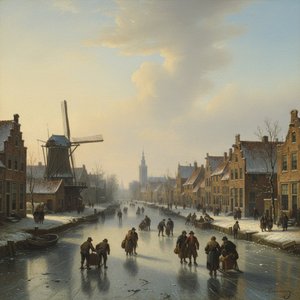
Charles Leickert: Capturing the Dutch Golden Age Light – A Comprehensive Study of Technique, Context, and Legacy
Explore the captivating winter landscapes of Charles Leickert, a master of Dutch Golden Age light & atmosphere. Discover his techniques, symbolism, and lasting legacy – a comprehensive study for art enthusiasts and collectors.
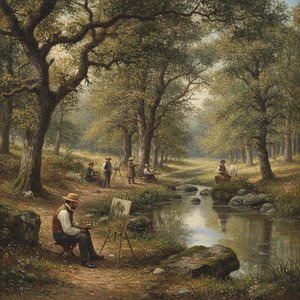
The Barbizon School: The Revolution of Naturalism and the Birth of Plein Air Landscape Painting
Explore the profound impact of the Barbizon School on landscape painting. Discover how masters like Rousseau and Corot revolutionized art through plein air naturalism, moving from academic idealism to the authentic beauty of the French countryside.

Masterpieces of Light: A Definitive Guide to the Landscapes of the Dutch Golden Age
Discover the luminous mastery of Dutch Golden Age landscapes. Our expert guide explores the atmospheric realism of masters like Van Goyen and Cuyp. Elevate your space with museum-quality, hand-painted oil reproductions from OriginalUniqueArt.com. Art history, beautifully realized.

Golden Light & Dutch Skies: The Timeless Magic of Dutch Golden Age Landscapes
Discover the breathtaking beauty of Dutch Golden Age landscapes. Explore the mastery of light, chiaroscuro, and 17th-century realism through an expert art history lens, celebrating the enduring legacy of the Dutch Masters for discerning collectors and art lovers.