
 Förhandsvisa
 Skicka
 Dela
Dela
 Visa detaljer
 Guide
Guide

 Ladda ner
 Liknande objekt
 Röntgen
 Bildspel
 Frågor och svar
 Statistik
The Smoker

- 130.0 x 96.0 cm


 Visa mer
Giclée / Konsttryck
Giclée- eller canvasprint av museumskvalitet med snabb produktion och flexibla ytbehandlingsalternativ. ( Beställ handmålad reproduktion Byt till digital bild)




P118B Skr10

P118H Skr10

P118W Skr10

P438Z Skr10

P508JH Skr12

P508YH Skr12

P805H Skr10

P805Z Skr10

P919BZ Skr10

P919G Skr10

P919XJ Skr10

P959ZH Skr10

P968JZ Skr12

W106C Skr8

W218G Skr10

W218JH Skr8

W218Y Skr10

W307PJ Skr10

W316G Skr10

W316PJ Skr8

W316Y Skr10

W398PJ Skr8

W4111J Skr10

W500HY Skr15

W500JH Skr15

W692G Skr12

W849H Skr8

W940BG Skr15

W953PJ Skr8




Välj bland våra förinställda storlekar som motsvarar konstverkets ursprungliga proportioner.

Ange den bredd och höjd du behöver för att passa din ram eller vägg. Ett tryck kan endast beskäras, aldrig göras större än originalbilden, vilket innebär att ett format med en annan proportion leder till att en del av bilden går förlorad. Vi skickar en digital mockup för godkännande innan vi påbörjar tryckningen. Bilden som visas på denna sida visar inte den faktiska beskärningen — det är endast mockuppen som gör det.
Leverans över hela världen () på 2 veckor istället för standard 4/5 veckor. (7 november)

Fri expressfrakt över hela världen

Högkvalitativ linnecanvas

Fullständig fraktförsäkring

Garantier för återbetalning av tullavgifter

Garantier för exakt färgåtergivning

100 dagars returrätt (endast vid fel)

100% pengarna tillbaka-garanti

Mängdrabatt erbjuds
 Glasalternativet är endast tillgängligt i storlekar under 110 cm.

The Smoker
Giclée / Konsttryck
Storlek på reproduktion
-


Slutgiltigt pris
Skr 809
The Smoker: A Fragmented Portrait of Modern Life
Juan Gris’s “The Smoker,” painted in 1913, isn't merely a depiction of a man enjoying a cigarette; it’s a meticulously constructed meditation on perception, fragmentation, and the burgeoning anxieties of early 20th-century modernity. Created during his pivotal period as a pioneer of Synthetic Cubism alongside Pablo Picasso, this work embodies the movement’s radical departure from traditional representation, offering instead a fractured, multi-faceted view of its subject – a Spanish painter and sculptor named Juan Gris himself.
The painting immediately draws the eye with its dynamic composition. A man, identified through preparatory sketches as Frank Haviland, an American patron of the arts, is presented in a series of interlocking planes and geometric shapes. He’s captured mid-action, puffing on a cigarette, yet his form is simultaneously broken down into its constituent parts – a sharp nose, a tilted head, a fragmented shirt collar – all arranged within a vibrant, almost chaotic, space. This deliberate fragmentation reflects the Cubist principle of depicting objects from multiple viewpoints at once, challenging the viewer’s ability to grasp a single, unified image. The use of *papier collé*, or collage elements—newspaper clippings and other fragments—further enhances this sense of deconstruction, layering textures and visual information onto the canvas.
A Symphony of Color and Technique
Gris masterfully employs a carefully calibrated palette of greens, blues, reds, and oranges to create a visually arresting effect. These bold colors aren’t simply decorative; they contribute significantly to the painting's dynamism and sense of movement. Notice how the smoke itself is rendered in swirling bands of color, adding another layer of complexity to the composition. The technique is equally sophisticated: Gris utilizes short, broken brushstrokes—a hallmark of Synthetic Cubism—to build up the forms and create a palpable sense of depth. The interplay between hard-edged geometric shapes and softer, more organic elements generates a fascinating tension within the painting.
Historical Context and Artistic Significance
“The Smoker” was created during a period of intense artistic experimentation and intellectual ferment in Paris. The rise of Cubism—and its subsequent iterations like Synthetic Cubism—represented a fundamental shift away from traditional representational art, reflecting a broader cultural questioning of established norms and values. Gris’s work stands as a crucial bridge between the analytical rigor of early Cubism (exemplified by Picasso and Braque) and the more expressive, collage-based approach that would characterize the movement's later stages. It was painted during a period when Gris was deeply engaged with his circle of artistic friends—Picasso, Matisse, Apollinaire—and exploring new ways to represent reality through abstraction.
Symbolism and Emotional Resonance
Beyond its formal innovations, “The Smoker” is rich in symbolic meaning. The act of smoking itself can be interpreted as a metaphor for contemplation, introspection, or even the anxieties associated with modern life. The fragmented figure suggests a sense of alienation and detachment—a feeling that resonates powerfully within the context of an increasingly complex and rapidly changing world. The inclusion of Haviland’s attire – a bow tie and top hat – adds a touch of social commentary, hinting at the formality and conventions of the era while simultaneously undermining them through the painting's fractured perspective. Ultimately, “The Smoker” is not simply a portrait; it’s a poignant exploration of human experience in the face of modernity.
This captivating artwork is now housed at the Thyssen-Bornemisza Museum in Madrid, Spain, offering art enthusiasts a chance to witness firsthand this seminal piece of modern art. Reproductions are available through OriginalUniqueArt.com and other reputable sources, allowing you to bring this iconic image into your own space.
Frågor och svar
Vilken teknik användes för "The Smoker" och när skapades den?
"The Smoker" skapades år 1913 med tekniken Acrylic On Paper. Material och datum beskriver hur och när originalet tillverkades.
Är "The Smoker" fri från upphovsrätt?
"The Smoker" av Juan Gris är allmän egendom – upphovsrätten har löpt ut. Denna status avgör hur bilden av verket får återges.
Hur förhåller sig "The Smoker" till Juan Griss återkommande motiv?
Juan Griss återkommande teman inkluderar picasso’s cubist influence, parisian avant-garde scene, geometric abstraction explored, friendship, patronage reflected, early synthetic cubism; "The Smoker" fokuserar på cubism, smoking, portrait, geometric, collage, paris, 1913.
Konstnärsbiografi
A Spanish Visionary of Cubism: The Life and Art of Juan Gris
Juan Gris, pseudonym för José Victoriano Carmelo Carlos González-Pérez, född 23 mars 1887 i Madrid, Spanien, död 11 maj 1927 i Boulogne-sur-Seine, Frankrike, var en spansk målare, skulptör och tecknare, förknippad med kubismen. Hans konst är ett fascinerande möte mellan analytisk precision och syntetisk lekfullhet, där geometriska former och färgpaletter samspelar för att skapa en unik visuell upplevelse. Gris’s resa från maskinritare till en av modernismens mest inflytelserika konstnärer är lika intressant som hans verk.Early Life and Artistic Beginnings
Gris föddes i Madrid och fick tidigt ett intresse för både teknik och konst. Han studerade maskinritning vid den spanska skolan för ingenjörsvetenskap, men det var under influensen av historiemålaren José Moreno Carbonero som hans passion för måleri verkligen blomstrade. Under 1904-1905 bidrog han med teckningar till lokala tidskrifter, vilket visade en redan etablerad förmåga att observera och återge världen visuellt. Det var i slutet av 1905 som han antog namnet Juan Gris – ett namn som skulle bli synonymt med hans konstnärliga identitet. Denna förändring markerade en avgörande vändpunkt, en övergång från den praktiska världen till den kreativa utmaningen av måleriet.Parisian Awakening and the Embrace of Cubism
1906 flyttade Gris till Paris, en stad som redan då var ett centrum för konstnärlig innovation och experimenterande. Där blev han snabbt en del av en dynamisk konstnärskrets, omgiven av namn som Henri Matisse, Georges Braque och Fernand Léger. Initialt arbetade han med satiriska illustrationer för tidningar som *L'Assiette au Beurre*, där hans skarpa blick och humoristiska stil utvecklades ytterligare. Men det var mötet med Pablo Picasso som skulle förändra hans konstnärliga riktning helt och hållet. Från 1910 började Gris att ägna sig helhjärtat åt kubismen, inte som en passiv kopia utan som en aktiv utforskare av nya visuella möjligheter. Han sökte efter ett sätt att fånga verklighetens essens genom att reducera den till grundläggande former och rumsliga relationer – en radikal avvikelse från traditionell representation.The Geometry of Perception: Style and Key Works
Gris’s konstnärliga produktion kännetecknas av en exceptionell klarhet och intellektuell precision. Han analyserade inte bara objekt, utan rekonstruerade dem med ett genomtänkt och metodiskt tillvägagångssätt. Hans kompositioner följer en strikt geometri och tydliga linjestrukturer i skildringar av vardagliga föremål. Detta ledde till vad som blev känt som hans "kristallperiod", illustrerad av mästerverk som *Still Life Before an Open Window* (1912) och *Place Ravignan* (1915). Dessa verk visar en fascinerande interaktion mellan plan och vinkel, vilket skapar en känsla av djup och soliditet samtidigt som de utmanar traditionella perspektiv. Han var en pionjär inom kubismen, och hans arbete bidrog till att forma dess utveckling.- Key Works: *Still Life Before an Open Window* (1912), *Place Ravignan* (1915), *Guitar in front of the sea* (1925), *Homage à Pablo Picasso* (1912)
Synthetic Cubism and the Integration of Collage
Efter 1913 tog Gris ett steg vidare i kubismen och omfamnade den syntetiska formen. Han började använda *papier collé* – collage – genom att integrera verkliga material, som tidningsutskrifter och texturerade papper, i sina kompositioner. Detta tillvägagångssätt ökade komplexiteten och taktiliteten i hans konst, suddade ut gränserna mellan måleri och skulptur. Han var en av de första att experimentera med denna teknik på ett sådant sätt, och det bidrog till att definiera den syntetiska kubismen. Hans verk från 1917-1920 visar en förenklad geometrisk struktur, en förvrängning av skillnaden mellan objekt och miljö, samt en harmonisk färgpalett som påverkade många andra konstnärer.Legacy and Lasting Influence
Juan Gris’s bidrag till kubismen sträcker sig bortom bara stilistiska innovationer; han introducerade en unik intellektuell djup och strukturell klarhet i rörelsen. Han gick utöver den analytiska fasen och sökte efter ett mer organiserat och syntetiskt tillvägagångssätt, med fokus på ordning och precision. Hans konst har haft en betydande inverkan på Purist-rörelsen, som främjades av Amédée Ozenfant och Charles Edouard Jeanneret (Le Corbusier), och betonade vikten av klassiska principer för form och komposition. Gris’s betoning på geometriska former, harmoniska färgpaletter och integrationen av vardagliga objekt i hans konst etablerade honom som en nyckelperson i 20-talets konsthistoria. Hans arv inspirerar fortfarande konstnärer idag, vilket visar den bestående kraften hos kubismen och den visionära geni hos Juan Gris – en spansk mästare som omformade vår förståelse av perception och representation.
Juan Gris
1887 - 1927 , Spanien
Kortfakta
- Artistic Movement Or Style: Kubism, Syntetisk Kubism
- Artists Or Movements Influenced By This Artist:
- Purism
- Ozenfant
- Le Corbusier
- Artists Who Influenced This Artist:
- Picasso
- Matisse
- Braque
- Date Of Birth: 23 mars 1887
- Date Of Death: 11 maj 1927
- Full Name: José Victoriano González-Pérez
- Nationality: Spansk
- Notable Artworks:
- Frukost
- Guitar i havet
- Hommage till Picasso
- Place Of Birth: Madrid, Spanien
Relaterade artiklar
Cubism Unveiled: How Picasso and Braque Redefined Reality Through Geometric Abstraction
Explore the revolutionary world of Cubism. Discover how masters Pablo Picasso and Georges Braque dismantled reality through geometric abstraction to redefine modern art history.
Deconstructing Reality: Cubism's Revolutionary Impact on 20th-Century Art
Explore the revolutionary world of Cubism with OriginalUniqueArt. Discover Picasso & Braque's groundbreaking techniques, its philosophical roots, and lasting impact on modern art. Expert insights for collectors.
Kubismens Mästerverk: Topp 10 Verk som Definierade en Epok | OriginalUniqueArt
Utforska kubismens 10 mästerverk – från Picassos banbrytande verk till Braques innovativa stil. Lär känna historien bakom konstikonerna och hitta inspiration för ditt hem med OriginalUniqueArt.com. Upptäck hela samlingen online!
Juan Gris: Cubist Deconstruction & Synthesis – A Comprehensive Exploration
Explore the revolutionary art of Juan Gris – a master of Cubism. Discover his unique approach to deconstruction, vibrant Synthetic Cubist works, and lasting influence on modern art. Expert analysis for collectors.
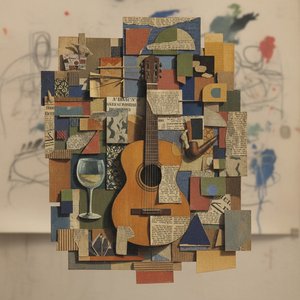
Deconstructing Reality: A Comprehensive Exploration of Synthetic Cubism's Evolution & Impact
Explore the revolutionary world of Synthetic Cubism! Discover its origins, key artists like Picasso & Braque, techniques, and lasting impact on modern art. A comprehensive guide for enthusiasts.


