

 Visa i rummet
 Skicka
 Dela
Dela
 Detaljer
 Studentguide för konstverk

 Ladda ner
 Liknande objekt
 Röntgen
 Bildspel
 Besökstatistik
Seated Woman


 Läs mer
Giclée / Konsttryck
Giclée- eller canvasprint av museumskvalitet med snabb produktion och flexibla ytbehandlingsalternativ. ( Köp handmålat konstverk Byt till digital bildförsäljning)




P118B Skr10

P118H Skr10

P118W Skr10

P438Z Skr10

P508JH Skr12

P508YH Skr12

P805H Skr10

P805Z Skr10

P919BZ Skr10

P919G Skr10

P919XJ Skr10

P959ZH Skr10

P968JZ Skr12

W106C Skr8

W218G Skr10

W218JH Skr8

W218Y Skr10

W307PJ Skr10

W316G Skr10

W316PJ Skr8

W316Y Skr10

W398PJ Skr8

W4111J Skr10

W500HY Skr15

W500JH Skr15

W692G Skr12

W849H Skr8

W940BG Skr15

W953PJ Skr8




Välj bland våra förinställda storlekar som motsvarar konstverkets ursprungliga proportioner.

Ange den bredd och höjd du behöver, för att passa din ram eller din vägg. Ett tryck kan endast beskäras, aldrig göras större än bilden, vilket innebär att ett format med en annan formform leder till att en del av bilden går förlorad. Vi skickar en digital mockup för godkännande innan vi trycker något. Bilden som visas på denna sida visar inte den faktiska beskärningen — det är endast mockuppen som gör det.
Leverans över hela världen () på 2 veckor istället för standard 4/5 veckor. (25 oktober)

Fri expressfrakt över hela världen

Högkvalitativ linnecanvas

Fullständig fraktförsäkring

Garantier för återbetalning av tullavgifter

Garantier för exakt färgåtergivning

100 dagars returrätt vid fabrikationsfel

100% pengarna tillbaka-garanti

Mängdrabatt erbjuds
 Glasalternativet är endast tillgängligt i storlekar under 110 cm.

Seated Woman
Giclée / Konsttryck
Reproduktionsstorlek
-


Totalpris
Skr 793
A Fragmented Portrait of Modernity: Exploring Juan Gris’s “Seated Woman”
Juan Gris's "Seated Woman," painted in 1917, isn’t merely a portrait; it’s a carefully constructed meditation on form, space, and the burgeoning anxieties of early 20th-century Europe. This work, rendered in oil on panel with a striking palette of blues, yellows, and blacks, embodies the heart of Cubism's analytical phase – a period where artists sought to dismantle traditional representation and reveal the underlying geometric structures of reality. Gris, deeply influenced by Picasso and Braque, moved beyond simply depicting an individual; he aimed to capture the essence of the subject through a fractured, multi-faceted approach that challenges our perception of what constitutes a recognizable image.
The painting depicts a woman seated in a chair, her hands resting before her face – a pose simultaneously vulnerable and enigmatic. However, it’s crucial to understand that this isn't a realistic portrayal. Gris employs a deliberate distortion of form, breaking the figure into interlocking planes and angles. The chair itself is not rendered as a solid object but rather as a collection of geometric shapes, mirroring the fragmentation of the woman’s image. This technique, central to Cubism, suggests that our understanding of reality is inherently subjective and constructed through individual perception. Notice how the blue tones dominate, creating a sense of depth and receding space, while the yellows introduce warmth and highlight specific areas of the figure – perhaps drawing attention to her face or hands.
The Language of Analytical Cubism
“Seated Woman” is a prime example of Analytical Cubism, a phase characterized by its meticulous deconstruction of objects. Gris’s approach involved meticulously dissecting his subjects into their component parts – lines, angles, and planes – and then reassembling them on the canvas in a way that presented multiple viewpoints simultaneously. This wasn't about creating an illusion of depth; rather, it was about revealing the underlying structure of form. The painting feels almost architectural in its precision, as if the woman has been carefully constructed from geometric blocks. The use of black is particularly significant here – not merely for contrast but to define and delineate the fragmented shapes, adding a layer of intellectual rigor to the composition.
Furthermore, Gris’s choice of color is deliberate. The muted palette—primarily blues, yellows, and blacks—reflects the atmosphere of introspection and uncertainty prevalent during this period. It's a far cry from the vibrant hues often associated with later Cubist works. Instead, it evokes a sense of quiet contemplation, inviting the viewer to engage in a more cerebral appreciation of the artwork.
A Figure Rooted in Early 20th-Century Context
To fully appreciate “Seated Woman,” it’s essential to consider its historical context. Painted in 1917, the work emerged during a time of profound social and artistic upheaval. The rise of industrialization, urbanization, and scientific advancements were challenging traditional notions of reality and identity. Cubism, with its radical departure from representational art, mirrored this broader cultural shift – questioning established conventions and exploring new ways of perceiving the world. Juan Gris’s work reflects a desire to capture not just the appearance of things but also their underlying structure and the way they interact within space.
Juan Gris himself was a pivotal figure in the development of Cubism, initially working as an engineer before dedicating himself fully to art. His meticulous approach, combined with his deep understanding of mathematics and geometry, allowed him to create works that are both intellectually stimulating and visually arresting. “Seated Woman” stands as a testament to his innovative spirit and his profound impact on the course of modern art.
Symbolism and Emotional Resonance
While seemingly abstract, "Seated Woman" is rich in symbolic potential. The woman’s posture – hands covering her face – suggests introspection, perhaps even melancholy or uncertainty. The fragmented nature of her form reflects the fragmentation of experience in a rapidly changing world. The painting doesn't offer easy answers; instead, it invites viewers to contemplate the complexities of human existence and the challenges of navigating an increasingly abstract reality. It’s a work that resonates with a sense of quiet contemplation and intellectual curiosity – a timeless reminder of the power of art to provoke thought and evoke emotion.
Frågor och svar
Hur många personer ser "Seated Woman"?
En Statistik-sida finns för "Seated Woman". Den visar månatliga besök för konstverket och konstnärens övriga verk, med uppdelning per land och språk.
Vilken typ av konstverk är "Seated Woman" av Juan Gris?
"Seated Woman" av Juan Gris är klassificerat som WallArt. Kategorin beskriver vilken typ av konstverk originalet är.
Hur beskrivs stämningen i "Seated Woman" av Juan Gris?
Den övergripande stämningen i "Seated Woman" av Juan Gris är Romantic. Stämningen beskriver verkets allmänna atmosfär.
Om konstnären
A Spanish Visionary of Cubism: The Life and Art of Juan Gris
Juan Gris, pseudonym för José Victoriano Carmelo Carlos González-Pérez, född 23 mars 1887 i Madrid, Spanien, död 11 maj 1927 i Boulogne-sur-Seine, Frankrike, var en spansk målare, skulptör och tecknare, förknippad med kubismen. Hans konst är ett fascinerande möte mellan analytisk precision och syntetisk lekfullhet, där geometriska former och färgpaletter samspelar för att skapa en unik visuell upplevelse. Gris’s resa från maskinritare till en av modernismens mest inflytelserika konstnärer är lika intressant som hans verk.Early Life and Artistic Beginnings
Gris föddes i Madrid och fick tidigt ett intresse för både teknik och konst. Han studerade maskinritning vid den spanska skolan för ingenjörsvetenskap, men det var under influensen av historiemålaren José Moreno Carbonero som hans passion för måleri verkligen blomstrade. Under 1904-1905 bidrog han med teckningar till lokala tidskrifter, vilket visade en redan etablerad förmåga att observera och återge världen visuellt. Det var i slutet av 1905 som han antog namnet Juan Gris – ett namn som skulle bli synonymt med hans konstnärliga identitet. Denna förändring markerade en avgörande vändpunkt, en övergång från den praktiska världen till den kreativa utmaningen av måleriet.Parisian Awakening and the Embrace of Cubism
1906 flyttade Gris till Paris, en stad som redan då var ett centrum för konstnärlig innovation och experimenterande. Där blev han snabbt en del av en dynamisk konstnärskrets, omgiven av namn som Henri Matisse, Georges Braque och Fernand Léger. Initialt arbetade han med satiriska illustrationer för tidningar som *L'Assiette au Beurre*, där hans skarpa blick och humoristiska stil utvecklades ytterligare. Men det var mötet med Pablo Picasso som skulle förändra hans konstnärliga riktning helt och hållet. Från 1910 började Gris att ägna sig helhjärtat åt kubismen, inte som en passiv kopia utan som en aktiv utforskare av nya visuella möjligheter. Han sökte efter ett sätt att fånga verklighetens essens genom att reducera den till grundläggande former och rumsliga relationer – en radikal avvikelse från traditionell representation.The Geometry of Perception: Style and Key Works
Gris’s konstnärliga produktion kännetecknas av en exceptionell klarhet och intellektuell precision. Han analyserade inte bara objekt, utan rekonstruerade dem med ett genomtänkt och metodiskt tillvägagångssätt. Hans kompositioner följer en strikt geometri och tydliga linjestrukturer i skildringar av vardagliga föremål. Detta ledde till vad som blev känt som hans "kristallperiod", illustrerad av mästerverk som *Still Life Before an Open Window* (1912) och *Place Ravignan* (1915). Dessa verk visar en fascinerande interaktion mellan plan och vinkel, vilket skapar en känsla av djup och soliditet samtidigt som de utmanar traditionella perspektiv. Han var en pionjär inom kubismen, och hans arbete bidrog till att forma dess utveckling.- Key Works: *Still Life Before an Open Window* (1912), *Place Ravignan* (1915), *Guitar in front of the sea* (1925), *Homage à Pablo Picasso* (1912)
Synthetic Cubism and the Integration of Collage
Efter 1913 tog Gris ett steg vidare i kubismen och omfamnade den syntetiska formen. Han började använda *papier collé* – collage – genom att integrera verkliga material, som tidningsutskrifter och texturerade papper, i sina kompositioner. Detta tillvägagångssätt ökade komplexiteten och taktiliteten i hans konst, suddade ut gränserna mellan måleri och skulptur. Han var en av de första att experimentera med denna teknik på ett sådant sätt, och det bidrog till att definiera den syntetiska kubismen. Hans verk från 1917-1920 visar en förenklad geometrisk struktur, en förvrängning av skillnaden mellan objekt och miljö, samt en harmonisk färgpalett som påverkade många andra konstnärer.Legacy and Lasting Influence
Juan Gris’s bidrag till kubismen sträcker sig bortom bara stilistiska innovationer; han introducerade en unik intellektuell djup och strukturell klarhet i rörelsen. Han gick utöver den analytiska fasen och sökte efter ett mer organiserat och syntetiskt tillvägagångssätt, med fokus på ordning och precision. Hans konst har haft en betydande inverkan på Purist-rörelsen, som främjades av Amédée Ozenfant och Charles Edouard Jeanneret (Le Corbusier), och betonade vikten av klassiska principer för form och komposition. Gris’s betoning på geometriska former, harmoniska färgpaletter och integrationen av vardagliga objekt i hans konst etablerade honom som en nyckelperson i 20-talets konsthistoria. Hans arv inspirerar fortfarande konstnärer idag, vilket visar den bestående kraften hos kubismen och den visionära geni hos Juan Gris – en spansk mästare som omformade vår förståelse av perception och representation.
Juan Gris
1887 - 1927 , Spanien
Snabbfakta
- Artistic Movement Or Style: Kubism, Syntetisk Kubism
- Artists Or Movements Influenced By This Artist:
- Purism
- Ozenfant
- Le Corbusier
- Artists Who Influenced This Artist:
- Picasso
- Matisse
- Braque
- Date Of Birth: 23 mars 1887
- Date Of Death: 11 maj 1927
- Full Name: José Victoriano González-Pérez
- Nationality: Spansk
- Notable Artworks:
- Frukost
- Guitar i havet
- Hommage till Picasso
- Place Of Birth: Madrid, Spanien
Relaterade artiklar

Serene Blue Backgrounds: Discover Soulful Art to Transform Your Space with Timeless Elegance
Transform your home with soulful blue art. From serene Monet impressions to modern textured sculptures, discover curated masterpieces designed to inspire calm. Explore expert art consultations and bespoke hand-painted reproductions to create your personal sanctuary.
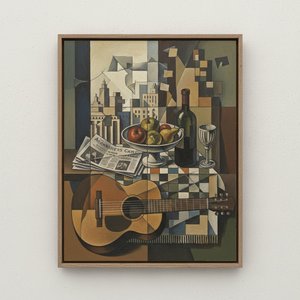
Juan Gris: Cubist Deconstruction & Synthesis – A Comprehensive Exploration
Explore the revolutionary art of Juan Gris – a master of Cubism. Discover his unique approach to deconstruction, vibrant Synthetic Cubist works, and lasting influence on modern art. Expert analysis for collectors.

De 10 mest ikoniska målningarna i nyansen 'Skifferblått' – Konst & Inredning
Utforska de 10 mest ikoniska målningarna dominerade av nyansen 'skifferblått'. Lär känna Monet, Van Gogh & andra mästare. Hitta inspiration för din inredning och köp museumkvalitativa konsttryck på OriginalUniqueArt.com – din källa till tidlös skönhet.

The Allure of Azure: Exploring the Symbolic & Aesthetic Depths of Blue in Art History
Explore the rich history of blue in art! Discover its symbolism, from ancient pigments to modern masterpieces by Kandinsky & Seurat. Uncover the psychological impact and cultural meanings behind this captivating hue.
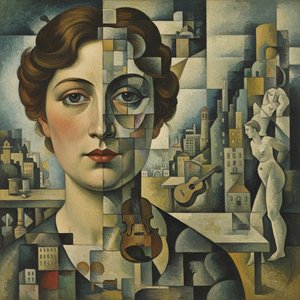
Deconstructing Reality: Cubism's Revolutionary Impact on 20th-Century Art
Explore the revolutionary world of Cubism with OriginalUniqueArt. Discover Picasso & Braque's groundbreaking techniques, its philosophical roots, and lasting impact on modern art. Expert insights for collectors.


