
 Förhandsvisa
 Skicka
 Dela
Dela
 Visa detaljer
 Guide
Guide

 Ladda ner
 Liknande objekt
 Röntgen
 Bildspel
 Frågor och svar
 Statistik
Portrait of Captain James Cook


 Visa mer
Giclée / Konsttryck
Giclée- eller canvasprint av museumskvalitet med snabb produktion och flexibla ytbehandlingsalternativ. ( Beställ handmålad reproduktion Byt till digital bild)




P118B Skr10

P118H Skr10

P118W Skr10

P438Z Skr10

P508JH Skr12

P508YH Skr12

P805H Skr10

P805Z Skr10

P919BZ Skr10

P919G Skr10

P919XJ Skr10

P959ZH Skr10

P968JZ Skr12

W106C Skr8

W218G Skr10

W218JH Skr8

W218Y Skr10

W307PJ Skr10

W316G Skr10

W316PJ Skr8

W316Y Skr10

W398PJ Skr8

W4111J Skr10

W500HY Skr15

W500JH Skr15

W692G Skr12

W849H Skr8

W940BG Skr15

W953PJ Skr8




Välj bland våra förinställda storlekar som motsvarar konstverkets ursprungliga proportioner.

Ange den bredd och höjd du behöver för att passa din ram eller vägg. Ett tryck kan endast beskäras, aldrig göras större än originalbilden, vilket innebär att ett format med en annan proportion leder till att en del av bilden går förlorad. Vi skickar en digital mockup för godkännande innan vi påbörjar tryckningen. Bilden som visas på denna sida visar inte den faktiska beskärningen — det är endast mockuppen som gör det.
Leverans över hela världen () på 2 veckor istället för standard 4/5 veckor. (5 november)

Fri expressfrakt över hela världen

Högkvalitativ linnecanvas

Fullständig fraktförsäkring

Garantier för återbetalning av tullavgifter

Garantier för exakt färgåtergivning

100 dagars returrätt (endast vid fel)

100% pengarna tillbaka-garanti

Mängdrabatt erbjuds
 Glasalternativet är endast tillgängligt i storlekar under 110 cm.

Portrait of Captain James Cook
Giclée / Konsttryck
Storlek på reproduktion
-


Slutgiltigt pris
Skr 810
A Commander on the Shoreline
In the quiet intensity of John Webber’s Portrait of Captain James Cook, we encounter more than just a likeness of a famous explorer; we witness a profound moment of historical reflection. The painting presents an austere and commanding figure, standing resolute against a rugged, coastal landscape. Clad in his formal naval uniform, detailed with subtle gold trim that catches the light, Cook holds a telescope—a symbol of his tireless gaze toward the unknown horizons of the Pacific. There is a certain gravity in his expression, a weight of responsibility that transcends the canvas. The artist masterfully balances the man against the elements, placing him upon a rocky shore where the sea meets the land, suggesting the very edge of the known world where discovery and danger coexist.
The technique employed by Webber reflects the rigorous training he received in the prestigious studios of Bern and Paris. Through delicate brushwork and a sophisticated use of oil on canvas, he achieves a remarkable sense of texture, from the heavy fabric of the naval coat to the weathered surfaces of the coastal rocks. The color palette is grounded in naturalistic tones—deep blues, earthy browns, and muted greys—which serve to heighten the emotional realism of the scene. This is not a work of mere idealization; rather, it is a portrait that captures the grit and determination required of a maritime commander during the Age of Discovery.
Legacy and Historical Resonance
To understand this portrait is to understand the era of global expansion and the personal cost of exploration. While some romantic legends suggest this work was a parting gift from Cook to his wife, Elizabeth, many historians believe it may serve as a posthumous memorial. Painted around 1780, shortly after Cook’s tragic death in Hawai‘i, the piece carries an air of solemnity that honors his memory without obscuring the harsh realities of his life at sea. The painting acts as a window into the late 18th century, capturing the spirit of an age defined by cartography, botany, and the relentless pursuit of scientific knowledge.
For the discerning collector or interior designer, this reproduction offers a centerpiece of immense character. Its presence in a room evokes a sense of adventure, intellectual curiosity, and timeless strength. Whether placed in a study lined with leather-bound books or as a focal point in a contemporary living space, the Portrait of Captain James Cook brings with it a narrative of human endurance. It is an invitation to contemplate the vastness of our world and the brave souls who first dared to map its furthest reaches.
Frågor och svar
När skapades "Portrait of Captain James Cook" och vilken stilriktning tillhör det?
"Portrait of Captain James Cook" skapades år 1780 som ett verk inom Romantic Realism-rörelsen. Datum och stil förankrar konstverket i konsthistorien.
Vad rekommenderas för användning av ett tryck av "Portrait of Captain James Cook"?
Det rekommenderade användningsområdet för ett tryck av "Portrait of Captain James Cook" är Accent.
Var kan jag ladda ner "Portrait of Captain James Cook" av John Webber?
"Portrait of Captain James Cook" av John Webber kan laddas ner som en högupplöst digital bildnedladdning via verkets sida för Ladda ner digital bild.
Konstnärsbiografi
Early Life and Education
- Birth and Family: John Webber was born on October 6, 1751, in London, United Kingdom. His father, Abraham Wäber, was a Swiss sculptor who anglicized his name upon moving to London and marrying Mary Quant in 1744.
- Early Training: Webber received his initial education in Bern, Switzerland, where he lived with his paternal aunt from the age of six. He began his artistic training as an apprentice to Johann Ludwig Aberli, a prominent landscape painter.
- Studies in Paris: From 1770, Webber continued his studies at the Académie Royale in Paris for four years, focusing on drawing and oil painting. This period honed his skills and broadened his artistic horizons.
- Return to London: After completing his education abroad, Webber returned to London and further refined his techniques at the Royal Academy.
The Pacific Expedition with Captain Cook
- Appointment as Artist: In 1776, Webber was selected as the official artist for Captain James Cook's third voyage of discovery in the Pacific. This opportunity arose through a recommendation from Daniel Solander, a botanist who had accompanied Cook on his first voyage.
- Voyage and Documentation: From 1776 to 1780, Webber meticulously documented the landscapes, people, and cultures encountered during the expedition. He created numerous drawings and watercolors of scenes in New Zealand, Hawaii (then known as the Sandwich Islands), Alaska, and other Pacific locations.
- First European Contact with Hawaii: Webber became the first European artist to make contact with Hawaii, producing significant visual records of the islands and their inhabitants. His watercolor landscapes of Kauai and Hawaii Island, including Kealakekua Bay and Kowroaa village, are particularly notable.
- Portraits of Indigenous Peoples: Webber also created portraits of prominent figures like Tereoboo, King of Owyhee, offering valuable insights into the appearance and customs of Pacific Islanders.
- Illustrations for Admiralty Account: His work was crucial in illustrating the British Admiralty's official account of the expedition, published in 1784. These engravings brought the discoveries of Cook’s voyage to a wider audience.
Career and Artistic Style
- Exhibitions at the Royal Academy: Following his return to England in 1780, Webber exhibited around 50 works at the Royal Academy between 1784 and 1792. His paintings showcased both landscapes and figures.
- Recognition and Membership: He was elected an associate of the Royal Academy in 1785 and a full member in 1791, demonstrating his growing reputation within the British art world.
- Landscape Focus with Figurative Elements: Webber’s artistic style primarily focused on landscapes, often incorporating figures to add narrative or scale. A notable example is “A Party from H.M.S. Resolution shooting sea horses,” exhibited in 1784.
- Influence of Earlier Masters: While his work reflects the influence of earlier landscape painters like Aberli, Webber developed a unique style characterized by detailed observation and accurate representation of natural environments.
Legacy and Collections
- Historical Significance: John Webber’s artwork provides invaluable visual documentation of Captain Cook's voyages and the first European encounters with Pacific cultures. His images offer a unique perspective on 18th-century exploration and cultural exchange.
- Museum Holdings: His works are held in numerous prestigious collections worldwide, including the Anchorage Museum of History and Art (Alaska), the Bishop Museum (Honolulu), the British Museum (London), the National Maritime Museum (London) ,the Bern Historical Museum (Switzerland), and the San Antonio Museum of Art.
- Enduring Impact: Webber’s paintings continue to be studied by art historians, anthropologists, and scholars interested in the history of exploration, Pacific cultures, and 18th-century art. His detailed depictions offer a glimpse into a pivotal period of global interaction.
- Death and Remembrance: John Webber died on May 29, 1793, leaving behind a significant artistic legacy that continues to resonate today.

John Webber
1751 - 1793 , United Kingdom
Kortfakta
- Full Name: John Webber
- Nationality: English
- Date Of Birth: 1751
- Date Of Death: 1793
- Place Of Birth: London, United Kingdom
- Notable Artworks:
- Ship Cove
- Cook's Portrait
- Poedua portrait
- Artistic Movement Or Style: Landscape, Portraiture
- Artists Who Influenced This Artist: ['Aberli']
Relaterade artiklar

John Constables 25 Mästerverk: En Konstnärlig Resa i Det Engelska Landskapet | OriginalUniqueArt
Utforska John Constables 25 mest ikoniska målningar – romantikens mästare av det engelska landskapet. Upptäck historien, tekniken & skönheten i verk som 'Hay Wain'. Köp exklusiva konsttryck på OriginalUniqueArt.com.
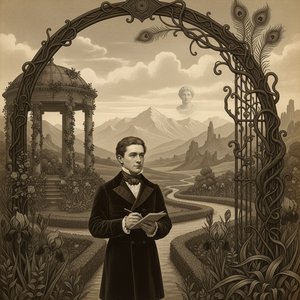
Francis Ferdinand Maurice Cook: A Study in Victorian Aestheticism & Landscape Evolution
Explore the captivating art of Sir Francis Ferdinand Maurice Cook – a British artist bridging Victorian traditions & Aestheticism. Discover his landscapes, collection history, and unique style. Expert analysis for collectors.

Sir Alfred James Munnings: Topp 25 mästerverk – Konst för hemmet & själen
Utforska Sir Alfred James Munnings 25 mest ikoniska målningar! Upptäck hästkonstens mästare, hans impressionistiska landskap & gripande krigskonst. Köp exklusiva konsttryck på OriginalUniqueArt.com – för en tidlös inredning.

John Singer Sargents 25 Mästerverk: Porträtt & Impressionism för Hemmet | OriginalUniqueArt
Utforska John Singer Sargents 25 mest ikoniska målningar! Lär känna porträttkonsten, impressionismen och hans unika ljusspel. Hitta inspiration & köp högkvalitativa konsttryck på OriginalUniqueArt.com – för en elegant heminredning.

James Abbott McNeill Whistler: Topp 25 mästerverk för konstälskaren – OriginalUniqueArt.com
Utforska James Abbott McNeill Whistlers 25 mest ikoniska verk – från stämningsfulla Nocturnes till gripande porträtt. Upptäck konsthistoria, tekniker och inspiration för din inredning. Köp reproduktioner av högsta kvalitet på OriginalUniqueArt.com.