
 Förhandsvisa
 Skicka
 Dela
Dela
 Visa detaljer
 Guide
Guide

 Ladda ner
 Liknande objekt
 Röntgen
 Bildspel
 Frågor och svar
 Statistik
Alexander Hamilton (ca. 1755–1804)

- 77.0 x 64.0 cm


 Visa mer
Giclée / Konsttryck
Giclée- eller canvasprint av museumskvalitet med snabb produktion och flexibla ytbehandlingsalternativ. ( Beställ handmålad reproduktion Byt till digital bild)




P118B Skr10

P118H Skr10

P118W Skr10

P438Z Skr10

P508JH Skr12

P508YH Skr12

P805H Skr10

P805Z Skr10

P919BZ Skr10

P919G Skr10

P919XJ Skr10

P959ZH Skr10

P968JZ Skr12

W106C Skr8

W218G Skr10

W218JH Skr8

W218Y Skr10

W307PJ Skr10

W316G Skr10

W316PJ Skr8

W316Y Skr10

W398PJ Skr8

W4111J Skr10

W500HY Skr15

W500JH Skr15

W692G Skr12

W849H Skr8

W940BG Skr15

W953PJ Skr8




Välj bland våra förinställda storlekar som motsvarar konstverkets ursprungliga proportioner.

Ange den bredd och höjd du behöver för att passa din ram eller vägg. Ett tryck kan endast beskäras, aldrig göras större än originalbilden, vilket innebär att ett format med en annan proportion leder till att en del av bilden går förlorad. Vi skickar en digital mockup för godkännande innan vi påbörjar tryckningen. Bilden som visas på denna sida visar inte den faktiska beskärningen — det är endast mockuppen som gör det.
Leverans över hela världen () på 2 veckor istället för standard 4/5 veckor. (10 november)

Fri expressfrakt över hela världen

Högkvalitativ linnecanvas

Fullständig fraktförsäkring

Garantier för återbetalning av tullavgifter

Garantier för exakt färgåtergivning

100 dagars returrätt (endast vid fel)

100% pengarna tillbaka-garanti

Mängdrabatt erbjuds
 Glasalternativet är endast tillgängligt i storlekar under 110 cm.

Alexander Hamilton (ca. 1755–1804)
Giclée / Konsttryck
Storlek på reproduktion
-


Slutgiltigt pris
Skr 813
A Gaze Through Time: The Enduring Presence of Alexander Hamilton
In the quiet intensity of John Trumbull’s 1804 portrait, we encounter more than just a likeness; we meet the very essence of an era. Alexander Hamilton, a man whose intellect and ambition helped forge the foundations of a nation, stares back at us with a profound, unwavering seriousness. The painting captures a moment of stillness in a life defined by turbulence and political brilliance. Trumbult, a painter who lived through the American Revolution, brings a unique, eyewitness authority to this work, imbuing the canvas with a sense of historical weight that transcends mere representation. As the viewer’s eye meets Hamilton’s gaze, there is an immediate emotional connection—a feeling of being summoned into a private moment of reflection from a bygone century.Technical Mastery and Symbolic Depth
The technical mastery of the piece lies in its sophisticated use of contrast and color to direct the soul's attention. Trumbull employs a rich, deep red background that serves as a dramatic stage, pushing the subject forward and creating an almost sculptural depth. This crimson backdrop does not merely provide contrast; it symbolizes the passion, conflict, and revolutionary fervor that characterized Hamilton’s life and the birth of the United States. Against this vibrant warmth, the meticulous rendering of Hamilton’s white hair and formal attire creates a striking visual harmony. The subtle play of light across the fabric of his suit and the delicate textures of his features demonstrate a neoclassical precision, where every brushstroke serves to elevate the subject from a man to an icon.An Icon for the Discerning Collector
For the discerning collector or interior designer, this portrait offers much more than historical documentation; it provides a focal point of intellectual prestige and timeless elegance. The composition is masterfully balanced, ensuring that Hamilton remains the undisputed protagonist of the frame. There are no distracting elements or secondary figures to pull the eye away from the subject's commanding presence. Whether placed in a stately library, a professional study, or a sophisticated living space, this reproduction serves as a window into the American spirit. It is an invitation to contemplate the legacy of one of history's most influential figures, making it an ideal acquisition for those who seek to surround themselves with art that possesses both narrative power and aesthetic grace.Frågor och svar
Hur välkänd är "Alexander Hamilton (ca. 1755–1804)" av John Trumbull?
"Alexander Hamilton (ca. 1755–1804)" klassificeras som Iconic.
Kan jag förhandsgranska "Alexander Hamilton (ca. 1755–1804)" av John Trumbull innan jag beställer?
På sidan Förhandsvisning för "Alexander Hamilton (ca. 1755–1804)" kan du förhandsgranska konstverket innan du beställer.
Vilken luminans har "Alexander Hamilton (ca. 1755–1804)" av John Trumbull?
Färgerna i "Alexander Hamilton (ca. 1755–1804)" har en Dark luminans.
Konstnärsbiografi
A Life Etched in Revolution: The World of John Trumbull
John Trumbull, a name synonymous with the visual narrative of America’s birth, was more than just a painter; he was a witness, a soldier, and a chronicler of a nation forging its identity. Born in Lebanon, Connecticut, in 1756, into a family steeped in patriotic fervor – his father, Jonathan Trumbull, served as governor throughout the Revolutionary War – young John’s destiny seemed intertwined with the unfolding drama of independence. A childhood accident tragically cost him the use of one eye, yet this perceived limitation may have paradoxically sharpened his observational skills, contributing to the meticulous detail that would become a hallmark of his artistic style. His early education at Harvard College further cultivated a mind primed for both intellectual rigor and creative expression. Even before fully embracing his calling as an artist, Trumbull’s life was already imbued with a sense of duty and service, sketching fortifications during the Siege of Boston – a foreshadowing of his future role in immortalizing the Revolution on canvas.From Battlefield to Brushstroke: Artistic Formation and Influences
The path to becoming “the Painter of the Revolution” wasn’t immediate. Financial constraints initially led Trumbull down various avenues, but the pull towards art proved irresistible. In 1780, he embarked on a journey to London, seeking tutelage under the esteemed Benjamin West, an American expatriate who had achieved prominence as a history painter. West recognized Trumbull’s potential and encouraged him to focus on scenes from the War of Independence, suggesting smaller-scale works and miniature portraits – a practical approach that allowed Trumbull to hone his skills while establishing a clientele. Over the course of his career, he produced approximately 250 miniatures, demonstrating remarkable versatility and precision. However, West’s influence extended beyond technique; he instilled in Trumbull an appreciation for classical history painting, inspiring him to imbue his work with dramatic composition and allegorical depth. This fusion of historical accuracy and artistic grandeur would define Trumbull's mature style. The experience wasn’t without hardship; a brief but alarming arrest on suspicion of espionage – retaliation for the execution of Major André – forced a temporary retreat from British society, yet ultimately solidified his commitment to portraying the American cause.Immortalizing Independence: Masterpieces and Historical Significance
Trumbull's most enduring legacy lies in his monumental historical paintings, particularly those that now grace the Capitol Rotunda. The Declaration of Independence, perhaps his most iconic work, is a carefully constructed tableau depicting the momentous occasion with remarkable fidelity. It’s not merely a record of who was present but an attempt to capture the gravity and solemnity of the event. Famously, this painting found its way onto the reverse of the two-dollar bill, cementing its place in American iconography. Other significant works include The Surrender of Cornwallis at Yorktown, The Surrender of General Burgoyne, and George Washington before the Battle of Trenton. These paintings weren’t simply artistic endeavors; they were acts of national commemoration, designed to inspire patriotism and solidify a shared historical narrative. Trumbull meticulously researched each scene, consulting with veterans and studying contemporary accounts to ensure accuracy. His preparatory sketches, like the Study for Surrender of Cornwallis at Yorktown, reveal his painstaking planning process and dedication to detail. In an era devoid of photographic documentation, Trumbull’s paintings served as invaluable visual records, shaping public understanding of the Revolution and its key figures.A Lasting Legacy: Collections and Enduring Influence
John Trumbull's contributions extend beyond his celebrated canvases. He was a staunch advocate for the arts in America, serving as president of the American Academy of Fine Arts from 1816 to 1835, tirelessly working to foster a vibrant artistic community within the young nation. His paintings are now held in prestigious institutions across the country, including Yale University Art Gallery, the Smithsonian American Art Museum, and the Virginia Museum of Fine Arts, ensuring their accessibility for generations to come. The prominent display of his works within the United States Capitol serves as a lasting tribute to his dedication to both art and history.- His paintings continue to inspire artists and historians alike.
- They offer invaluable insights into the aesthetics and ideals of the early American republic.
- Trumbull’s commitment to historical accuracy set a precedent for future generations of American historical painters.

John Trumbull
1756 - 1843 , USA
Kortfakta
- Artistic Movement Or Style: Historisk målning
- Artists Who Influenced This Artist: ['Benjamin West']
- Date Of Birth: 6 juni 1756
- Date Of Death: 1843
- Full Name: John Trumbull
- Nationality: Amerikaner
- Notable Artworks:
- Deklarationen om självständighet
- Cornwalis kapitulation
- George Washington vid Trenton
- Place Of Birth: Lebanon, USA
Relaterade artiklar

John Singer Sargents 25 Mästerverk: Porträtt & Impressionism för Hemmet | OriginalUniqueArt
Utforska John Singer Sargents 25 mest ikoniska målningar! Lär känna porträttkonsten, impressionismen och hans unika ljusspel. Hitta inspiration & köp högkvalitativa konsttryck på OriginalUniqueArt.com – för en elegant heminredning.

Crimson Threads of Narrative: Exploring Symbolism & Representation in Artworks Featuring the Red Dress
Explore the rich symbolism of the red dress in art history! From ancient power displays to iconic portraits like Cézanne’s 'Madame Cezanne', discover the cultural and artistic significance behind this captivating color. Expert analysis & insights.

John Constables 25 Mästerverk: En Konstnärlig Resa i Det Engelska Landskapet | OriginalUniqueArt
Utforska John Constables 25 mest ikoniska målningar – romantikens mästare av det engelska landskapet. Upptäck historien, tekniken & skönheten i verk som 'Hay Wain'. Köp exklusiva konsttryck på OriginalUniqueArt.com.
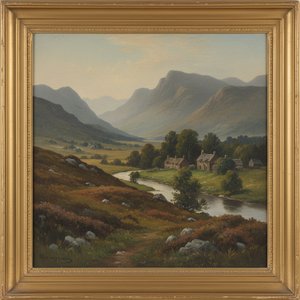
Sir John Watson Gordon: A Study in Scottish Landscape Painting & Tonal Impressionism
Explore the captivating portraits of Sir John Watson Gordon, a leading Scottish master. Discover his evolution from neoclassical style to atmospheric Tonalism and influence on 19th-century British art. Learn about his iconic sitters & legacy.
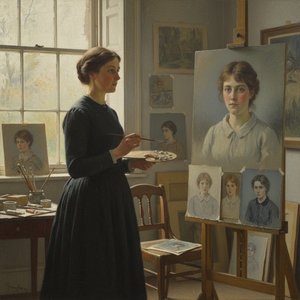
Gwen John: Intimacy, Modernity & the Quiet Power of Welsh Portraiture
Explore the captivating world of Gwen John, a pioneering Welsh artist renowned for her intimate portraits & subtle style. Discover her life, legacy, and how to bring her timeless beauty into your home with OriginalUniqueArt.