Meny
KOSTNADSFRI KONSTRÅDGIVNING
Köp tryck Köp tryckKöp högupplöst digital bild Köp högupplöst digital bild SkickaSkicka
Visa detaljerVisa detaljer Lägg till i favoriter Lägg till i favoriter Ladda nerLadda ner Liknande objektLiknande objekt RöntgenRöntgen BildspelBildspel

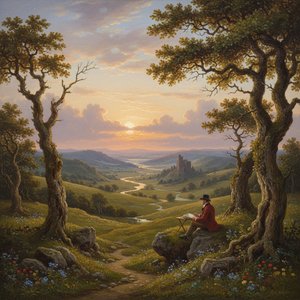
A Mountain Scene

Upplev John Constables vackra landskap 'Harnam Gate, Salisbury'. En idyllisk vy över det engelska ländskapet och en tid av lugn och harmoni.

Handgjord oljereproduktion

Handmålad olja på duk i din valda storlek och ram, tillverkad efter beställning av våra konstnärer.

P118B $10
P118H $10
P118W $10
P438Z $10
P508JH $12
P508YH $12
P805H $10
P805Z $10
P919BZ $10
P919G $10
P919XJ $10
P959ZH $10
P968JZ $12
W106C $8
W218G $10
W218JH $8
W218Y $10
W307PJ $10
W316G $10
W316PJ $8
W316Y $10
W398PJ $8
W4111J $10
W500HY $15
W500JH $15
W692G $12
W849H $8
W940BG $15
W953PJ $8

Standard
custom
CM
INCH

Välj bland våra förinställda storlekar som motsvarar konstverkets ursprungliga proportioner.

bredd
höjd

Du kan ange egna mått för att passa en specifik ram eller yta. Om den valda storleken inte matchar originalbildens proportioner kommer vi antingen att beskära konstverket eller utöka målningen med ytterligare handmålade element. En digital skiss skickas till dig för godkännande innan produktionen påbörjas.

Observera att förhandsvisningen på skärmen inte återspeglar den faktiska beskärningen eller utökningen. Endast skissen visar den slutgiltiga kompositionen korrekt.
Även om anpassade storlekar är möjliga, rekommenderar vi att du väljer en dimension från den fördefinierade listan för att bevara originalproportionerna.

Exempel på vad som kan ändras: Byt ut ansiktet mot ett foto av kunden; Lägg till ett husdjur (t.ex. byt ut en katt mot en hund); Inkludera ett dolt meddelande i bakgrunden; Ändra bakgrundens landskap eller element.
Efter beställning kommer OriginalUniqueArt.com team att mejla kunden för instruktioner och tillhandahålla en skissförhandsvisning

Leverans över hela världen () på 3–4 veckor istället för standard 5 veckor. (22 juli). Inga kompromisser med kvaliteten.

why_choose_icon
Fri expressfrakt över hela världen
why_choose_icon
Högkvalitativ linnecanvas
why_choose_icon
Fullständig fraktförsäkring
why_choose_icon
Garantier för återbetalning av tullavgifter
why_choose_icon
Garantier för exakt färgåtergivning
why_choose_icon
60 dagars returrätt (endast vid fabrikationsfel)
why_choose_icon
100% pengarna tillbaka-garanti
why_choose_icon
Mängdrabatt erbjuds

Totalpris

-

reproduction

A Mountain Scene

Teknik för reproduktion

Storlek på reproduktion

-

Slutgiltigt pris

-

Kortfakta

  • Influences: Romanticism
  • Title: A Mountain Scene
  • Location: Private Collection
  • Medium: Oil on Canvas
  • Subject or theme: Mountain Landscape
  • Year: 1806
  • Artistic style: Romantic Landscape Painting

Konstquiz

Det finns endast ett korrekt svar på varje fråga.

Fråga 1:
What is the primary subject matter of this painting?
Fråga 2:
The description mentions two people observing the mountain landscape. What is their role in relation to the artwork?
Fråga 3:
What artistic technique is prominently employed in depicting the mountain range?
Fråga 4:
In what year was this artwork created?
Fråga 5:
John Crome is associated with which artistic movement?

Beskrivning av konstverket

A Mountain Scene by John Crome

The Norfolk landscape holds a special place in British artistic memory, largely thanks to the unwavering dedication of artists like John Crome who tirelessly sought to capture its sublime beauty. Painted in 1806, “A Mountain Scene” exemplifies the Norwich School’s distinctive approach to landscape painting—a style characterized by understated tonal harmonies and an acute sensitivity to atmospheric conditions. This piece isn't merely a depiction of mountains; it’s an embodiment of Romantic ideals, reflecting a profound connection between humanity and the natural world.

Subject Matter & Composition

The artwork presents a panoramic vista of East Anglian hills dominated by a substantial rock outcrop. The artist skillfully employs perspective to convey depth, drawing the viewer's eye upwards towards the cloudy sky—a crucial element in establishing mood and conveying the grandeur of the landscape. Two figures stand prominently positioned near the left side of the canvas, gazing out upon this breathtaking panorama. Their presence serves not only as compositional anchor but also subtly suggests contemplation and admiration for the majesty of nature.

Style & Technique: Norwich School Characteristics

Crome’s technique is rooted in the Norwich School's core principles—a deliberate rejection of flamboyant brushwork favored by earlier Romantic painters. Instead, he achieves remarkable tonal gradation through meticulous layering of thin washes of oil paint, creating a velvety surface that captures the subtle nuances of light and shadow. This understated approach prioritizes observation and accuracy, mirroring the Norfolk landscape’s muted palette. The artist's masterful use of color—primarily browns, greys, and blues—creates an atmosphere of quiet contemplation and reinforces the painting’s emotional resonance.

Historical Context & Romantic Ideals

“A Mountain Scene” emerged during a period marked by significant intellectual ferment – the burgeoning Romantic movement. Artists like Crome were deeply influenced by thinkers such as Edmund Burke and William Wordsworth, who championed emotion and imagination as pathways to understanding the sublime—that feeling of awe and wonder experienced when confronted with overwhelming natural beauty. The painting reflects this philosophical preoccupation, conveying not just visual information but also a spiritual appreciation for the power and majesty of the mountains.

Symbolism & Emotional Impact

The rock formation itself symbolizes resilience and permanence against the forces of time and weather—a recurring motif in Romantic art reflecting anxieties about mortality alongside an affirmation of enduring natural order. The figures observing the landscape represent humanity's yearning for connection with something larger than oneself, inviting viewers to contemplate their place within the vastness of creation. Ultimately, “A Mountain Scene” succeeds in evoking a feeling of tranquility and reverence—a testament to Crome’s ability to translate visual observation into profound emotional experience. It remains an enduring symbol of Norfolk's artistic heritage and a captivating example of Romantic landscape painting at its finest.

Konstnärsbiografi

John Crome (1768–1821) - Art UK

John Crome, affectionately known as “Old Crome” to distinguish him from his artist son, John Berney Crome, stands as a pivotal figure in British art history—a founder and leading light of the celebrated Norwich School. Born in 1768 in Norwich, Norfolk, Crome’s journey was one of remarkable self-education and dedication, rising from humble beginnings to become a respected landscape painter who captured the very essence of his beloved East Anglian countryside. His father, a weaver, instilled a strong work ethic, but it was an apprenticeship with house, coach, and sign painter Francis Whisler that first nurtured Crome’s artistic inclinations, providing him with foundational skills in design and color. This practical training proved invaluable as he began to explore his passion for depicting the natural world around him. A formative friendship with Robert Ladbrooke, a fellow aspiring artist, further fueled his development; together they sketched en plein air, honing their observational abilities and sharing a burgeoning enthusiasm for art.

Early Life and Apprenticeship

Crome’s early years were marked by modest circumstances but also by an unwavering determination to pursue knowledge and artistic skill. He was born into a family of weavers in Norwich—a profession that instilled within him the discipline and perseverance characteristic of his later life. Recognizing the importance of formal training, he embarked on an apprenticeship with Francis Whisler, a house painter who recognized Crome’s innate talent for visual representation. This experience wasn't merely about acquiring technical proficiency; it fostered a deep appreciation for craftsmanship and attention to detail—qualities that would permeate his artistic practice throughout his career. Whisler’s workshop provided Crome with invaluable exposure to the techniques of decorative painting, shaping his understanding of color palettes and compositional strategies.

The Influence of Harvey and Beechey

A transformative encounter occurred when Thomas Harvey, a wealthy art collector and amateur painter residing in Old Catton, Norwich, generously granted Crome access to his extensive collection of artworks—a veritable treasure trove of inspiration for young artists. Among the masterpieces that captivated Crome’s gaze were paintings by Gainsborough and Hobbema—artists who championed direct observation of nature and employed luminous atmospheric effects. Furthermore, Crome benefited from the guidance of established figures such as Sir William Beechey and John Opie—Royal Academicians who recognized his potential and encouraged him to develop his artistic vision. These mentors instilled in Crome a profound respect for tradition while simultaneously urging him to forge his own distinctive style.

The Founding of the Norwich School

In 1803, Crome achieved a monumental accomplishment that would solidify his place in art history—he co-founded the Norwich Society of Artists with Robert Ladbrooke. This bold initiative represented more than just the establishment of an artistic collective; it signaled the formal genesis of the Norwich School—a groundbreaking movement that championed uncompromising realism and sought to portray the Norfolk landscape with unparalleled accuracy and beauty. The Society’s members shared a commitment to capturing the subtle nuances of light and color, rejecting idealized representations in favor of honest depictions of rural life. Crome served as its president for many years, fostering a vibrant artistic community and nurturing the talents of aspiring painters—most notably his son, John Berney Crome.

Style and Technique: Embracing Romantic Sensibility

Crome’s artistic style is undeniably rooted in Romantic sensibilities—characterized by expressive brushwork, dramatic lighting, and an emotional connection to the natural world. He eschewed academic conventions, prioritizing spontaneity and immediacy in his approach to painting. Like many of his contemporaries, Crome drew inspiration from Dutch masters such as Hobbema and Ruisdael—artists who had pioneered techniques for rendering atmospheric perspective and capturing the grandeur of landscapes. However, Crome distinguished himself by meticulously documenting plant species—a remarkable feat of botanical observation that underscored his dedication to scientific accuracy alongside artistic expression. His canvases pulsate with life—infused with a palpable sense of atmosphere and imbued with an emotional resonance that continues to captivate viewers today.

Legacy and Recognition

John Crome’s contribution to British art extended far beyond his prolific output of paintings. He established the Norwich School as a beacon of regional artistic identity, fostering a tradition of landscape painting that endured for decades after his death. Despite initial skepticism from London’s artistic elite—who often favored grand historical narratives and idealized depictions—Crome gained widespread acclaim through thirteen exhibitions at the Royal Academy between 1806 and 1818. His etchings—particularly *Norfolk Picturesque Scenery*—provided a complementary perspective on his artistic vision, showcasing his mastery of printmaking techniques and furthering his reputation as one of England’s foremost landscape artists. Even now, Crome’s paintings inspire admiration for their quiet beauty, evocative atmosphere, and enduring connection to the heart of Norfolk—a testament to his unwavering dedication to capturing the spirit of his beloved homeland. His life serves as an inspiring example of how artistic vision, combined with a deep connection to one's surroundings, can create a body of work that resonates across generations.
John Crome

John Crome

1768 - 1821 , Storbritannien

Kortfattad information

  • Artistic Movement Or Style: Norwich School
  • Artists Or Movements Influenced By This Artist: ['Dutch Masters']
  • Artists Who Influenced This Artist:
    • Hobbema
    • Wilson
  • Date Of Birth: 1768
  • Full Name: John Crome
  • Nationality: Engelsk
  • Notable Artworks:
    • Lime Kiln
    • Grove Scene
    • Mousehold Heath
  • Place Of Birth: Norwich, UK
Utforska konstverk organiserade efter teman, stilar och egenskaper.