Romanticism · 1817
Flatford Mill (John Constable, 1817)
John Constable (1776–1837) skapade Flatford Mill. Den är från 1817. Det tillhör Romanticism-rörelsen. Den är utförd i Oil On Canvas. Måtten är 50 × 60 cm.
- 1817
- Oil On Canvas
- 50 × 60 cm

 Förhandsvisa

 Handmålad oljemålning
 Skicka
 Dela
 Faktablad


 Ladda ner
 Liknande objekt
 Röntgen
 Bildspel
 Frågor och svar

 Statistik
Flatford Mill i korthet
- Titel
- Flatford Mill
- Konstnär
- John Constable (1776–1837)
- Konstnär född i
- East Bergholt, Storbritannien
- Datum
- 1817
- Material
- Oil On Canvas
- Mått
- 50 × 60 cm
- Rörelse
- Romanticism
- Tidsperiod
- 19th Century
- Motiv
- landscape, rural england, mill scene, river stour, pastoralism, british art
Vad föreställer Flatford Mill?
Identification of Flatford Mill by John Constable
Flatford Mill is an 1817 landscape painting by the British artist John Constable. This work offers a view of the mill located in East Bergholt on the River Stour. It is also known by the subtitle Scene on a Navigable River. The scene captures a specific moment in the rural landscape of the Stour Valley, focusing on the quiet activity surrounding the water's edge.
The painting was first presented to the public when it was displayed at the Royal Academy's Summer Exhibition at Somerset House in 1817. At that time, it established the artist's interest in the specific topography of his home region. The composition centers on the mill and the river, providing a detailed look at the relationship between the water and the surrounding land.
The Composition and Visual Elements
The composition pulls you into a world of lush greens and reflective waters. At the heart of the scene, the calm, reflective waters of the river act as a mirror to the lush, verdant banks. This interplay of light and liquid creates a sense of depth that draws the eye toward the center of the work. A moored boat and distant figures provide a gentle human connection to the vastness of the Suffolk countryside, grounding the landscape in a quiet, lived-in reality.
Several individuals stand near the water's edge, their presence adding a subtle layer of activity to the peaceful scene. On the left side of the image, a horse is positioned near the bank, its form integrated into the pastoral setting. Two boats are visible in the water; one is situated towards the center, while another rests slightly to the right. These elements, combined with the rhythmic presence of the river, establish a sense of harmony within the rural environment.
Technique and Artistic Materials
In this oil on canvas, one can sense the methodical preparation that preceded the final application of paint. Before committing to the large-scale composition, the artist relied on a foundation of oil sketches, graphite drawings, and watercolour studies. This disciplined approach allowed for a careful arrangement of the landscape's complexities. The resulting work possesses a physical weight, achieved through the use of thick impasto to build up texture across the surface. This tactile quality gives the river and the earth a sense of movement and life.
There is a particular luminosity in the way the light interacts with the water and the sky. This effect is achieved through the painstaking layering of thin glazes of paint. Such a technique allows light to penetrate the surface, creating an illusion of shimmering luminescence that mimics the shifting atmosphere of the Stour Valley. It is a quiet, deliberate mastery of light and shadow.
Historical Ownership and Collections
The provenance of this work is deeply connected to the artist's own legacy. It was eventually included as part of the Constable Bequest in 1888, ensuring its place within the public consciousness. This transition from private hands to a permanent collection secured its survival for future generations to study.
Today, the painting is held within the collection of Tate Britain. It is also part of the holdings at the Tate Gallery in London. These institutions maintain the work as a significant part of their English landscape holdings. Additionally, the National Trust holds a connection to the work through its stewardship of the surrounding landscapes and properties.
Related Works by John Constable
To understand the evolution of this artist, one might look toward his earlier explorations of the Stour Valley. In 1815, he produced Boat-building near Flatford Mill, a work that captures the rhythmic sounds of craftsmanship against a quiet river setting. This piece reflects his deep connection to the local landscape and the dignity of rural labor. It is a quiet study of the textures found in the Suffolk countryside.
His later compositions often expanded in scale and ambition. He moved toward larger canvases, such as The Hay Wain from 1821, which remains one of his most recognized depictions of the river. Other significant works include The Cornfield (1826) and The Lock (1824), both of which continue his investigation into the interplay of light and water. He also turned his attention to more architectural subjects, such as Salisbury Cathedral from the Meadows in 1831.
- Boat-building near Flatford Mill (1815)
- The Hay Wain (1821)
- The Lock (1824)
- The Cornfield (1826)
- Salisbury Cathedral from the Meadows (1831)
Where to See This Masterpiece Today
If you wish to experience the subtle shifts of light and the texture of the River Stour in person, you will find this work held within the collections of the Tate Gallery in London. It is part of the permanent collection at Tate Britain, where the painting is kept for public viewing. The work remains a significant part of the Tate Britain collection, allowing visitors to observe the specific impasto and the atmospheric perspective that Constable achieved in 1817.
The painting is situated in London, United Kingdom. It is housed within the Tate Gallery, London, providing a quiet space to study the relationship between the water and the sky. Being part of the Tate Britain collection, it is accessible to those who appreciate the nuances of the Romantic tradition in a museum setting.
Högupplösta bilder av Flatford Mill

Allmän egendom: konstnären avled 1837.
Andra storlekar, beskärningar och citering →John Constable, Flatford Mill (1817). Allmän egendom
Frågor om Flatford Mill besvarade
Vilket år skapades "Flatford Mill" av John Constable?
"Flatford Mill" dateras till 1817. Datumet placerar verket inom John Constables karriär och dess epok.
Vilket medium är "Flatford Mill" av John Constable utförd i?
"Flatford Mill" av John Constable är utförd i Oil On Canvas. Reproduktionerna strävar efter att återge teknikens särpräglade utseende.
Vilka är måtten på originalet av "Flatford Mill"?
"Flatford Mill" mäter 50 x 60 cm i sin originalform. Originalmåtten är en bra referens när du väljer storlek på en reproduktion.
Vad föreställer "Flatford Mill"?
Motiven i "Flatford Mill" är landscape, rural england, mill scene, river stour, pastoralism, british art, constables vision.
Är "Flatford Mill" av John Constable fri från upphovsrätt?
"Flatford Mill" av John Constable är allmän egendom – upphovsrätten har löpt ut. Denna status avgör hur bilden av verket får återges.
Vilken konstnär tillskrivs "Flatford Mill"?
Konstnären bakom "Flatford Mill" är John Constable. Verket är katalogiserat under John Constables namn.
Vilken konststil tillhör "Flatford Mill" av John Constable?
"Flatford Mill" av John Constable tillhör Romanticism-rörelsen. Denna rörelse ger det stilistiska sammanhanget för verket.
Vilken fas av John Constables konstnärliga utveckling representerar "Flatford Mill"?
"Flatford Mill" tillhör John Constables Early Romanticism i konstnärskarriären. Denna klassificering relaterar verket till konstnärens utveckling.
Hur gammal var John Constable när "Flatford Mill" skapades?
När "Flatford Mill" skapades år 1817, var John Constable – född 1776 – 41 år gammal.
Om konstnären, John Constable
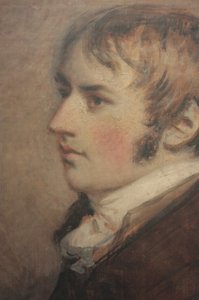
1776–1837, Storbritannien
John Constable
Tidigt liv, familj och utbildning John Constable föddes 1776 i den idylliska byn East Bergholt i Suffolk. Han var den andre sonen till Golding och Ann (Watts) Constable. Hans far var en välbärgad spannmåls- och kolhandlare som ägde Flatford Mill. Denna djupa koppling till floden och den lokala handeln innebar att vattnets rytmer och varornas ständiga rörelse utgjorde en naturlig del av hushållets dagliga liv.
Andra verk av John Constable
 Vägen till ån1821
 Utsikt över Salisbury Cathedral från biskopens marker1823
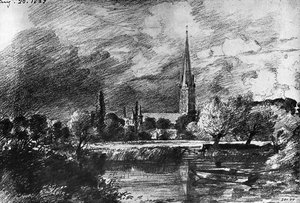 Salisbury kathedra
 Hölasset (detalj)1821

Essäer om Flatford Mill
 British artworks of the 1810sBritish artworks from the 1810s featuring the sublime landscapes of J. M. W. Turner and John Constable. View the full collection at Origina…
 25 Must-See Masterpieces at the Yale Center for British ArtExplore 25 iconic works from Turner to Hogarth at Yale Center for British Art. Discover every masterpiece on OriginalUniqueArt.com.
 Mastering the English Landscape: The Top 25 Artworks by John ConstableImmerse yourself in the soul of the English countryside with our curated guide to John Constable's top 25 masterpieces. Explore the emotive…