
 Förhandsvisa
 Skicka
 Dela
Dela
 Visa detaljer
 Guide
Guide

 Ladda ner
 Liknande objekt
 Röntgen
 Bildspel
 Frågor och svar
 Statistik
Clotilde on the Beach


 Visa mer
Giclée / Konsttryck
Giclée- eller canvasprint av museumskvalitet med snabb produktion och flexibla ytbehandlingsalternativ. ( Beställ handmålad reproduktion Byt till digital bild)




P118B Skr10

P118H Skr10

P118W Skr10

P438Z Skr10

P508JH Skr12

P508YH Skr12

P805H Skr10

P805Z Skr10

P919BZ Skr10

P919G Skr10

P919XJ Skr10

P959ZH Skr10

P968JZ Skr12

W106C Skr8

W218G Skr10

W218JH Skr8

W218Y Skr10

W307PJ Skr10

W316G Skr10

W316PJ Skr8

W316Y Skr10

W398PJ Skr8

W4111J Skr10

W500HY Skr15

W500JH Skr15

W692G Skr12

W849H Skr8

W940BG Skr15

W953PJ Skr8




Välj bland våra förinställda storlekar som motsvarar konstverkets ursprungliga proportioner.

Ange den bredd och höjd du behöver för att passa din ram eller vägg. Ett tryck kan endast beskäras, aldrig göras större än originalbilden, vilket innebär att ett format med en annan proportion leder till att en del av bilden går förlorad. Vi skickar en digital mockup för godkännande innan vi påbörjar tryckningen. Bilden som visas på denna sida visar inte den faktiska beskärningen — det är endast mockuppen som gör det.
Leverans över hela världen () på 2 veckor istället för standard 4/5 veckor. (7 november)

Fri expressfrakt över hela världen

Högkvalitativ linnecanvas

Fullständig fraktförsäkring

Garantier för återbetalning av tullavgifter

Garantier för exakt färgåtergivning

100 dagars returrätt (endast vid fel)

100% pengarna tillbaka-garanti

Mängdrabatt erbjuds
 Glasalternativet är endast tillgängligt i storlekar under 110 cm.

Clotilde on the Beach
Giclée / Konsttryck
Storlek på reproduktion
-


Slutgiltigt pris
Skr 809
The Essence of a Moment: Joaquín Sorolla’s “Clotilde on the Beach”
Joaquín Sorolla’s “Clotilde on the Beach,” painted in 1904, isn't merely a depiction of a seaside scene; it’s an immersion into the heart of Spanish summer – a vibrant distillation of light, color, and the quiet joy of family life. Sorolla, a master of *plein air* painting, captures a fleeting moment with breathtaking immediacy, transporting the viewer to the warm sands of Valencia's Playa de El Cabanyal. The canvas breathes with an almost palpable warmth, radiating the golden hues of late afternoon sunlight filtering through the sea and sky.
The central figures – Sorolla’s wife, Clotilde García del Castillo, and their young daughter Maria – are rendered with a remarkable sense of naturalism and intimacy. They aren't posed dramatically; instead, they exist within a relaxed, almost dreamlike state, suggesting an effortless connection to each other and the surrounding environment. Clotilde’s posture, leaning slightly forward, hints at movement and engagement, while Maria’s subtle turn towards the viewer creates a direct, engaging gaze – inviting us into their private world.
A Symphony of Light and Color: Sorolla's Technique
Sorolla’s genius lies in his masterful manipulation of light. He employs a broken brushstroke technique—a series of short, distinct strokes—to build up layers of color, creating an illusion of shimmering luminosity. The sea isn’t painted with smooth gradients; instead, it's composed of countless tiny dabs of blue, turquoise, and green, reflecting the sky and capturing the movement of the waves. The white of Clotilde’s dress and parasol is not a flat color but a complex interplay of yellows, pinks, and blues, mimicking the way sunlight dances on fabric.
He expertly utilizes *sfumato*, a technique borrowed from Renaissance masters, to soften edges and create atmospheric depth. The background fades gently into the distance, blurring the horizon line and emphasizing the immediacy of the scene. The use of complementary colors – particularly the juxtaposition of blue and orange – further intensifies the vibrancy of the painting.
Historical Context: Spain in the Age of Leisure
“Clotilde on the Beach” was painted during a period of significant social and cultural change in Spain. The late 19th and early 20th centuries witnessed a growing emphasis on leisure, travel, and the enjoyment of life – particularly among the upper classes. Sorolla’s painting reflects this shift, capturing the spirit of *la dolce vita*—the sweet life—that was becoming increasingly popular in Spain. The beach itself, once a place for fishermen and laborers, was transforming into a fashionable resort destination.
Furthermore, Sorolla's work aligns with the broader artistic trends of the time – Impressionism and *plein air* painting. He embraced these innovations, adapting them to his own unique style and incorporating elements of Spanish realism and color theory. The painting’s focus on capturing fleeting moments of beauty and light echoes the core tenets of Impressionist art.
Symbolism and Emotional Resonance
Beyond its technical brilliance, “Clotilde on the Beach” is rich in symbolism. The beach itself represents a sanctuary—a place of escape from the pressures of urban life. The family’s relaxed posture and shared enjoyment of the moment convey a sense of harmony and contentment. The parasol, a symbol of protection from the sun, also suggests a desire for privacy and intimacy.
Ultimately, “Clotilde on the Beach” is more than just a beautiful painting; it’s a poignant meditation on family, light, and the fleeting beauty of life. It evokes a feeling of warmth, nostalgia, and a deep appreciation for the simple pleasures of summer – an enduring testament to Sorolla's artistic vision.
Frågor och svar
Kan "Clotilde on the Beach" av Joaquin Sorolla, som finns i samlingen på Sorolla Museum, reproduceras lagligt?
"Clotilde on the Beach" av Joaquin Sorolla, som finns på Sorolla Museum, är allmän egendom – upphovsrätten har löpt ut. Denna status avgör om reproduktioner av bilden får framställas.
Är färgerna i "Clotilde on the Beach" av Joaquin Sorolla mättade eller dämpade?
Färgpaletten i "Clotilde on the Beach" har en mättnad på Muted.
Hur passar "Clotilde on the Beach" in i Joaquin Sorollas teman och stil?
Inom Joaquin Sorollas produktion är "Clotilde on the Beach" skapad i Sorolla Impressionism-stil, med de återkommande temana en plein air, light, realism, spanish leisure, coastal life, family portrait, domestic scene, sorolla’s signature style”.
Konstnärsbiografi
A Life Bathed in Light: The World of Joaquín Sorolla
Joaquín Sorolla y Bastida, ett namn synonymt med det skimrande ljuset och den livfulla energin i Spanien, var mer än bara en målare; han var en skildrare av nationens själ. Född i Valencia 1863, präglades Sorollas tidiga liv av tragedi. Bara två år gammal förlorade han sina föräldrar vid en kökardepression som tog både hans mamma och pappa. Den unga Joaquín och hans syster adopterades sedan av sin morbror och moster. Detta tidiga möte med sorg kan ha instället gett honom en djupgående uppskattning för livets flyktighet – en känsla som skulle genomsyra hans konst. Trots svårigheter som skuggade hans början, dog inte gnistan av konstnärlig talang som snabbt blev uppenbar. Han fick initial utbildning i Valencia, där han visade en aptit som ledde till studier under etablerade konstnärer som Cayetano Capuz och José Benlliure, vilket slutligen kulminerade i en fyraårig stipendie för att studera i Rom. Där, mitt i den klassiska praktiken i Italien, började Sorolla forma sin unika konstnärliga väg, absorberade influenser samtidigt som han utvecklade en stil som var distinkt för honom själv.Från Historiska Berättelser till Solkysst Realism
Sorollas tidiga verk återspeglade de rådande akademiska trenderna på den tiden – stora skalan historiska och mytologiska scener. Men en avgörande förändring inträffade när han återvände till Spanien och började observera världen omkring honom verkligen. Han fann sig fascinerad av vardagslivet hos sina landsman, särskilt de som levde längs den valencianska kusten. Det intensiva medelhavssolskenet, det skimrande havet och den livliga energin hos folket blev hans främsta motiv. Denna övergång var inte omedelbar; Sorolla fortsatte att utforska social realism med verk som *Sad Inheritance* (1899), en kraftfull skildring av barn drabbade av polio som badar i havet – ett målning som fick betydande beröm men också avslöjade en mörkare, mer medkännande sida till hans konstnärliga vision. *Sad Inheritance*, utställd på Universellutställningen i Paris, gav honom stort erkännande och etablerade honom som en ledande figur i spansk konst. Trots detta fortsatte han att utforska ljusets och färgens skönhet, inspirerad av impressionism men aldrig helt omfamnade dess principer. Han var inte bara *att föreställa* ljuset; han försökte *fånga* det – hur det dansade på vatten, upplyste hud och förvandlade vardagliga ögonblick till scener av extraordinär skönhet.Mästare i Luminism: En Unik Konstnärlig Röst
Sorollas teknik blev omedelbart igenkännbar – en bravur visning av penseldrag, kännetecknad av lösa, energiska penslar som uttryckte rörelse och atmosfär. Han arbetade *en plein air* när det var möjligt, konfronterade direkt utmaningarna med att fånga flyktiga ljusförhållanden. Denna dedikation till att måla utomhus resulterade i dukar fyllda av liv och omedelbarhet. Hans strandscener, kanske hans mest ikoniska verk, är inte bara pittoreska representationer av fritid; de är studier i luministisk skönhet – ljusreflektioner, speglingar och den glada interaktionen mellan människor och deras miljö. Verk som *Children on the Seashore* och *Sewing the Sail* exemplifierar denna maestri – figurer badade i gyllene ljus, målade med en otrolig känsla av spontanitet och livlighet. Han var inte intresserad av minutiös detalj; snarare sökte han att förmedla *intrycket* av verkligheten, prioritera atmosfär och känslor framför exakt representation. Detta tillvägagångssätt fick honom att jämföras med impressionister som Monet och Renoir, men Sorollas verk hade en unik spansk karaktär – värme, intensitet och emotionell djup som skiljde det från andra.Arv och Bestående Inverkan
Undertecknade 1920-talet var Joaquín Sorolla internationellt känd. Han utställde flitigt i Europa och USA, mottog många utmärkelser och uppdrag. Hans mest ambitiösa projekt, *Vision of Spain*, en serie fjorton monumentala murfreskar som beställdes av den spanska föreningen i Amerika, är ett testamente till hans konstnärliga vision och tekniska skicklighet. Trots att han led ett stroke 1920 som begränsade hans målande aktivitet, fortsatte Sorollas inflytande att växa efter sin död 1923. Hans verk inspirerade generationer av konstnärer, inte bara i Spanien utan över hela världen. Idag finns hans målningar i stora museer runt om i världen, inklusive Museo Sorolla i Madrid – ett tidigare hem som har förvandlats till en dedikerad plats för att visa upp hans konst. Sorollas arv sträcker sig bortom hans tekniska briljans; han fångade ett specifikt ögonblick i spansk historia och kultur, förtrollande nationens landskap och dess folks anda. Han är kvar som en mästare av ljus, färg och känslor – en konstnär vars verk fortsätter att resonera med publiken idag, påminner oss om konsten att upplysa vår värld.Viktiga prestationer & Erkännande
- 1892: Guldmedalj vid den nationella utställningen i Madrid för *Another Marguerite*.
- 1894: Berömd för *The Return from Fishing: Hauling the Boat*, som köptes av Musée du Luxembourg.
- 1899: Grand Prix och hederstegn vid Universellutställningen i Paris för *Sad Inheritance*.
- 1900-1923: Utbredda utställningar i Europa och USA, vilket etablerade internationellt erkännande.
- 1912-1928: Beställd att skapa *Vision of Spain* för den spanska föreningen i Amerika (avslutad postumt).
- Idag: Verk finns i stora museer världen över, inklusive Museo Sorolla i Madrid.

Joaquin Sorolla
1863 - 1923 , Spanien
Kortfakta
- Artistic Movement Or Style: Impressionism, Luminism
- Artists Or Movements Influenced By This Artist: ['Sorolla']
- Artists Who Influenced This Artist:
- Pradilla
- Bastien-Lepage
- Date Of Birth: 27 februari 1863
- Date Of Death: 10 augusti 1923
- Full Name: Joaquín Sorolla y Bastida
- Nationality: Spansk
- Notable Artworks:
- Promenad vid havet
- Sad Inheritance
- Barn på stranden
- Place Of Birth: Valencia, Spanien
Relaterade artiklar
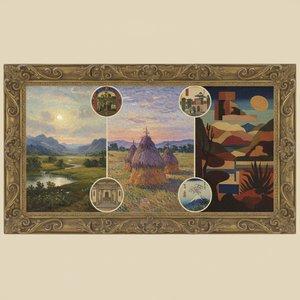
The Allure of Open Airs: Exploring Representations of Outdoors in Art History
Explore the rich history of outdoor painting! From Romantic landscapes to Impressionism's revolution, discover key artists, techniques & the enduring legacy of capturing light and nature in art. Learn more at OriginalUniqueArt.
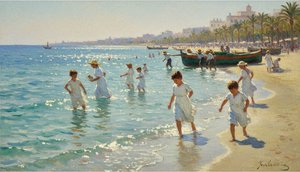
Joaquín Sorolla: Capturing Spanish Light & Life – A Legacy of Impressionism
Explore the luminous world of Joaquín Sorolla, Spanish master of Impressionism. Discover his life, techniques & legacy – a guide for art collectors and enthusiasts. Invest in timeless beauty.
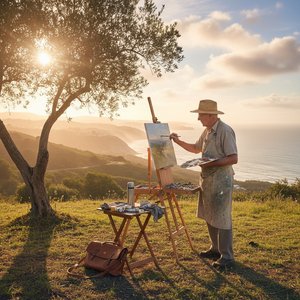
Capturing Ephemeral Light: A Comprehensive Exploration of Plein Air Painting's History & Enduring Legacy
Explore the rich history of plein air painting, from its origins to Impressionism & beyond. Discover key artists, techniques, and the enduring legacy of capturing light in landscape art. Find museum-quality reproductions at OriginalUniqueArt.
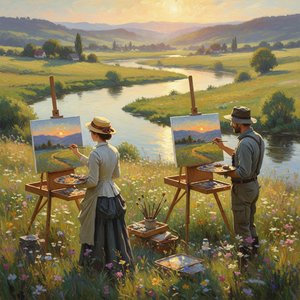
Capturing Ephemeral Light: Plein Air Painting from Impressionism to Today
Explore the history of plein air painting, from its origins with the Barbizon school to Impressionism's revolution & contemporary practice. Discover techniques, artists like Monet & Renoir, and find museum-quality reproductions at OriginalUniqueArt.

Capturing Ephemeral Light: A Comprehensive Exploration of Plein Air Painting's History & Enduring Legacy
Explore the rich history of plein air painting, from its origins with Constable & Corot to Impressionism's revolution. Discover techniques, key artists, and the enduring legacy of capturing light outdoors. Learn more at OriginalUniqueArt.


