Textstorlek

() ·

En målning skapad för dig, för hand

Sèrie Grans rupestres

Handgjord oljereproduktion

Handmålad olja på duk i din valda storlek och ram, tillverkad efter beställning av våra konstnärer. ( Byt till tryck Byt till digital bild)

Beskrivning av samlarobjekt

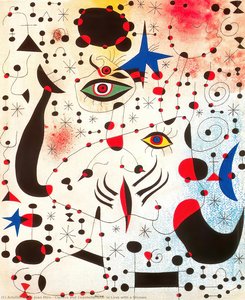
Joan Miró’s ‘Sèrie Grans rupestres,’ an evocative oil painting on canvas featuring an eye-like form adorned with dots and lines, embodies Catalan surrealism. Explore Miro's masterful abstraction and delve into the symbolism of his dreamlike compositions.

Konstnärens biografi

Upptäck Joan Mirós fantastiska värld! Surrealistisk konst och abstrakta mästerverk från Katalonien – utforska hans ikoniska verk på OriginalUniqueArt!

från ·

Kapitel 1

Vilken storlek bör det ha?

Glid för att ändra storlek; bilden till vänster visar ramen i dess verkliga bredd. Originalets proportioner bibehålls.

Standardstorlek
skräddarsydd
CM
INCH

Välj bland våra förinställda storlekar som motsvarar konstverkets ursprungliga proportioner.

bredd
höjd

Ange den bredd och höjd du behöver för att passa din ram eller din vägg. Eftersom detta är handmålat kan konstnären, vid ett annat format, måla lite mer runt bilden eller beskära den något – det är du som väljer. Vi skickar en digital mockup för godkännande innan målningen påbörjas. Bilden som visas på denna sida representerar inte det slutgiltiga resultatet — det är endast mockuppen som visar det.

Kapitel 2

Hur vill du att den ska levereras?

Välj kanter för den uppspända duken

Välj din ram

Corner sample of the WhiteWrap canvas edge finish, stretched on massivt trä bars
Vit kant Skr1
Corner sample of the BlurSideWrap canvas edge finish, stretched on massivt trä bars
Suddig kantfinish Skr1
Corner sample of the ExtendedWrap canvas edge finish, stretched on massivt trä bars
Fortsatt motiv Skr1
Corner sample of the P118B picture frame: formgjuten polystyren, 5 cm wide and 3 cm thick
P118B Skr10
Corner sample of the P118H picture frame: formgjuten polystyren, 5 cm wide and 3 cm thick
P118H Skr10
Corner sample of the P118W picture frame: formgjuten polystyren, 5 cm wide and 3 cm thick
P118W Skr10
Corner sample of the P438Z picture frame: formgjuten polystyren, 5.5 cm wide and 3.5 cm thick
P438Z Skr10
Corner sample of the P508JH picture frame: formgjuten polystyren, 7 cm wide and 3.5 cm thick
P508JH Skr12
Corner sample of the P508YH picture frame: formgjuten polystyren, 7 cm wide and 3.5 cm thick
P508YH Skr12
Corner sample of the P805H picture frame: formgjuten polystyren, 5 cm wide and 3.5 cm thick
P805H Skr10
Corner sample of the P805Z picture frame: formgjuten polystyren, 5 cm wide and 3.5 cm thick
P805Z Skr10
Corner sample of the P919BZ picture frame: formgjuten polystyren, 7 cm wide and 3.5 cm thick
P919BZ Skr10
Corner sample of the P919G picture frame: formgjuten polystyren, 7 cm wide and 3.5 cm thick
P919G Skr10
Corner sample of the P919XJ picture frame: formgjuten polystyren, 7 cm wide and 3.5 cm thick
P919XJ Skr10
Corner sample of the P959ZH picture frame: formgjuten polystyren, 5 cm wide and 3 cm thick
P959ZH Skr10
Corner sample of the P968JZ picture frame: formgjuten polystyren, 6 cm wide and 4 cm thick
P968JZ Skr12
Corner sample of the W106C picture frame: massivt trä, 5 cm wide and 3 cm thick
W106C Skr8
Corner sample of the W218G picture frame: massivt trä, 5 cm wide and 3 cm thick
W218G Skr10
Corner sample of the W218JH picture frame: massivt trä, 5 cm wide and 3 cm thick
W218JH Skr8
Corner sample of the W218Y picture frame: massivt trä, 5 cm wide and 3 cm thick
W218Y Skr10
Corner sample of the W307PJ picture frame: massivt trä, 6 cm wide and 3 cm thick
W307PJ Skr10
Corner sample of the W316G picture frame: massivt trä, 6 cm wide and 3 cm thick
W316G Skr10
Corner sample of the W316PJ picture frame: massivt trä, 6 cm wide and 3 cm thick
W316PJ Skr8
Corner sample of the W316Y picture frame: massivt trä, 6 cm wide and 3 cm thick
W316Y Skr10
Corner sample of the W398PJ picture frame: massivt trä, 5 cm wide and 3 cm thick
W398PJ Skr8
Corner sample of the W4111J picture frame: massivt trä, 6.5 cm wide and 3.5 cm thick
W4111J Skr10
Corner sample of the W500HY picture frame: massivt trä, 7 cm wide and 5 cm thick
W500HY Skr15
Corner sample of the W500JH picture frame: massivt trä, 7 cm wide and 5 cm thick
W500JH Skr15
Corner sample of the W692G picture frame: massivt trä, 8 cm wide and 4 cm thick
W692G Skr12
Corner sample of the W849H picture frame: massivt trä, 5 cm wide and 3 cm thick
W849H Skr8
Corner sample of the W940BG picture frame: massivt trä, 7.5 cm wide and 4.5 cm thick
W940BG Skr15
Corner sample of the W953PJ picture frame: massivt trä, 6 cm wide and 3.5 cm thick
W953PJ Skr8
Corner sample of the H24-GOLD picture frame: snidad trä med gesso, 10 cm wide and 6 cm thick
H24-GOLD Skr30
Corner sample of the H24-SILVER picture frame: snidad trä med gesso, 10 cm wide and 6 cm thick
H24-SILVER Skr30
Corner sample of the H36-GOLD picture frame: snidad trä med gesso, 15 cm wide and 6.5 cm thick
H36-GOLD Skr45
Corner sample of the H36-SILVER picture frame: snidad trä med gesso, 15 cm wide and 6.5 cm thick
H36-SILVER Skr45
Förhandsvisning av ram
Inramad

Profil: . Total storlek inklusive ram: .

Kapitel 3

Vem målar det, och bör något ändras?

Exempel på vad som kan ändras: Byt ut ansiktet mot kundens eget foto; Lägg till ett husdjur (t.ex. byt ut en katt mot en hund); Inkludera ett dolt meddelande i bakgrunden; Ändra landskap eller element i bakgrunden.
Efter beställning kommer OriginalUniqueArt.com team att skicka ett e-postmeddelande till kunden för instruktioner och tillhandahålla en förhandsvisning av utkastet

Leverans över hela världen () på 3–4 veckor istället för standard 5 veckor. (7 november). Inga kompromisser med kvaliteten.

Kapitel 4

De sista detaljerna

En skylt, precis som på ett museum?

Detaljer för graverad bronsplatta

This elegant plaque features the artist's name and the title of the artwork, finely engraved for a timeless presentation.

It is made from bronze with a refined, elegant finish. The text is precisely laser-engraved for a sharp and permanent result. Measuring 9x2 cm, the plaque is compact yet easy to read. It's built to be durable and scratch-resistant, offering a professional, museum-quality look. Mounting is simple thanks to the included adhesive backing.

Detaljer för transparent akrylplatta

The plaque includes essential engraved details such as the artist's name, the title of the artwork, the date it was created, the type of media used-like oil on canvas or watercolor-a brief description of the piece, and a QR code that links to the complete artwork information.

It is crafted from clear acrylic, offering a sleek, modern appearance. The text is UV-engraved in black to ensure strong visual contrast. With a size of 10x15 cm, it ensures optimal readability. It comes equipped with two metal hooks for secure wall mounting. The plaque is designed to be weather-resistant, making it suitable for various environments, and it includes interactive features that work seamlessly with smartphone scanning.

Detaljer för svart akrylplatta

This elegant plaque includes engraved information such as the artist's name, the title of the artwork, the date it was created, the type of media used (like oil on canvas or watercolor), a short description of the artwork, and a QR code for quick access to more information.

The plaque itself is made from refined black acrylic with a premium finish. The text is laser-engraved in white for high contrast and readability. Its size is 10x15 cm, designed to be easy to read. It comes with two metal hooks for professional mounting. The design is sleek and fits any interior style. It is also weather-resistant and durable, with built-in digital integration for mobile compatibility.

Ett skyddande fernissa?

När behöver du den?

Kapitel 5

Din målning, precis som du beställt den

Sèrie Grans rupestres

Reproduktionsmetod

Storlek på reproduktion

-

Elitkonstnär av högsta klass

Mer detaljrikedom, finess och extra produktionstid

-

Inramning av reproduktion

-

-

För konstverk eller reproduktioner som är större än 105 cm (cirka 41 tum) på någon sida, levereras ramen som ett isärplockat kit. Denna metod säkerställer en trygg leverans och förhindrar skador under transport.

Professionell montering krävs – detta är inte en produkt för självmontering.
Kitet måste monteras och duken spännas av en erfaren professionell inramare med hjälp av trälim (ingår ej), en spänntång för duk och klämmor för att hålla sargen rak medan limmet torkar. Felaktig montering eller ojämn spänning av duken kan orsaka permanenta skador på konstverket och täcks inte av vår garanti.

  • Alla massiva träribbor ingår, exakt tillkapade efter mått.

  • Monteras med de medföljande skruvarna, samt trälim för hörnfogarna, vilket inte ingår och måste anskaffas av din ramverkare.

  • Professionella verktyg krävs och ingår ej: en dukspännare och klämmor för att hålla listerna raka medan limmet torkar.

Viktigt:
Hörnjunctionerna kräver trälim, listerna måste hållas på plats med tvingar tills limmet har torkat helt, och för att spänna duken på den monterade ramen krävs en spänntång för duk. Inget av detta ingår i kitet. Vänligen kontakta en erfaren professionell rammakare innan du beställer denna storlek.

Namnskylt

-

-

Skyddande fernissa

Glansig fernissa (förstärker färgerna, skyddar mot ljus och fukt)

-

Anpassa mitt konstverk

Exempel på vad som kan ändras: Byt ut ansiktet mot ett foto från kunden; Lägg till ett husdjur (t.ex. byt ut en katt mot en hund); Inkludera ett dolt meddelande i bakgrunden; Ändra bakgrundens landskap eller detaljer.

-

Expressleverans

Leverans över hela världen () inom 3–4 veckor istället för standardiserade 5 veckor. (7 november). Inga kompromisser med kvaliteten.

-

Expressleverans

Leverans över hela världen () inom 5 veckor. (14 november).

Ingår

Slutgiltigt pris

Skr 2996

Totalt pris Skr 2996

Glasalternativet är endast tillgängligt i storlekar under 110 cm.

Ingår i varje beställning

  • Fri expressfrakt över hela världen
  • Högkvalitativ linnecanvas
  • Fullständig fraktförsäkring
  • Garantier för återbetalning av tullavgifter
  • Garantier för exakt färgåtergivning
  • 100 dagars returrätt (endast vid fel)
  • 100% pengarna tillbaka-garanti
  • Mängdrabatt erbjuds

Joan Miró: Decoding Catalan Dreams

A Catalan Visionary: The Life and Art of Joan Miró Joan Miró i Ferrà, born in Barcelona in 1893, stands as one of the most significant figures in 20th-century art. His journey was not merely a progression through styles but an exploration of inner worlds, translating dreams, memories, and Catalan identity onto canvas with a uniquely poetic visual language. From humble beginnings marked by illness and initial parental reservations about his artistic pursuits, Miró persevered, driven by an innate need to express the intangible—the emotions, sensations, and subconscious currents that lie beneath the surface of reality. His early life was steeped in the traditions of Barcelona, a city brimming with architectural marvels thanks to Antoni Gaudí, whose organic forms would subtly influence Miró’s later abstractions. The goldsmithing profession of his father instilled an appreciation for meticulous craftsmanship, while the rugged Catalan landscape became a recurring motif and source of inspira

The Birth of Surrealism

Miró's artistic breakthrough arrived during the tumultuous years following World War I, coinciding with the emergence of Surrealism—a movement spearheaded by André Breton that sought to liberate creativity from rational constraints. Influenced profoundly by Sigmund Freud’s psychoanalytic theories and fascinated by automatism—the spontaneous creation of images without conscious thought—Miró embraced techniques designed to tap into the subconscious mind. This fascination manifested in his use of collage, incorporating found objects and fragments of text alongside painted surfaces, creating layered compositions that defied conventional representation. Breton himself recognized Miró’s singular vision as embodying the essence of Surrealist aesthetics: “He is a painter who has discovered the secret of dreaming.”

“Sèrie Grans rupestres”: An Eye to Eternity

The painting "Sèrie Grans rupestres," or “Great Cave Paintings,” exemplifies Miró’s distinctive style—characterized by bold, biomorphic forms rendered in vibrant hues against stark white backgrounds. Dominating the canvas is a central eye-like shape, encircled by dots and lines that pulsate with energy. This motif isn't merely decorative; it represents a profound symbol of perception, awareness, and contemplation—a visual echo of prehistoric cave paintings depicting animals and human figures, suggesting an enduring connection to primal imagery and spiritual beliefs. The artist’s meticulous application of oil paint creates a textured surface that enhances the painting’s tactile quality, inviting viewers to engage with its visual richness on multiple levels.

Technique and Material Considerations

Miró's artistic process involved layering techniques—primarily brushwork combined with collage elements—to achieve his desired effect. He began by applying thin washes of color onto the canvas, establishing a luminous foundation that allowed for subsequent additions of thicker paint strokes. These strokes were executed with confidence and precision, capturing the dynamism inherent in Miró’s vision. The incorporation of collage materials—such as newspaper clippings and fragments of fabric—added textural contrast and disrupted visual harmony, mirroring the chaotic nature of dreams and subconscious experience. Furthermore, Miró's careful selection of pigments ensured that his paintings retained their brilliance over time, reflecting a commitment to artistic excellence and enduring beauty.

Emotional Resonance: Beyond Representation

Ultimately, “Sèrie Grans rupestres,” like much of Miró’s oeuvre, transcends mere visual representation—it communicates an emotional state rather than depicting a specific scene. The painting evokes feelings of wonder, curiosity, and perhaps even apprehension—mirroring the awe experienced when confronted with the immensity of geological time and the mysteries of the cosmos. It invites contemplation on themes of mortality, rebirth, and the enduring power of imagination. For interior designers seeking to infuse their spaces with artistic inspiration, Miró’s work offers a compelling counterpoint to conventional decorative styles—a celebration of spontaneity, abstraction, and the evocative beauty of dreamlike imagery.

Frågor och svar

Vilken är den emotionella tonen i "Sèrie Grans rupestres" av Joan Miró?

Den emotionella tonen som har registrerats för "Sèrie Grans rupestres" av Joan Miró är Calm. Den sammanfattar den känsla som verket uttrycker.

Är "Sèrie Grans rupestres" av Joan Miró fri från upphovsrätt?

Upphovsrättslig status för "Sèrie Grans rupestres" av Joan Miró: verket är fortfarande skyddat av upphovsrätt. Detta avgör om reproduktioner av bilden får framställas fritt.

Vem är "Sèrie Grans rupestres" en passande present till, och i vilket sammanhang?

"Sèrie Grans rupestres" föreslås som en gåva till Wedding, med Accent i åtanke.

Mer om denna målning

Förhandsvisa Förhandsgranska i AR Byt till tryck Byt till digital bild Skicka
Visa detaljer Guide Lägg till i favoriter Ladda ner Liknande objekt Röntgen Bildspel Frågor och svar Statistik

I siffror

  • 29ramar att välja mellan
  • standardstorlekar, i sina egna proportioner
  • 5veckor att måla och leverera

Om originalet

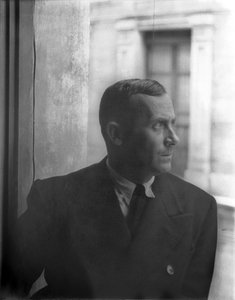
Joan Miró

Joan Miró

1893 - 1983, Spanien

Snabbfakta om Joan Miró

  • Artistic Movement Or Style: Surrealism
  • Artists Who Influenced This Artist:
    • Pablo Picasso
    • Sergei Diaghilev
  • Date Of Birth: 1893
  • Date Of Death: 1983
  • Full Name: Joan Miró i Ferrà
  • Nationality: Spanska
  • Notable Artworks:
    • Nudebad med Spegel
    • La Poetisa
    • Målning
  • Place Of Birth: Barcelona, Spanien

Konstnärsbiografi

A Catalan Visionary: The Life and Art of Joan Miró

Joan Miró i Ferrà, born in Barcelona in 1893, stands as one of the most significant figures in 20th-century art. His journey was not merely a progression through styles but an exploration of inner worlds, translating dreams, memories, and Catalan identity onto canvas with a uniquely poetic visual language. From humble beginnings marked by illness and initial parental reservations about his artistic pursuits, Miró persevered, driven by an innate need to express the intangible—the emotions, sensations, and subconscious currents that lie beneath the surface of reality. His early life was steeped in the traditions of Barcelona, a city brimming with architectural marvels thanks to Antoni Gaudí, whose organic forms would subtly influence Miró’s later abstractions. The goldsmithing profession of his father instilled an appreciation for meticulous craftsmanship, while the rugged Catalan landscape became a recurring motif and source of inspiration throughout his career.

Early Influences and the Path to Surrealism

Miró's formal artistic training began at La Llotja in Barcelona, where he honed his skills in traditional techniques. However, it was exposure to the avant-garde movements sweeping through Paris that truly ignited his creative evolution. The vibrant colors of Fauvism and the fragmented forms of Cubism resonated deeply, prompting him to move to Paris in 1920. This period proved pivotal as he encountered artists like Pablo Picasso and began experimenting with increasingly abstract compositions. Yet, Miró didn’t simply adopt these styles; he synthesized them, forging a path toward his own distinctive aesthetic. He sought to distill forms to their essence, stripping away representational details in favor of symbolic shapes and evocative colors. This exploration led him to the Surrealist group in 1924, aligning him with artists such as Max Ernst and Salvador Dalí. While embracing the Surrealist interest in the subconscious, Miró maintained a unique sensibility—his work was less about shocking imagery or Freudian symbolism than it was about creating a world of playful forms and poetic suggestion. He famously stated that he wanted to “paint what I see,” but what he saw wasn’t necessarily what others perceived; it resided within the realm of dreams and imagination.

The Surrealist Universe: Exploring Symbolism and Imagination

Miró's involvement with Surrealism profoundly shaped his artistic vision. Influenced by Sigmund Freud’s theories on psychoanalysis, Miró sought to tap into the hidden depths of consciousness—to depict not what is visible but what is felt. His canvases became populated with fantastical creatures—birds, insects, amorphous shapes—each imbued with symbolic significance. Recurring motifs like spirals and circles represented cycles of life and death, while biomorphic forms evoked primal instincts and primordial landscapes. Collaborations with fellow Surrealists yielded groundbreaking techniques such as *grattage*, where paint was scraped off the canvas surface to reveal underlying textures—a method he pioneered alongside Max Ernst for designs intended for Sergei Diaghilev’s ballet, *The Firebird*. This experimental approach underscored Miró's commitment to challenging artistic conventions and pushing the boundaries of visual expression.

Major Works and Artistic Innovations

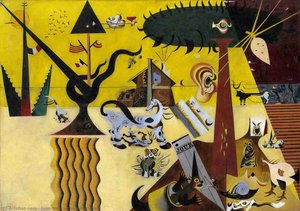
Throughout his prolific career, Miró produced an astonishing array of paintings, sculptures, ceramics, and prints—each reflecting his evolving aesthetic sensibilities. The Farm (1922) stands as a seminal work demonstrating his early embrace of Surrealist principles. Its depiction of Catalan rural life is rendered in vibrant colors and simplified forms, conveying both visual beauty and symbolic depth. The series *Dutch Interiors* (1928-1930), created during his Parisian period, reimagined the interiors of Dutch bourgeois homes through a Cubist lens—a bold departure from traditional representation that prioritized geometric abstraction and expressive color palettes. Miró’s monumental sculpture *Barcelona* (1945) embodies his desire to engage with grand themes—the Catalan spirit and the resilience of human creativity in times of adversity. His ceramic works, particularly those produced during World War II, explored textural surfaces and organic forms—a testament to his versatility as an artist.

Legacy and Enduring Influence

Joan Miró’s contribution to modern art is undeniable. He wasn't merely a painter; he was a visionary who redefined the possibilities of artistic expression. His work profoundly influenced subsequent generations of artists, fostering experimentation with abstraction and symbolism—inspiring movements like Abstract Expressionism and Pop Art. Beyond his artistic achievements, Miró championed Catalan culture and identity—a commitment reflected in his lifelong dedication to preserving the traditions of his homeland. He established two foundations—the Fundació Joan Miró in Barcelona (1975) and the Fundació Pilar i Joan Miró in Palma de Mallorca (1981)—ensuring that his legacy would endure, providing spaces for artistic exploration and education. His art continues to captivate audiences worldwide, inviting us to contemplate the mysteries of consciousness and celebrate the transformative power of imagination—a timeless testament to the enduring spirit of a truly exceptional artist.

Kortfakta

  • Year: 1983
  • Title: Sèrie Grans rupestres
  • Influences: Antoni Gaudí
  • Notable elements or techniques: Eye-like shape, Dot
  • Subject or theme: Dreams

Konstquiz

Det finns endast ett korrekt svar på varje fråga.

Fråga 1:
What is the artist known for?
Fråga 2:
The painting utilizes what artistic technique?
Fråga 3:
What prominent architectural figure influenced Miró's style?
Fråga 4:
The central image in the painting resembles what?
Fråga 5:
What is a key characteristic of Miró's artistic vision?