Förhandsvisa
 Skicka
 Dela
Dela
 Visa detaljer

 Ladda ner
 Liknande objekt
 Röntgen
 Bildspel
 Stats
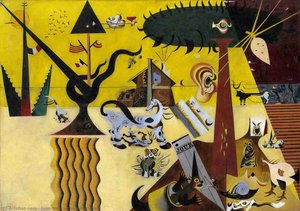
StatsPrades, the Village
 Akryl på duk
- Väggkonst
- Cubism
 1917
1917- Modernism
 65.0 x 72.0 cm
 Visa mer
Giclée / Konsttryck
Giclée- eller canvasprint av museumskvalitet med snabb produktion och flexibla ytbehandlingsalternativ. ( Beställ handmålad reproduktion Switch to Digital Image)




P118B $10

P118H $10

P118W $10

P438Z $10

P508JH $12

P508YH $12

P805H $10

P805Z $10

P919BZ $10

P919G $10

P919XJ $10

P959ZH $10

P968JZ $12

W106C $8

W218G $10

W218JH $8

W218Y $10

W307PJ $10

W316G $10

W316PJ $8

W316Y $10

W398PJ $8

W4111J $10

W500HY $15

W500JH $15

W692G $12

W849H $8

W940BG $15

W953PJ $8




Välj bland våra förinställda storlekar som motsvarar konstverkets ursprungliga proportioner.

Du kan ange egna mått för att passa en specifik ram eller yta. Om det valda måttet inte överensstämmer med originalbildens proportioner kommer vi antingen att beskära konstverket eller utöka bilden med en speglad eller enfärgad kant. En digital mockup skickas för ditt godkännande innan produktionen påbörjas.
Vänligen notera att förhandsvisningen på skärmen inte återspeglar den faktiska beskärningen eller utökningen. Endast mockuppen visar den slutgiltiga kompositionen korrekt.
Även om anpassade storlekar är möjliga, rekommenderar vi att du väljer ett mått från den fördefinierade listan för att bevara de ursprungliga proportionerna.
Leverans över hela världen () på 2 veckor istället för standard 4/5 veckor. (8 september)

Fri expressfrakt över hela världen

Högkvalitativ linnecanvas

Fullständig fraktförsäkring

Garantier för återbetalning av tullavgifter

Garantier för exakt färgåtergivning

100 dagars returrätt (endast vid defekter)

100% pengarna tillbaka-garanti

Mängdrabatt erbjuds
 Glasalternativet är endast tillgängligt i storlekar under 110 cm.

Prades, the Village
Giclée / Konsttryck
Storlek på reproduktion
-


Slutgiltigt pris
$ 80
Joan Miró: Prades, The Village – A Synthesis of Cubism and Fauvism
Joan Miró’s “Prades, the Village,” painted in 1917, stands as a cornerstone of early 20th-century art, embodying the burgeoning spirit of Surrealism while firmly rooted in the innovative impulses of Cubism and Fauvism. This oil on canvas masterpiece isn't merely a depiction of a Catalan landscape; it’s an exploration of form, color, and subconscious imagery—elements that would define Miró’s distinctive artistic vision for decades to come.
The Artistic Movement – A Dialogue Between Perspectives
“Prades, the Village” operates within a fascinating dialogue between two influential movements. Cubism, spearheaded by Picasso and Braque, fractured traditional perspective, presenting multiple viewpoints simultaneously through geometric shapes and overlapping planes—a technique evident in the stylized depiction of buildings and the central church tower. Simultaneously, Fauvism’s bold use of non-naturalistic color – vibrant reds, yellows, blues – injects an emotional intensity into the scene, animating the foliage and highlighting the overall atmosphere.
Composition and Color – Rhythm and Emotion
The painting's composition is deliberately asymmetrical yet harmonious. Geometric forms dominate, creating a dynamic rhythm that draws the eye across the canvas. Miró’s masterful manipulation of color isn’t simply decorative; it serves as a conduit for emotion. The audacious hues—particularly the fiery reds and yellows—capture the energy of the village landscape and imbue the artwork with an unforgettable vibrancy.
Artistic Legacy – Echoes in Subsequent Works
“Ciurana, the Path” by Miró, created around the same period, showcases similar explorations of form and structure. Furthermore, “The Waggon Tracks” and “Portrait of V. Nubiola” demonstrate Miró’s singular style—a blend of Cubist fragmentation and Fauvist expressive color—solidifying his position as a pioneer of modern art.
Museum Collection – A Testament to Artistic Significance
"Prades, the Village" resides within the Solomon R. Guggenheim Museum's esteemed collection in New York City, USA. This institution recognizes Miró’s contribution to artistic history and continues to inspire visitors with its impressive array of contemporary artworks.
Relevance to Modern Art – Surrealist Roots
Miró’s oeuvre has been interpreted as Surrealism infused with a deeply personal style—a fascination with the unconscious mind manifested in simplified, childlike imagery. This approach distinguishes Miró from many of his contemporaries and underscores his commitment to liberating art from conventional constraints.
Conclusion – An Enduring Vision
"Prades, the Village" remains a captivating piece that encapsulates the essence of early 20th-century artistic innovation. Its striking color palette and fractured composition elevate it beyond mere representation, establishing it as a landmark achievement in modern art history. For those seeking to delve deeper into Miró’s artistic universe, reproductions of “Prades, the Village” and other significant works are available on OriginalUniqueArt.com.
- Joan Miró's “Prades, the Village” (1917)
- Ciurana, the Path by Joan Miró
- The Waggon Tracks by Joan Miró
- Portrait of V. Nubiola by Joan Miró
For more information on Joan Miró and his works, visit OriginalUniqueArt.
Konstnärsbiografi
A Catalan Visionary: The Life and Art of Joan Miró
Joan Miró i Ferrà, born in Barcelona in 1893, stands as one of the most significant figures in 20th-century art. His journey was not merely a progression through styles but an exploration of inner worlds, translating dreams, memories, and Catalan identity onto canvas with a uniquely poetic visual language. From humble beginnings marked by illness and initial parental reservations about his artistic pursuits, Miró persevered, driven by an innate need to express the intangible—the emotions, sensations, and subconscious currents that lie beneath the surface of reality. His early life was steeped in the traditions of Barcelona, a city brimming with architectural marvels thanks to Antoni Gaudí, whose organic forms would subtly influence Miró’s later abstractions. The goldsmithing profession of his father instilled an appreciation for meticulous craftsmanship, while the rugged Catalan landscape became a recurring motif and source of inspiration throughout his career.Early Influences and the Path to Surrealism
Miró's formal artistic training began at La Llotja in Barcelona, where he honed his skills in traditional techniques. However, it was exposure to the avant-garde movements sweeping through Paris that truly ignited his creative evolution. The vibrant colors of Fauvism and the fragmented forms of Cubism resonated deeply, prompting him to move to Paris in 1920. This period proved pivotal as he encountered artists like Pablo Picasso and began experimenting with increasingly abstract compositions. Yet, Miró didn’t simply adopt these styles; he synthesized them, forging a path toward his own distinctive aesthetic. He sought to distill forms to their essence, stripping away representational details in favor of symbolic shapes and evocative colors. This exploration led him to the Surrealist group in 1924, aligning him with artists such as Max Ernst and Salvador Dalí. While embracing the Surrealist interest in the subconscious, Miró maintained a unique sensibility—his work was less about shocking imagery or Freudian symbolism than it was about creating a world of playful forms and poetic suggestion. He famously stated that he wanted to “paint what I see,” but what he saw wasn’t necessarily what others perceived; it resided within the realm of dreams and imagination.The Surrealist Universe: Exploring Symbolism and Imagination
Miró's involvement with Surrealism profoundly shaped his artistic vision. Influenced by Sigmund Freud’s theories on psychoanalysis, Miró sought to tap into the hidden depths of consciousness—to depict not what is visible but what is felt. His canvases became populated with fantastical creatures—birds, insects, amorphous shapes—each imbued with symbolic significance. Recurring motifs like spirals and circles represented cycles of life and death, while biomorphic forms evoked primal instincts and primordial landscapes. Collaborations with fellow Surrealists yielded groundbreaking techniques such as *grattage*, where paint was scraped off the canvas surface to reveal underlying textures—a method he pioneered alongside Max Ernst for designs intended for Sergei Diaghilev’s ballet, *The Firebird*. This experimental approach underscored Miró's commitment to challenging artistic conventions and pushing the boundaries of visual expression.Major Works and Artistic Innovations
Throughout his prolific career, Miró produced an astonishing array of paintings, sculptures, ceramics, and prints—each reflecting his evolving aesthetic sensibilities. The Farm (1922) stands as a seminal work demonstrating his early embrace of Surrealist principles. Its depiction of Catalan rural life is rendered in vibrant colors and simplified forms, conveying both visual beauty and symbolic depth. The series *Dutch Interiors* (1928-1930), created during his Parisian period, reimagined the interiors of Dutch bourgeois homes through a Cubist lens—a bold departure from traditional representation that prioritized geometric abstraction and expressive color palettes. Miró’s monumental sculpture *Barcelona* (1945) embodies his desire to engage with grand themes—the Catalan spirit and the resilience of human creativity in times of adversity. His ceramic works, particularly those produced during World War II, explored textural surfaces and organic forms—a testament to his versatility as an artist.Legacy and Enduring Influence
Joan Miró’s contribution to modern art is undeniable. He wasn't merely a painter; he was a visionary who redefined the possibilities of artistic expression. His work profoundly influenced subsequent generations of artists, fostering experimentation with abstraction and symbolism—inspiring movements like Abstract Expressionism and Pop Art. Beyond his artistic achievements, Miró championed Catalan culture and identity—a commitment reflected in his lifelong dedication to preserving the traditions of his homeland. He established two foundations—the Fundació Joan Miró in Barcelona (1975) and the Fundació Pilar i Joan Miró in Palma de Mallorca (1981)—ensuring that his legacy would endure, providing spaces for artistic exploration and education. His art continues to captivate audiences worldwide, inviting us to contemplate the mysteries of consciousness and celebrate the transformative power of imagination—a timeless testament to the enduring spirit of a truly exceptional artist.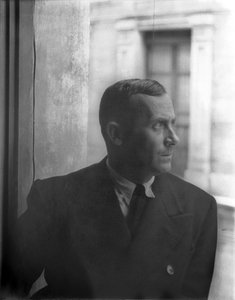
Joan Miró
1893 - 1983 , Spanien
Kortfakta
- Artistic Movement Or Style: Surrealism
- Artists Who Influenced This Artist:
- Pablo Picasso
- Sergei Diaghilev
- Date Of Birth: 1893
- Date Of Death: 1983
- Full Name: Joan Miró i Ferrà
- Nationality: Spanska
- Notable Artworks:
- Nudebad med Spegel
- La Poetisa
- Målning
- Place Of Birth: Barcelona, Spanien
Relaterade artiklar
Deconstructing Reality: Cubism's Revolutionary Impact on 20th-Century Art
Explore the revolutionary world of Cubism with OriginalUniqueArt. Discover Picasso & Braque's groundbreaking techniques, its philosophical roots, and lasting impact on modern art. Expert insights for collectors.
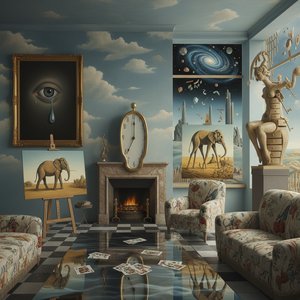
Surrealismens 10 Mästerverk – Konst som Utmanar Verkligheten | OriginalUniqueArt.com
Utforska surrealismens 10 mest ikoniska mästerverk – från Dalís drömlandskap till Magrittes tankeväckande symbolik. Lär känna konstnärerna och tekniken bakom tidlösa tavlor. Hitta din perfekta inredningsdetalj på OriginalUniqueArt.com! Upptäck hela kollektionen online.
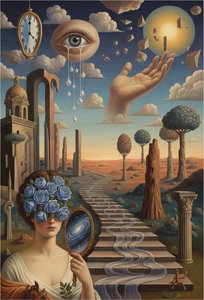
Surrealismens 10 Mästerverk: Konst som Utmanar Verkligheten | OriginalUniqueArt.se
Utforska surrealismens 10 mest ikoniska mästerverk – från Dalís drömlandskap till Magrittes tankeväckande symbolik. Lär känna konsthistorien och hitta inspiration för ditt hem med OriginalUniqueArt.se! Upptäck hela kollektionen online.
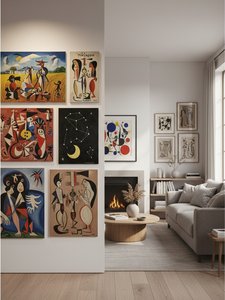
Joan Mirós 25 Mästerverk: Konst, Drömmar & Inredning för Hemmet
Utforska Joan Mirós 25 mest ikoniska konstverk! Fördjupa dig i surrealismens värld, katalanska färger och tidlösa målningar. Hitta inspiration & köp museumkvalitativa reproduktioner på OriginalUniqueArt.com – för en unik heminredning.
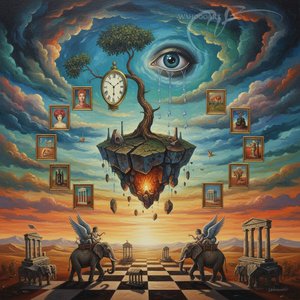
Surrealismens 10 Mästerverk: Konst som Utmanar Verkligheten – OriginalUniqueArt
Utforska surrealismens 10 mest ikoniska mästerverk – Dalí, Magritte & mer. Lär känna historien bakom drömlika landskap och symbolik i konsten. Hitta konsttryck av högsta kvalitet för ditt hem på OriginalUniqueArt.com.