

 Förhandsvisa
 Skicka
 Dela
Dela
 Visa detaljer

 Ladda ner
 Liknande objekt
 Röntgen
 Bildspel
Para David Fernández Miró

 Visa mer
Köp en högupplöst, förbättrad digital bild med betydligt högre kvalitet än förhandsvisningen online.
Varje fil är noggrant förberedd av våra interna specialister med hjälp av avancerade verktyg och professionell manuell retuschering. Vi säkerställer att varje bild har exceptionell skärpa, exakt färgåtergivning och fina detaljer.
Den slutgiltiga filen levereras via e-post inom 72 timmar, optimerad för omedelbar användning i professionella sammanhang, redaktionellt bruk och tryckmiljöer. Detta är samma kvalitet som med förtroende används av ledande designstudior, förlag och gallerier.
Digital bild
Ladda ner en högupplöst fil för personlig visning, utskrift och kreativa projekt. ( Beställ tryck Beställ handmålad reproduktion)
Ingår i varje beställning av digital bild
Professionell digital leverans, garanterad
När du väljer OriginalUniqueArt.com får du inte bara en bild – du får ett professionellt förädlat digitalt konstverk, skapat med precision och med en garanterad tillfredsställelse. Här är allt som ingår i din beställning, automatiskt:

Snabb leverans via e-post
Din högupplösta digitala bild skickas till dig via e-post inom 72 timmar efter beställning – redo för omedelbar användning.

AI-förbättrad digital bild
Ditt konstverk optimeras professionellt med hjälp av avancerade AI-verktyg och manuell redigering, vilket garanterar maximal detaljrikedom, skärpa och färgnoggrannhet.

Gratis livstidsåterutskick
Har du råkat radera eller tappa bort din fil? Ingen oro – vi skickar den kostnadsfritt till dig när som helst.

Inga importavgifter – någonsin
Njut av ditt konstverk omedelbart utan tull, importavgifter eller leveranskostnader – digitala nedladdningar är alltid skattefria.

Garanterad färgåtergivning
Vi säkerställer att din digitala bild återger de ursprungliga färgerna så exakt som möjligt med hjälp av professionella verktyg och färghantering.

60 dagars nöjdhetsgaranti
Om du inte är nöjd med din digitala bild kommer vi att revidera den eller återbetala 100% inom 60 dagar – utan frågor.

100% pengarna-tillbaka-garanti
Inte nöjd? Få full återbetalning inom 60 dagar efter att du har tagit emot din digitala fil – utan frågor och diskussioner.

Rabatt vid storköp
Köp 3 bilder, spara 10% – Köp 5, spara 15% – Köp 10+, spara 20%. Perfekt för kreativa projekt, gallerier och byråer.
Beskrivning av samlarobjektet
Introduction: A Dreamscape Unveiled – ‘Para David Fernández Miró’
Joan Miró's 'Para David Fernández Miró', painted in 1964, isn’t merely a depiction of fish swimming through an ocean; it’s a portal into the artist’s subconscious, a vibrant embodiment of Surrealist principles and Catalan identity. This oil painting, brimming with color and imbued with a dreamlike quality, invites viewers to lose themselves within its swirling forms and playful symbolism. Miró, deeply influenced by the organic architecture of Gaudí and the rugged landscapes of his homeland, crafted this piece as a personal gift for David Fernández, a close friend and fellow artist – a testament to their shared artistic spirit and a window into Miró’s intensely private world.
The composition immediately captivates with its seemingly chaotic yet meticulously balanced arrangement. At least twelve fish, rendered in an astonishing array of hues—cerulean blues, fiery oranges, emerald greens, and deep violets—dance across the surface of a rich, ultramarine blue ocean. These aren’t realistic representations; they are abstracted symbols, each possessing a unique character and contributing to the overall sense of movement and fluidity. The fish don't swim in a linear fashion but rather drift and swirl, suggesting an underwater ballet governed by unseen forces – a direct reflection of Miró’s fascination with the irrational and the unpredictable.
The Language of Abstraction: Style and Technique
Miró’s signature style is powerfully evident in ‘Para David Fernández Miró’. He employs bold, gestural brushstrokes, creating a textured surface that pulsates with energy. The forms are deliberately ambiguous, resisting precise definition and inviting multiple interpretations. This abstraction isn't random; it’s rooted in a deep understanding of color theory and composition. The use of oil paint allows for incredible depth and luminosity, capturing the shimmering quality of water and the iridescent sheen of the fish scales. Notice how light seems to emanate from within the painting, creating an otherworldly glow.
Miró’s technique is a masterful blend of spontaneity and control. He began with loose sketches and intuitive gestures, allowing his subconscious to guide his hand. However, he then refined these initial marks, adding details and shaping forms with careful precision. This interplay between improvisation and deliberate execution results in a work that feels both deeply personal and remarkably polished.
Symbolism and the Catalan Soul
Beyond its purely aesthetic qualities, ‘Para David Fernández Miró’ is rich in symbolism, reflecting Miró's unique worldview and his connection to Catalonia. The fish themselves are frequently interpreted as symbols of fertility, abundance, and transformation – recurring motifs in Miró’s oeuvre. Their vibrant colors evoke the Mediterranean Sea, a defining element of Catalan identity and a source of endless inspiration for the artist. The scattered arrangement could also represent the fragmentation of memory or the fleeting nature of dreams.
Furthermore, the painting subtly incorporates elements of Catalan folklore and mythology. The swirling forms and organic shapes recall the intricate patterns found in traditional Catalan textiles and ceramics. Miró often drew upon these cultural traditions to create works that were both deeply personal and universally resonant. The overall effect is a potent distillation of Catalan spirit – a celebration of beauty, mystery, and the power of imagination.
A Legacy of Surrealism: Historical Context
‘Para David Fernández Miró’ stands as a significant example of Surrealist art, a movement that sought to liberate the mind from the constraints of reason and explore the depths of the unconscious. Miró embraced the principles of automatism – spontaneous creation without conscious control – but he infused his work with a distinctly personal style, rejecting the rigid dogma of the group. This painting exemplifies Miró’s ability to translate his inner world onto canvas, creating images that are both dreamlike and profoundly moving.
Miró's exploration of the subconscious aligns perfectly with the broader Surrealist project, which aimed to challenge conventional notions of reality and reveal the hidden truths beneath the surface. ‘Para David Fernández Miró’ is a testament to Miró’s enduring influence on 20th-century art, continuing to inspire artists today with its bold vision and captivating beauty. It's a piece that invites contemplation, sparking the imagination and reminding us of the power of art to transport us beyond the boundaries of our everyday experience.
Konstnärsbiografi
A Catalan Visionary: The Life and Art of Joan Miró
Joan Miró i Ferrà, born in Barcelona in 1893, stands as one of the most significant figures in 20th-century art. His journey was not merely a progression through styles but an exploration of inner worlds, translating dreams, memories, and Catalan identity onto canvas with a uniquely poetic visual language. From humble beginnings marked by illness and initial parental reservations about his artistic pursuits, Miró persevered, driven by an innate need to express the intangible—the emotions, sensations, and subconscious currents that lie beneath the surface of reality. His early life was steeped in the traditions of Barcelona, a city brimming with architectural marvels thanks to Antoni Gaudí, whose organic forms would subtly influence Miró’s later abstractions. The goldsmithing profession of his father instilled an appreciation for meticulous craftsmanship, while the rugged Catalan landscape became a recurring motif and source of inspiration throughout his career.Early Influences and the Path to Surrealism
Miró's formal artistic training began at La Llotja in Barcelona, where he honed his skills in traditional techniques. However, it was exposure to the avant-garde movements sweeping through Paris that truly ignited his creative evolution. The vibrant colors of Fauvism and the fragmented forms of Cubism resonated deeply, prompting him to move to Paris in 1920. This period proved pivotal as he encountered artists like Pablo Picasso and began experimenting with increasingly abstract compositions. Yet, Miró didn’t simply adopt these styles; he synthesized them, forging a path toward his own distinctive aesthetic. He sought to distill forms to their essence, stripping away representational details in favor of symbolic shapes and evocative colors. This exploration led him to the Surrealist group in 1924, aligning him with artists such as Max Ernst and Salvador Dalí. While embracing the Surrealist interest in the subconscious, Miró maintained a unique sensibility—his work was less about shocking imagery or Freudian symbolism than it was about creating a world of playful forms and poetic suggestion. He famously stated that he wanted to “paint what I see,” but what he saw wasn’t necessarily what others perceived; it resided within the realm of dreams and imagination.The Surrealist Universe: Exploring Symbolism and Imagination
Miró's involvement with Surrealism profoundly shaped his artistic vision. Influenced by Sigmund Freud’s theories on psychoanalysis, Miró sought to tap into the hidden depths of consciousness—to depict not what is visible but what is felt. His canvases became populated with fantastical creatures—birds, insects, amorphous shapes—each imbued with symbolic significance. Recurring motifs like spirals and circles represented cycles of life and death, while biomorphic forms evoked primal instincts and primordial landscapes. Collaborations with fellow Surrealists yielded groundbreaking techniques such as *grattage*, where paint was scraped off the canvas surface to reveal underlying textures—a method he pioneered alongside Max Ernst for designs intended for Sergei Diaghilev’s ballet, *The Firebird*. This experimental approach underscored Miró's commitment to challenging artistic conventions and pushing the boundaries of visual expression.Major Works and Artistic Innovations
Throughout his prolific career, Miró produced an astonishing array of paintings, sculptures, ceramics, and prints—each reflecting his evolving aesthetic sensibilities. The Farm (1922) stands as a seminal work demonstrating his early embrace of Surrealist principles. Its depiction of Catalan rural life is rendered in vibrant colors and simplified forms, conveying both visual beauty and symbolic depth. The series *Dutch Interiors* (1928-1930), created during his Parisian period, reimagined the interiors of Dutch bourgeois homes through a Cubist lens—a bold departure from traditional representation that prioritized geometric abstraction and expressive color palettes. Miró’s monumental sculpture *Barcelona* (1945) embodies his desire to engage with grand themes—the Catalan spirit and the resilience of human creativity in times of adversity. His ceramic works, particularly those produced during World War II, explored textural surfaces and organic forms—a testament to his versatility as an artist.Legacy and Enduring Influence
Joan Miró’s contribution to modern art is undeniable. He wasn't merely a painter; he was a visionary who redefined the possibilities of artistic expression. His work profoundly influenced subsequent generations of artists, fostering experimentation with abstraction and symbolism—inspiring movements like Abstract Expressionism and Pop Art. Beyond his artistic achievements, Miró championed Catalan culture and identity—a commitment reflected in his lifelong dedication to preserving the traditions of his homeland. He established two foundations—the Fundació Joan Miró in Barcelona (1975) and the Fundació Pilar i Joan Miró in Palma de Mallorca (1981)—ensuring that his legacy would endure, providing spaces for artistic exploration and education. His art continues to captivate audiences worldwide, inviting us to contemplate the mysteries of consciousness and celebrate the transformative power of imagination—a timeless testament to the enduring spirit of a truly exceptional artist.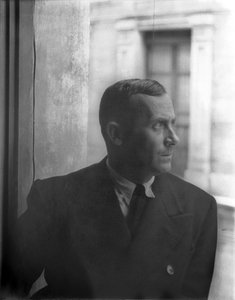
Joan Miró
1893 - 1983 , Spanien
Snabbfakta
- Artistic Movement Or Style: Surrealism
- Artists Who Influenced This Artist:
- Pablo Picasso
- Sergei Diaghilev
- Date Of Birth: 1893
- Date Of Death: 1983
- Full Name: Joan Miró i Ferrà
- Nationality: Spanska
- Notable Artworks:
- Nudebad med Spegel
- La Poetisa
- Målning
- Place Of Birth: Barcelona, Spanien

